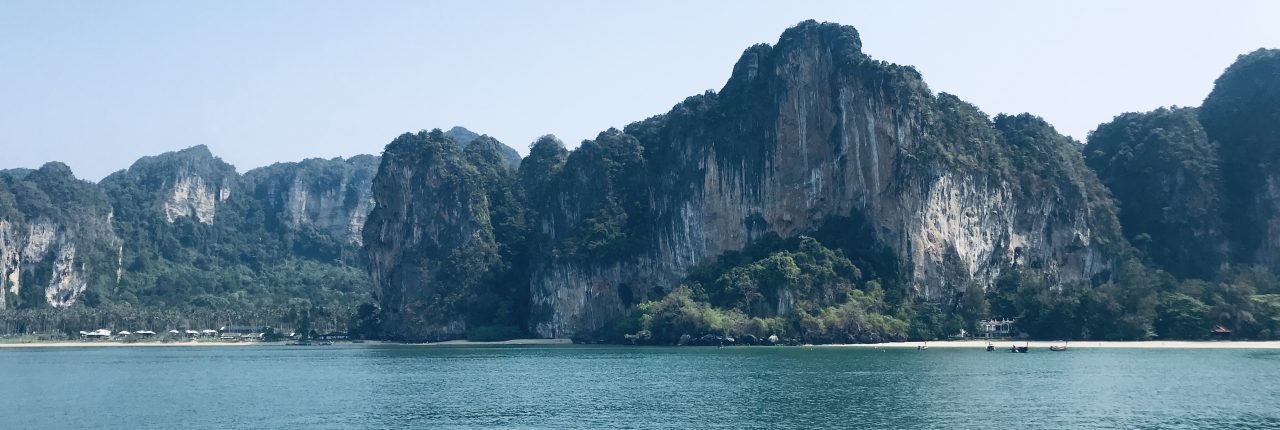
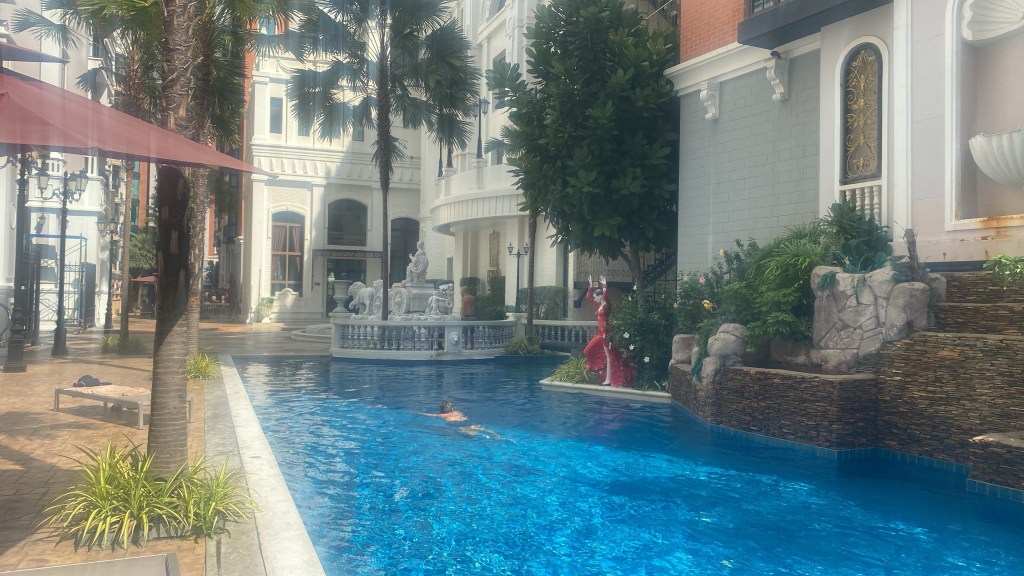
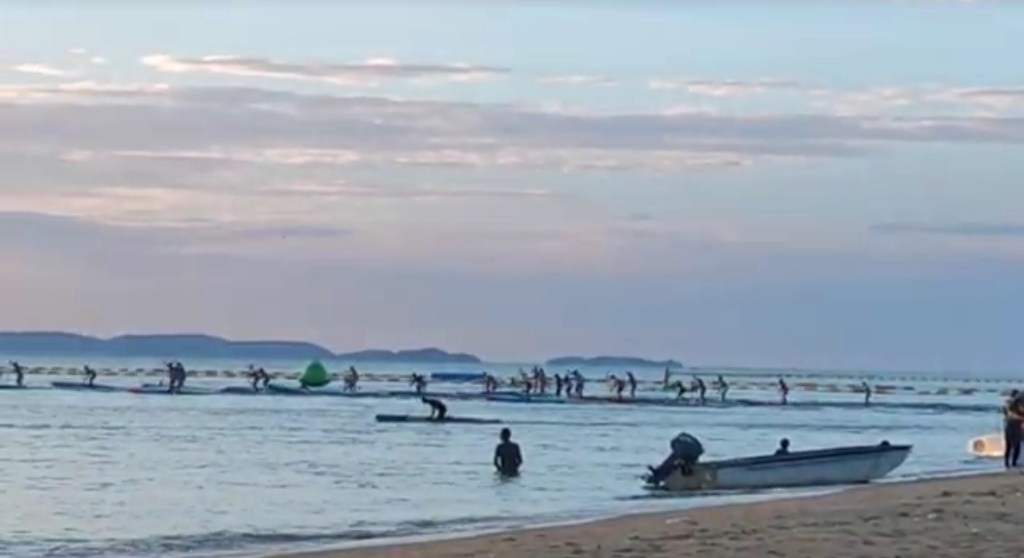
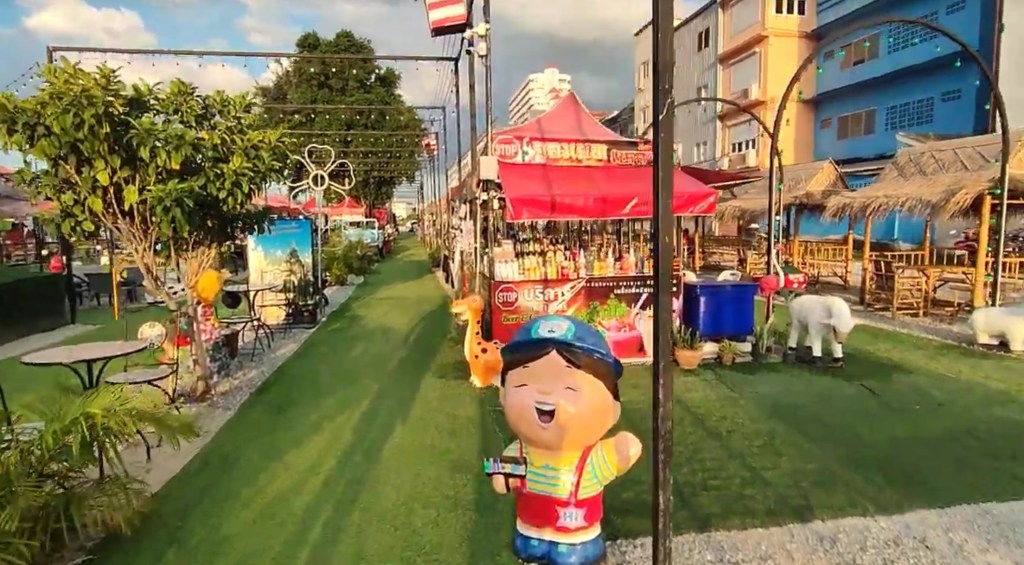
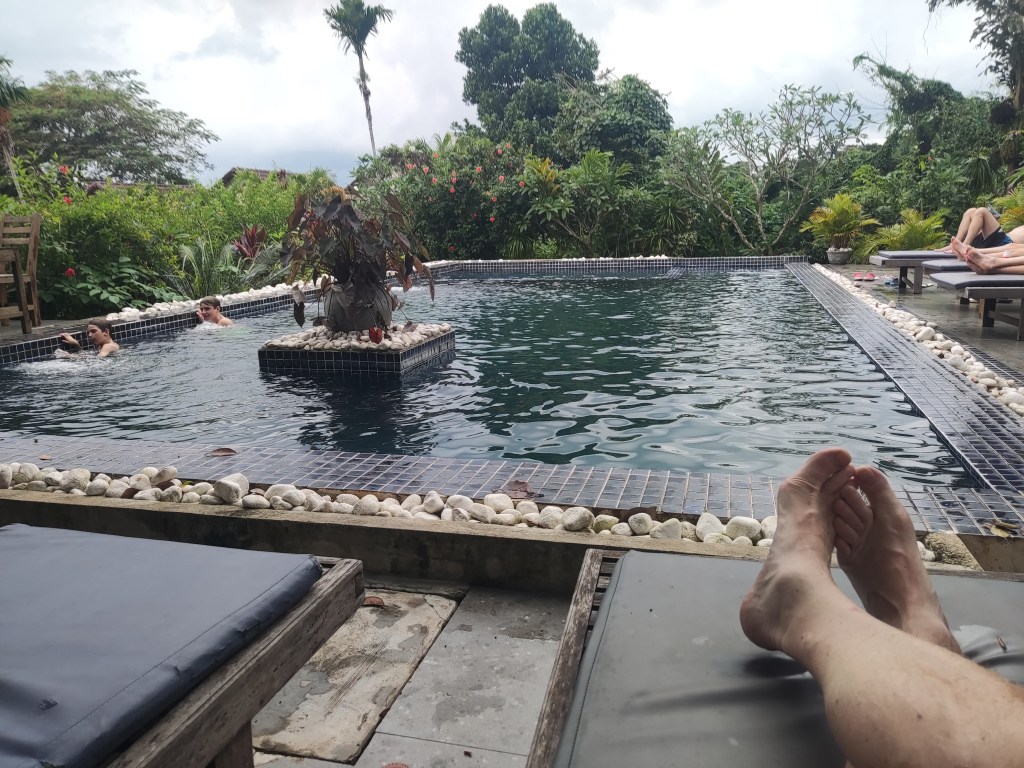
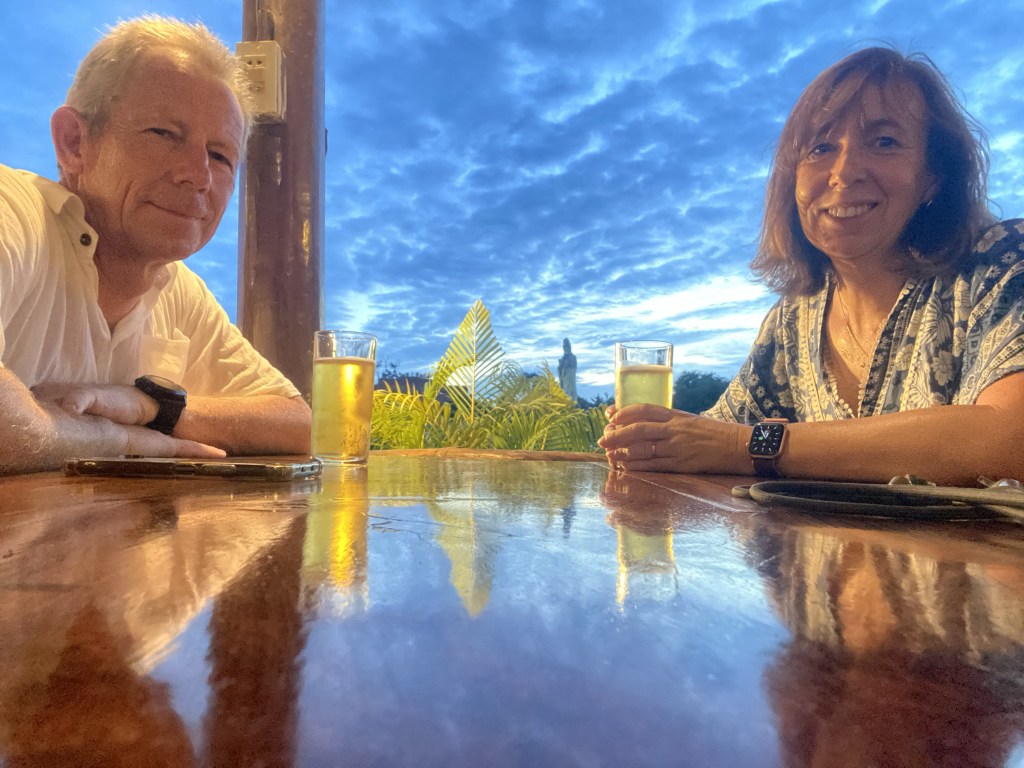
We had about 5 nights from when our Cambodian visa ran out to when we were due to be in Bangkok to meet family and so we thought we’d have a bit of beach time again. We knew Pattaya had a very shady reputation but it was on the way so we booked an apartment in the “ family friendly “ area of Jomtien. The studio apartment had everything we needed and the complex had a gorgeous and sparkling clean pool so it was a good place to come down with my cold; only I can go to the hottest place and still end up with one. We enjoyed lazing about and just wandering down to the beach for a sunset drink. We sat one evening and watched the world SUP championship races which were pretty entertaining. We watched them practicing their entrances to the water and became quite critical of their styles as we enjoyed the beers. We were expert coaches by the end🤔. Jomtien beach itself is very wide and clean but it is extremely built up which is just not our cup of tea. We did find a really nice night market though with great food.
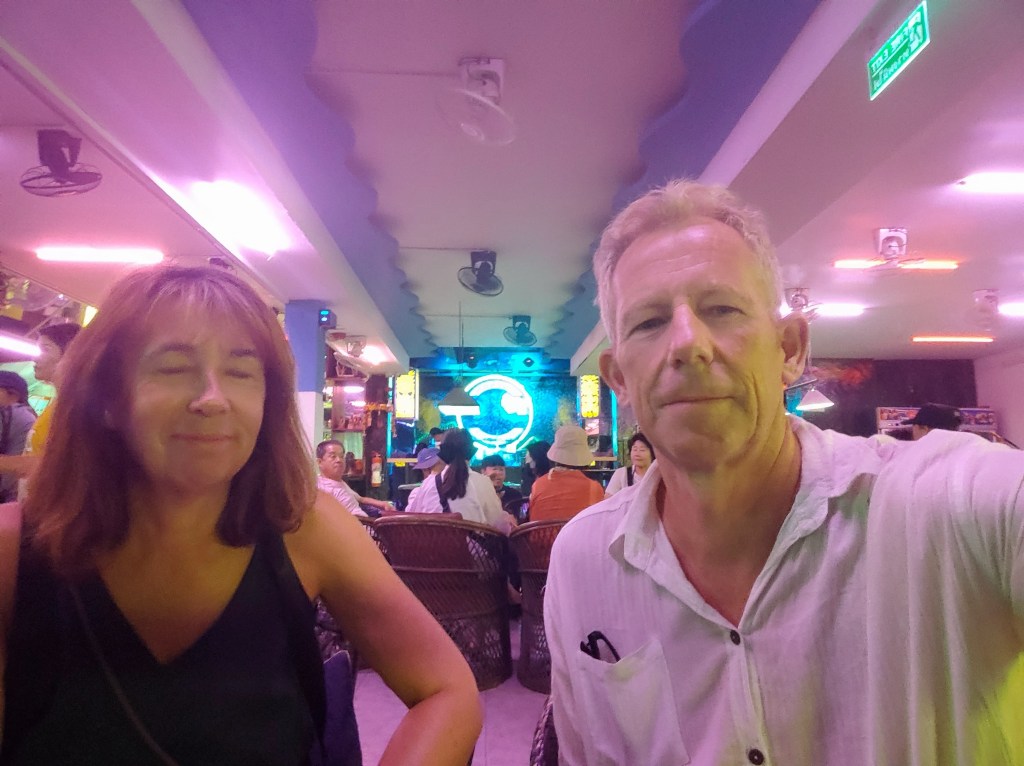
Our condo poolSUP world championshipsEyes shut against the sights😆
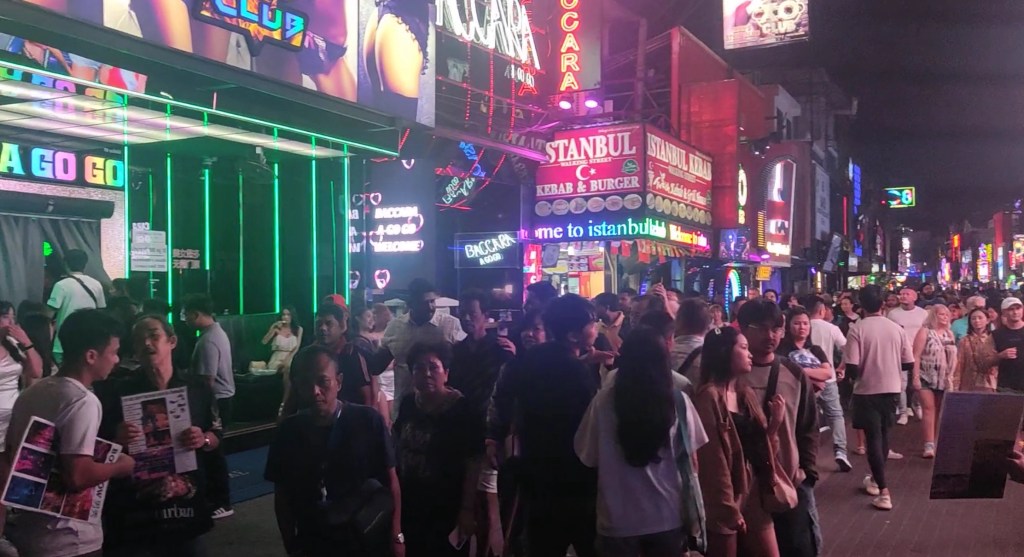
On our final evening, we headed into central part of Pattaya to see what all the fuss was about. It was so busy, full of tall buildings, jostling people and absolutely everyone appeared to be heading to the famous walking street. We were not really surprised by the “ menus” of activities thrust in front of us every few steps but we were surprised to see quite a lot of people bringing children along the street when it really wasn’t a family friendly environment. Having sat in what we thought was a “safe” bar, we then realised I appeared to be the only non-“working” lady there. Safe to say, we only stayed for one drink on the edge of the street and then made our way home though we did see some lively dancing on the way back.
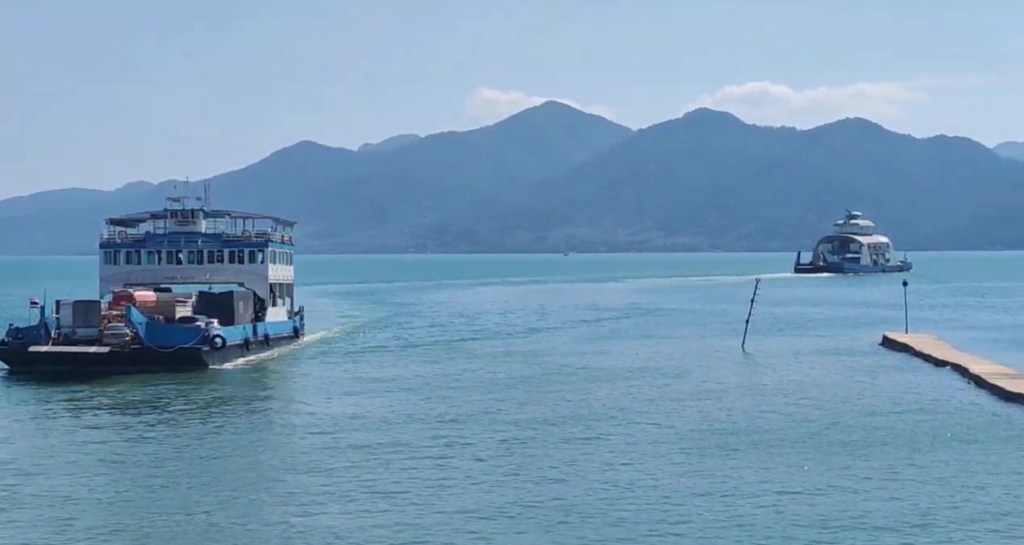
After a very easy journey to Bangkok, we enjoyed a few family days there (again) before heading to Koh Chang; an island which Kate had highly recommended after her release from Covid quarantine in Bangkok during her Thailand term for her masters degree.
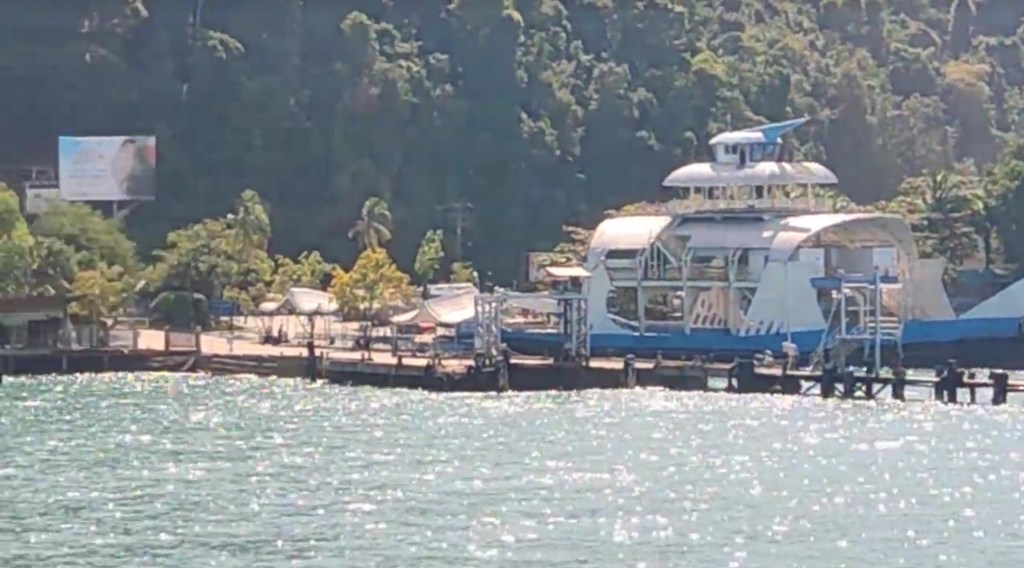
Koh Chang – the elephant shaped islandLonely Beach Bangbao pier – a nice shopping spot.
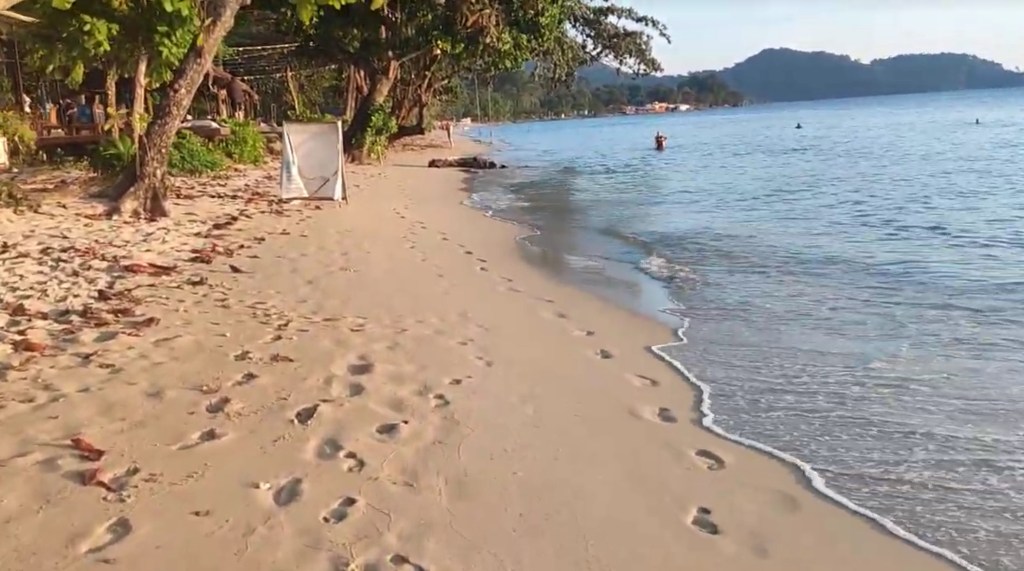
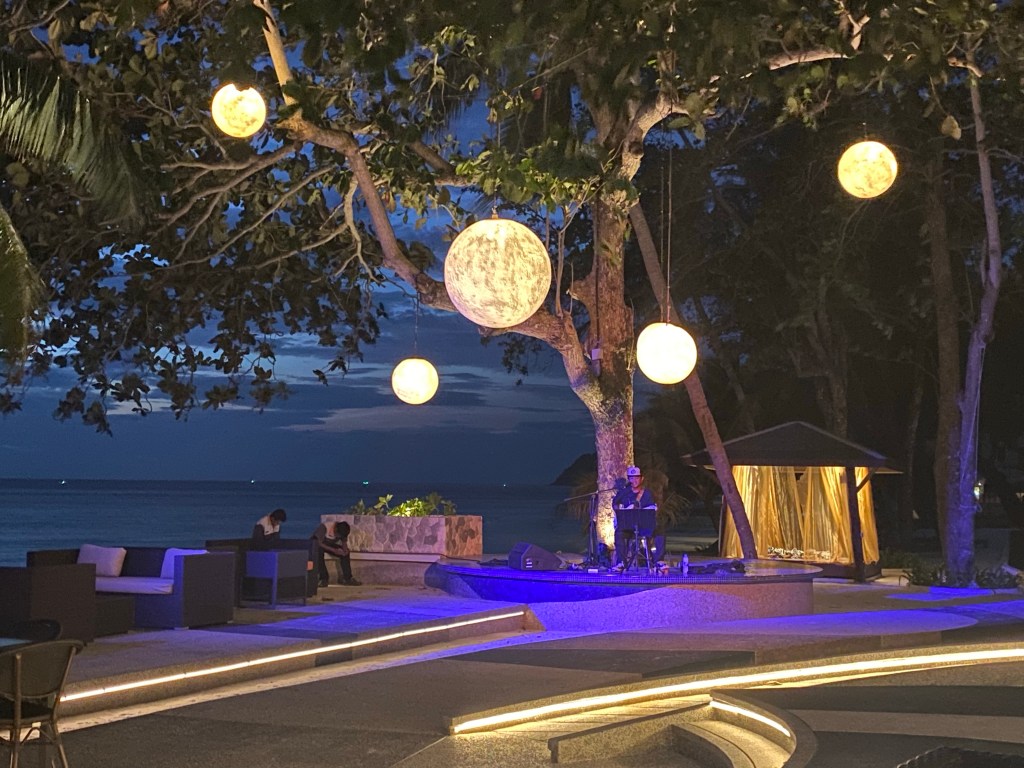
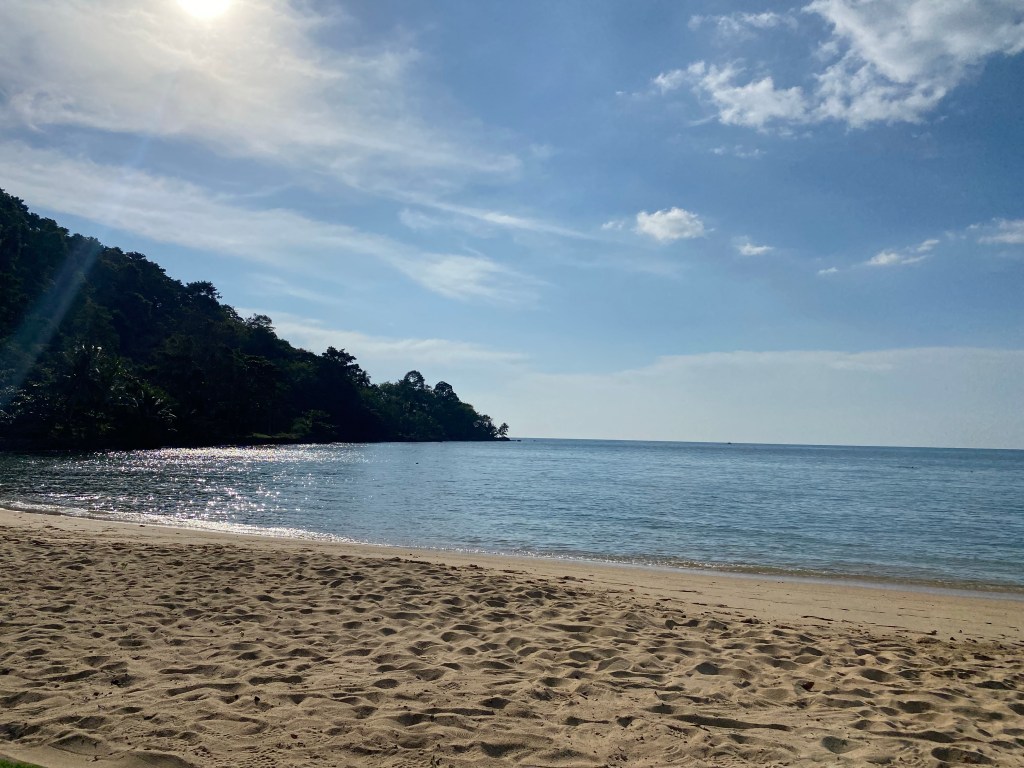
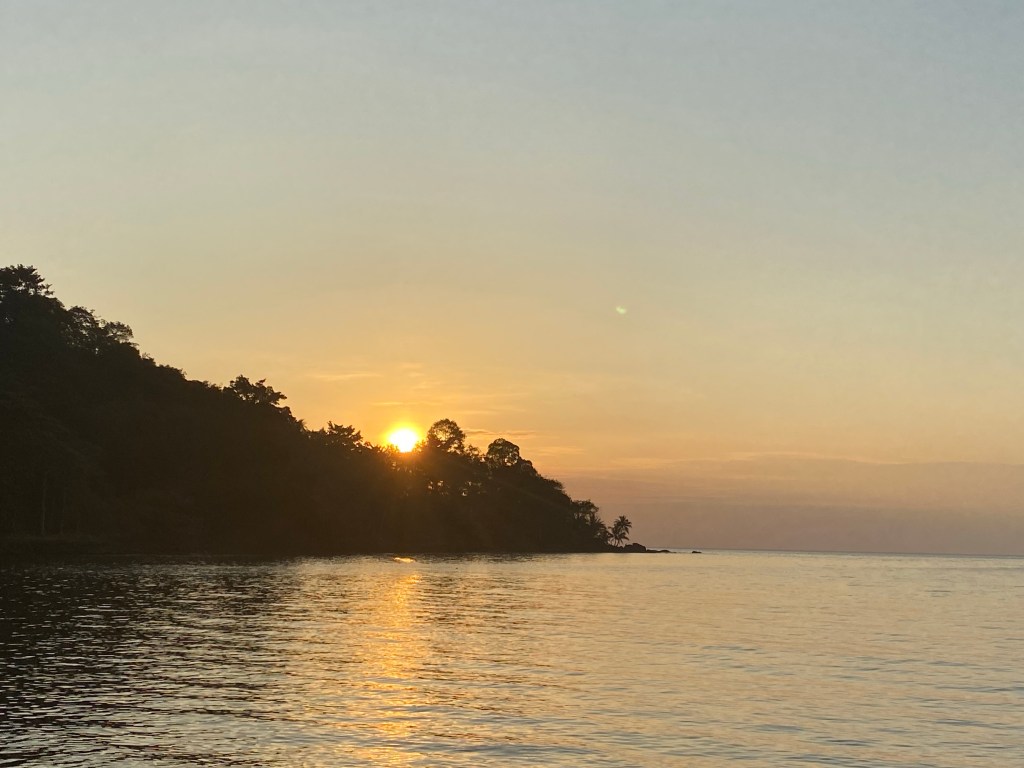
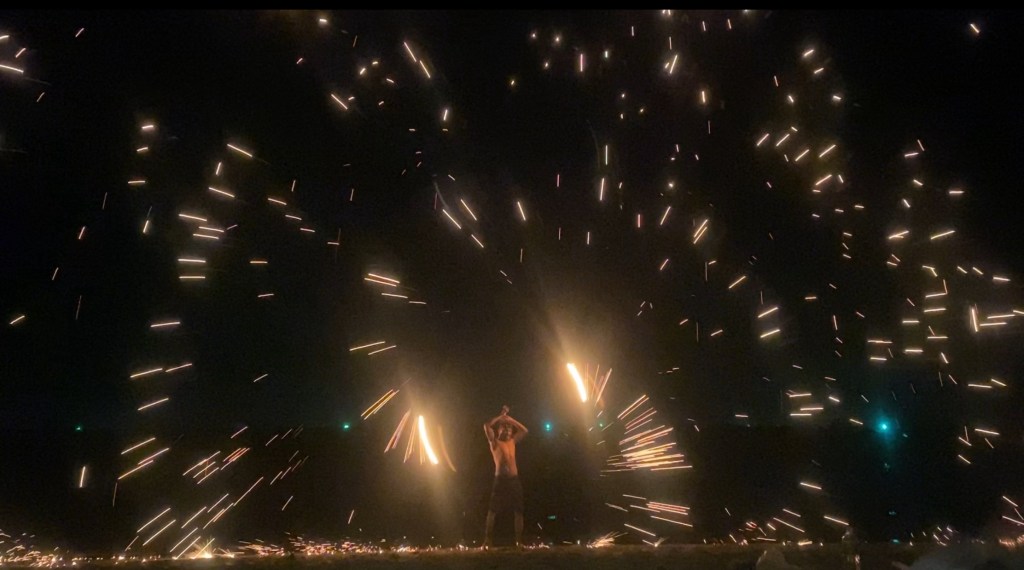
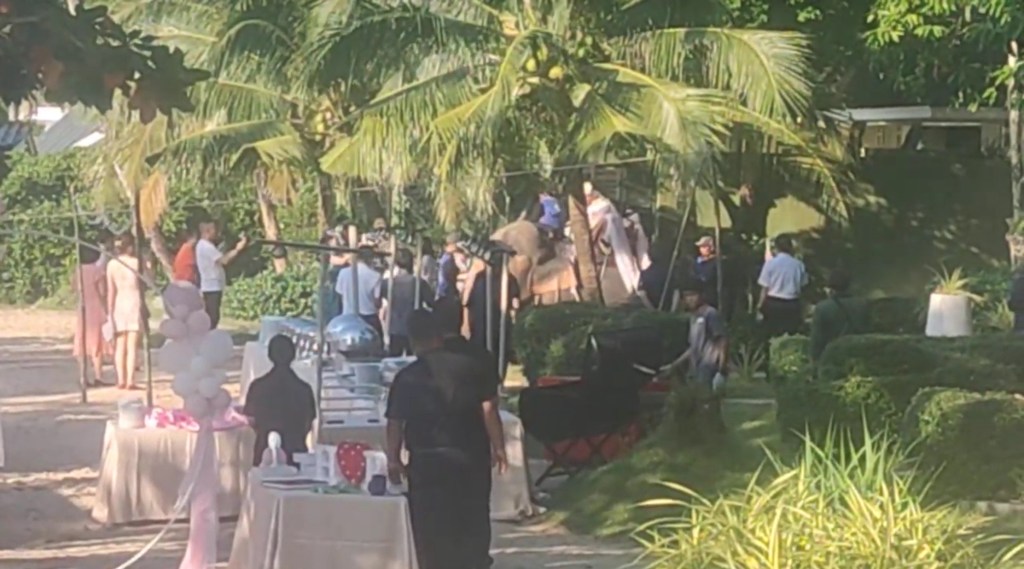
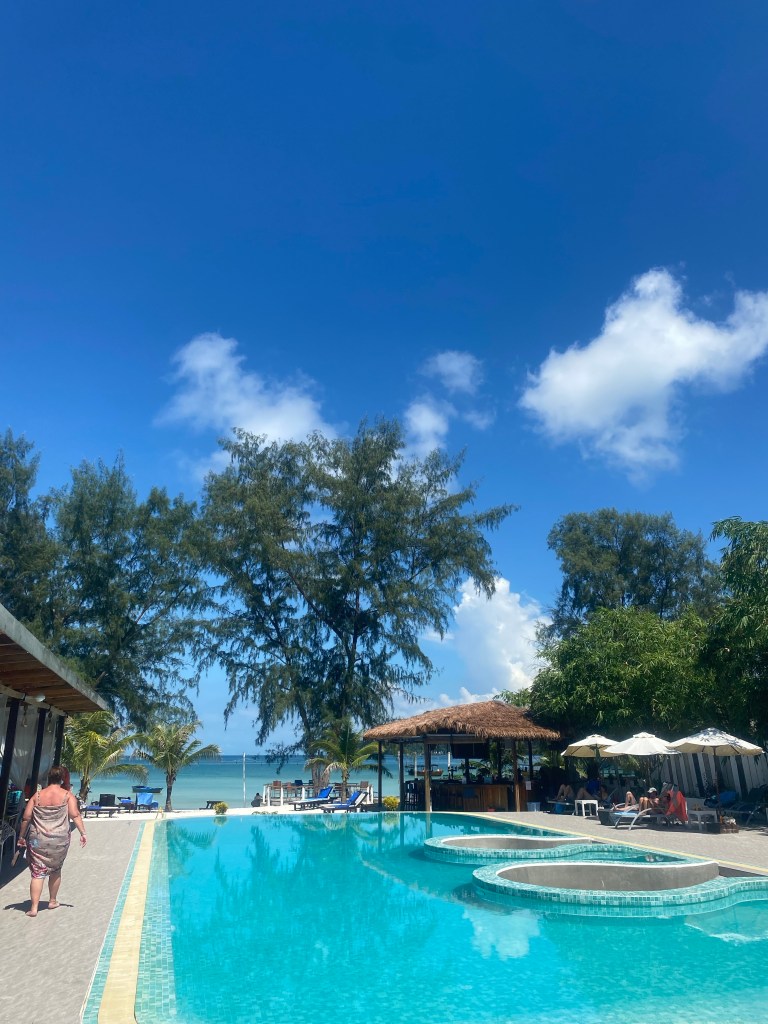
It took about 7 hours by bus, ferry and minibus but we arrived at Lonely Beach and found that the hotel had a gorgeous pool and beach. There are only a few cute bars on it which we used one sunset watching the free fire shows and chatting to some very interesting Londoners who worked in some well known films with very impressive actors, one of whom we’d met due to the Downton connection. We moved hotels and bays a few times on the island for some variety but decided that Lonely Beach was the best beach but Bailan Bay (Mercure Hideaway) had the best hotel, massage and food. We even watched a Thai/ westerner wedding there where the bride arrived on an elephant!
White Sand Beach – a singha beer and singer.Bailan Bay
We’re, at present, not sure quite what we’re doing for our final week; whether we’re going north to a national park or south to more beaches but I think either way we will be seeing some wild elephants and perhaps a temple or 2 just so that Callum can have more ice cream of course.
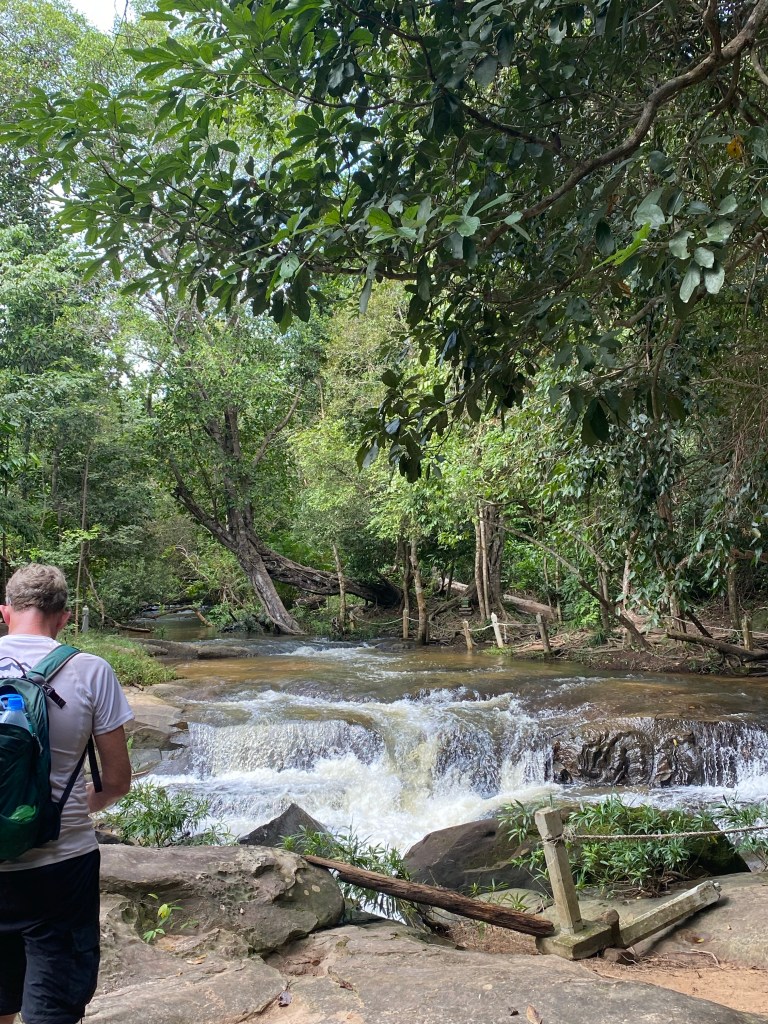
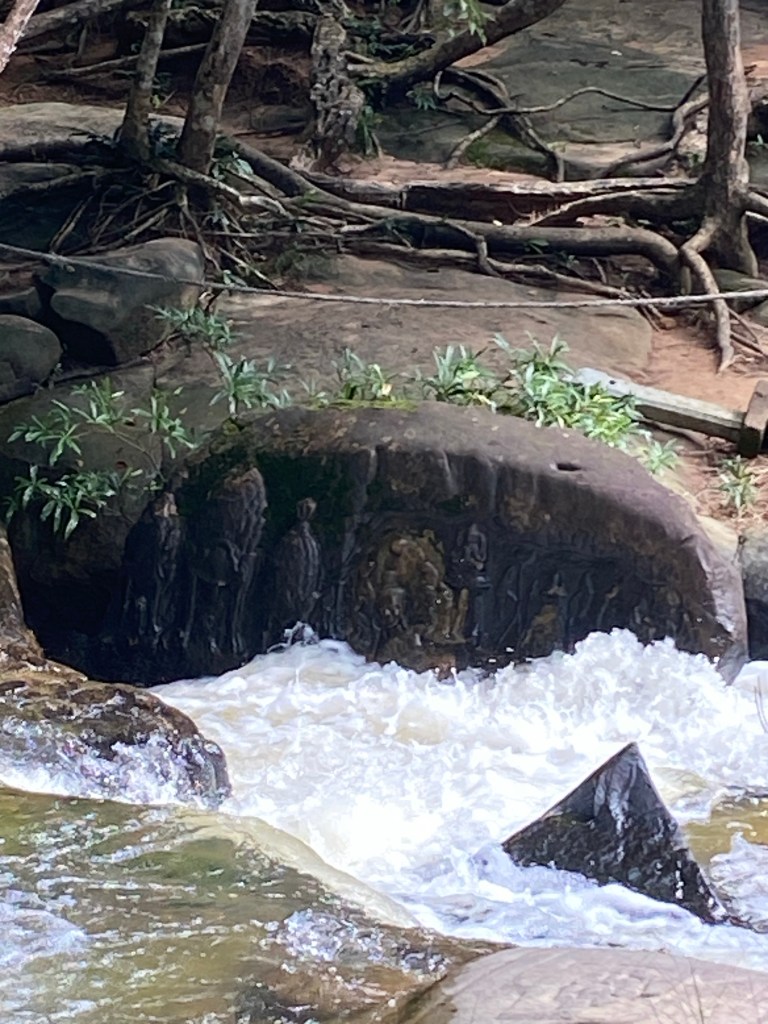
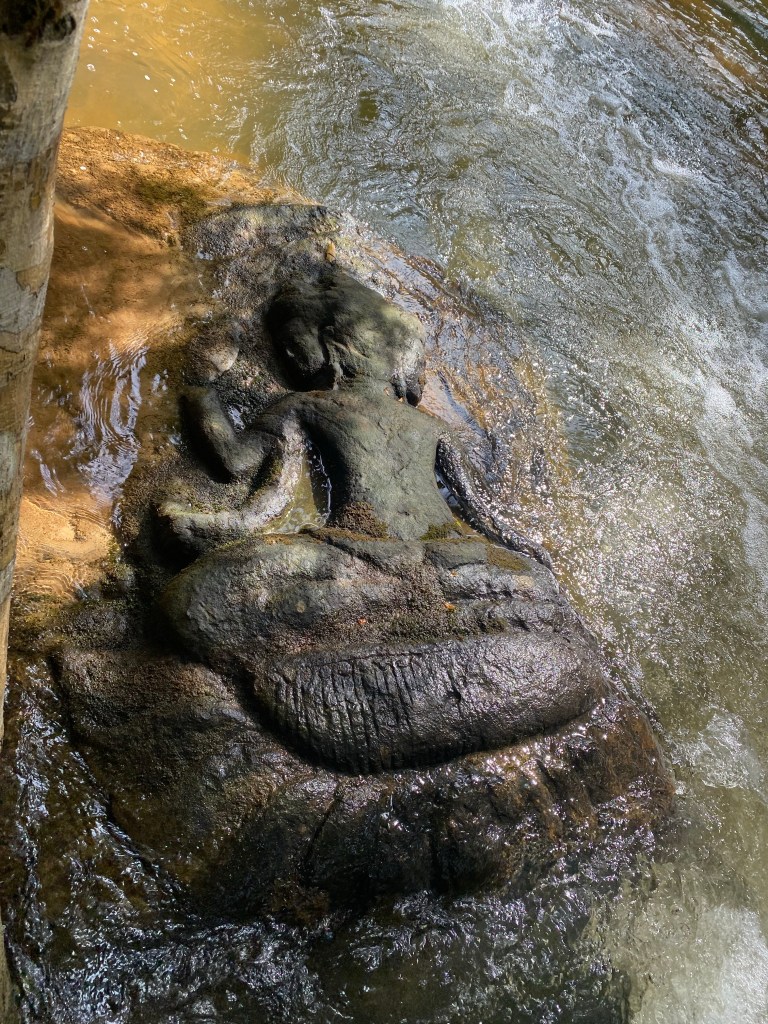
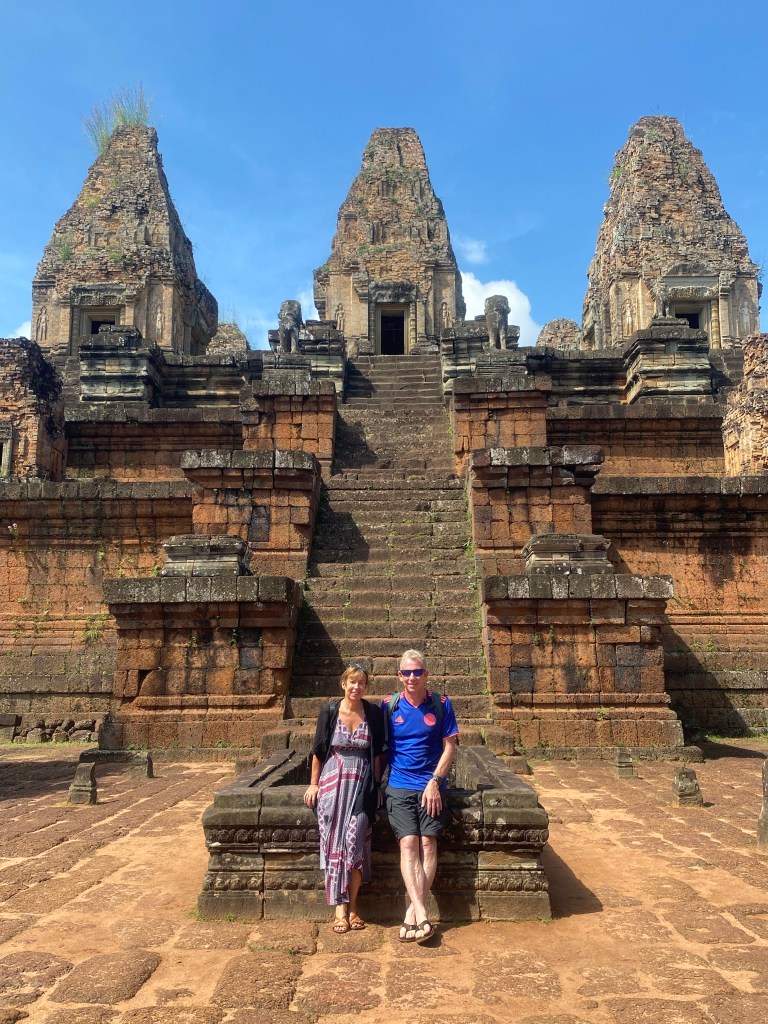
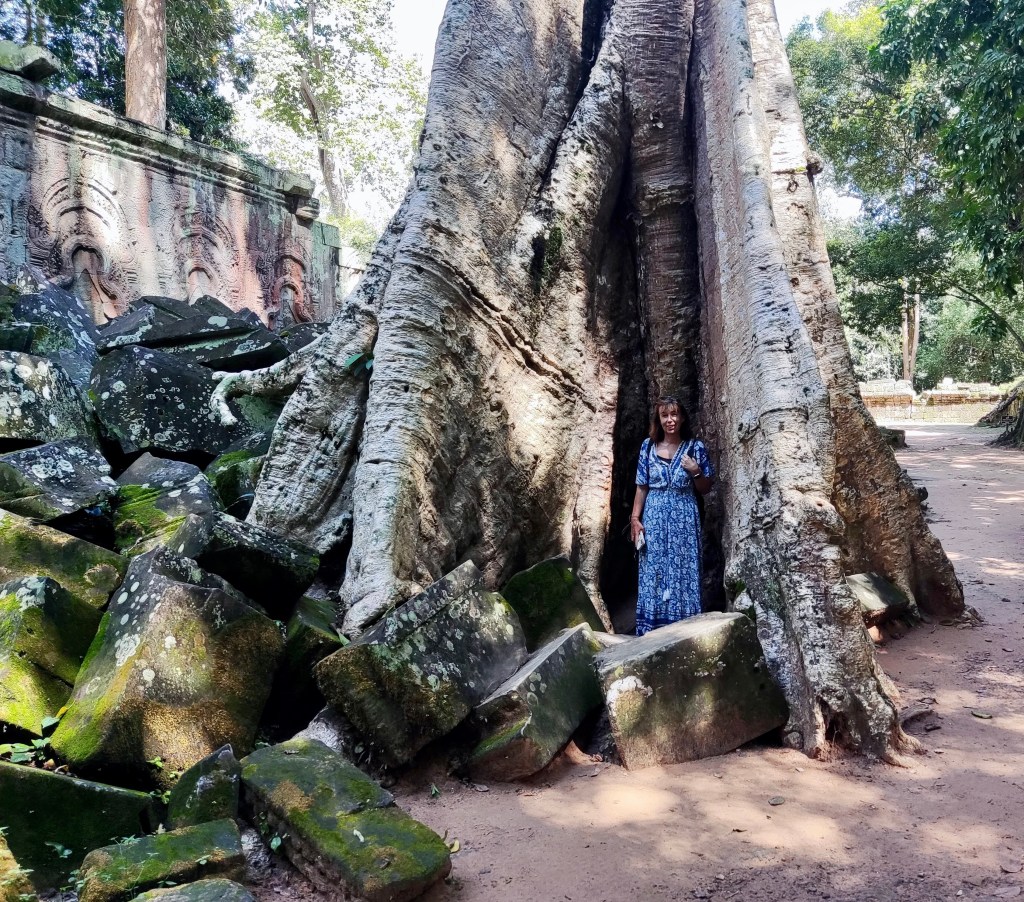
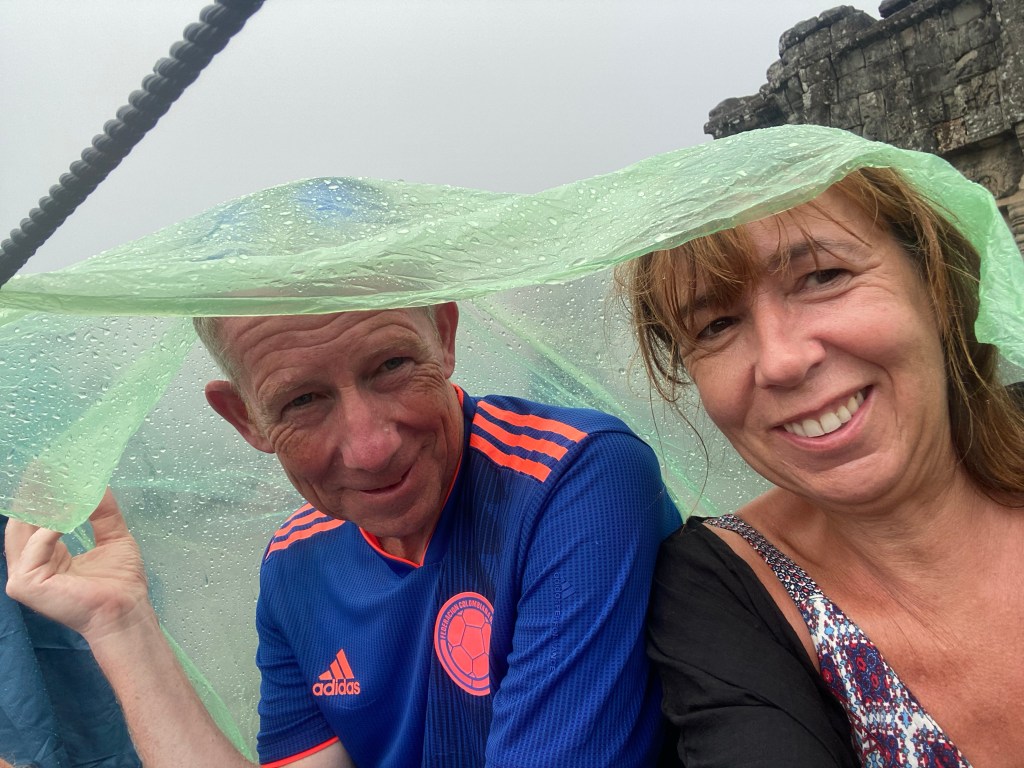
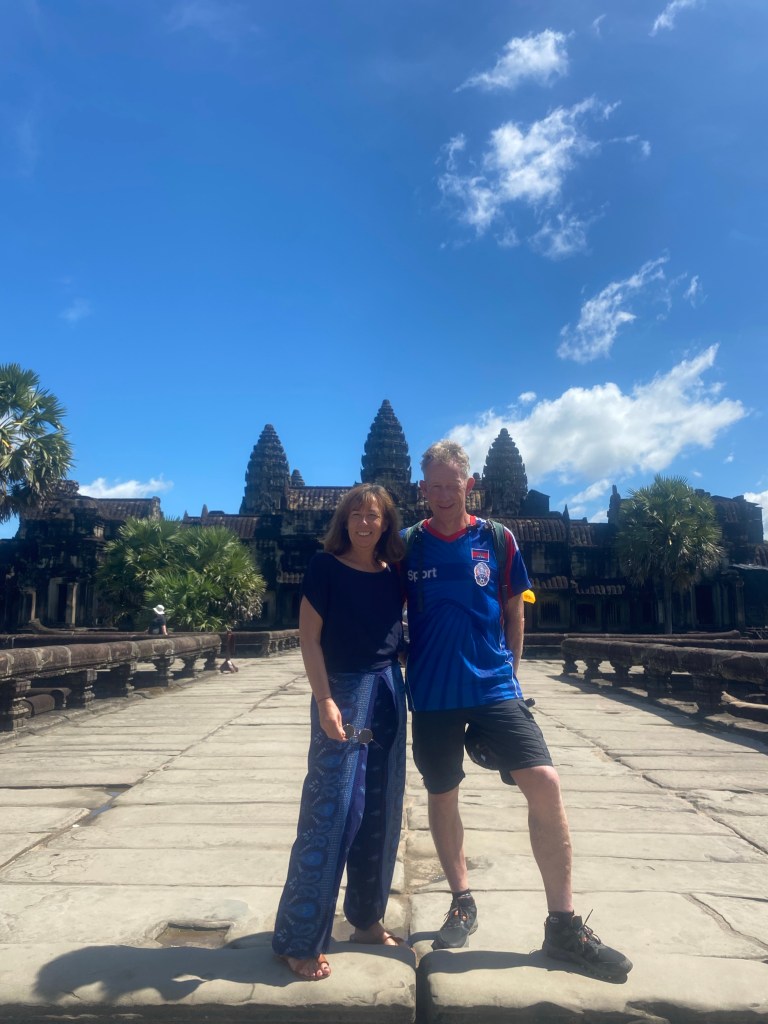
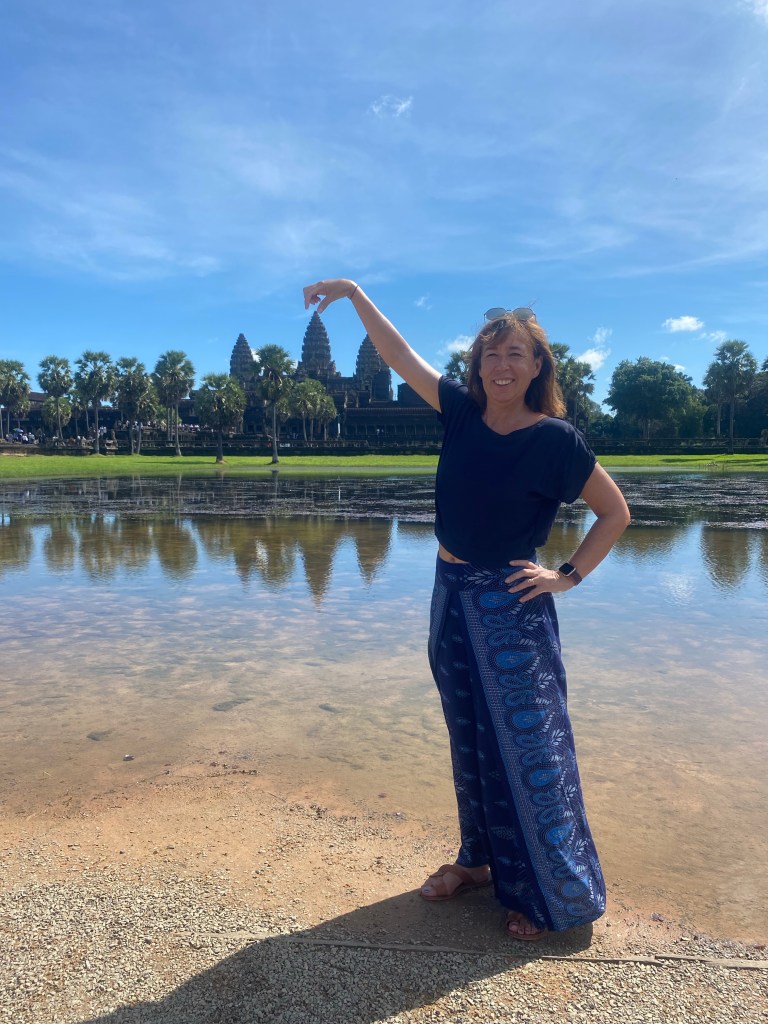
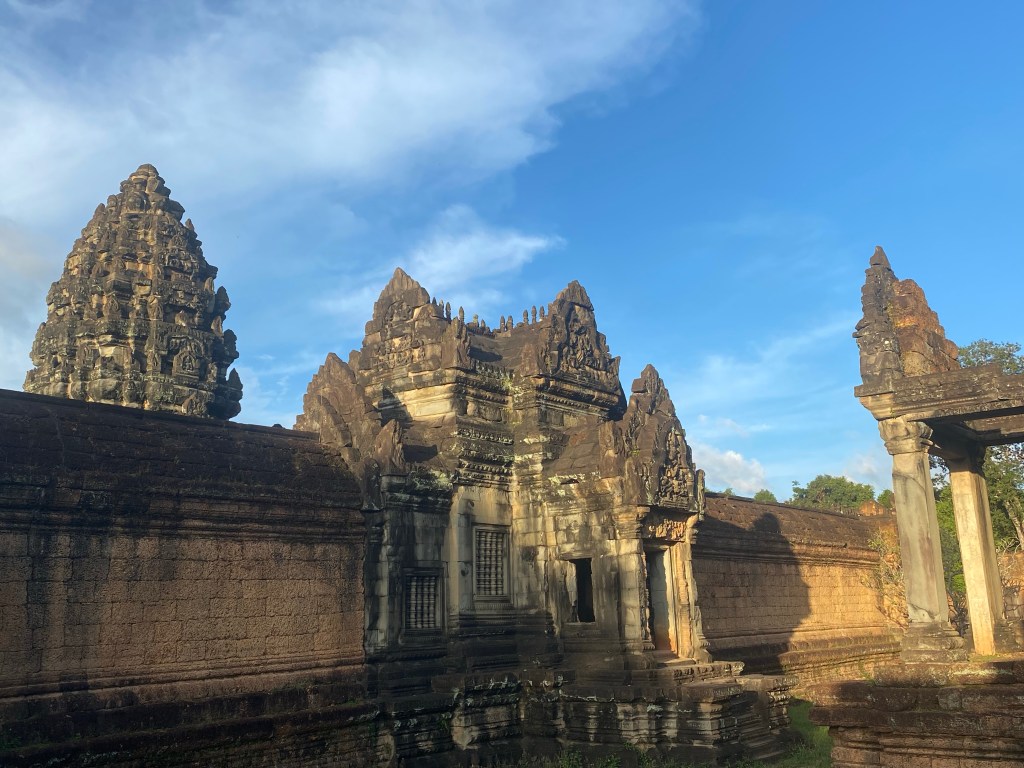
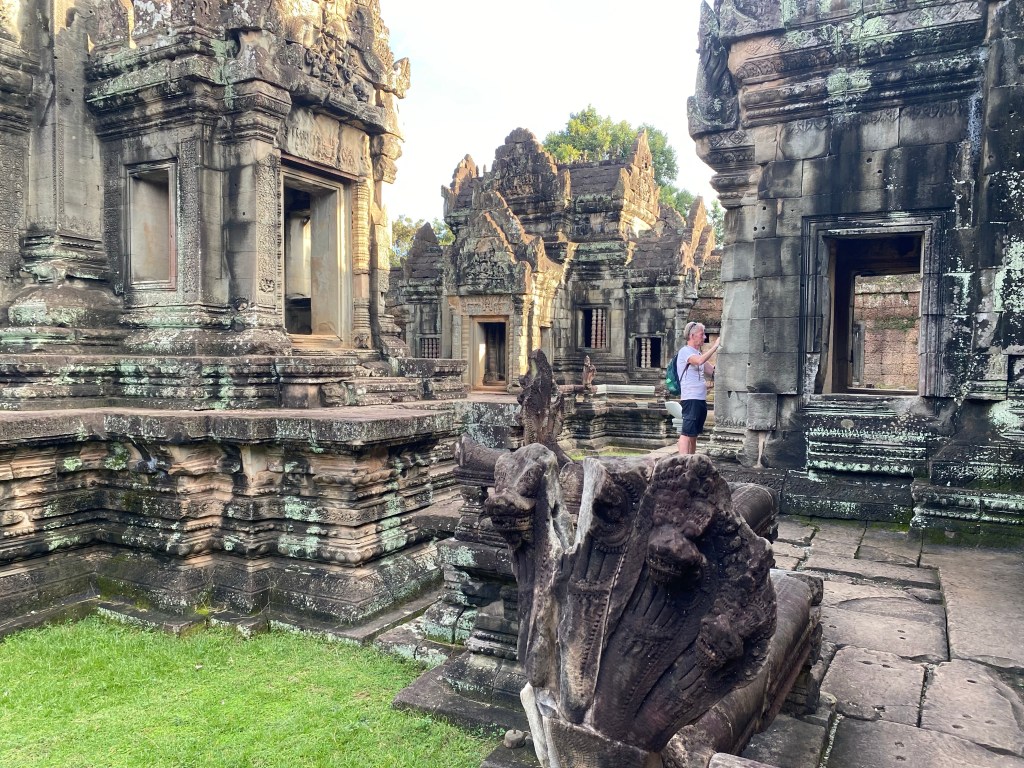
The overnight bus from the slum that is Sihoukanville (the town next to Koh Rong Sanloem) was surprisingly good with beds that were completely flat and privacy curtains as well as a pretty straight road meaning we got a fair amount of sleep. We checked into our hotel which we really liked and had a lazy day pottering about the town of Siem Reap. We organised a 7 day Angkor Pass so that we could potter about temples rather than have to have full on days with early starts for the 10 days we were there. The pass gives you a month to use it so really good value for around £60 each. We visited the temples on 6 days; 3 days on mountain bikes, 2 days in a tuk tuk (1 with a guide on our final day when we just picked our favourite ones to learn more about) and one on a scooter to visit those that were further away along with a national park that has carvings (lingas) in the river. We decided against the sunrise over Angkor Wat with the hoards but did attempt sunset views twice which failed dismally and once in a pretty wet way.
The mountain biking was hot work especially with the putting on and off of clothes for the temples for me (shoulders and knees must be covered). I had a dress which I popped over the top of my shorts and top each time- ok first thing but by 3 o’clock this wasn’t a pleasant experience😂! The breeze was good though and cycling through the countryside was fun. So many people waved at us and shouted hello- we think they must have been laughing at the mad farang cycling in the 35 degree (but feels like 44) heat. We had seen some temples previously on a quick trip with Euan and Kate in 2019 but even when visiting for a third time with the guide we saw different amazing sights. There is so much detail and beauty there, that it’s hard to see everything in both the Buddhist but especially the Hindu temples.
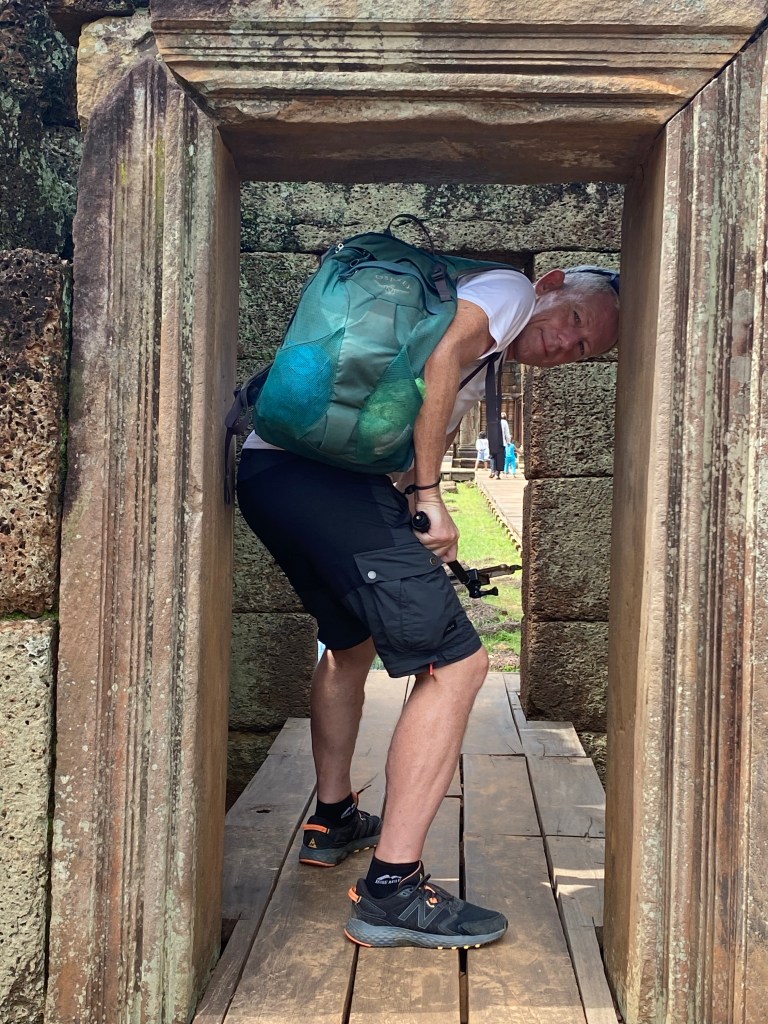
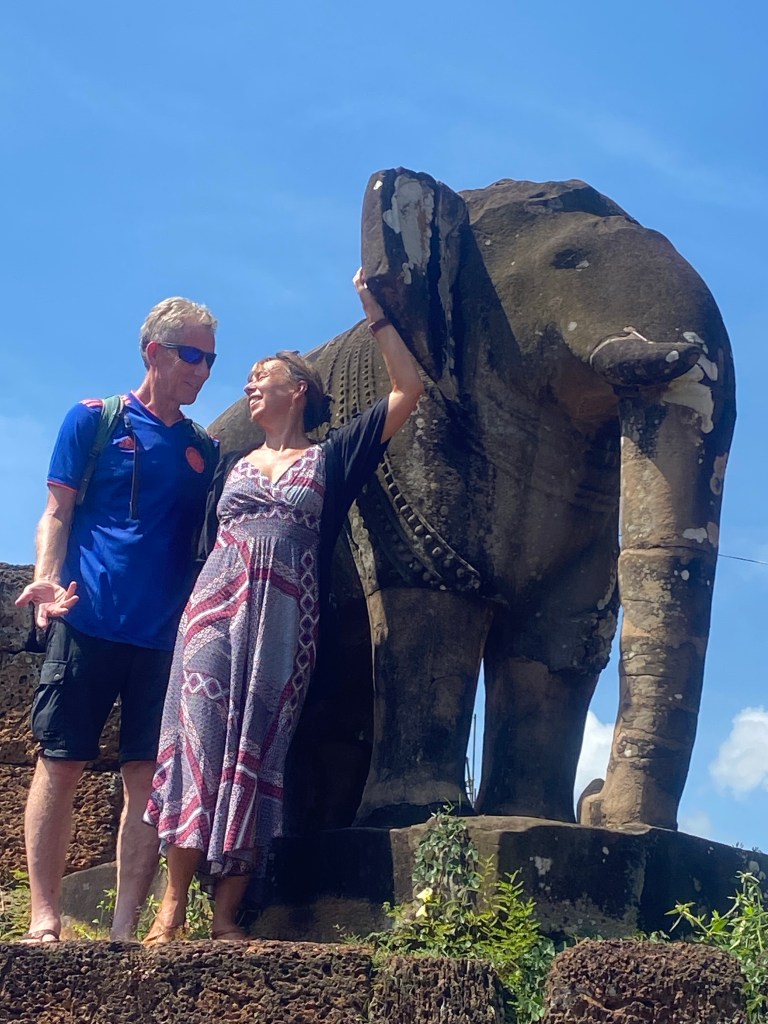
Our guide loved taking ones like these😁The grand tour temples and further out ones were much quieter. We were the only people at Banteay Samre at 4pmA mind your head moment at Banteay Srei
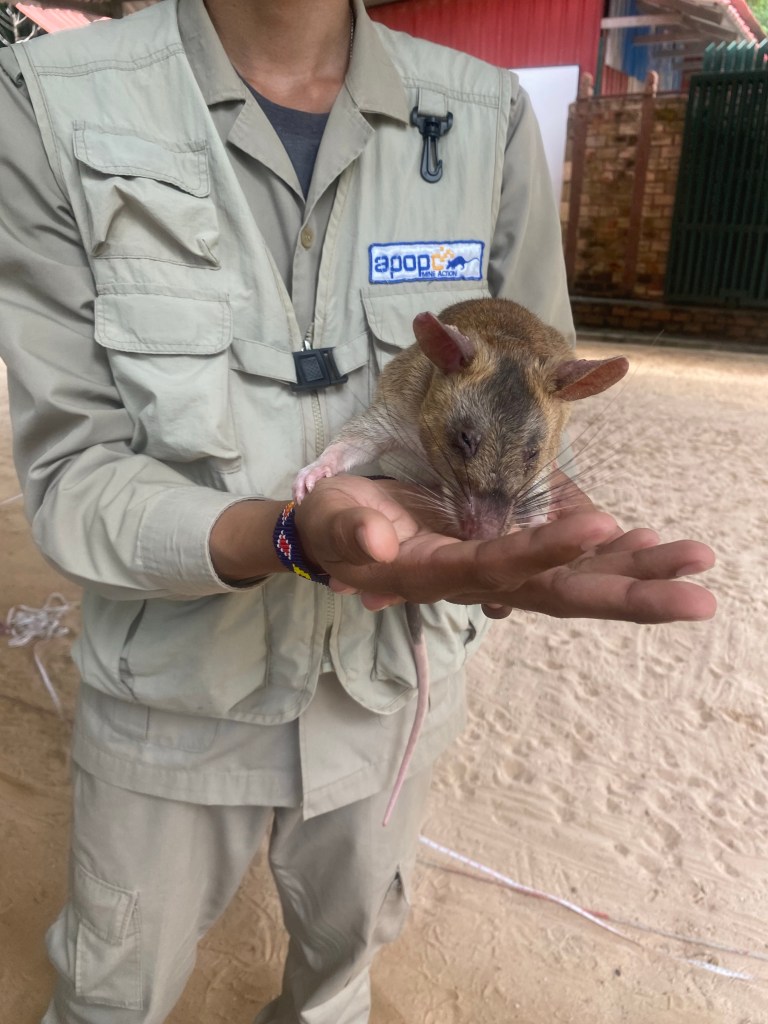
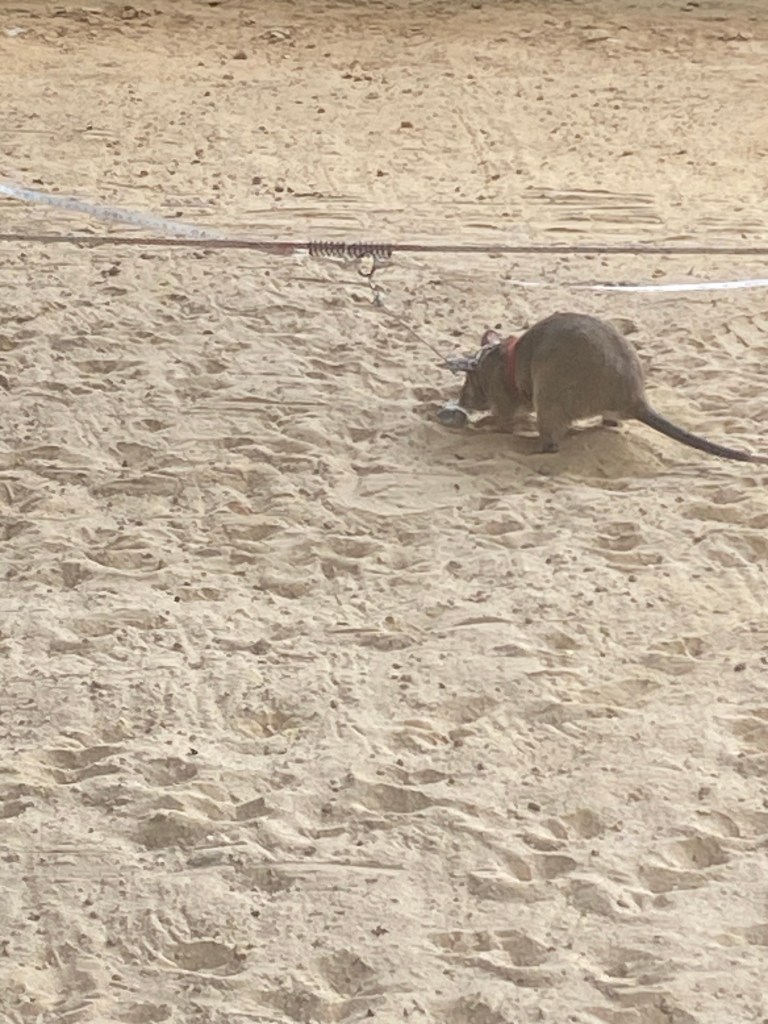
We also had a great day visiting the Apopo Humanitaian Demining centre. Having heard so many terrible stories about the land mines and war on our travels, it was so good to learn how Cambodia is moving forward to solve the situation. The female African Giant Pouched rats (they call them hero-rats) get trained in Africa, have to pass an accreditation over about a year and then get transported to Cambodia to work with a specific handler. They can search and identify land mines within an area the size of a tennis court within 90 minutes scratching in the sand when they smell the TNT but as they weigh so little they don’t set them off. They can also identify tuberculosis better than a microscopic test in a lab and are more accurate checking 100 samples in just 20 minutes. They gave a demonstration to find a mine with TNT in it and it was amazing to see Jenny ( they are all named) in action. We even got to hold one – they’re huge and feel like you’re holding a cat rather than a rat.
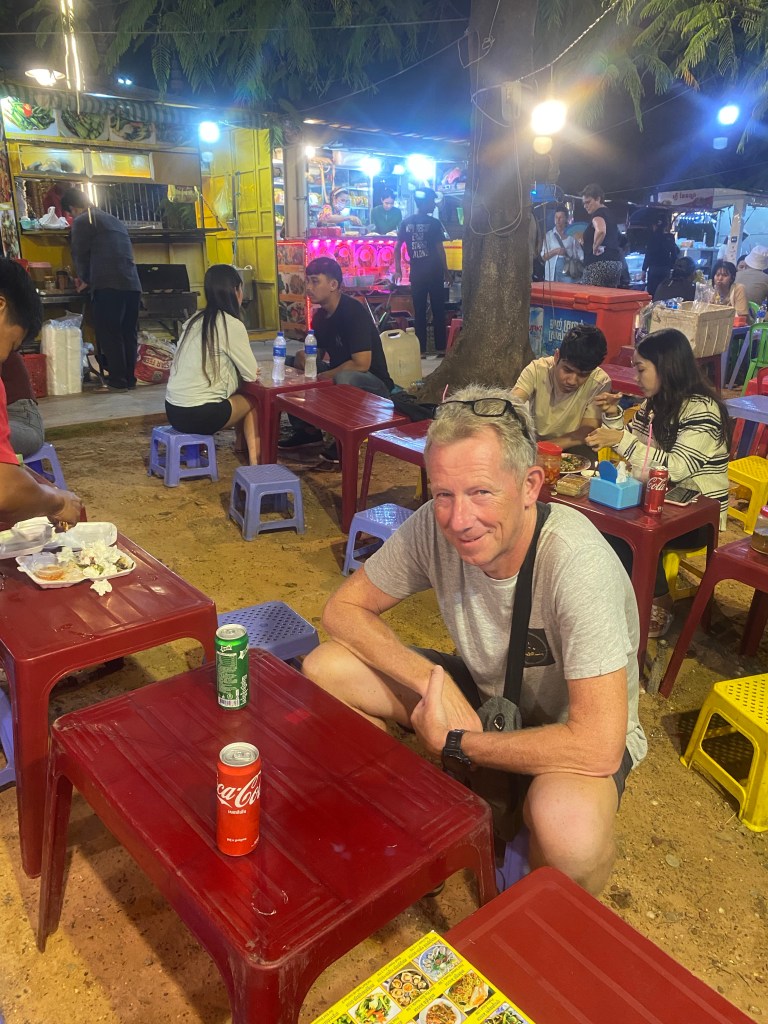
Most evenings we sat by the river to eat from the food carts there where there was a mixture of tourists and locals . The food was amazing though Callum was less than impressed with the little chairs. Made me laugh every night- he really needs to do some yoga 😂. The only part of this we didn’t like was the constant trickle of beggars, both adults and children, as we ate. People with disabilities and children constantly ask for money or for our empty cans. We have read up on this and everything says you shouldn’t give them anything as it encourages both adult begging and parents who get the children to beg rather than go to school but give to the NGOs instead. That’s all well and good but it is hard when the child looks to be 3 and appears to be alone.
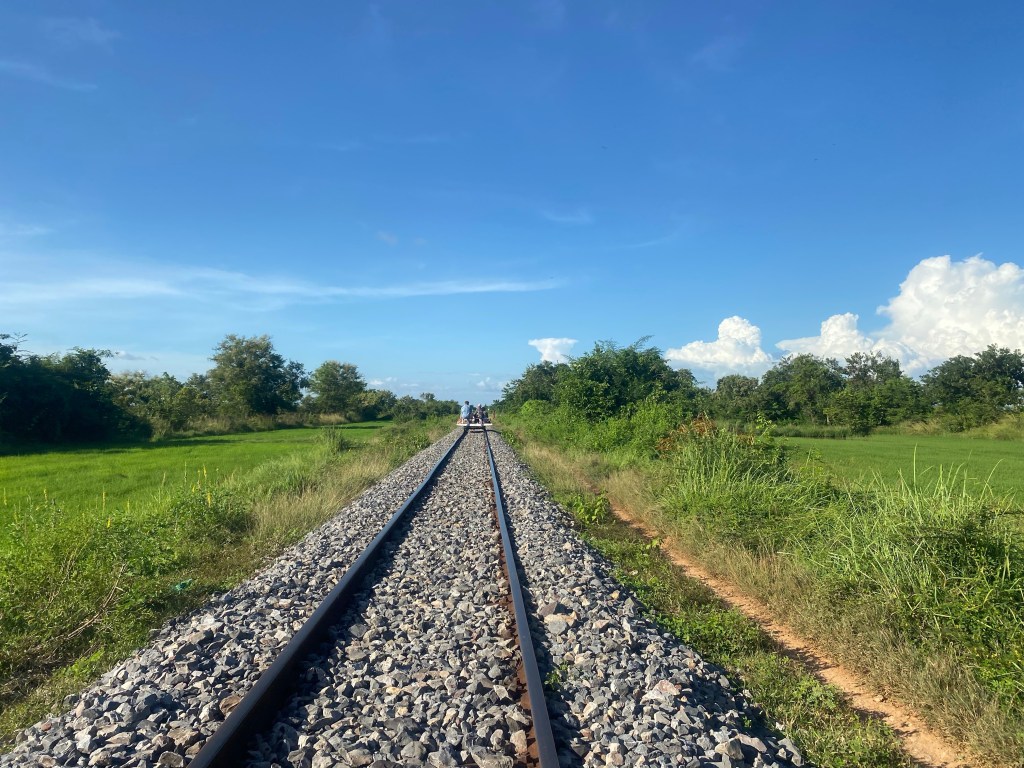
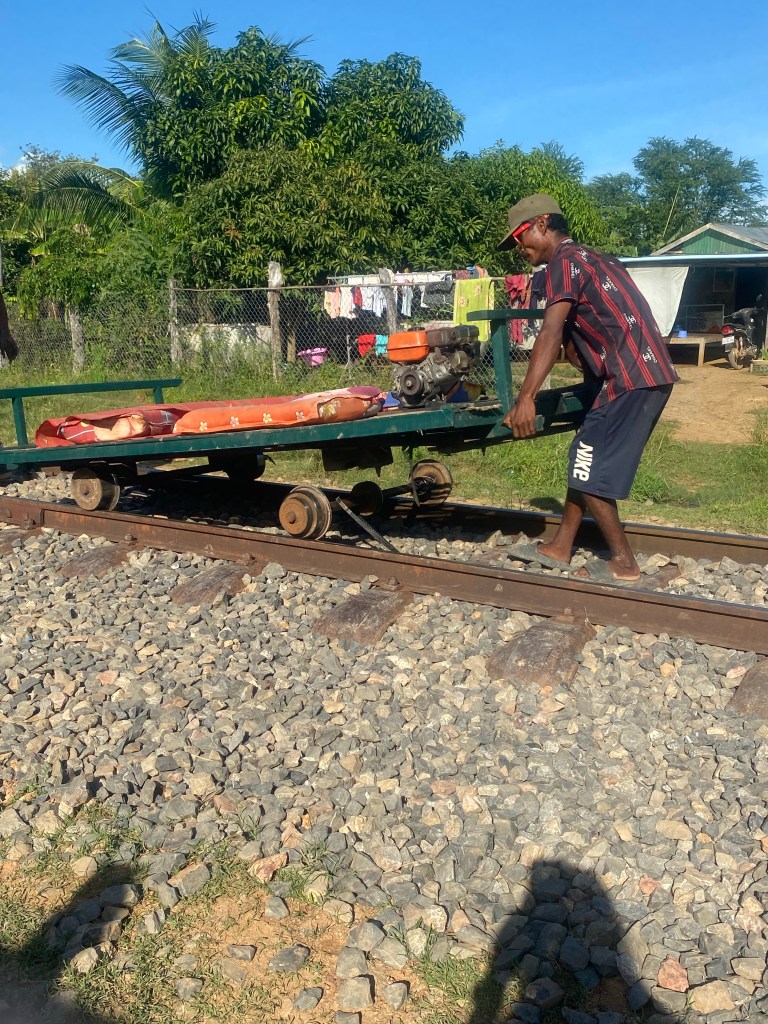
We were sorry to say goodbye to Siem Reap but our visa was running out so we had a quick trip to Battambang before heading to Thailand again.It is a small town on the river and is famous for its bamboo railway and bat caves. We used a tuk tuk as we needed to drive at night and we had a lovely tour of the countryside as well as a visit to these 2 places. The bamboo train came about because the Khmer Rouge destroyed the countryside roads and most of railway track but the villagers collected the bits of track and constructed it so that they could use left over truck wheels and fit them with a bamboo platform on top to transport their rice. This is fine except there is only one track so when a cart comes the other way they have to disassemble the wheels and put them and the platform to the side to let the other pass and then reassemble it. We did this twice in our trip. The trains move pretty quickly; 40 km/hr feels quite quick at a low height.
The bamboo trainThey were pretty quick at this.
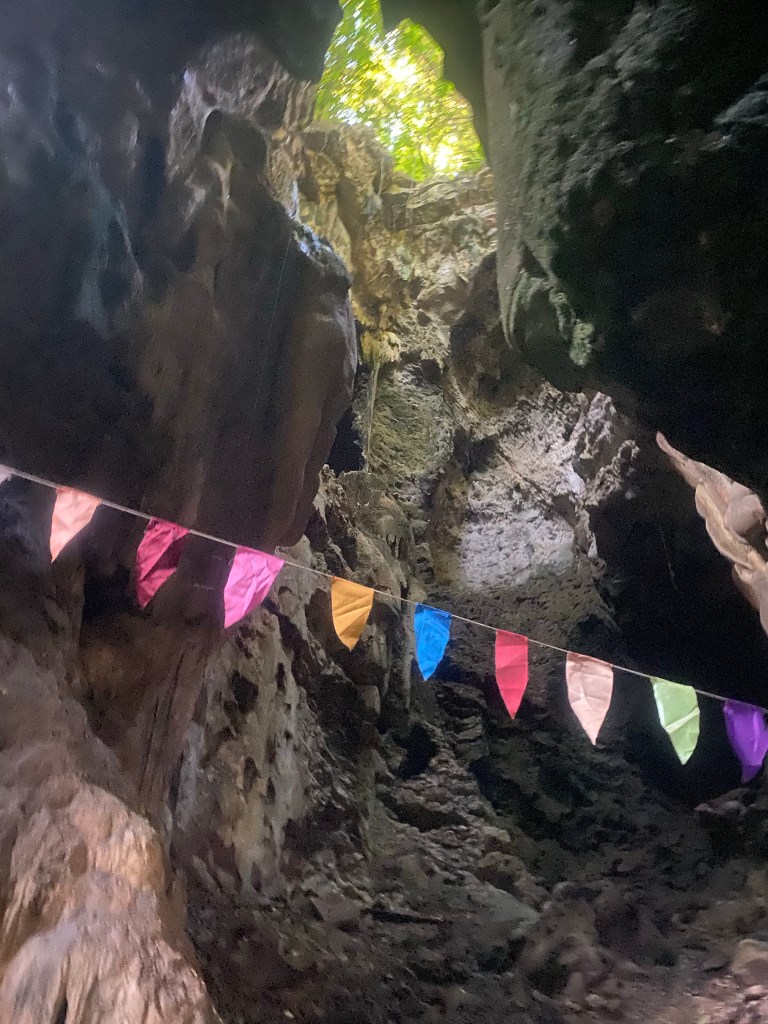
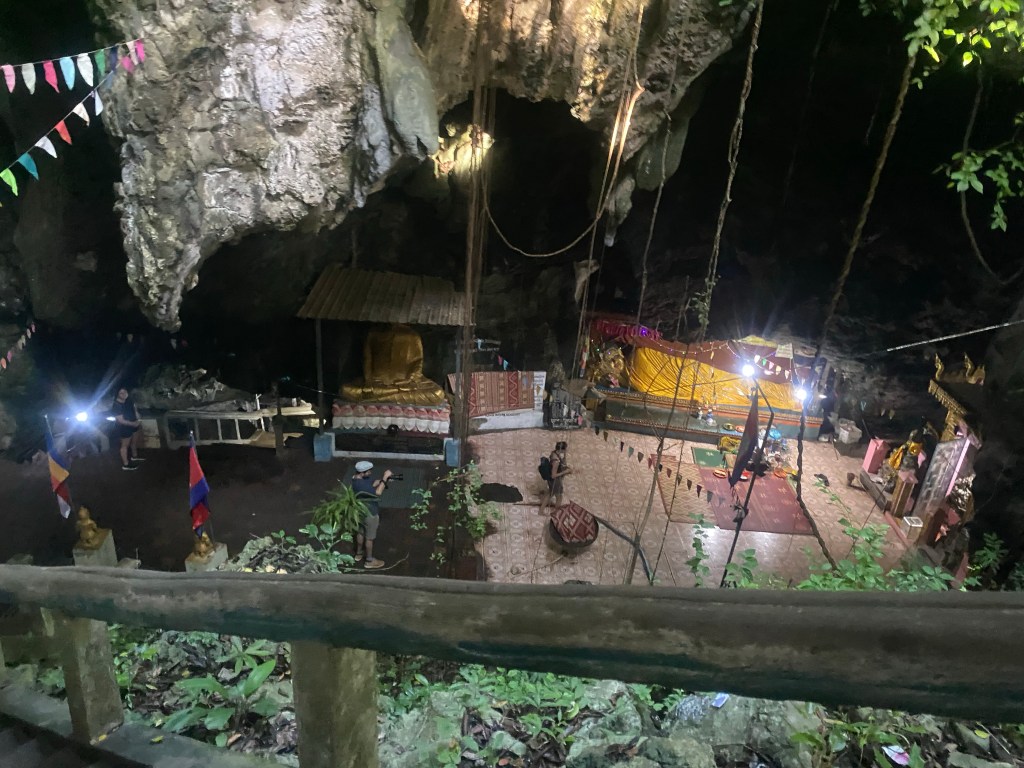
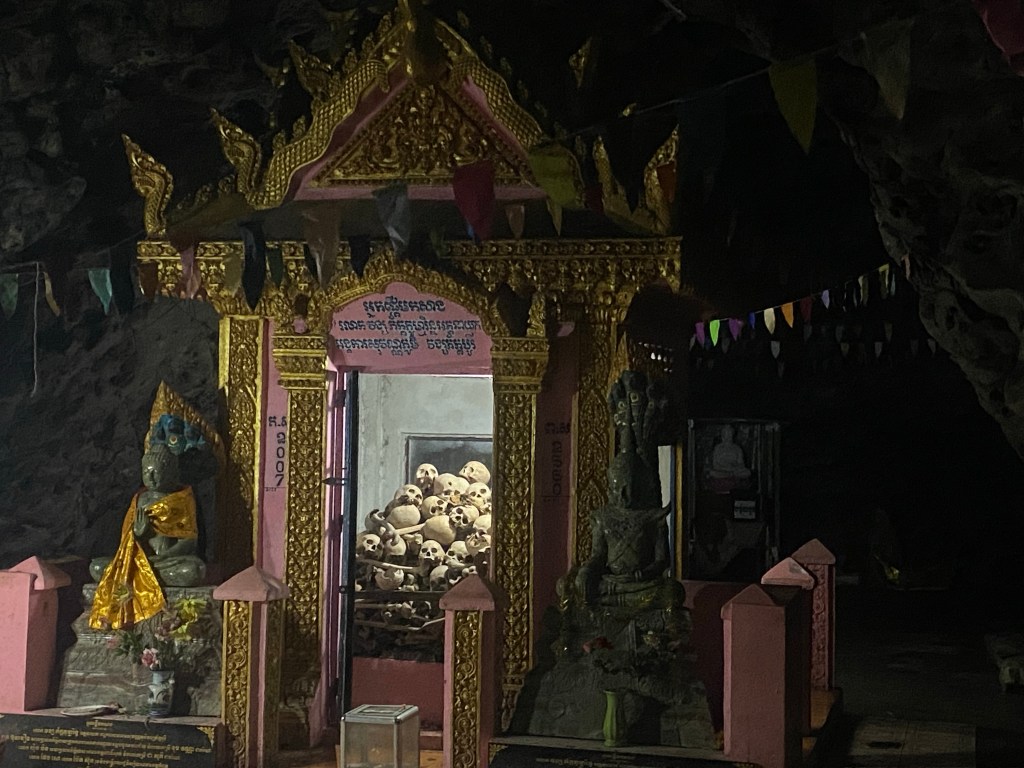
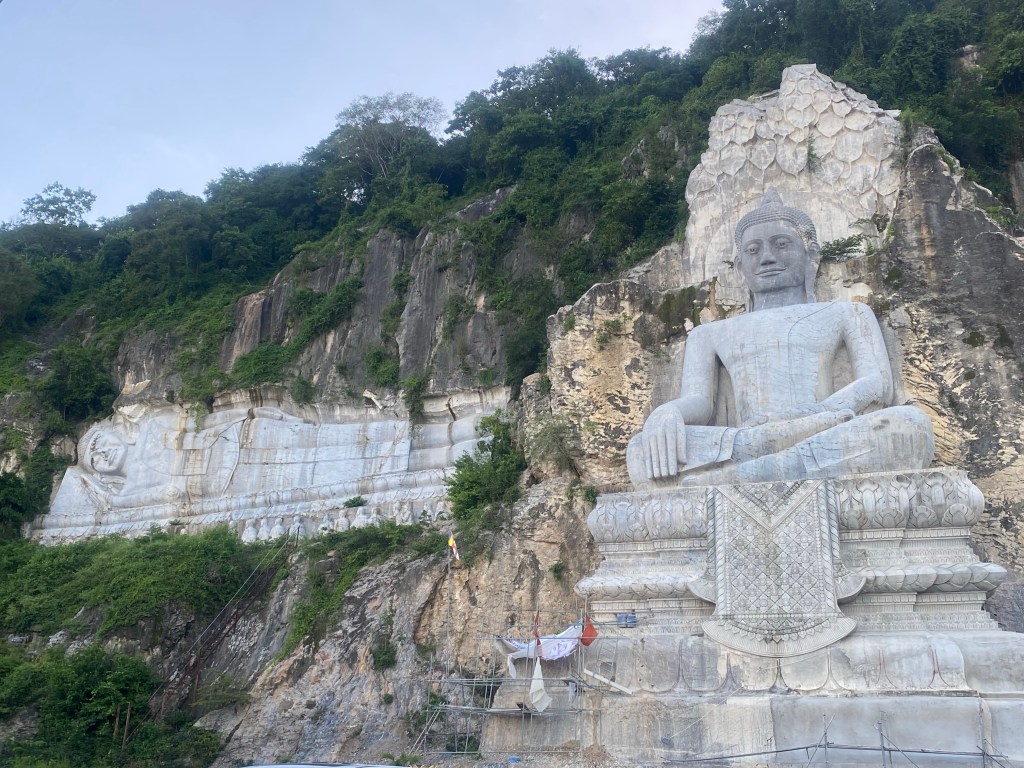
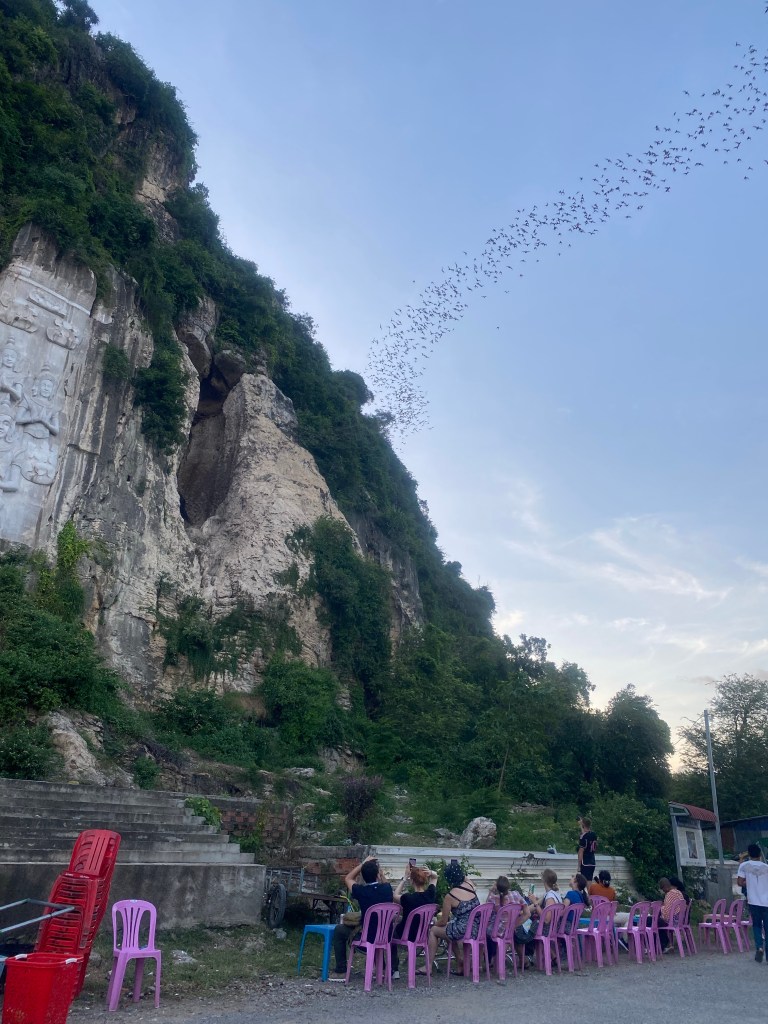
We also went to the killing cave where the Khmer Rouge used to throw people down from the top of the mountain into a cave to get rid of them. It was all pretty gruesome especially the skulls on display. While we have been here, we have been welcomed, waved and smiled at by every person we have met without exception and it is so hard to equate this with how this country brutally murdered half of its population. We recognise that tourists with money are usually given a warm welcome but even as we have cycled through local areas and not spent any money it has been the same. We’ve wondered whether their friendliness is as a result of the horror or whether it was always there. The cave now has lots of shrines within it and on its top and to front 2 huge Buddha statues and a frieze are being carved into it next to the bat cave. At 5:30 every night, millions of bats leave the cave in a huge stream which lasts for at least 15 minutes to feed on the insects over the paddy fields. It was a pretty amazing sight though they were interrupted by an idiot flying his drone, not Callum, who the French man sat next to us went to have a rather a strong word with.
One of the places people were thrown to. One of the shrines inside.Seeing rather than hearing /reading is so much more shocking.This is due to be finished in 3 years but pretty amazing already.Millions of bats weave in a line out over the fields.
We have loved Cambodia as much as our last very brief visit , have learnt so much and seen amazing sites. We’re off to Thailand next with a long day and a land border crossing and hoping for a bus not a minivan.
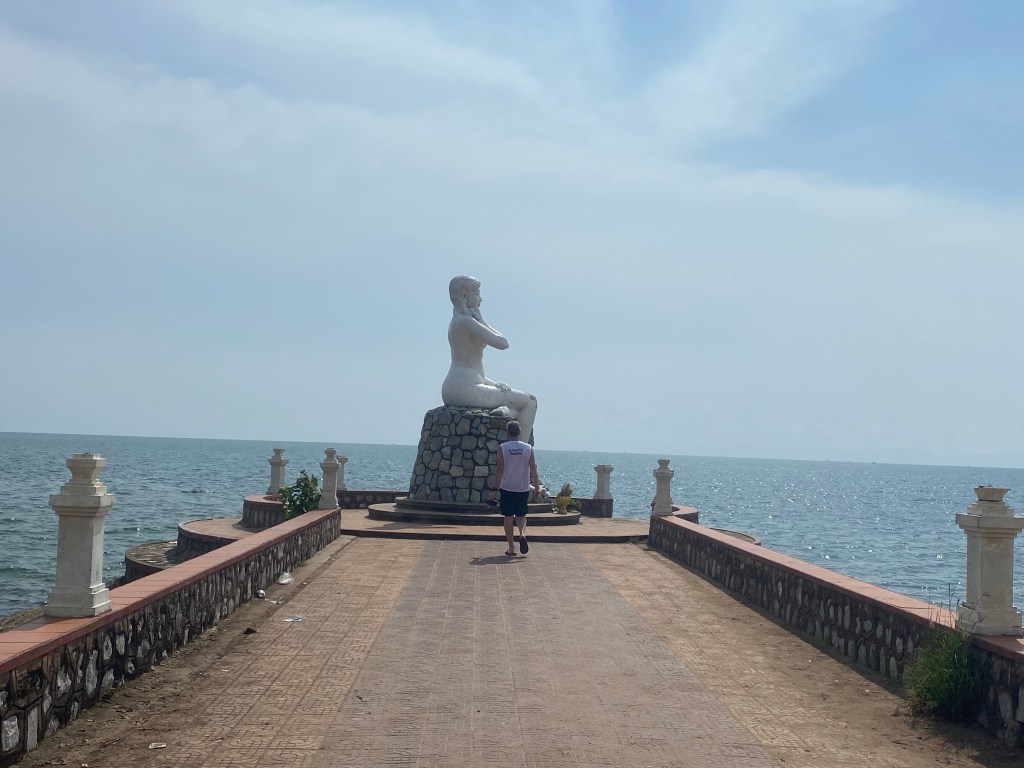
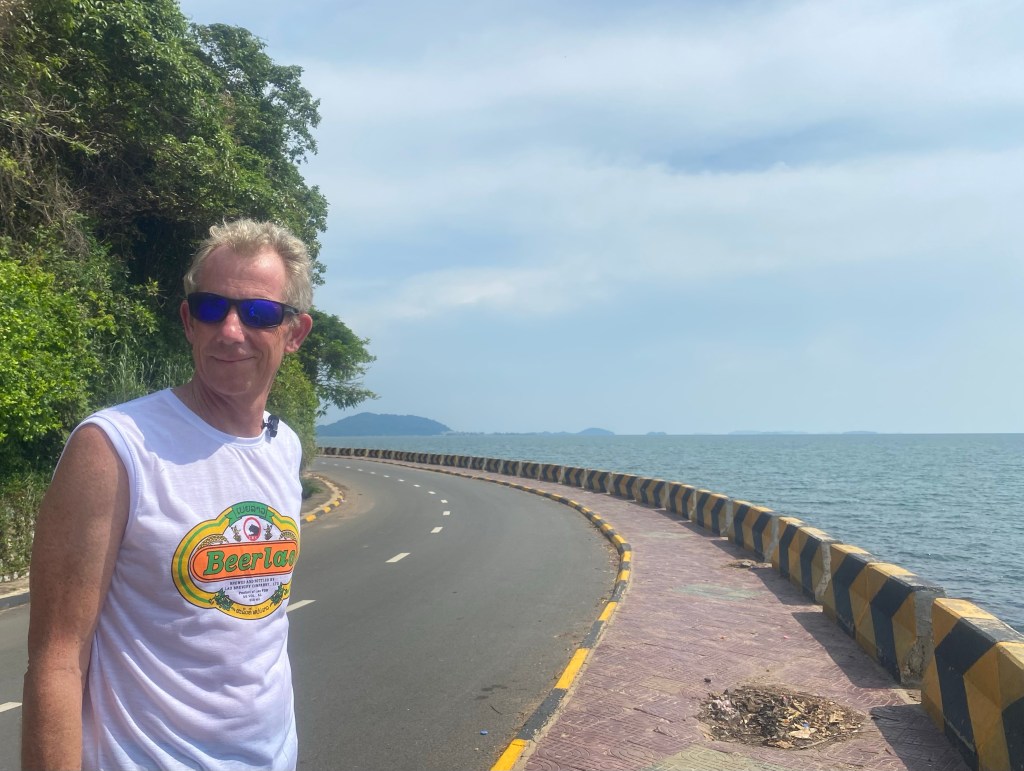
We arrived at our lovely little bungalow in Kep after a decent coach trip from Phnomh Penh where we had a half empty coach, free water and a croissant! After settling in, we set off to explore the crab market Kep is famous for. It is as smelly and chaotic as you would expect but we sat at a little bar next to it for some seafood. It was quite lovely but why do we always seem to pick the restaurant next to the one with the chainsaw or drill going full pelt as soon as we sit down? The town of Kep is a little local seaside place where we were well stared at for being what felt like the only westerners but also welcomed with big smiles when we spoke to anyone. We walked along the promenade and saw the large mermaid and a few days later the big blue crab that it’s famous for.
Mermaid looking out to sea.
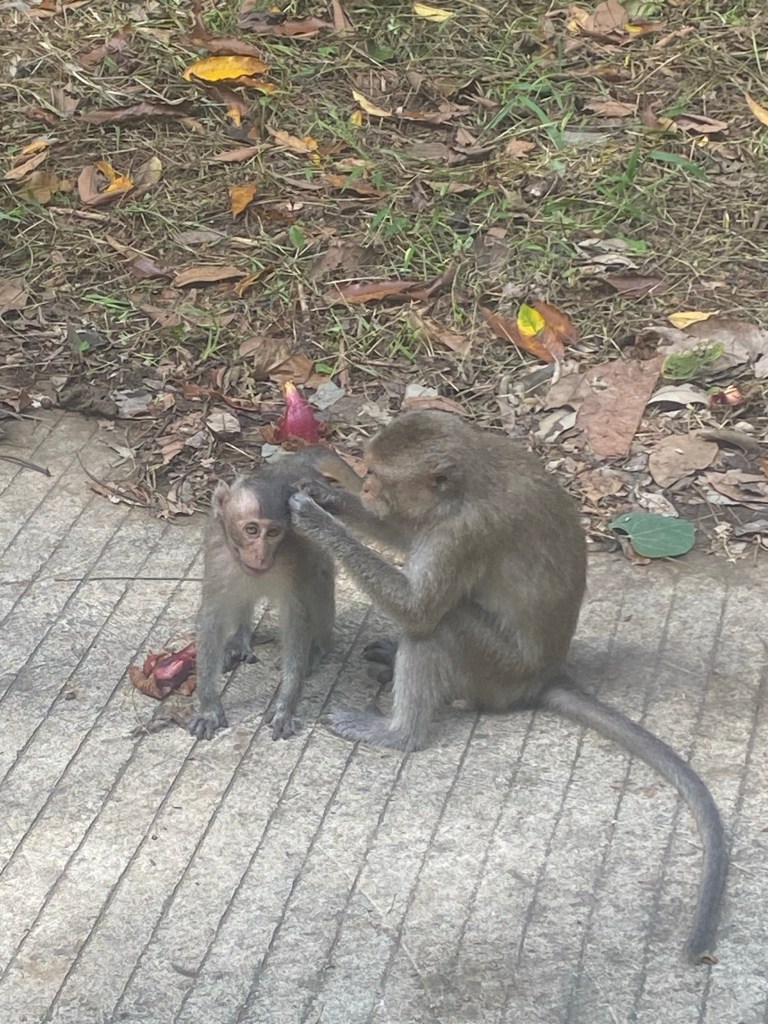
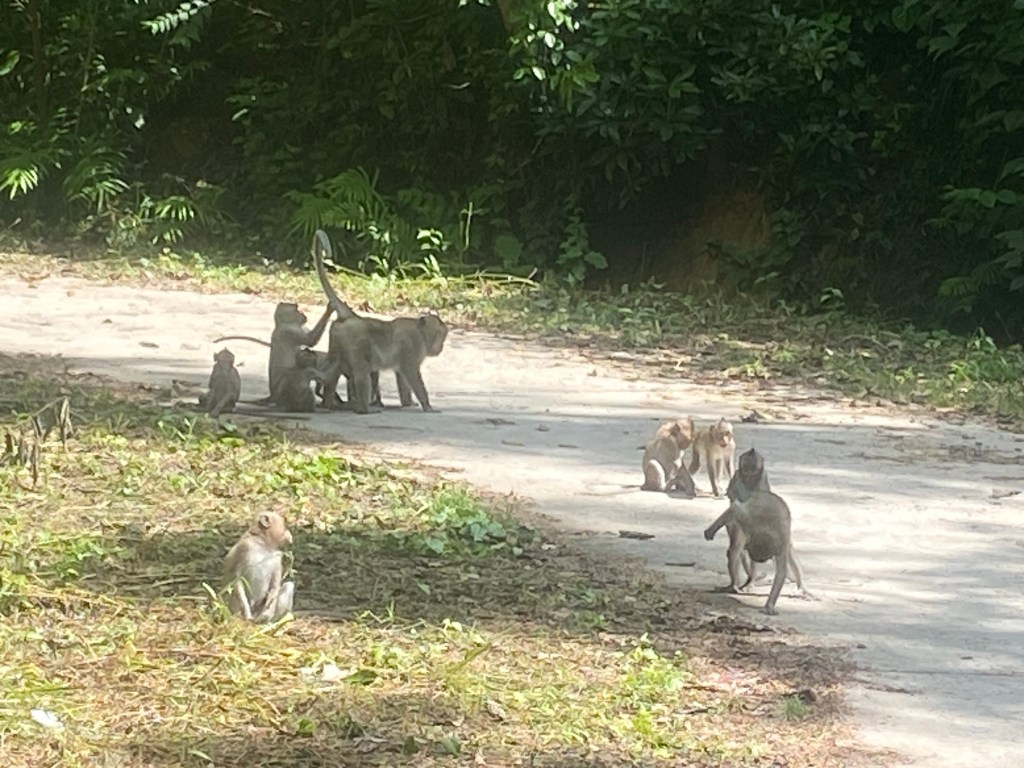
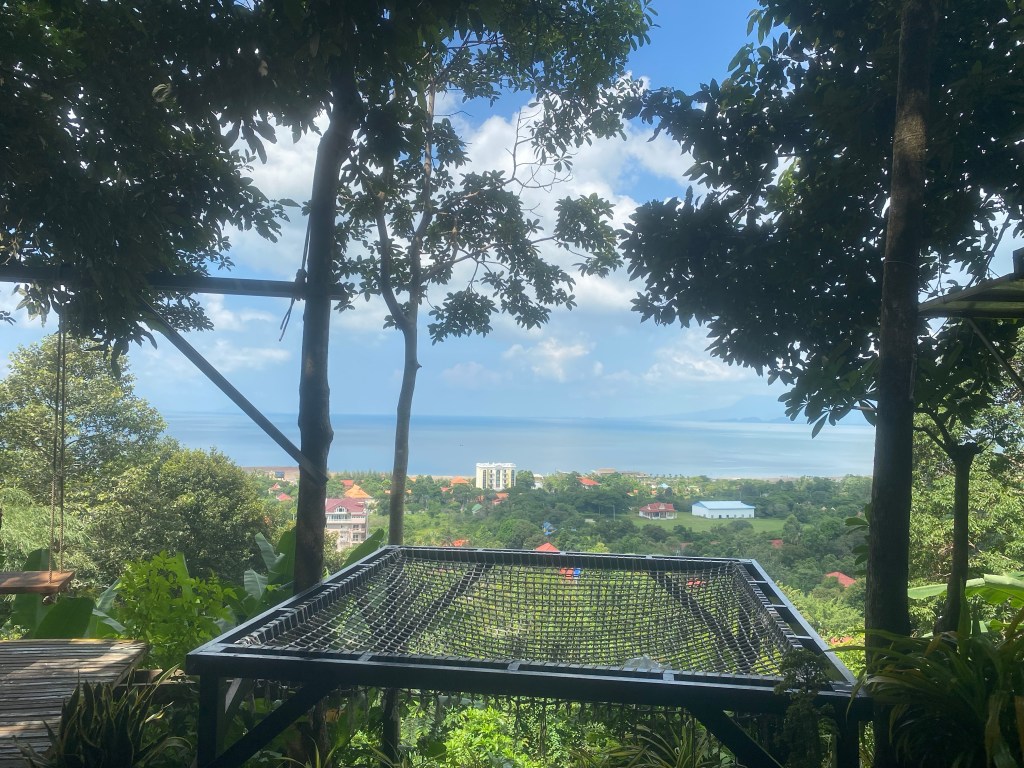
The next day, we went for a walk in the National Park just behind our accommodation. As usual, we weren’t early and so it was quite a sweaty walk but it had lovely viewpoints and monkeys to keep us amused on the way. Callum had a good play about with his drone and so felt we’d earnt a lie by the pool before another one of the many spectacular thunder storms we’ve had here.
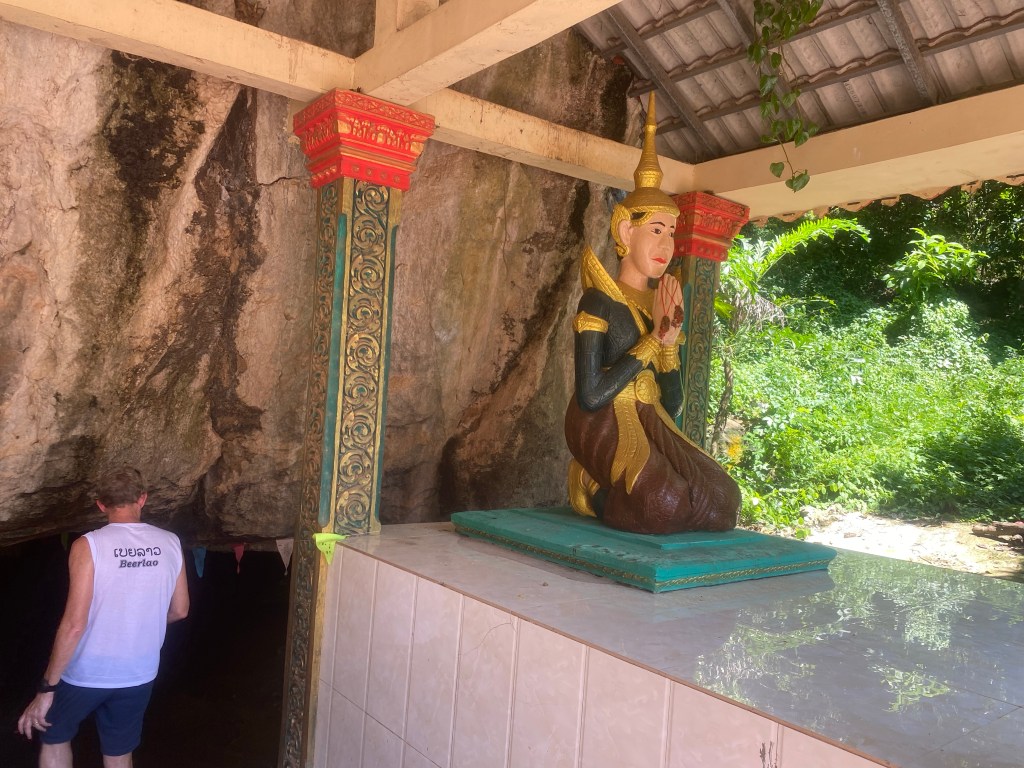
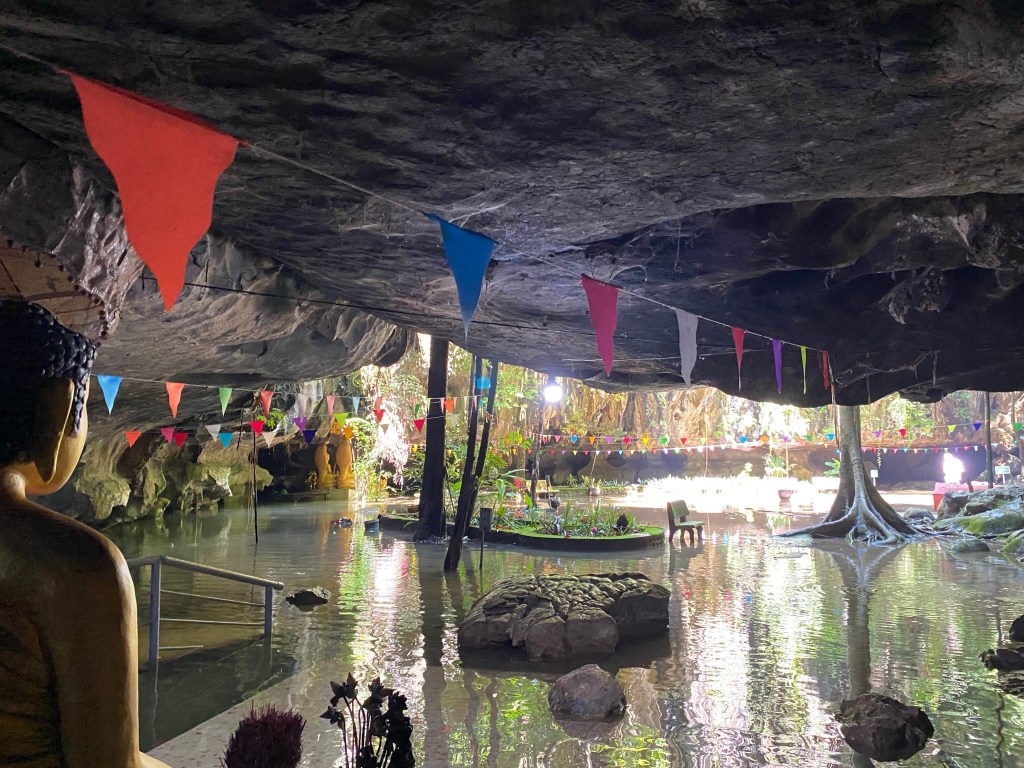
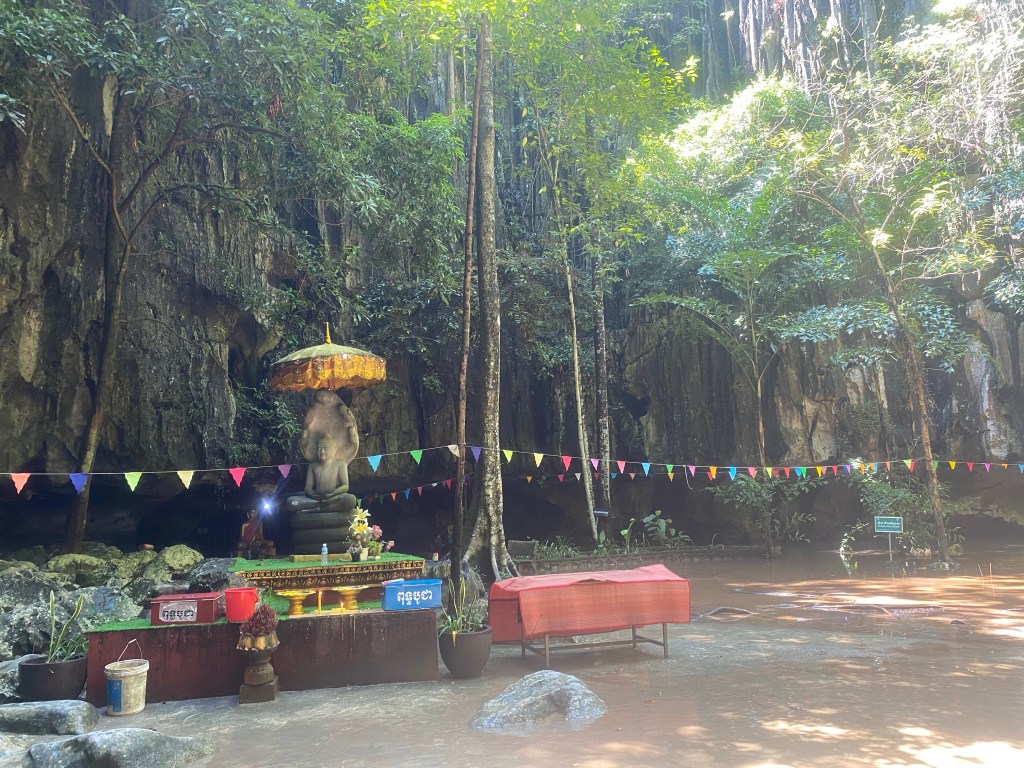
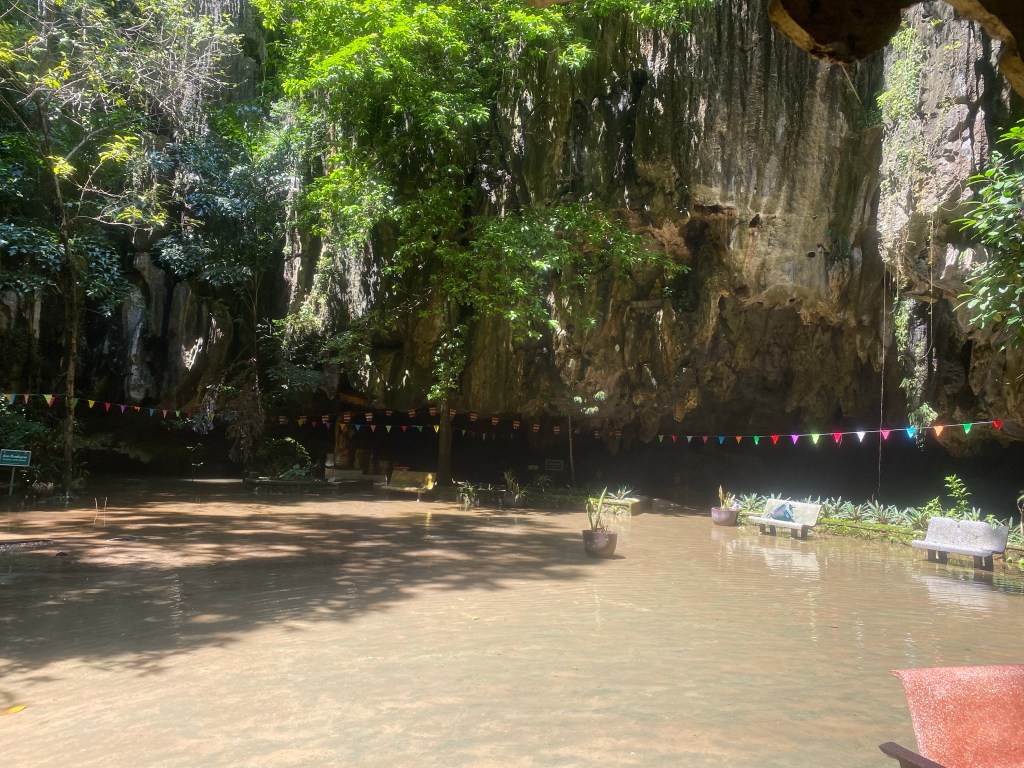
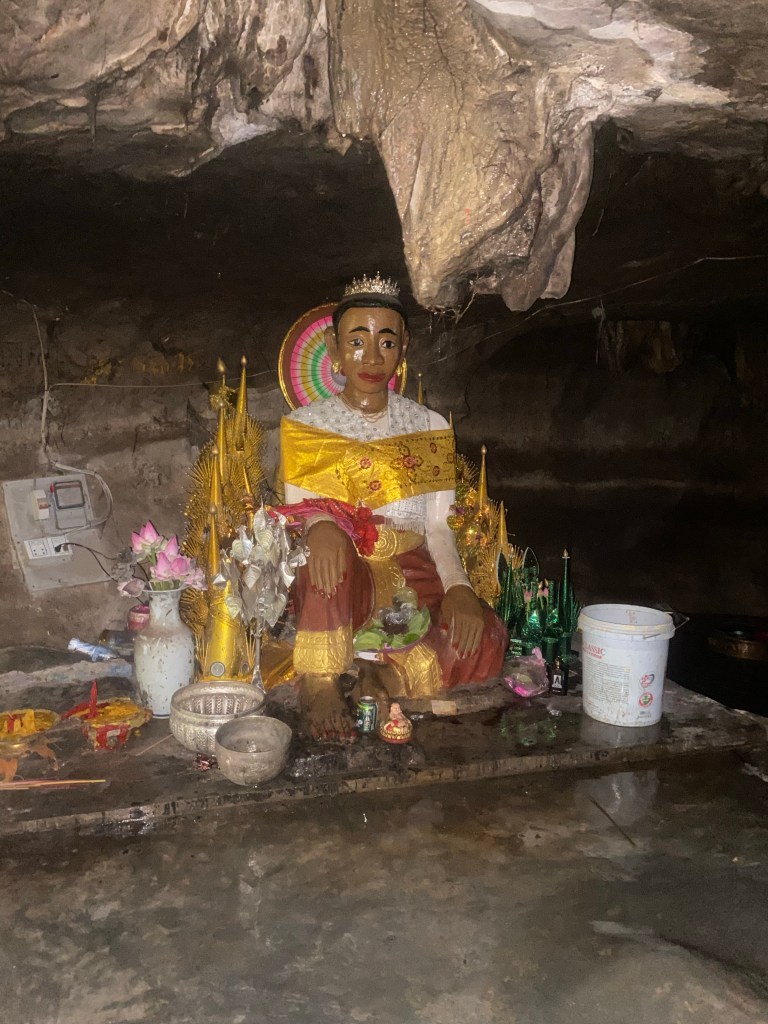
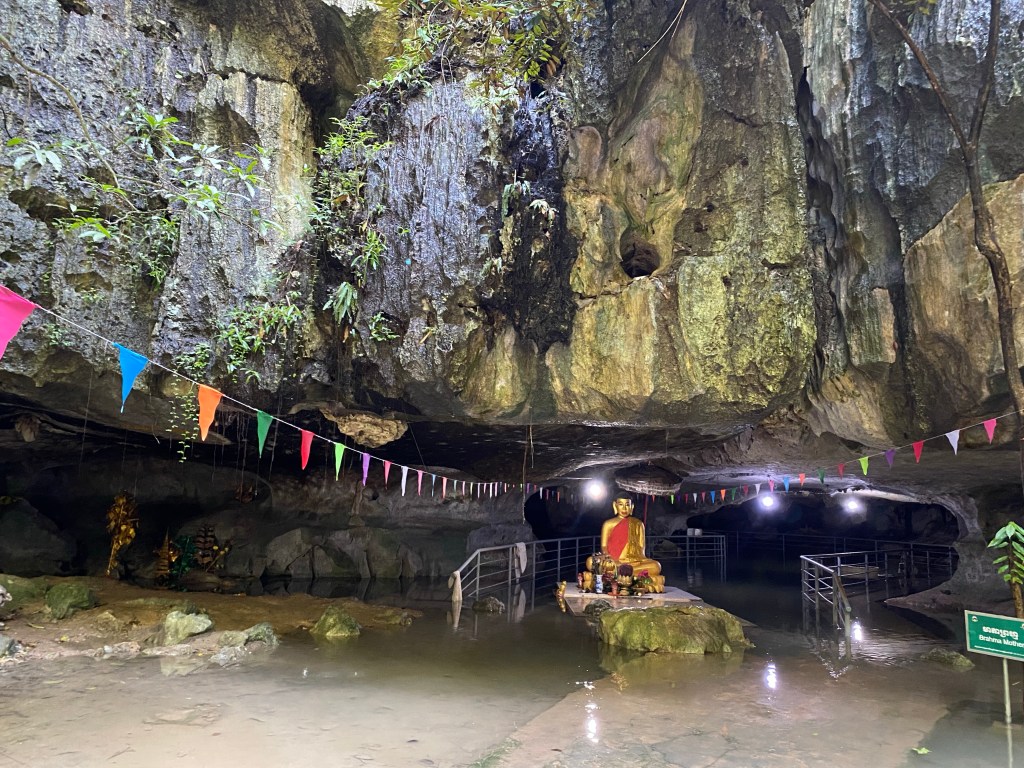
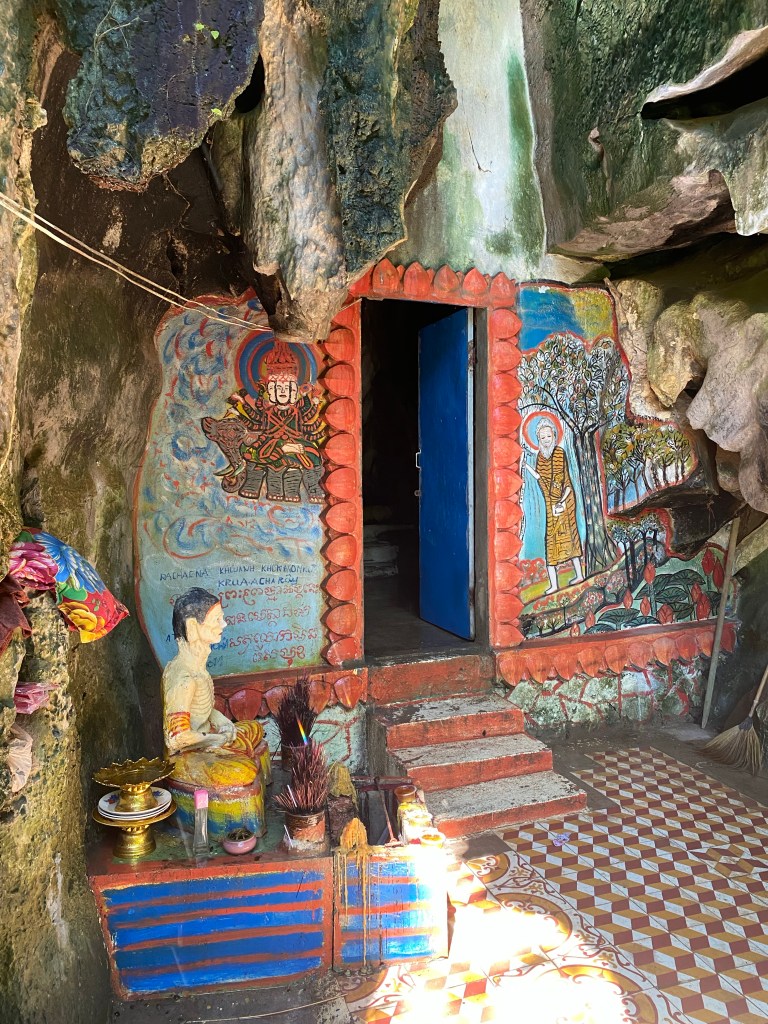
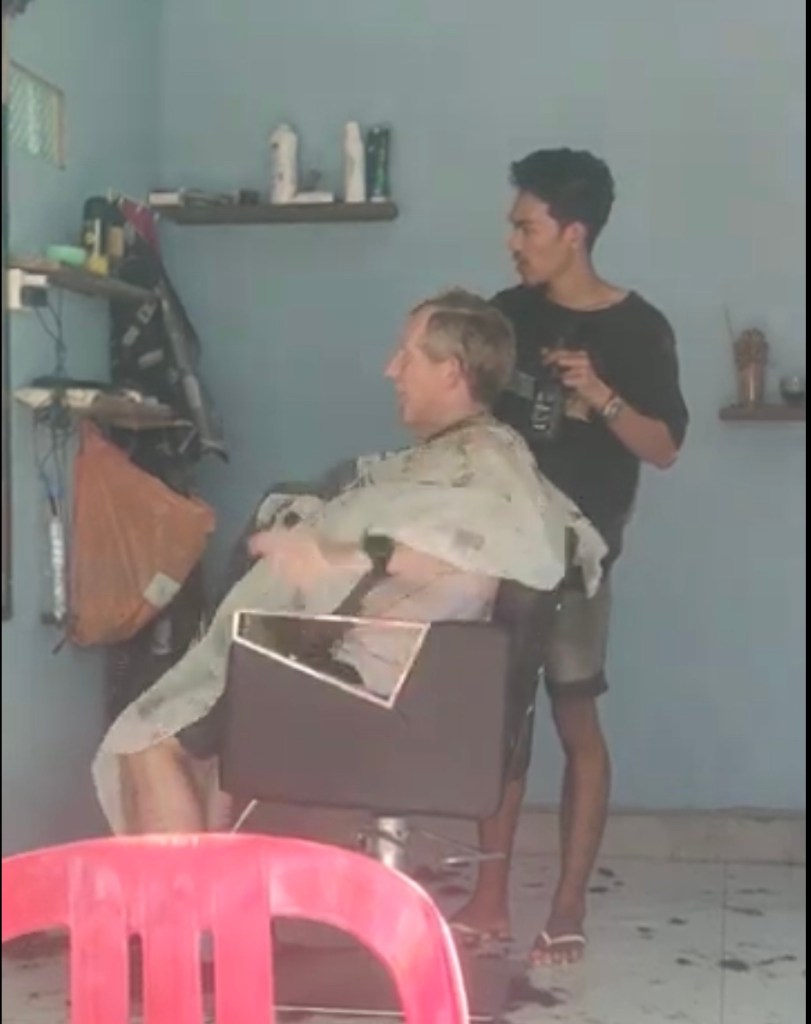
We hired another moped the following day from a nice man at the next hotel and set off for a very bumpy ride (even though we’d been told it was a good road) to see a cave. We arrived and again got well stared at and entered what looked like a very little cave. It had taken us an hour to get there and unfortunately the cave was a bit flooded. After some discussion, I took my shoes off to wade through to see if it was worth Callum doing the same. It absolutely was! It opened up to what was basically a karst mountain that the middle had fallen through and inside was a Buddhist temple. It was slightly flooded and we were the only ones there – it was spectacular and quite spiritual even for us heathens. Another highlight of the day, was Callum’s haircut. On the way we’d passed a little barber that looked clean so decided to call in on the way back . He sat confidently in the chair explaining with sign language just a little bit off all over .The young barber then pretty much scalped the side of Callum’s head . I’m not sure which of them was more scared by the shriek to stop. With the help of Google translate, we got there in the end but let’s say his hair won’t need cutting til the spring. The plus side was it was supposed to cost £1 and he even tried to refuse the tip!
Terror on both of their faces!
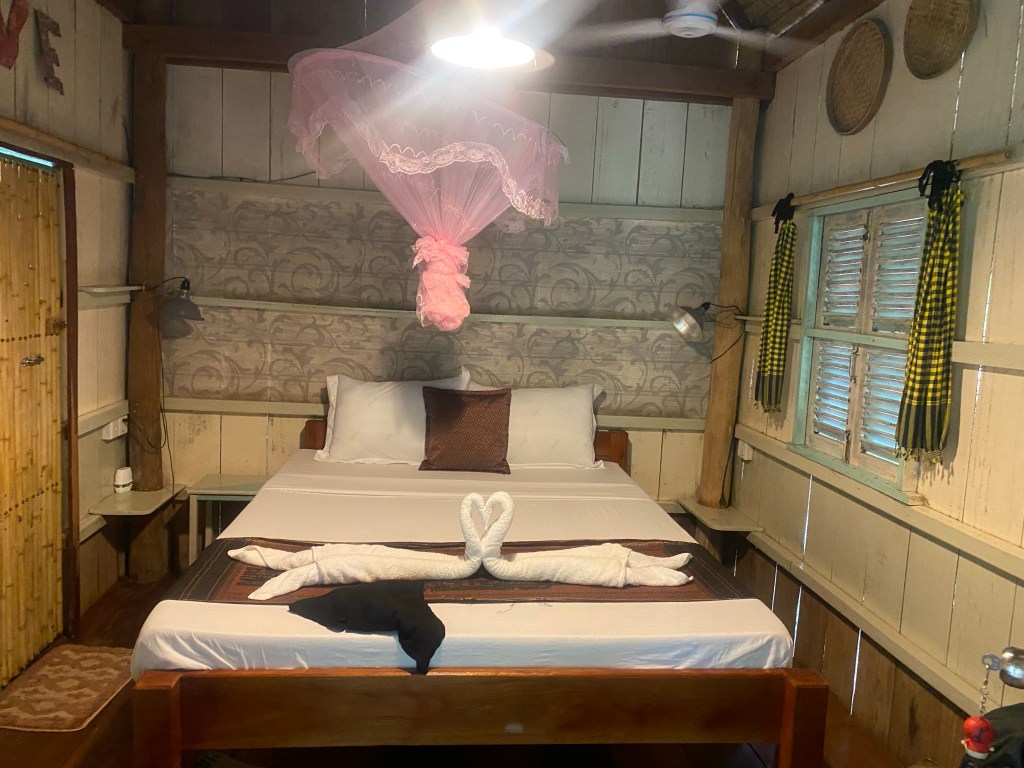
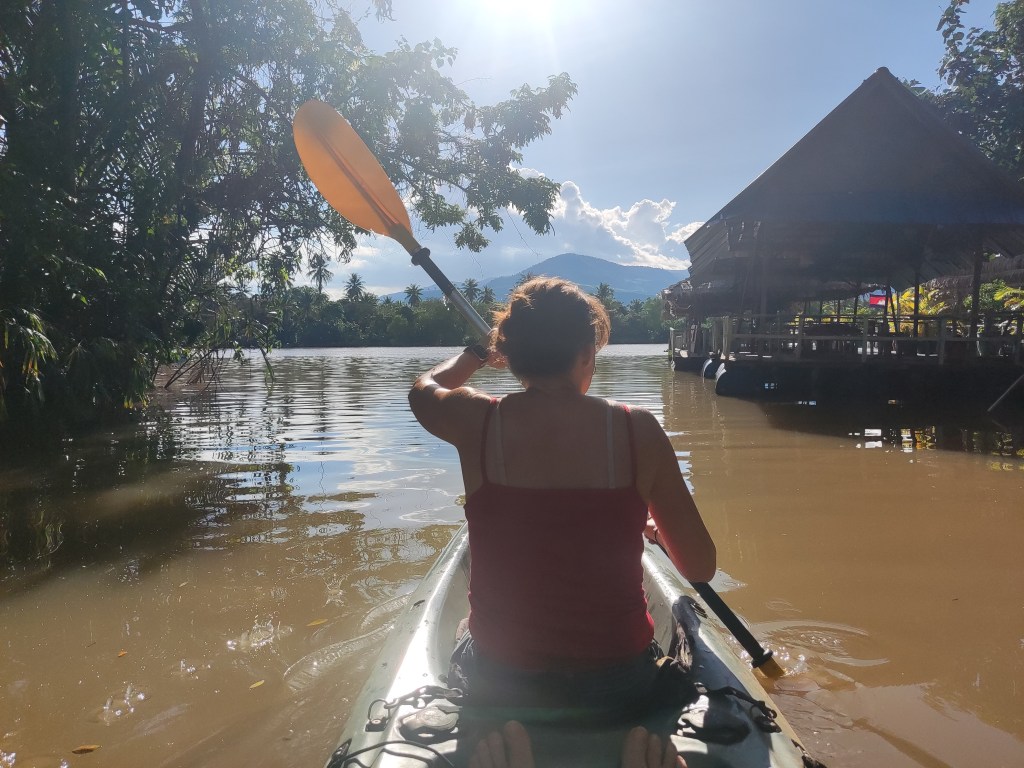
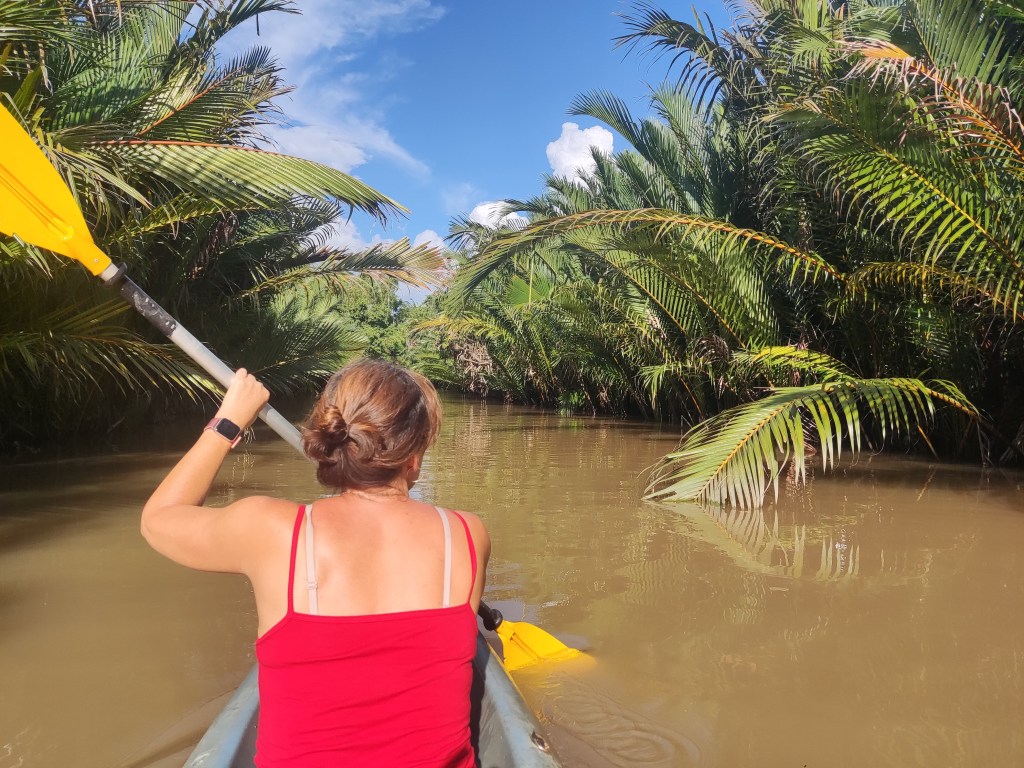
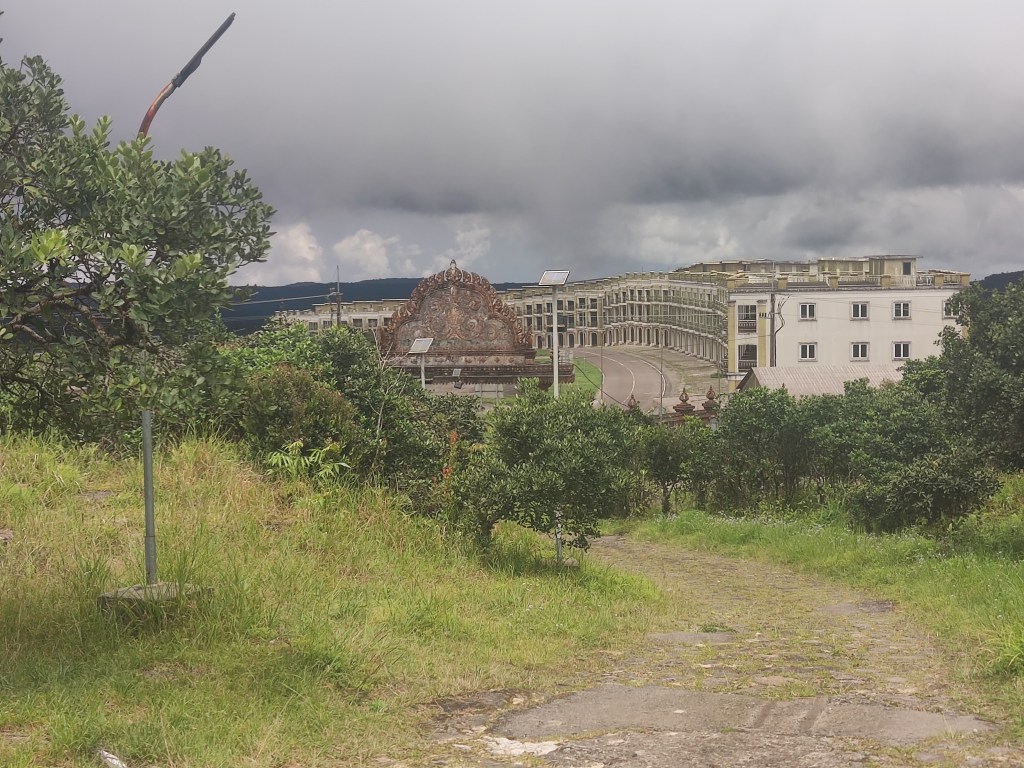
After a bit of an argument with a tuktuk driver, the next day we changed location to stay just outside Kampot, a small town on the river about 10 miles away on yet another awful road. We stayed in a basic little wooden bungalow in the mangroves with a river view. I know that sounds like mosquito hell but it was actually very quaint with very few mosquitos. We had free kayaks there and so kayaked through the mangroves just before sunset which was rather lovely. It was a small homestay accommodation and the people there were so kind bringing us homegrown fruit and water as soon as we entered the communal areas. We hired a bike and drove to an abandoned town in the mountains. It had been started by the French before Cambodia gained independence as a holiday retreat high in the mountain with a more temperate climate before being abandoned with Cambodian independence. It was gorgeous drive with very little traffic but lots of monkeys. As usual, there was a big Buddha as well as a dilapidated temple and some fabulous viewpoints but it also felt a bit like a perfect filming location for the Walking Dead. Interesting but with a slightly creepy vibe.
Many gaps for the bugs but we just had a friendly bathroom frog instead. Holding on at our cabin hanging over the water
Our lovely homestay had organised our onward travel to the island of Koh Rong Samloen. Unfortunately, that meant the minivan from hell for 3 hours. If we had known, we would have definitely taken the dilapidated train we had heard of instead. All seemed well for the first 20 minutes and then it took 2 hours to cover what had to be less than 10 km. The road (if it could even be called that) was so potholed we literally left our seats. Callum was squashed in the back holding onto the luggage and the rest of us wished we could have walked as it would have been so much quicker, cooler and more pleasant. It was eventually worth it when we arrived from our boat however and found the small island was really pretty .
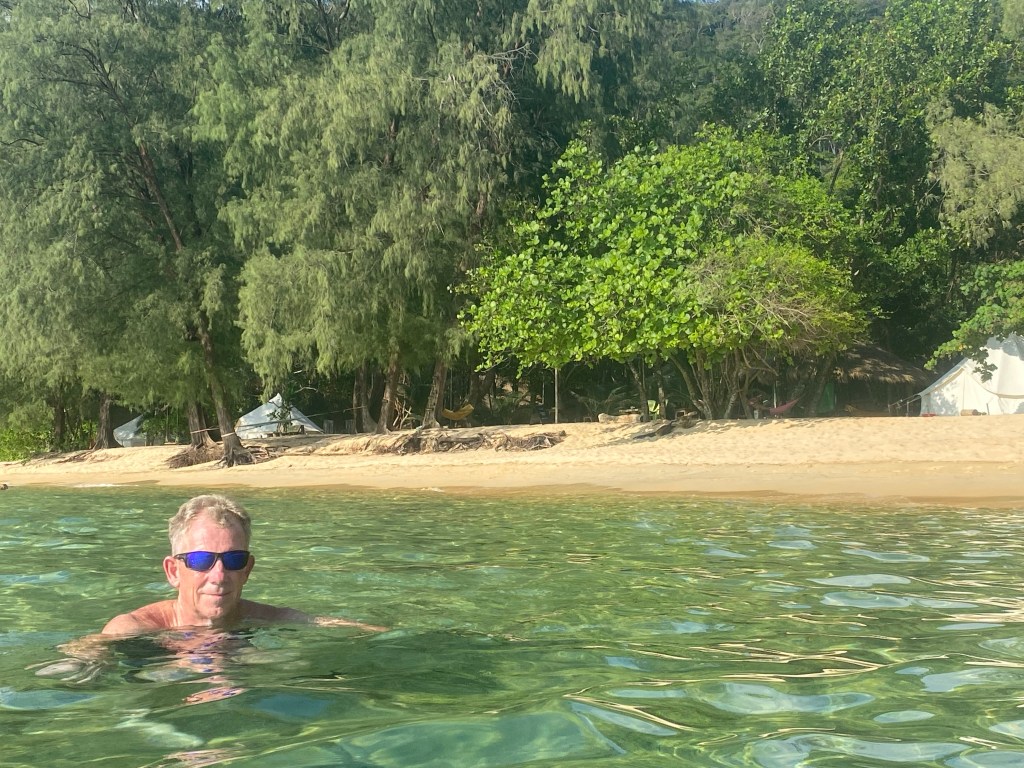
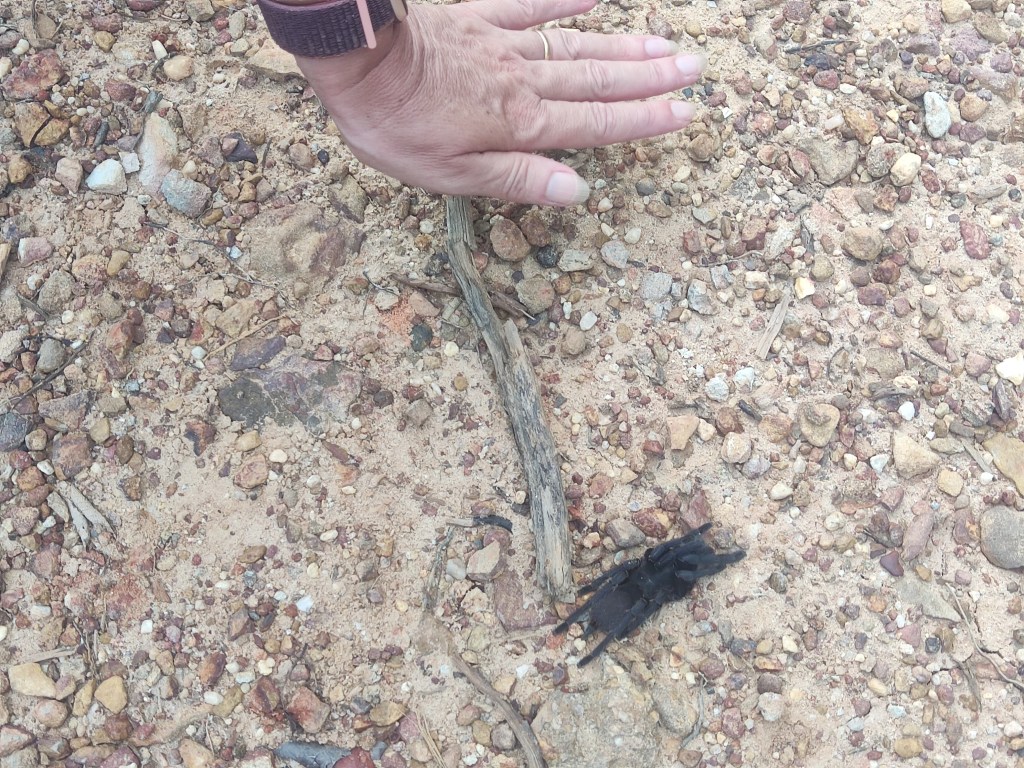
We were were staying in the main resort bit of the island as it had a pool but we also enjoyed walking across it to visit 2 other beaches that had much less development- only beach huts with intermittent electricity. Those beaches were picture perfect and didn’t have the trash that was sadly washed up onto the beach we had from the big Chinese development of Sihoukanville where our boat had come from. The island itself is already being developed and the Chinese have essentially built a dual carriage way through the middle ready for work to begin once agreements have been made locally. It was really sad to see the deforestation. On one of our walks, we also saw a huge dead tarantula on the track. Callum took a picture with my hand as reference to the size but after poking it with a stick it reared up with red fangs ready to bite. Don’t think either of us have ever moved so fast!
Sunset beach Lazing on Lazy Beach A very much alive with large red fangs.
We went off on a boat trip whilst we were on the island too. We snorkelled in water with bright green coral which we’d never seen before and then fished catching some of the fish we’d just swum with ☹️. Callum caught 6 to my 1. We went to a viewpoint for sunset with beers we’d won by catching our fish and had lovely chats with our fellow fishers. We then swam with the bio luminescent plankton. Having never done this before, we didn’t know really what to expect but we got into the water with warnings not go too far from the boat. They turned off all the lights and we swam in the pitch black. As we moved, it was like there was gold dust all around us – the more we moved, the more the plankton sparkled. It really was very special.
A 10 hour night bus is next all the way to Siem Reap. Fingers crossed the roads are better than our last experience!
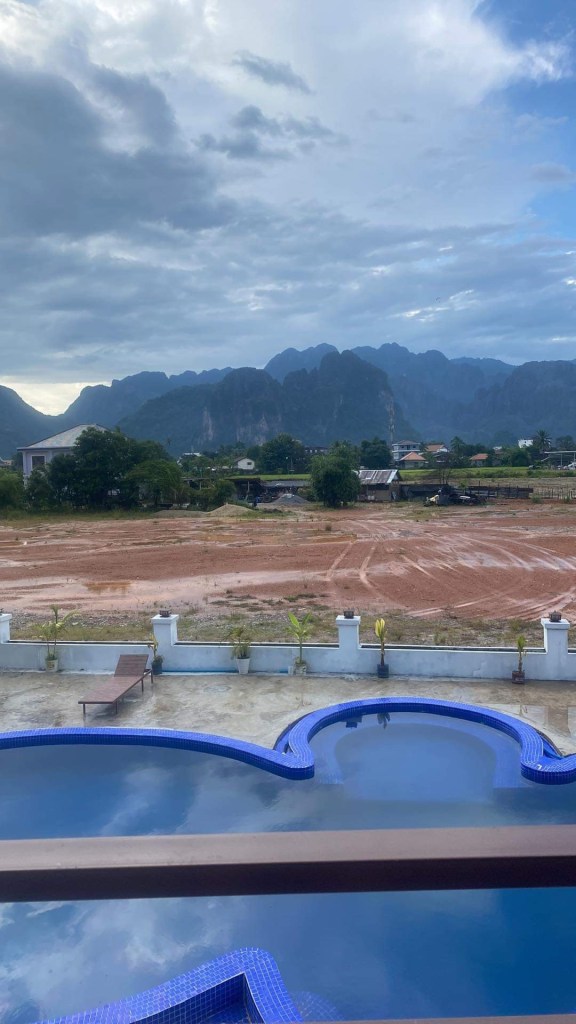
Our journey on the Chinese bullet train was as expected: efficient airport style security (Callum had to give up his deodorant which was somewhat worrying), ordered boarding and a clean and very fast train. Unfortunately, the rest of our day was not to go as well. We arrived at the hotel to find that the whole of Vang Vieng had no power in the day and our building site of a hotel had stationed a generator outside of our room. The pool and whole area was covered in building dust; there was no way we were staying there. After discussions with the hotel and Agoda and despite the hotel offering to upgrade us as well as move the generator (they were so nice we felt bad about leaving especially as they offered to get us a tuktuk), we quickly booked another on the outskirts of the town. When we arrived there, we weren’t met with the hotel from the reviews but one that did have a lovely receptionist who did everything and great views of the hot air balloons flying across the mountains- if you look over the mud flats! We decided to stay and Callum went out to source beer and crisps as, of course, no one could cook as there was no power😁.
Not how it looked on booking.com!Beautiful if you look over the mud flats and fly filled murky pool.
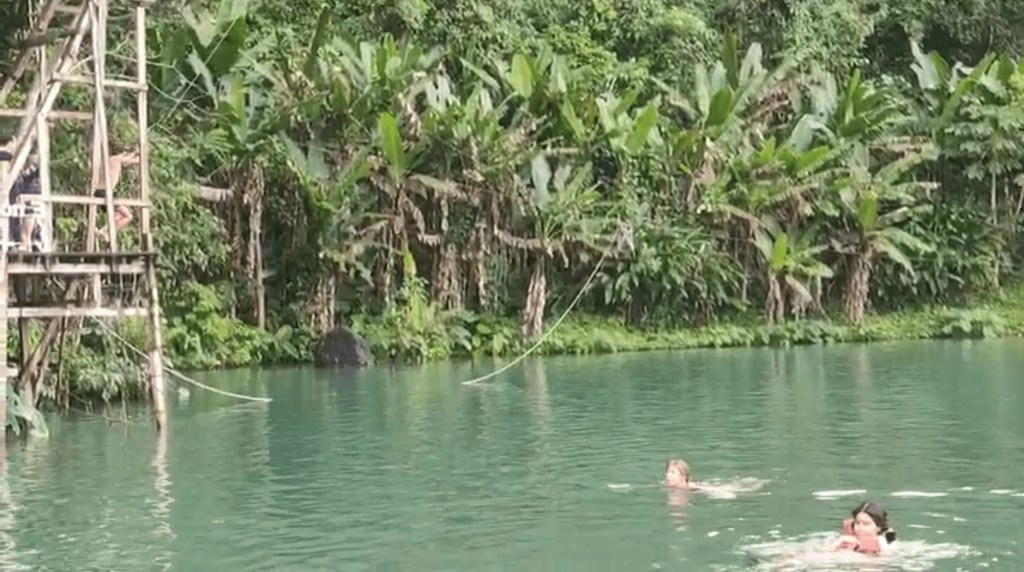
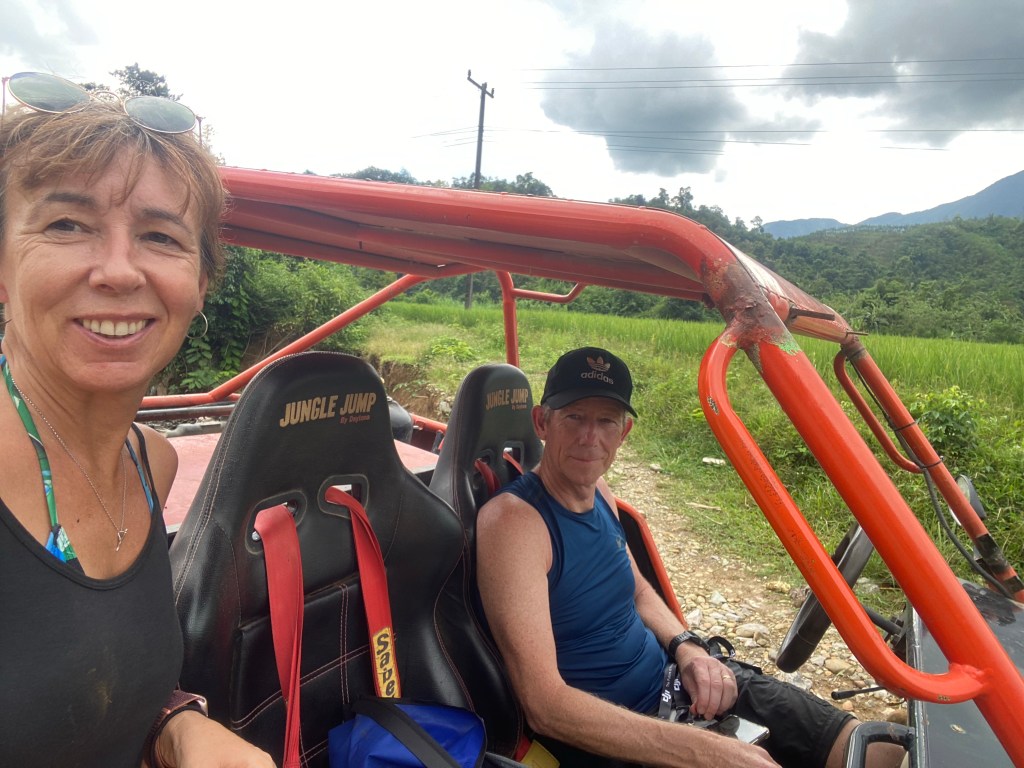
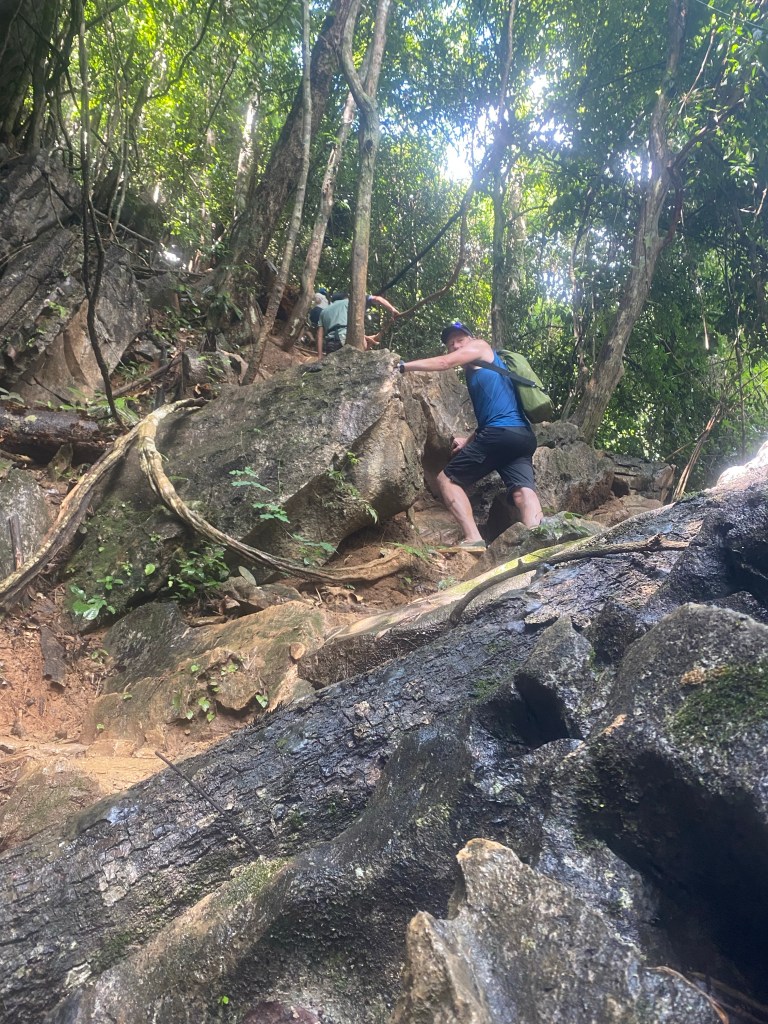
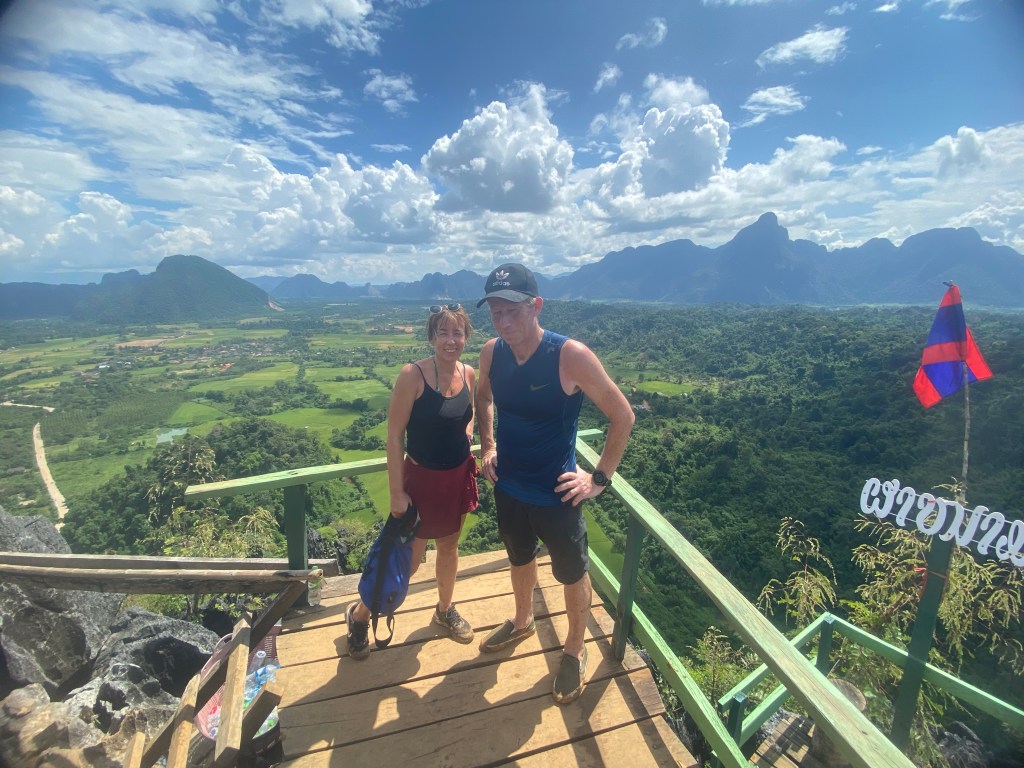
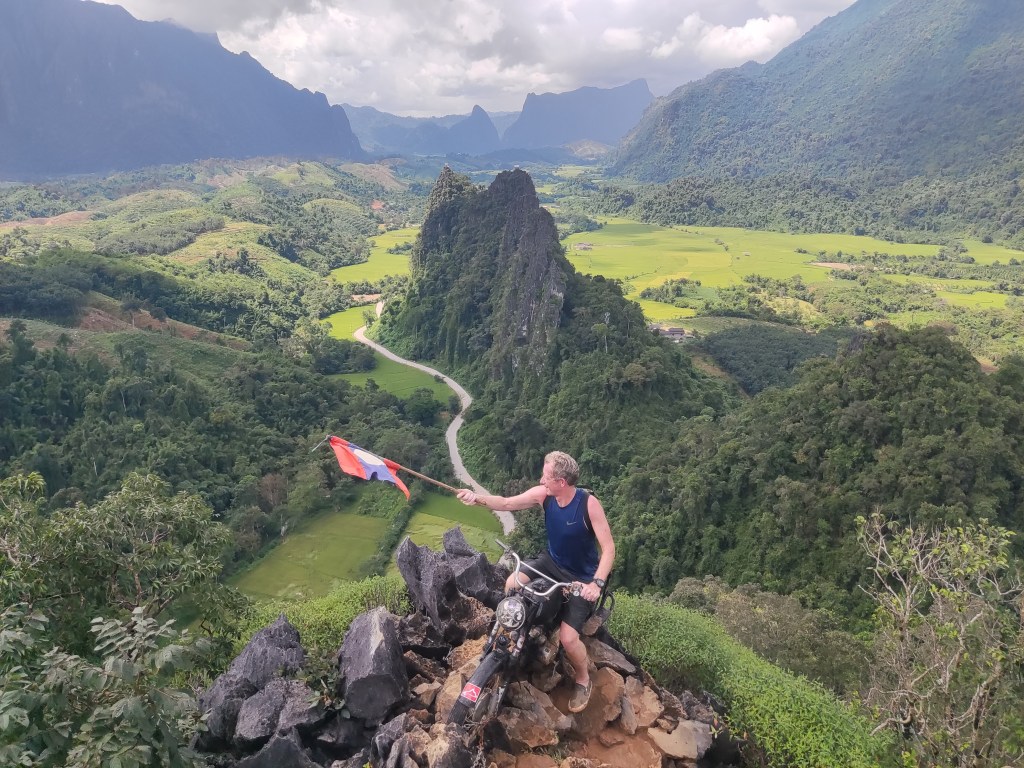
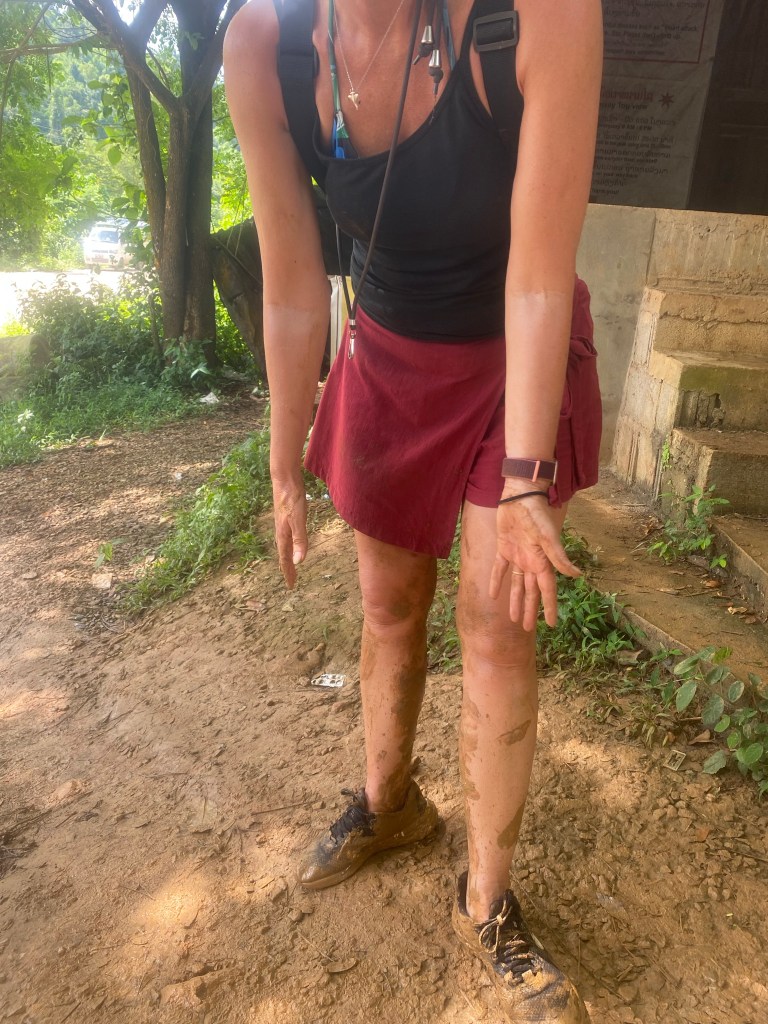
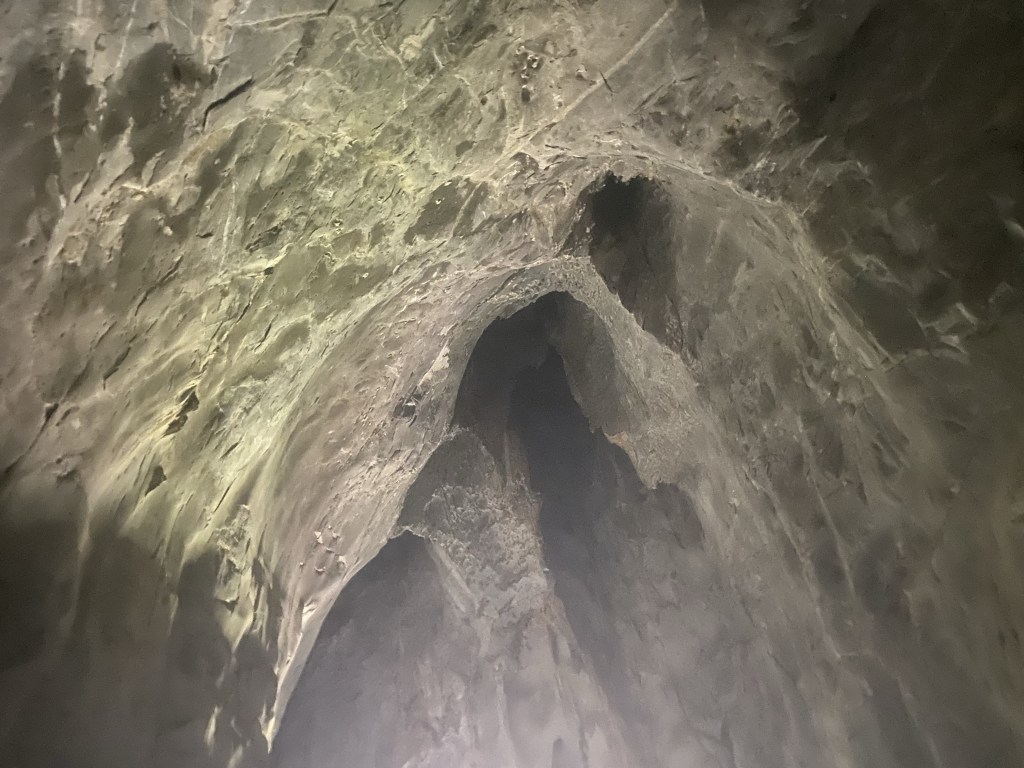
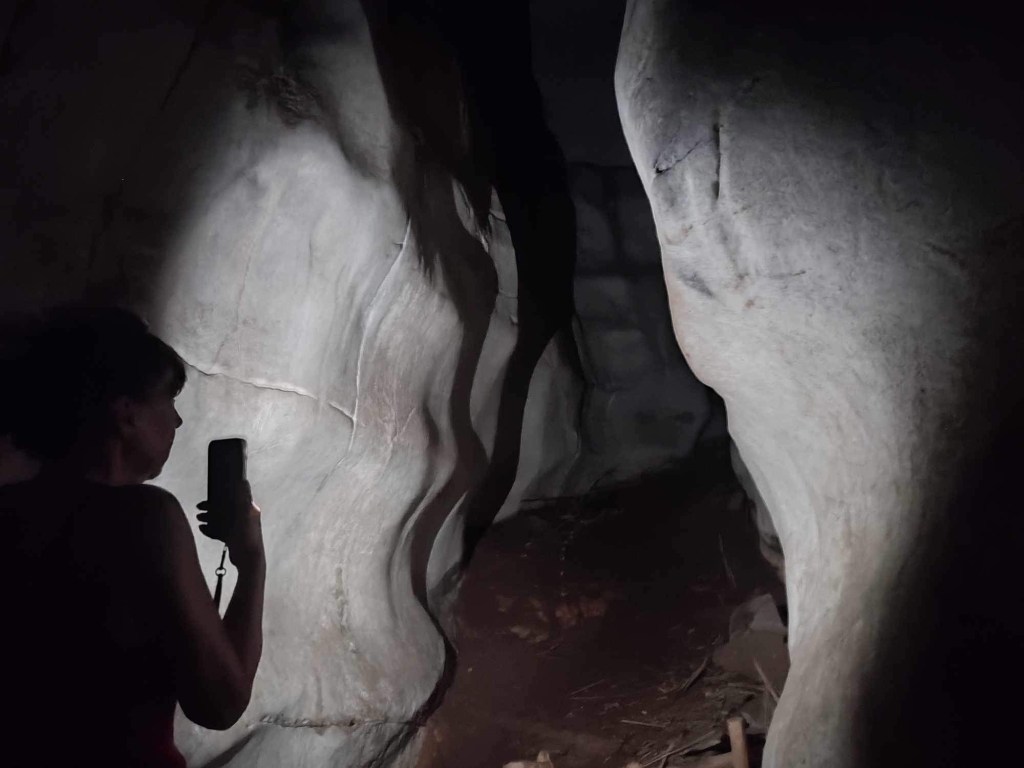
The town itself is far from lovely but the area gorgeous. We got possibly the worst scooter ever from our hotel (no indicators , took 10 goes to start it or open the seat and the brakes weren’t the best) and set off exploring walking up viewpoints getting covered in mud and swimming in lagoons. The caves were amazing and went on a long way through the mountain. We were there with just one other person and we scrambled over huge rocks with our head torches looking for the odd painted arrow to show the way. The roads were pretty bad so the following day we got a buggy instead which felt somewhat safer the downside being that Callum thought he was driving a formula one car.
More of a climb than a hike! It wasn’t as scary as it looked but how on earth did they got the bike up there? We were absolutely covered due to the rain as we arrived!
Vientiane
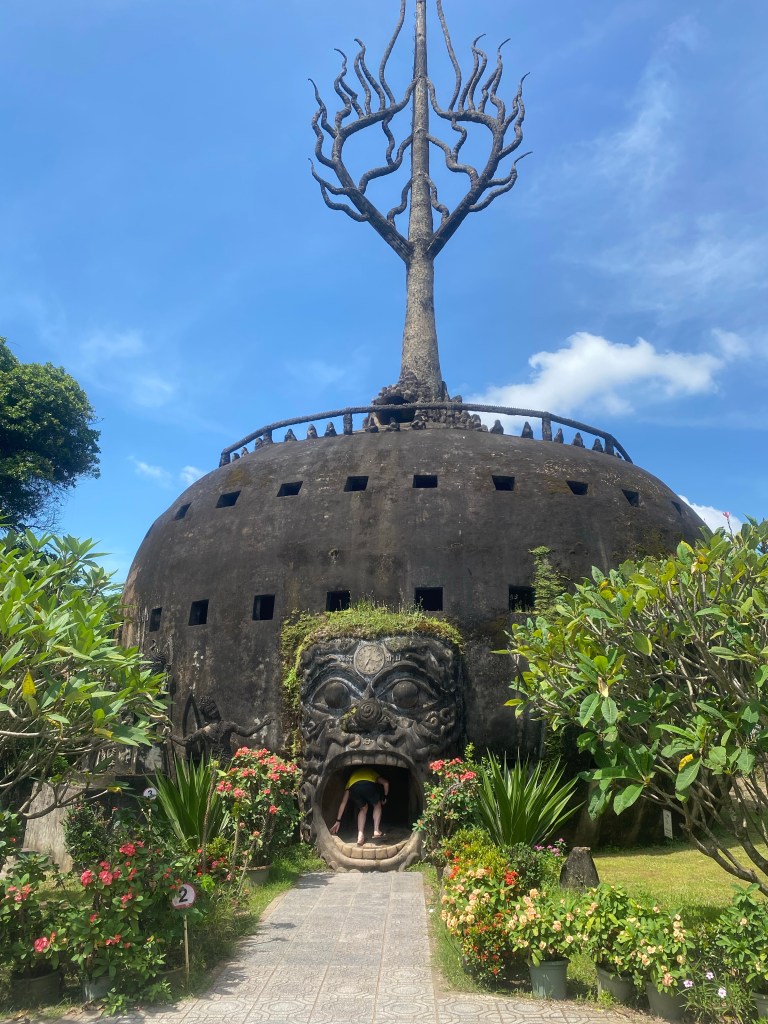
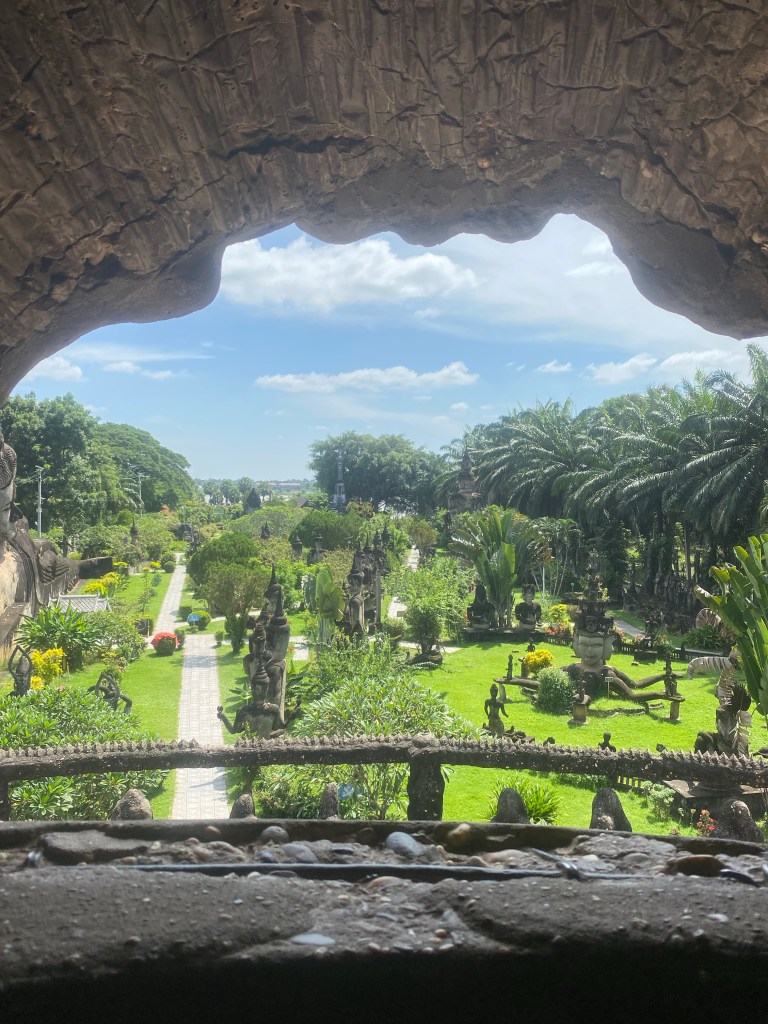
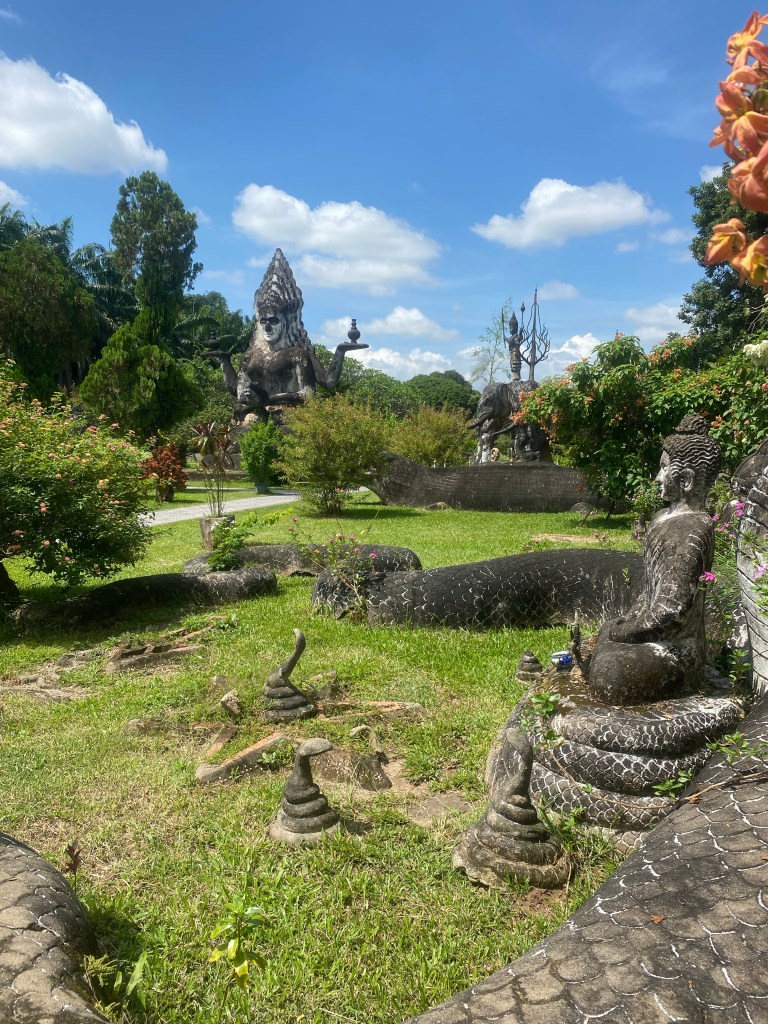
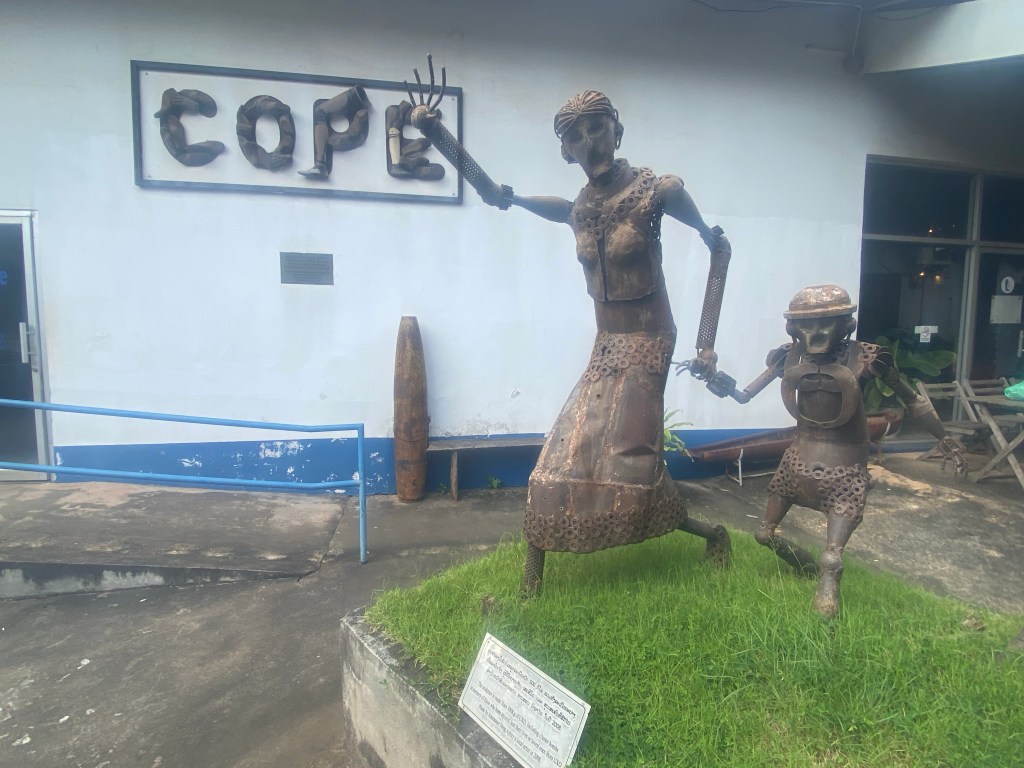
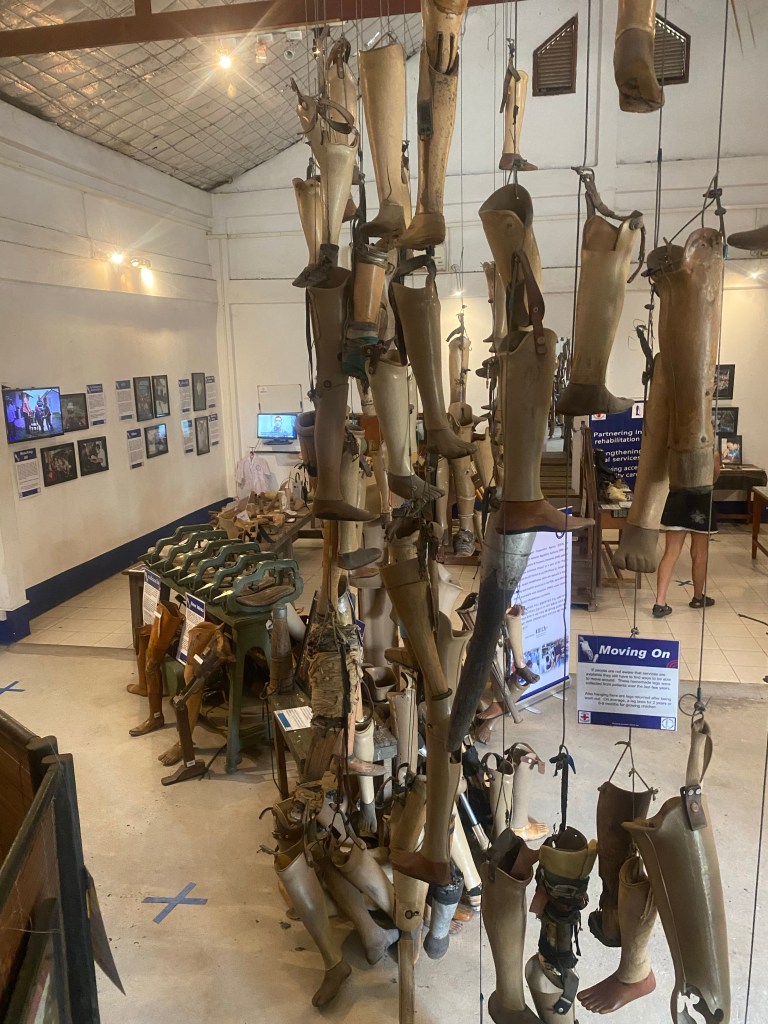
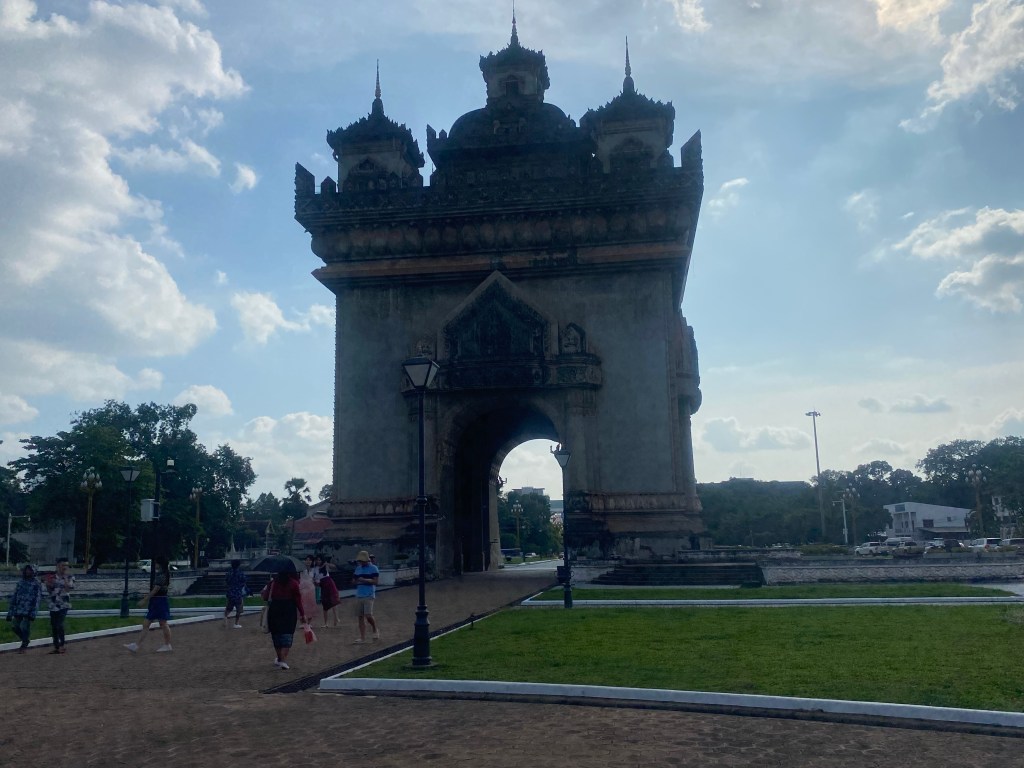
Next, we headed to Vientiane, the capital of Laos. We’d read there wasn’t much to do here and there really wasn’t. We went to a tourist attraction, Buddha Park, which just had lots of Buddha statues and the weirdest pumpkin installation that had Buddhas and skulls inside. It was quite small to get through all the holes to climb up and Callum had the locals in stitches trying to get back down😂. He really needs to do some yoga for a bit of flexibility! We walked around the Patuaxi monument, luckily, whilst the fountain display started. This is meant to resemble the Arc de Triomphe and with the boulevard running up you could really see the French influence. It was built to commemorate those that died in the struggle for independence from France. Our last stop was the COPE museum which taught us more about the Secret War in Laos. The USA had more than 580,000 bombing missions over Laos, one mission every 8 minutes , 24 hours a day for 8 years to prevent the supply line being established and run to Vietnam. 30% of the bombs didn’t explode and so approximately 80 million bombs were left unexploded at the end of the war – the figures are just staggering. Unfortunately, many of these have exploded since whilst farmers plough their fields , people cook outside or where children play as they mistake them for balls. The COPE organisation supports these victims and it was so interesting to see the prosthetics used both now and in the past. We did hope that Callum’s dads prosthetic leg had ended up here.
Whilst there was nothing wrong with the city, nothing really stood out about it either except maybe the pizza we had there which we had been dying for – there’s only so many noodle and rice dishes you can have before you crave some western food.
The people of Laos have all been lovely but the roads, or lack of, made us rethink our plans. We had thought to go south for a 4 day scooter trip through the countryside to see some fantastic caves and waterfalls but I decided at the 10km an hour we had averaged in Vang Vieng and with those roads, my behind and back wouldn’t cope. Instead, we booked a flight to Pnomh Penh and I promised Callum we would move slower from now on.
Phnom Penh
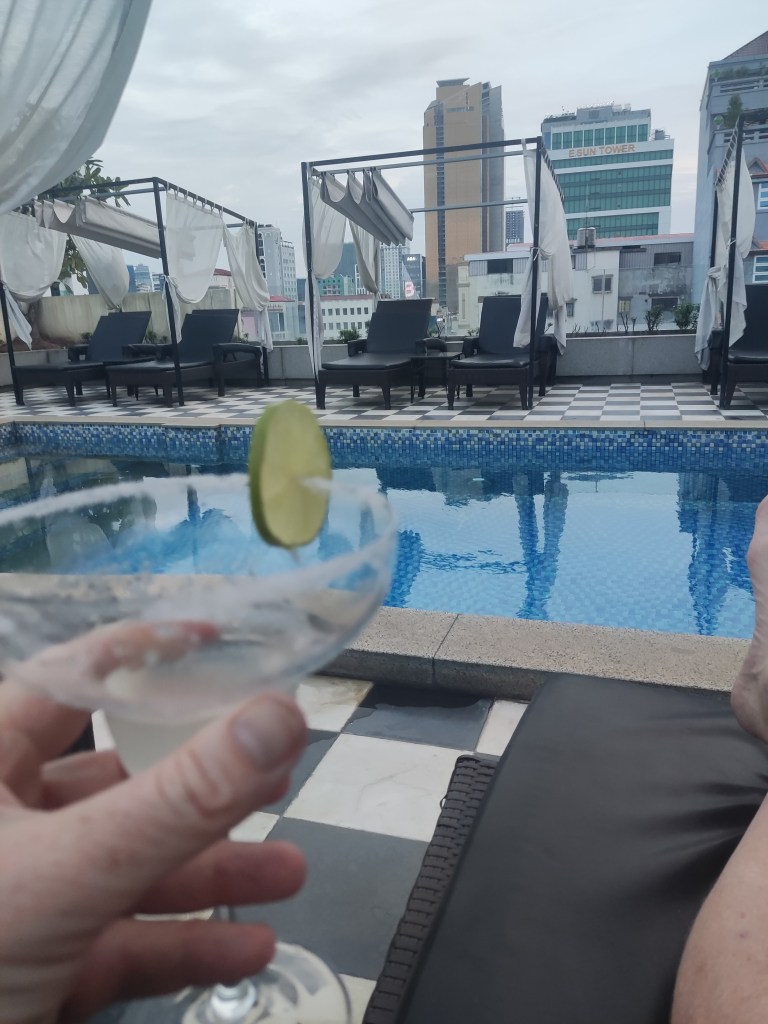
Because of our last minute change of plan, we needed US dollars (and only dollars) to pay for the visa. Unfortunately, we couldn’t get any in Vientiane so were told to exchange kip for dollars at the airport. However, they lied! There was nowhere at the airport either so we sat in departures worrying about whether there’d be an atm or exchange in immigration. Luckily, there was so we could pay though we did see someone there in a panic as he was in the same boat we’d been. Note to self – ignore your husband when he says you don’t need dollars travelling abroad! We now also have lots of Kip we can’t get rid of – we can do a great exchange rate should anyone be coming this way😁.We /I were so stressed that we just sat by the pool in the afternoon and drank happy hour margaritas!
We had a lazy start the next day (possibly due to the margaritas) and went to a disappointing museum that contained stones from Angkor Wat (better seen in situ in our opinion) and wandered round near the Grand Palace, waterfront and Central Market from Top Gear fame!
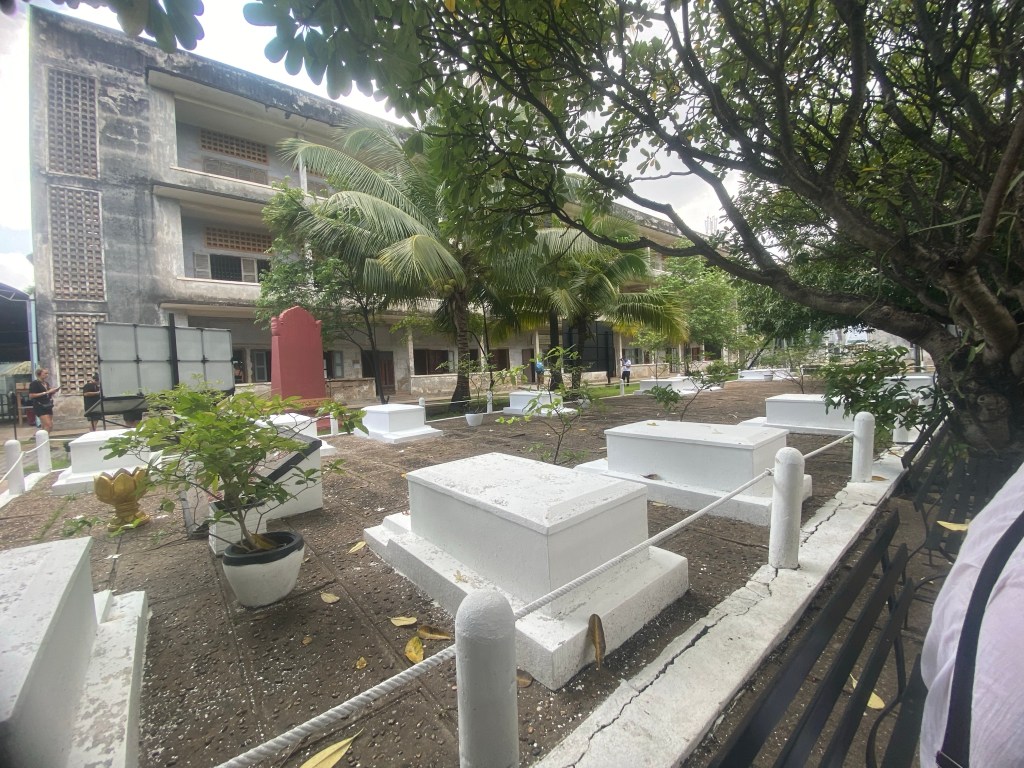
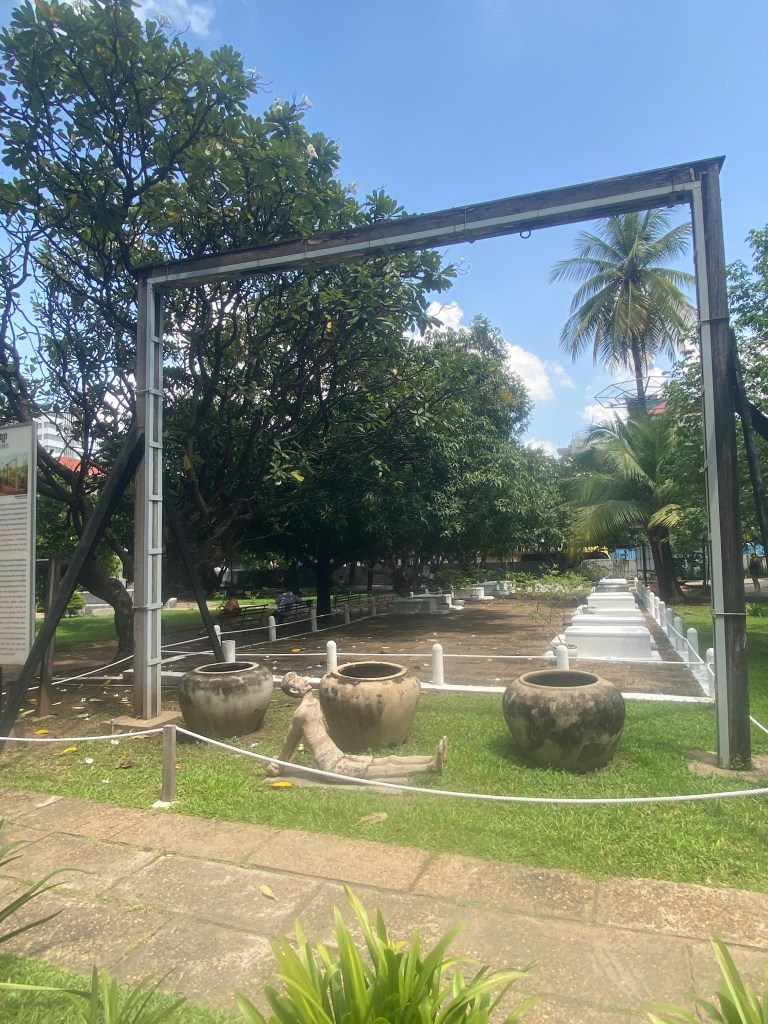
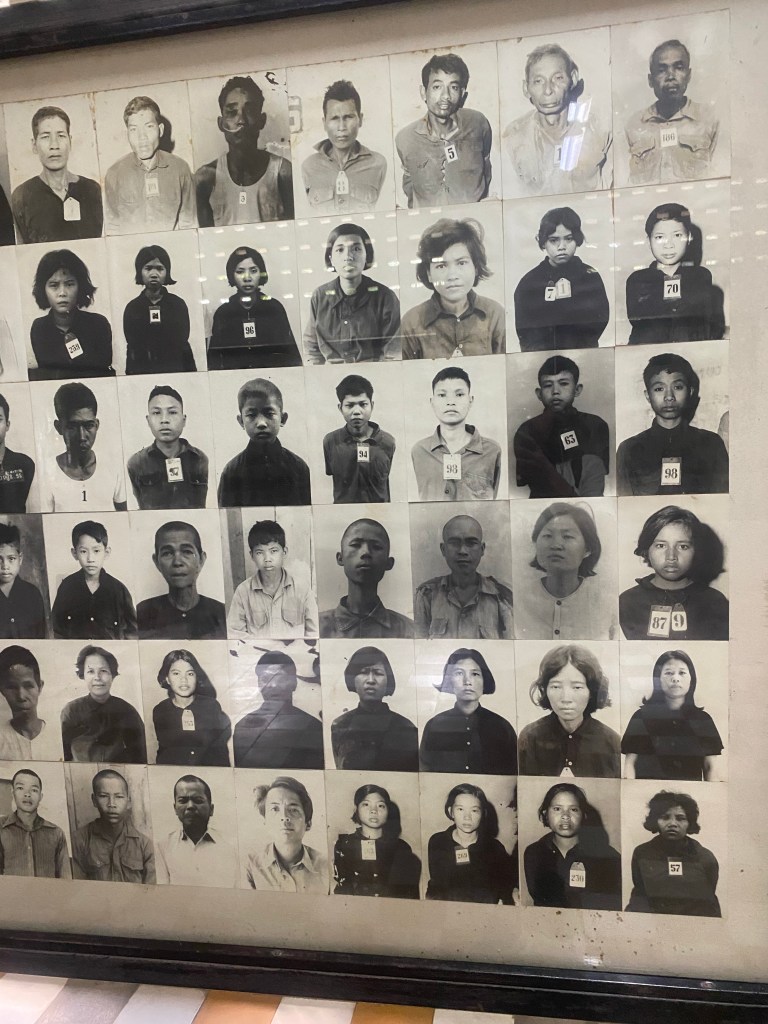
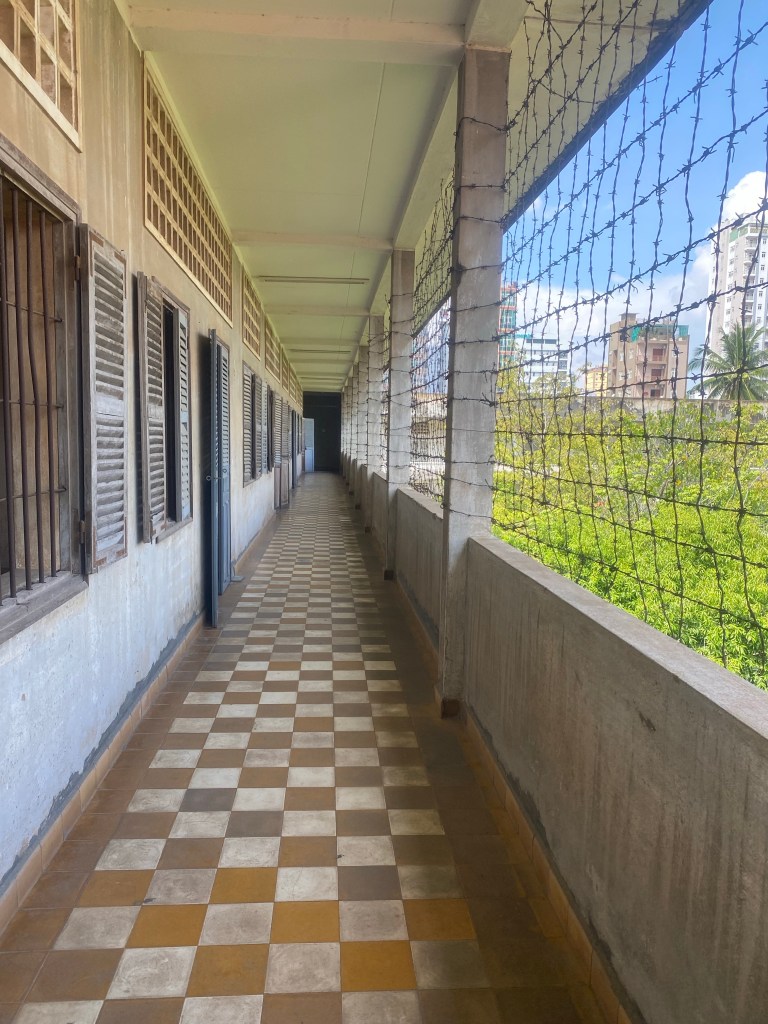
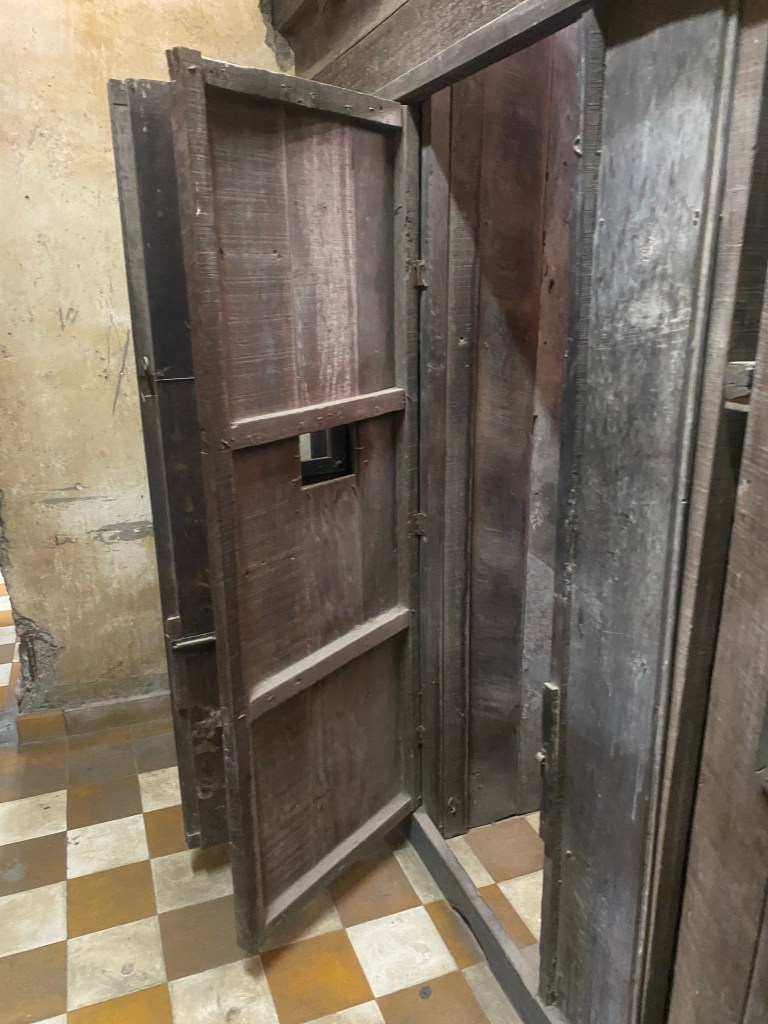
The following morning, we headed off to Tuol Sleng Genocide Museum, the site of S21 buildings that used to be a school but was converted to place to torture “confessions” from people before they were shipped to the Killing Fields to die. I was in 2 minds as to whether to put pictures of this and the other museum in but all the way through the audio guides they ask you to share what you saw. Shamefully, we really didn’t know much about the genocide here and were shocked by the shear numbers: Polpot’s regime brutally murdered 3 million of its own people within 4 years, forcibly relocated all the people from the cities to the countryside and attacked anyone with glasses, soft hands or qualifications as possible traitors – “It is better to kill an innocent by mistake than spare an enemy by mistake.” was his phrase. The audio guide was one of the best I’ve ever heard and there were many red faces (including ours) where you could see that visitors held back tears from what we were hearing and seeing.
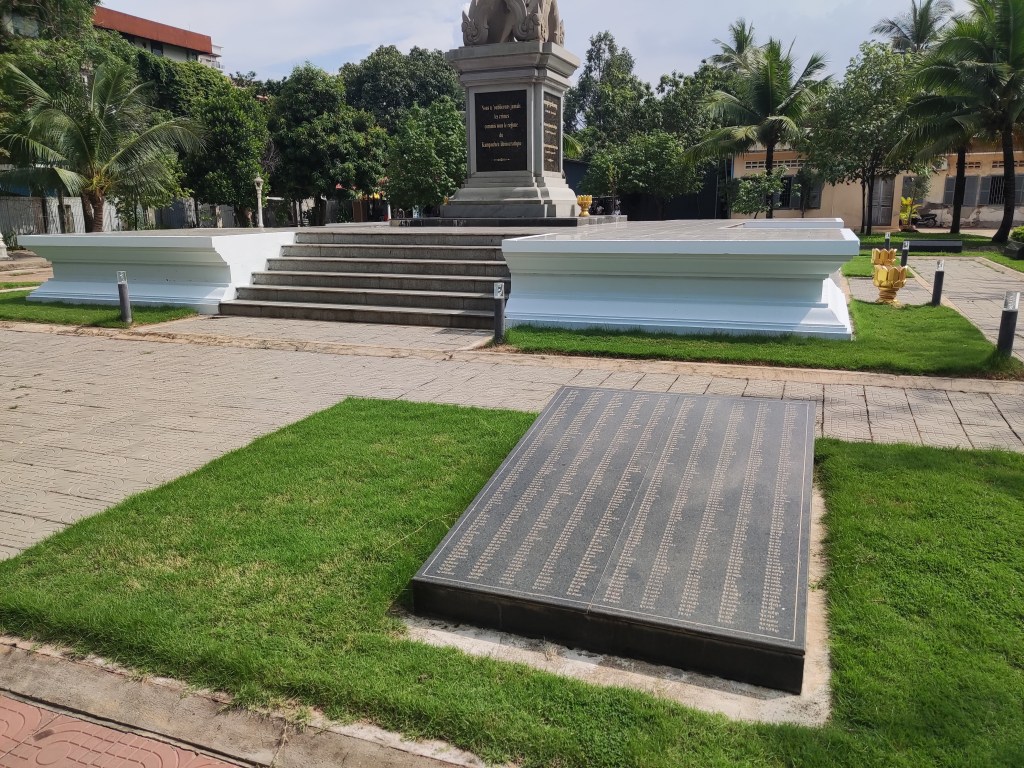
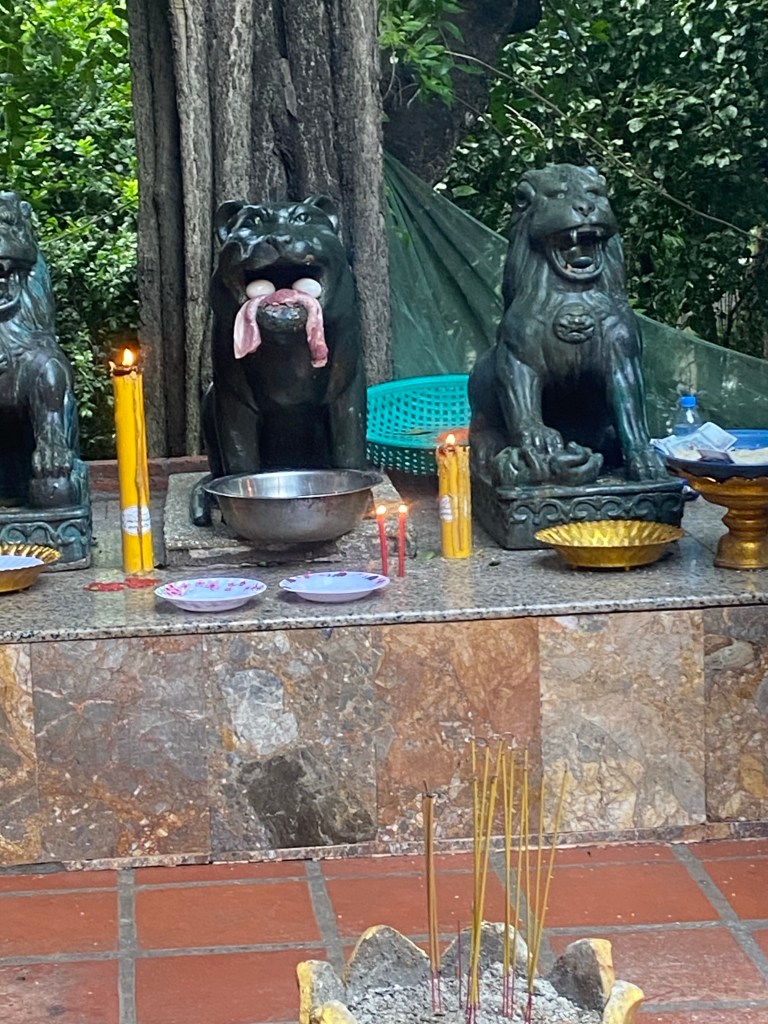
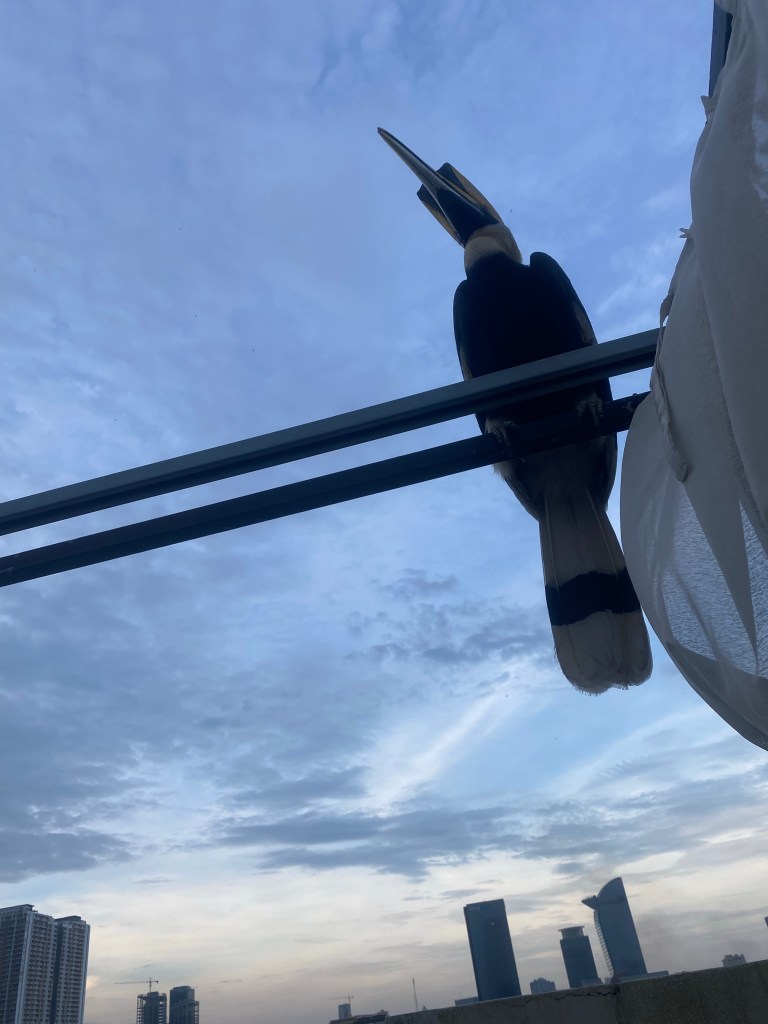
At last a nice hotel! Laos reviews lie!Only 14 bodies were found on liberation and these commemorate them .Playground equipment was converted to gallows.There were boards and boards of photos like this. People came after liberation to try to spot their family members as families were split.Seeing school corridors that contained rooms with shackles with blood stains on the floor was hard to see.Memorial with names of those who died here.Bacon and egg offerings at Wat PhnomThis huge hornbill gave me the shock of my life as it landed on my sun bed!
We had planned to go the Killing Fields that afternoon but decided to leave it to the next day so instead visited the most important Wat and had a few hours by the pool (with a massive friendly bird) and then headed to the small night market for dinner.
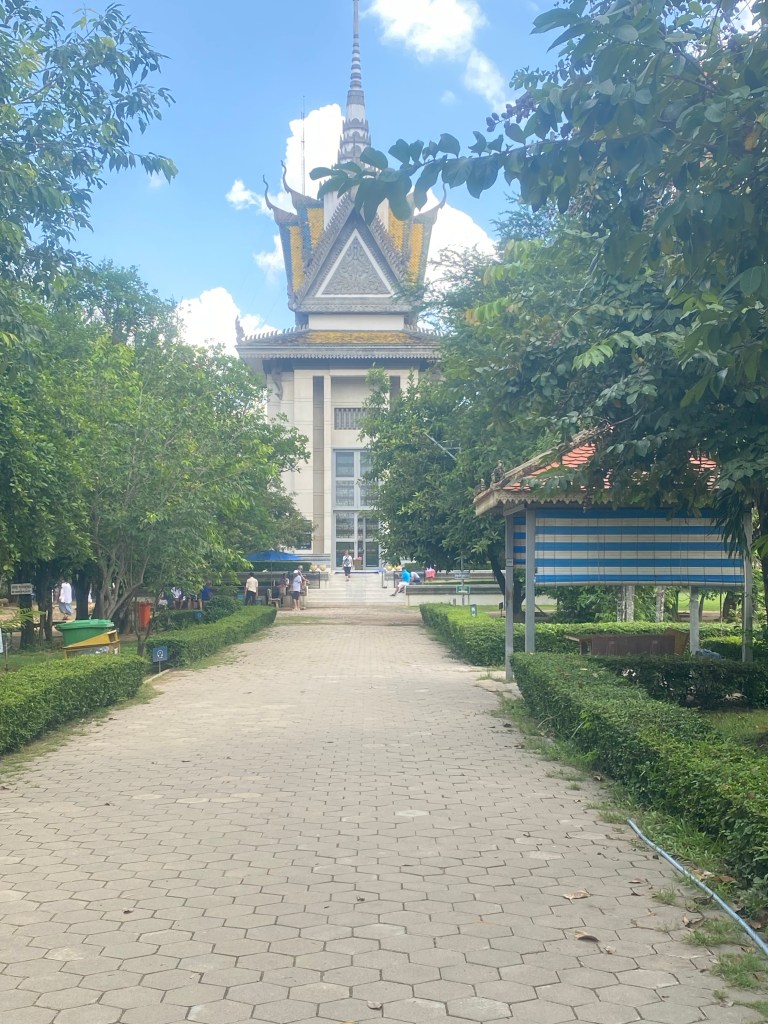
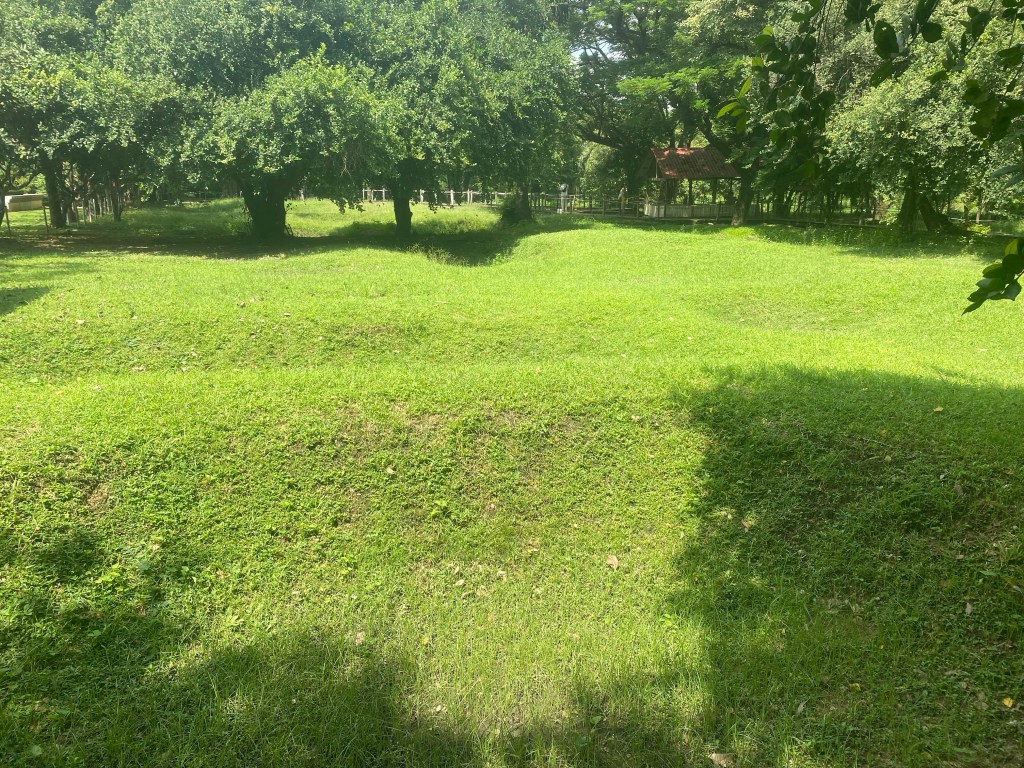
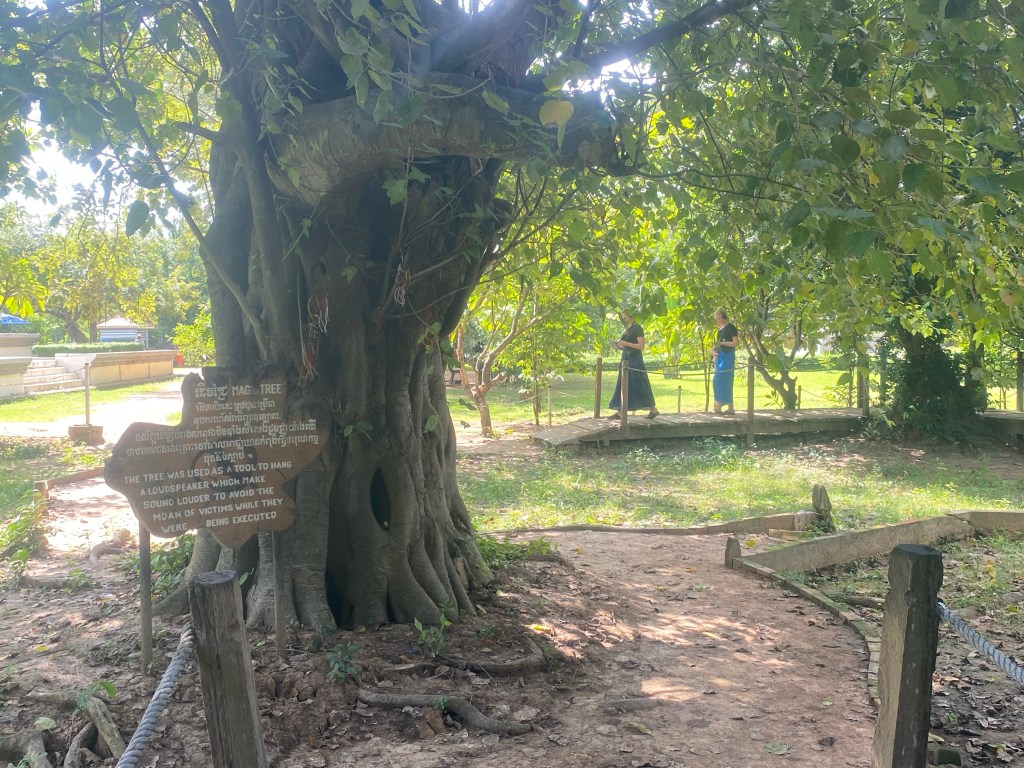
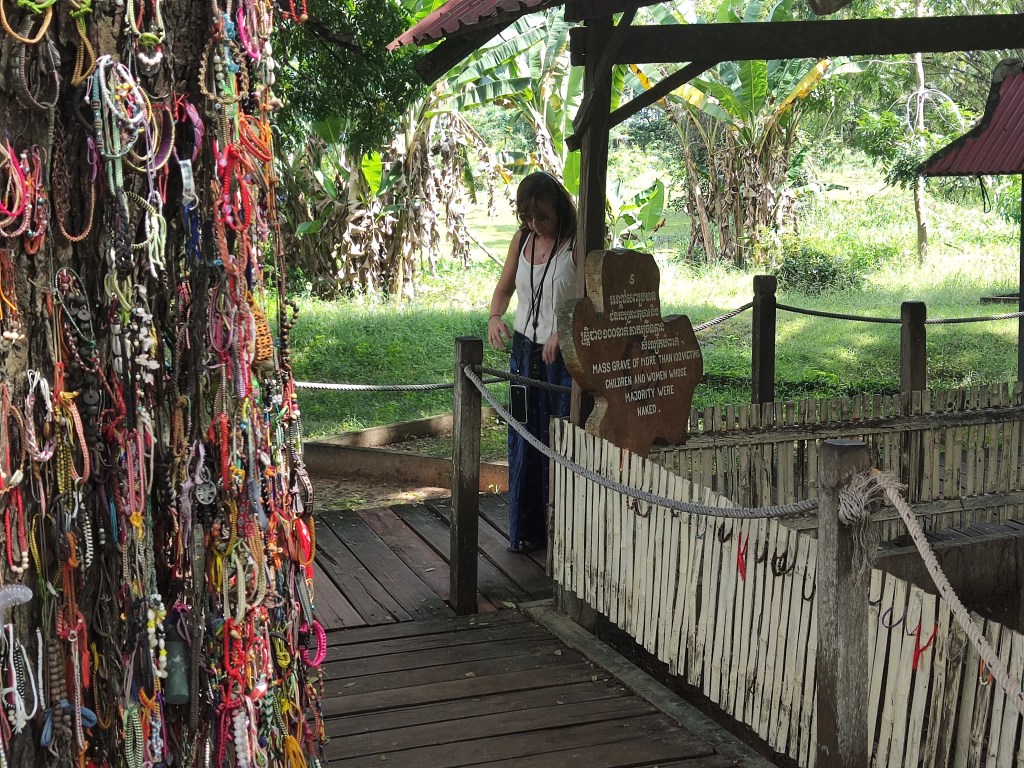
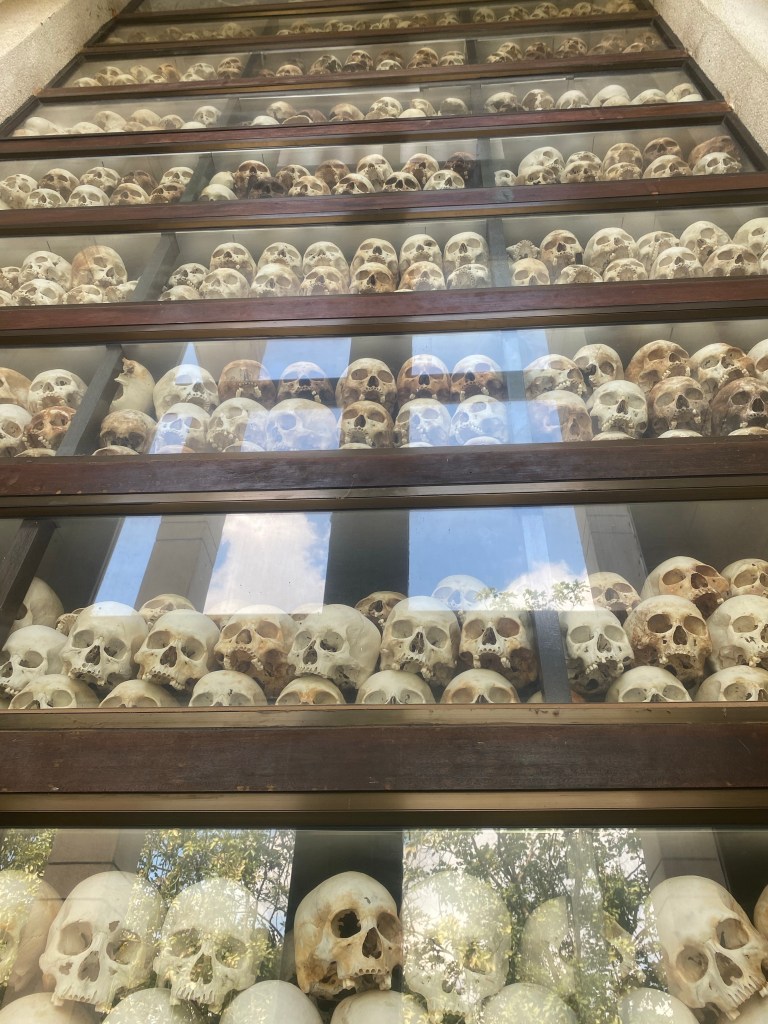
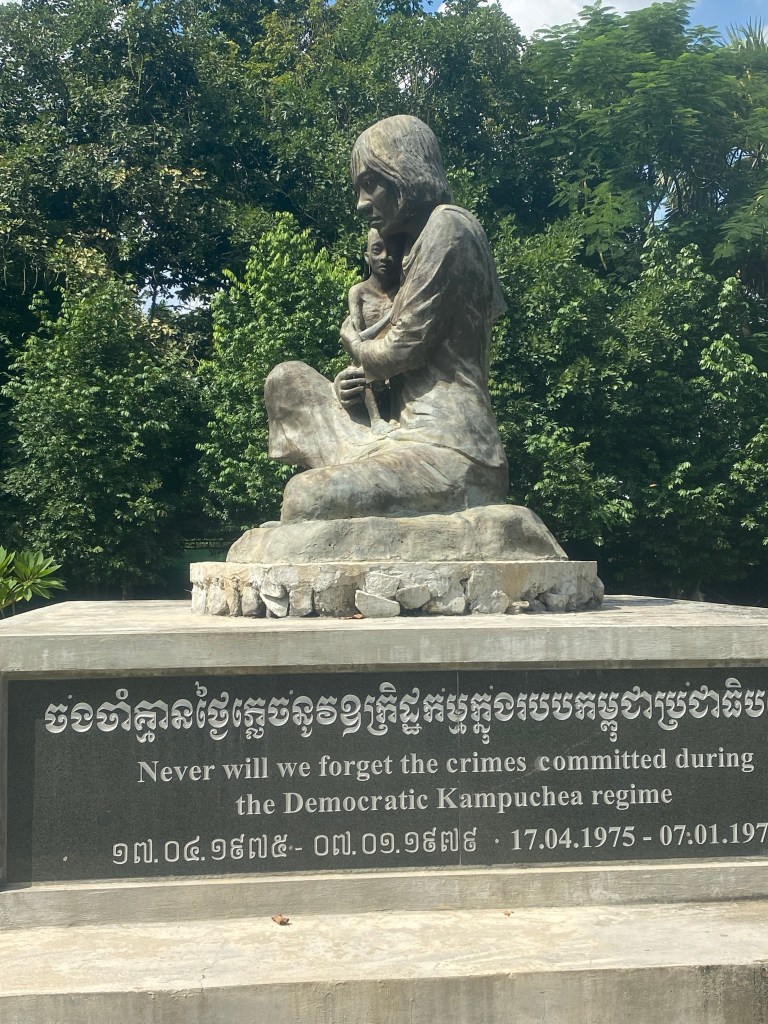
We went to the Killing Fields with some trepidation after what we’d seen the day before. Again, there was an excellent audio guide but here the beautiful surroundings with the sound of birds was somehow surreal against what we heard. People died very quickly here on their arrival with machetes, hammers and any other cheap way and we’re thrown into mass graves- bullets were too expensive to waste! We hadn’t realised they have found more than 300 of these sites all over Cambodia and again realised how little we knew. Our memories of the time are of hearing about starving children in a Blue Peter appeal and a bit on John Craven’s Newsround and we did wonder if our children know anything about it all. It struck us that this is what teenagers need to learning about later on in school – not doing WW2 three times!
The memorial looked nice from a distance. Excavated mass graves where bones still rise to the ground. The tree used to amplify the sound of propaganda and music at night to hide the sounds of screams. The killing tree where babies heads were smashed against, often in front of the mother, before being thrown into the pit.Inside the memorial. We were encouraged to take photos of this where the skulls have been categorised. It was shocking!We sat here in front of this poignant statue with in a drink to recover.
Sorry this post is a rather long and solemn with lots of shocking facts and war information but we felt it is important to share what felt quite harrowing at times as well as the fun bits of our time away. We enjoyed Phnomh Penh but are looking forward to seeing the sea for the first time this trip as we now head for the beach!
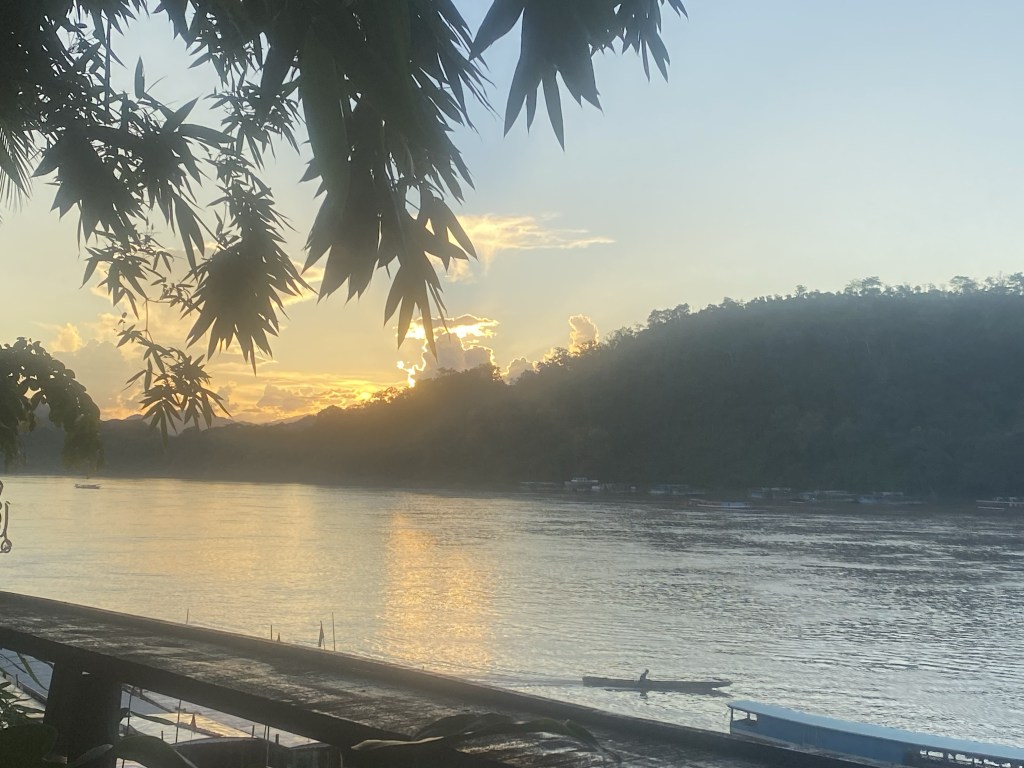
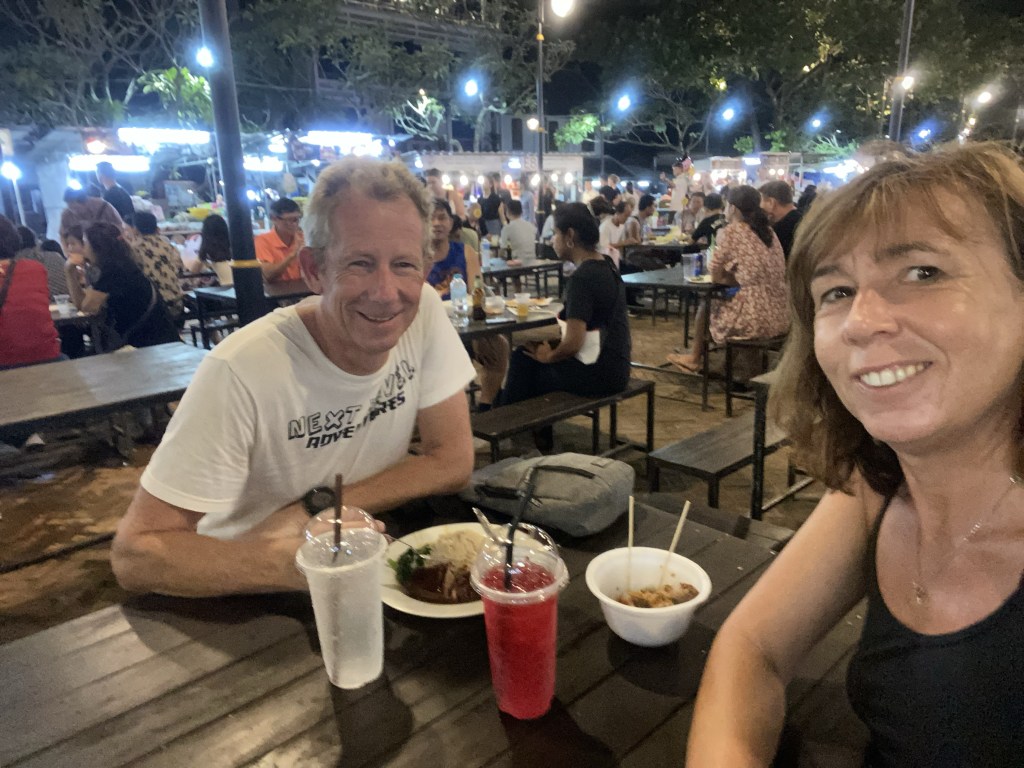
We knew as soon as we arrived in Laos and Luang Prabang, a French colonial town on the river, that we were going to like it. We walked straight down to the Mekong to sit and watch the sun go down with our first Beerlao and then headed to the night market for some food.The choice was quite diverse, the smells delicious and, of course, Callum loved the fact that we could get meal for 2 with drinks for less than a fiver!
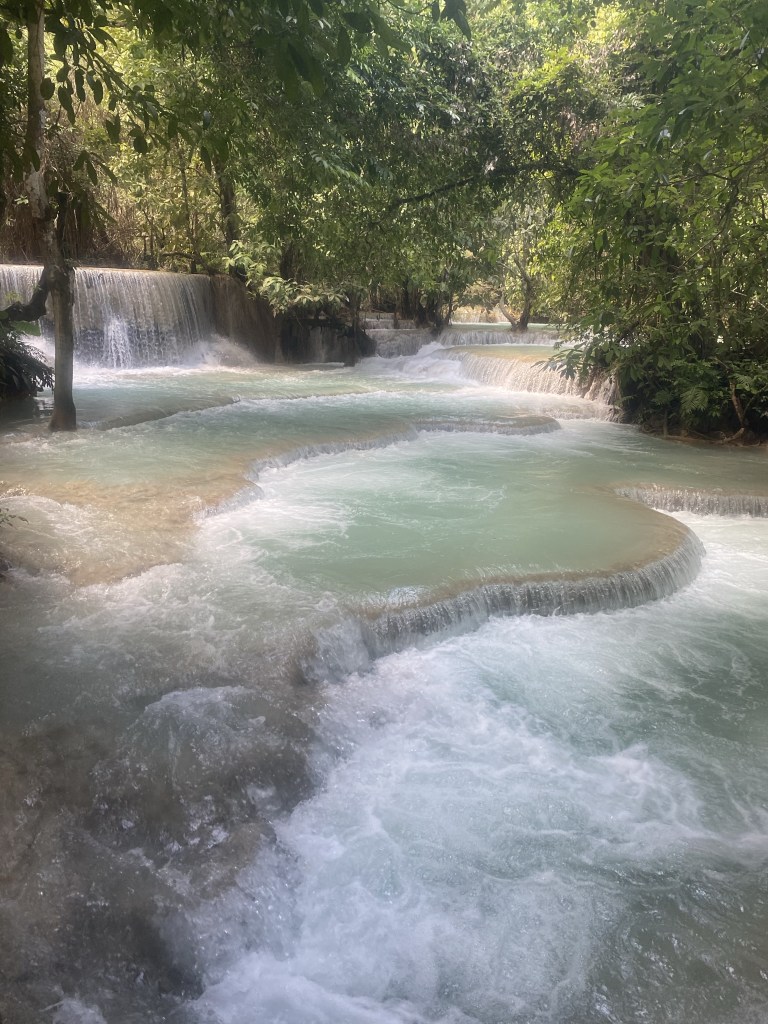
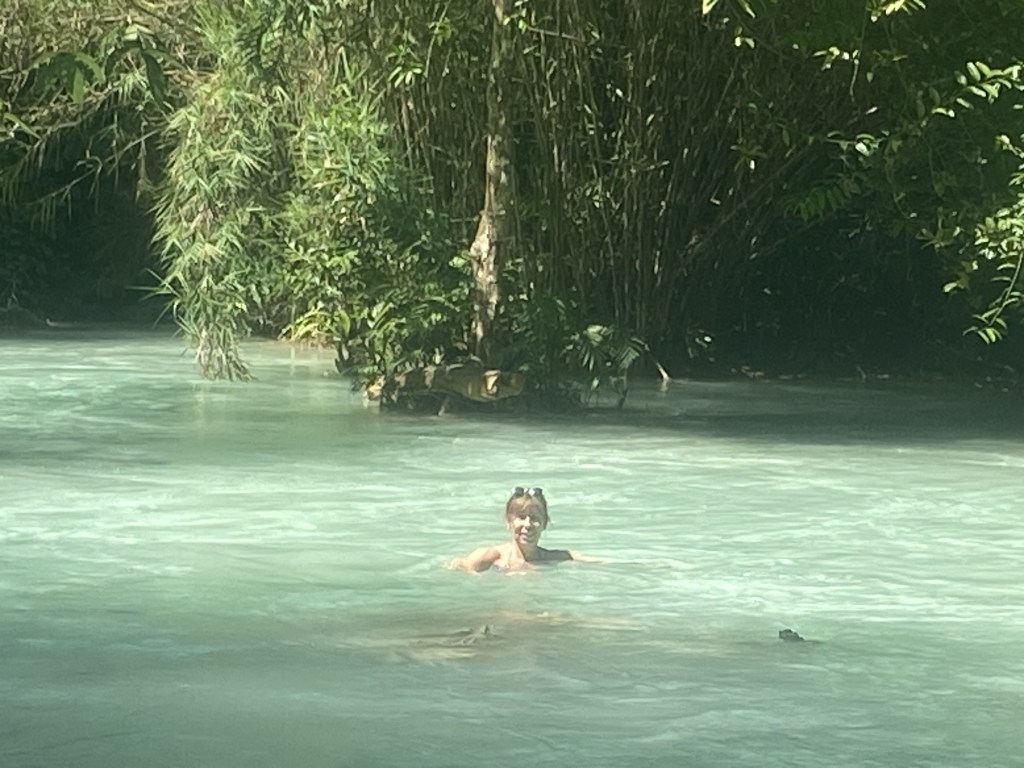
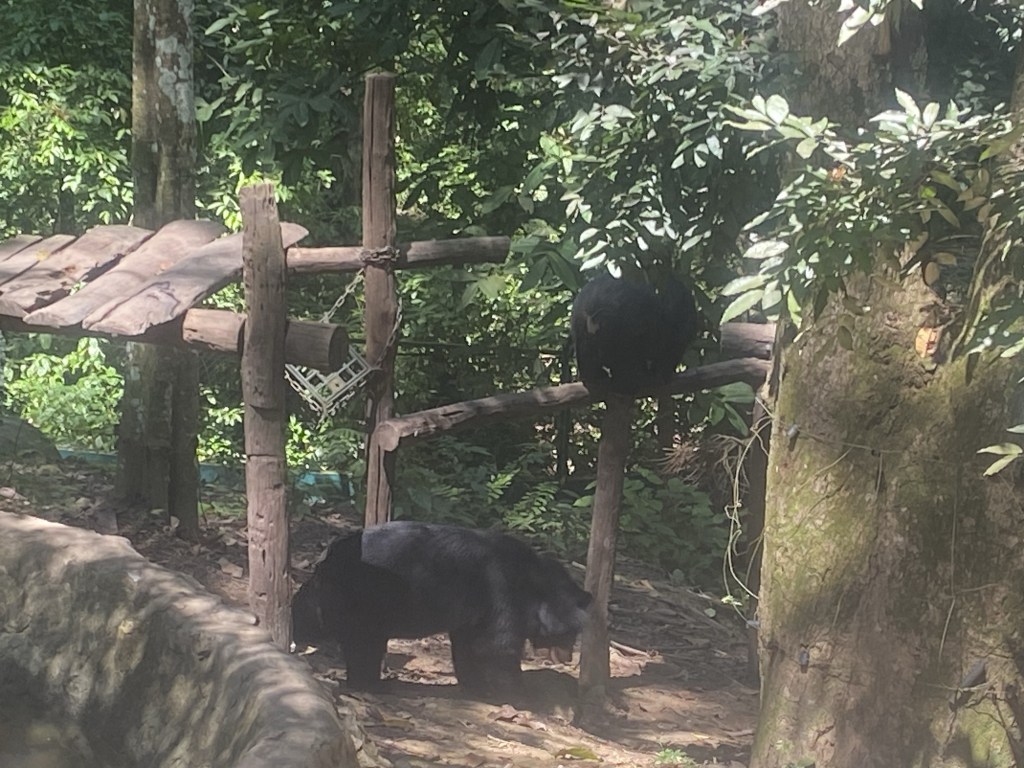
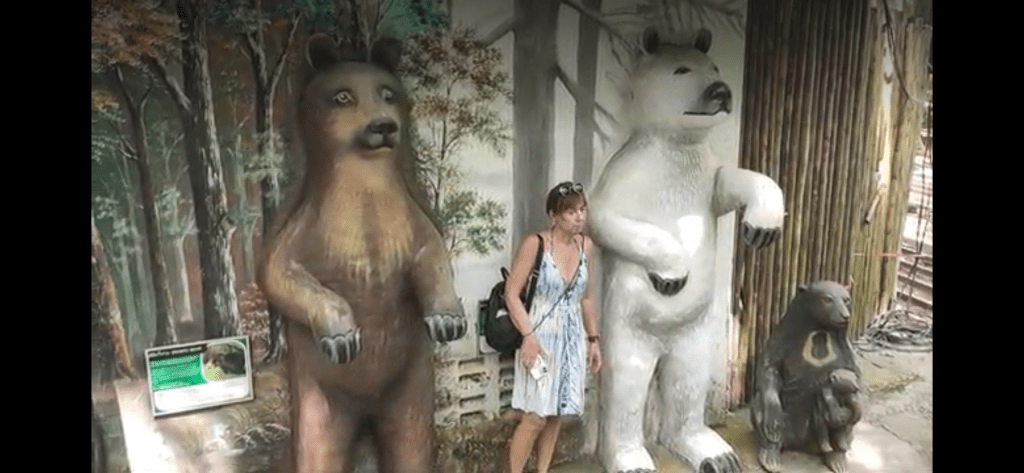
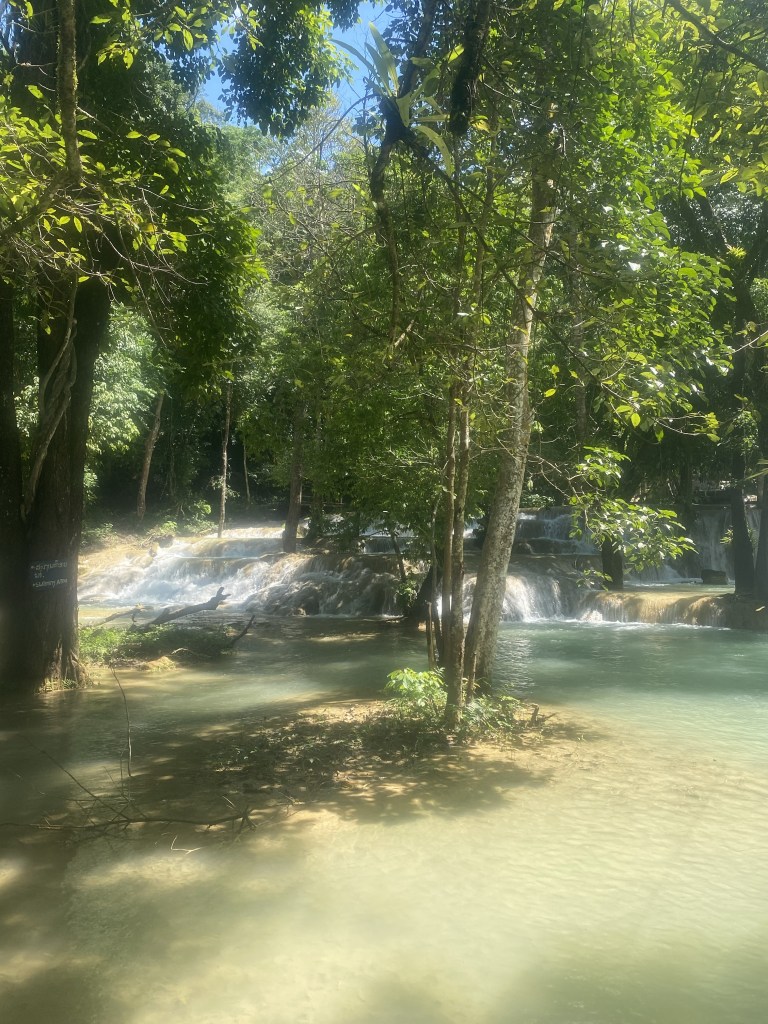
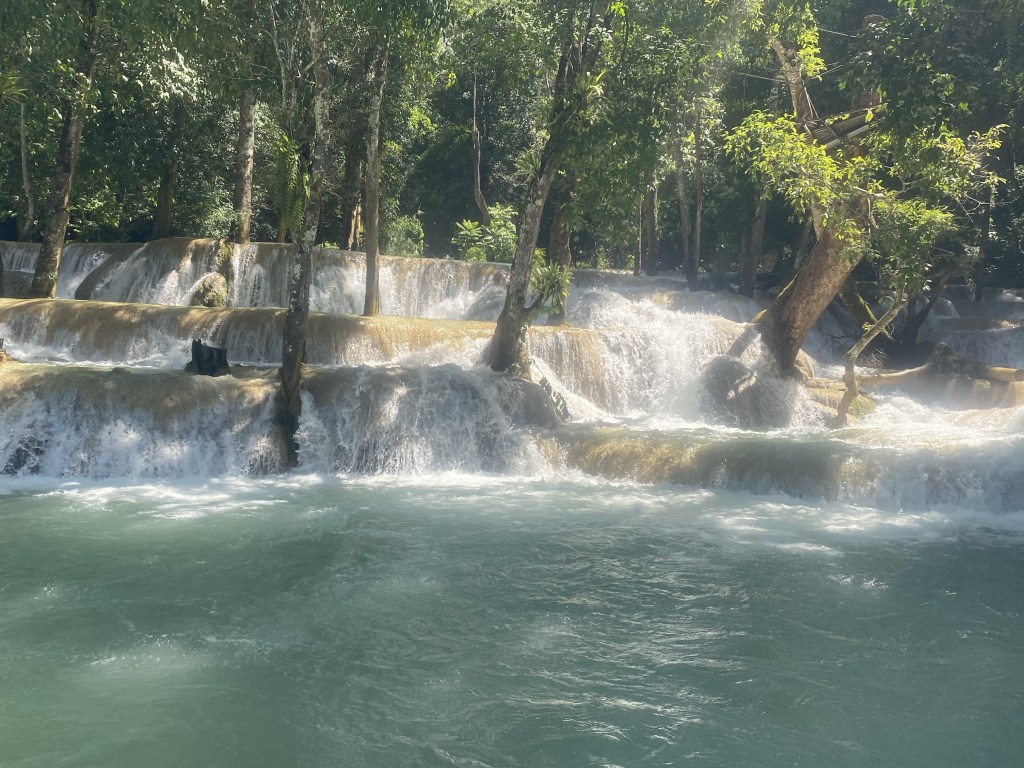
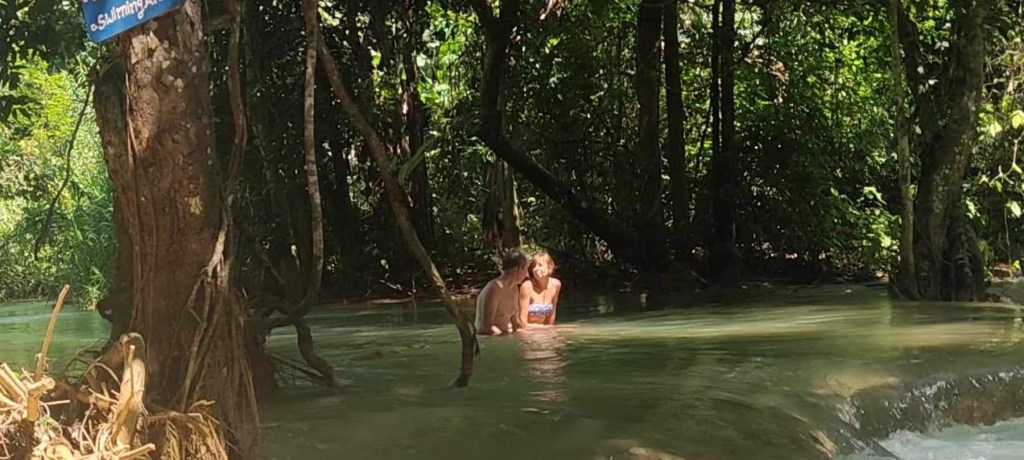
The next morning, we hired a scooter from the hotel and made our way to the famous Kuang Si waterfalls which were extremely impressive and beautiful. You can swim in the waters there and it was quite quiet which was a real bonus along with the fact that these pools did not have fish that would take huge bites from Callum’s feet! Sadly, there was also a bear sanctuary which housed rescued moon bears. We disagreed in the ethics around this as I felt that their enclosures were far too small but Callum felt as it was such an improvement on the cage that they lived in where their bile was collected for medicines, then it was ok.
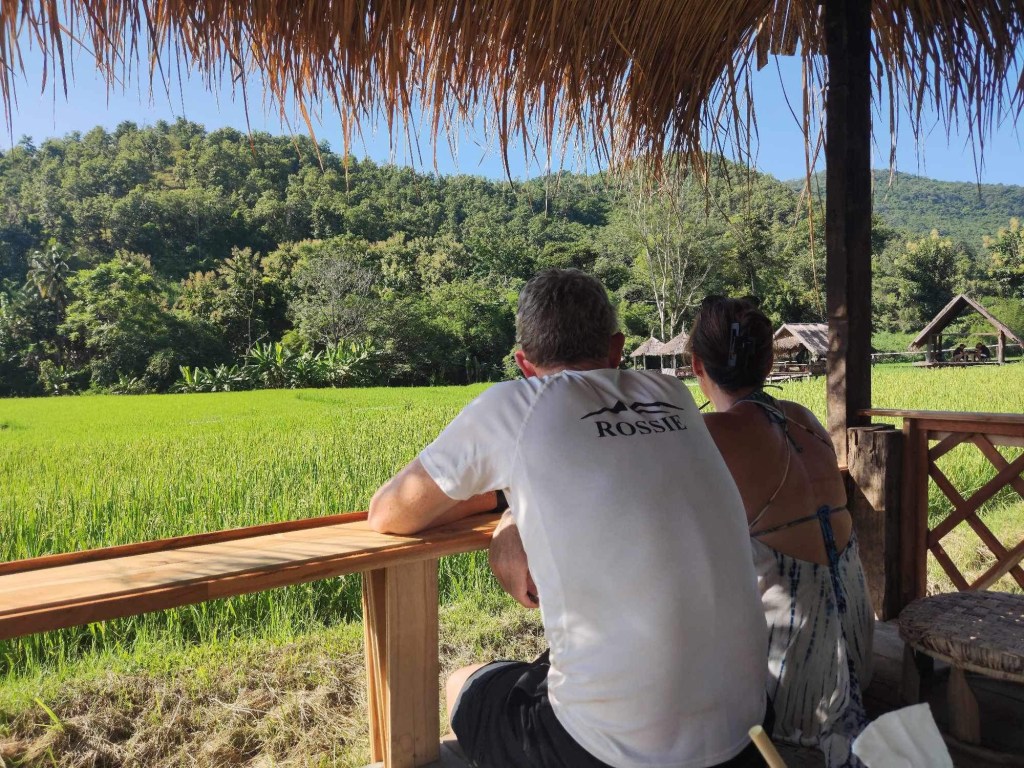
The road we had travelled on there was the worst potholed one ever and thankfully, for my behind, we stopped at a rice field for a bit of lunch and a drink. In the evening, we bumped into a couple that I had earlier taken photos for in the night market and spent a fantastic evening chatting to our new German friends who had just started their full year of travel around the globe.
After a slow start, we headed out on, thankfully, the near perfect road to Tat Sae, a local waterfall with the help of our trusted Google maps. We had to take a small boat and pay our £1.20 entrance each to get in but were met with equally as beautiful falls with even less people. There were 3 levels and, though the top one was a bit of trek through the jungle in our flip flops, it was worth it as there was only one other couple there.
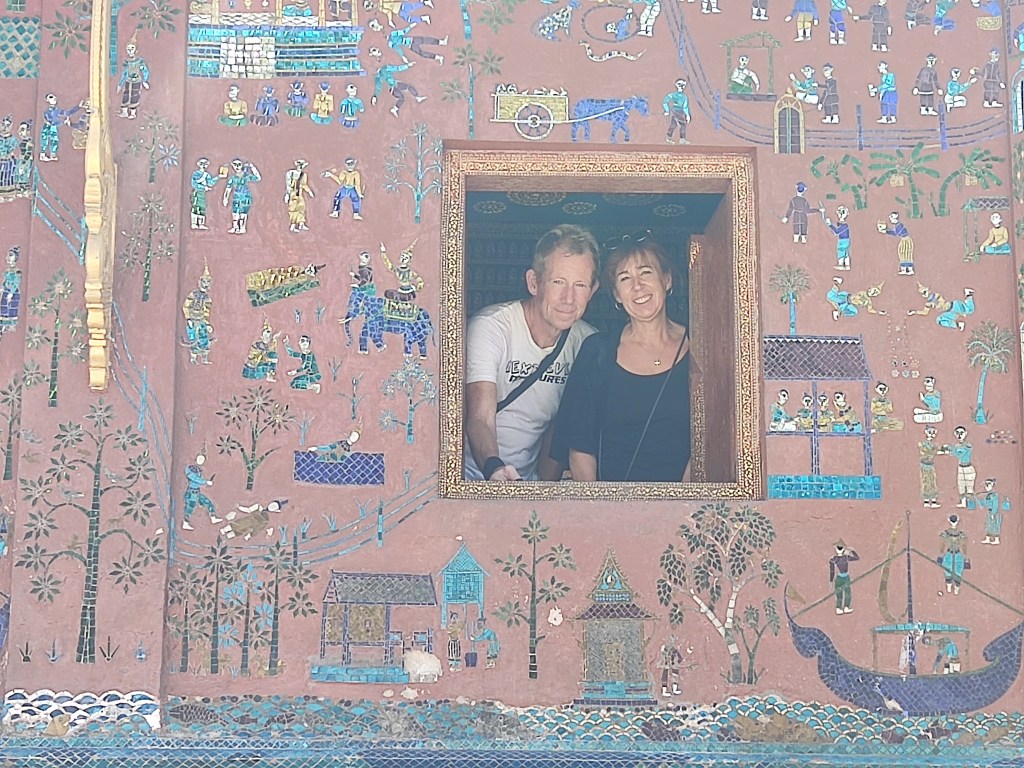
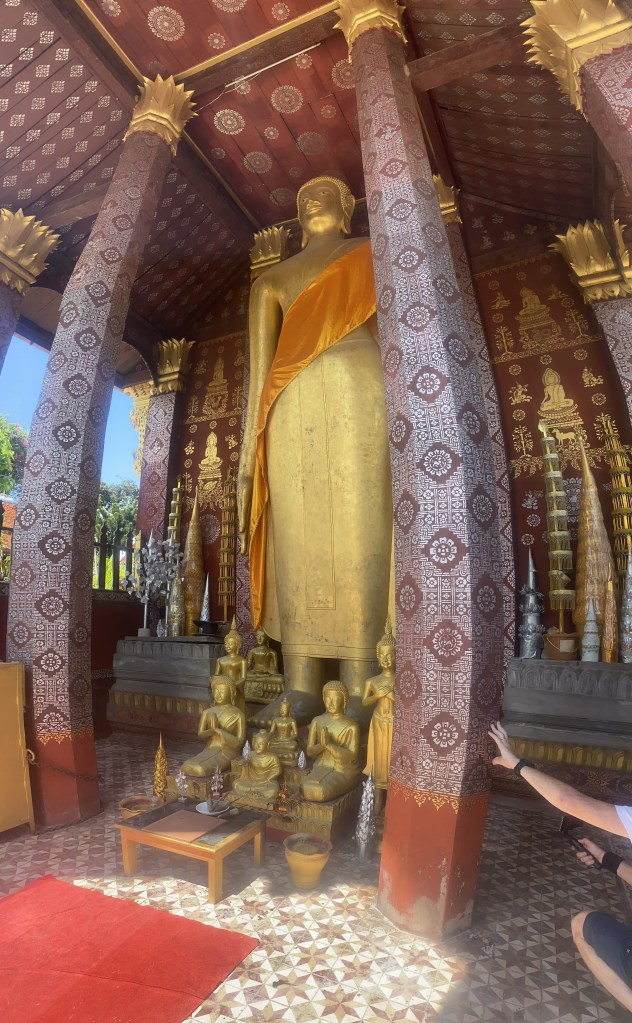
Museums and temples were on the agenda the next day in the town where we walked into one amazing place after another. All of them had accommodation for the monks and we saw so many young monks ( some who looked about 6) sitting together, wandering the streets as well as making rice cakes. We didn’t go to the alms ceremony which takes place each morning where monks walk barefoot through the streets and are given offerings of food by local people for the 35 temples in Luang Prabang. Tourists watching this ceremony has become more frowned upon locally as so many Chinese tourists behave inappropriately during it. Discussing it with the hotel owners, they didn’t tell us not to go but suggested that it just feels a bit invasive as it is an actual religious part of life here and not a tourist attraction. Whilst we have always been welcomed by the monks into the temples with big smiles and bows, we would hate to do anything disrespectful so we left the Chinese to it.
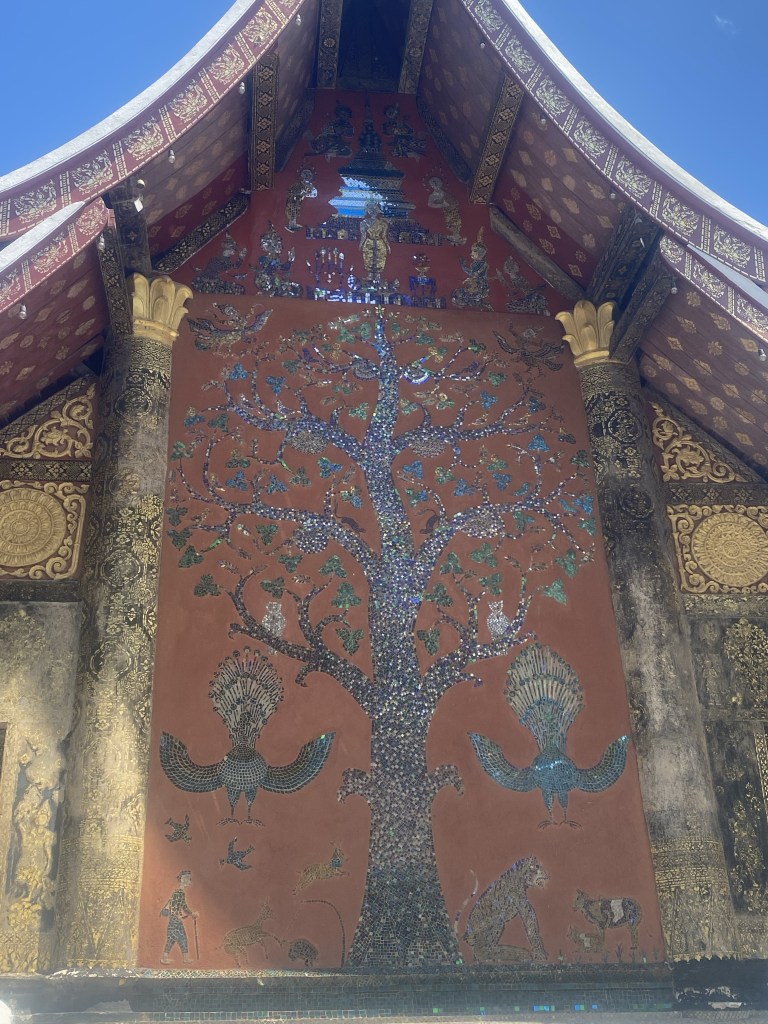
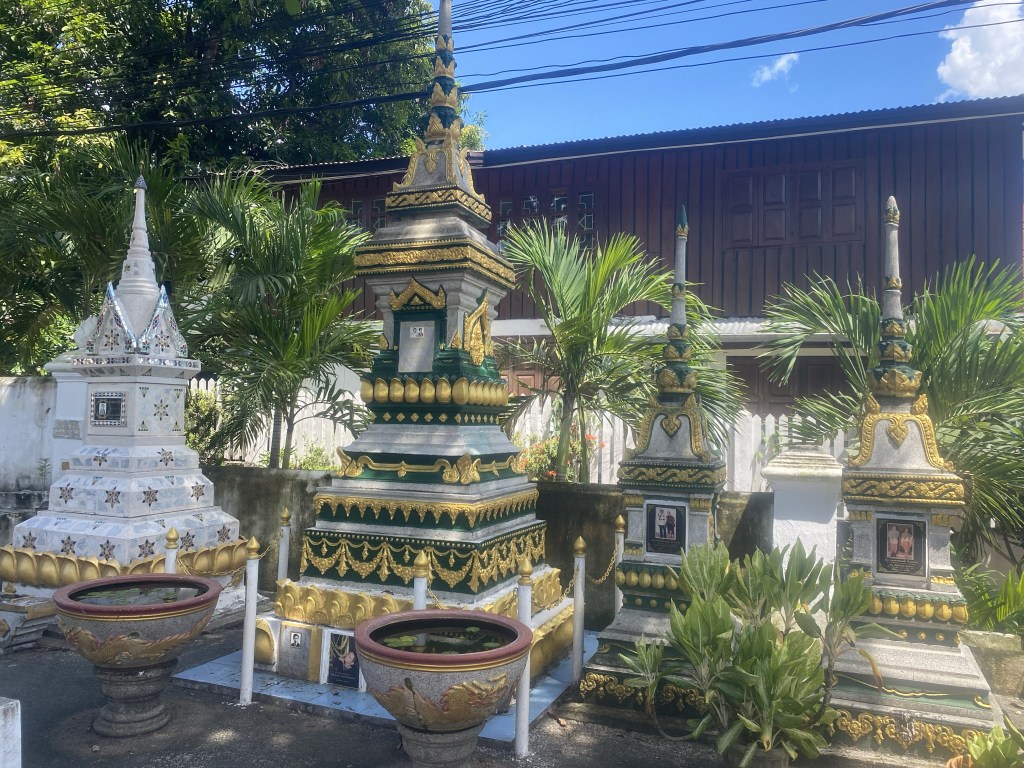
The tree of life at Wat Xieng Thong.These chedi had photos on which we’d never seen before.
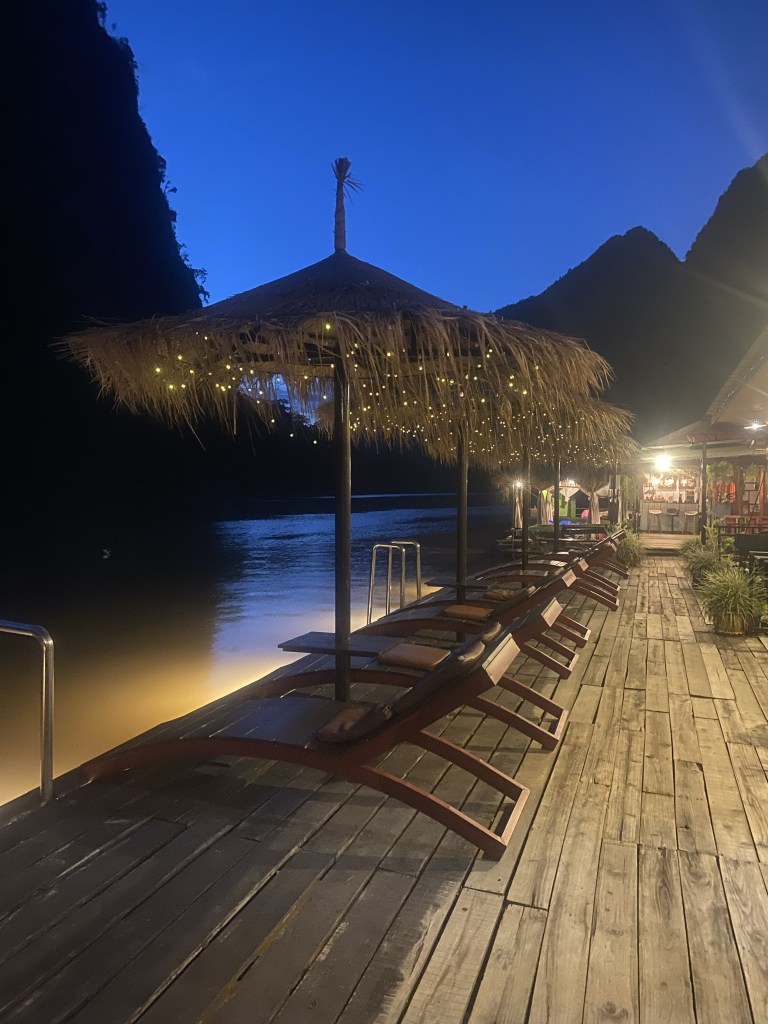
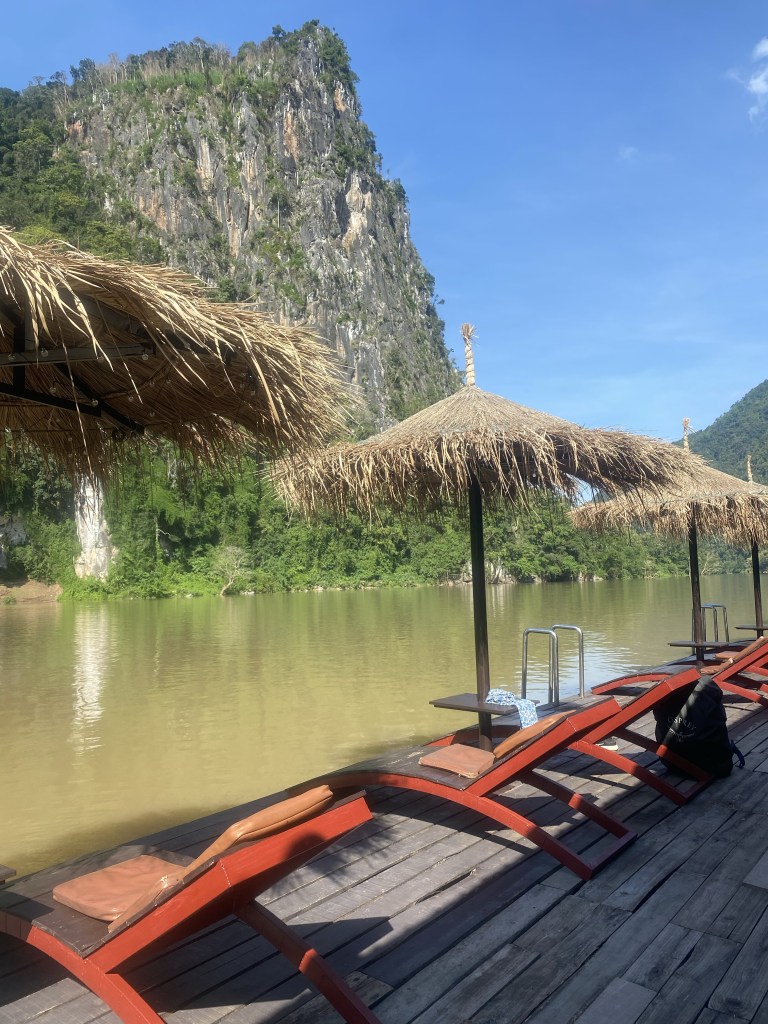
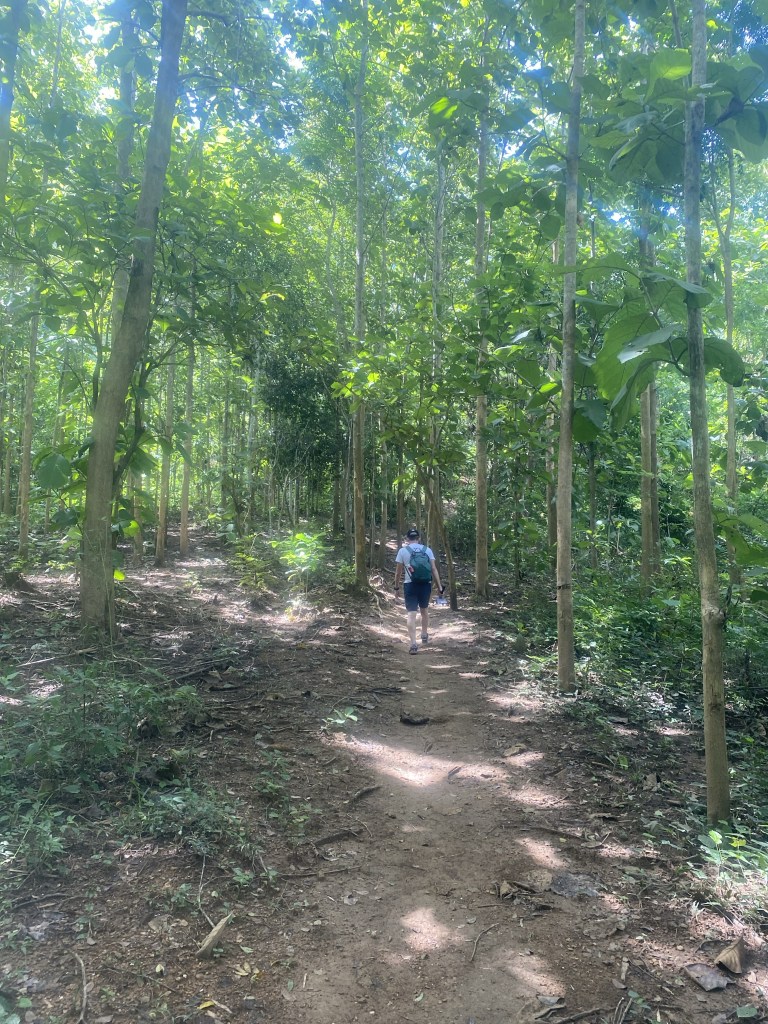
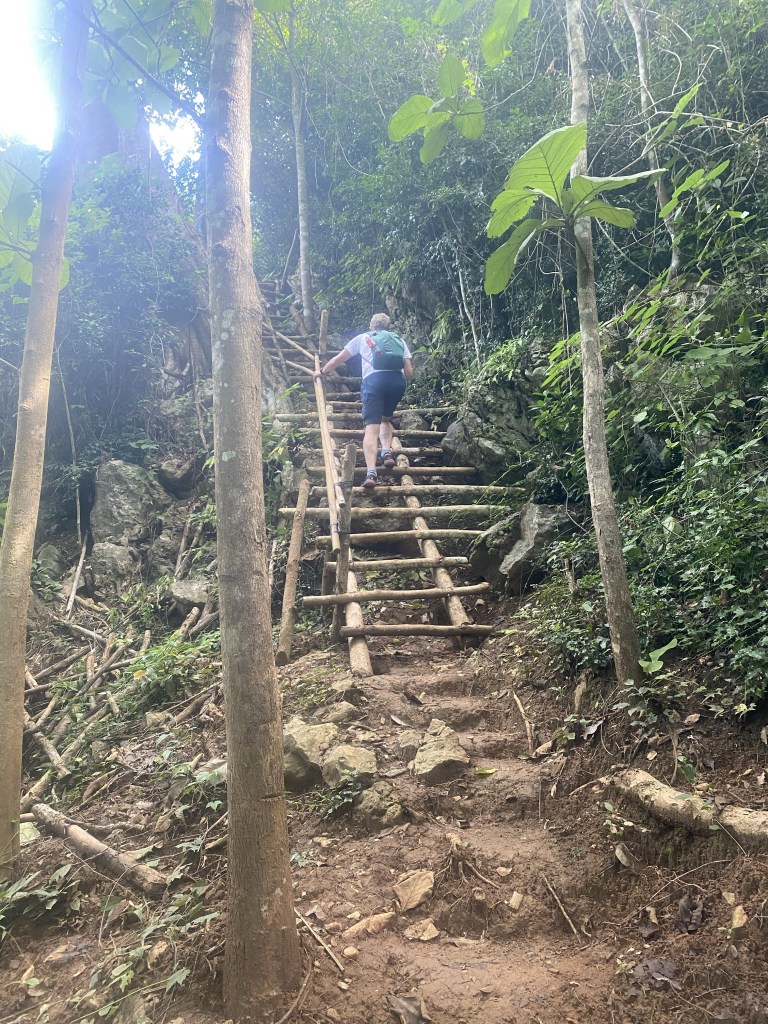
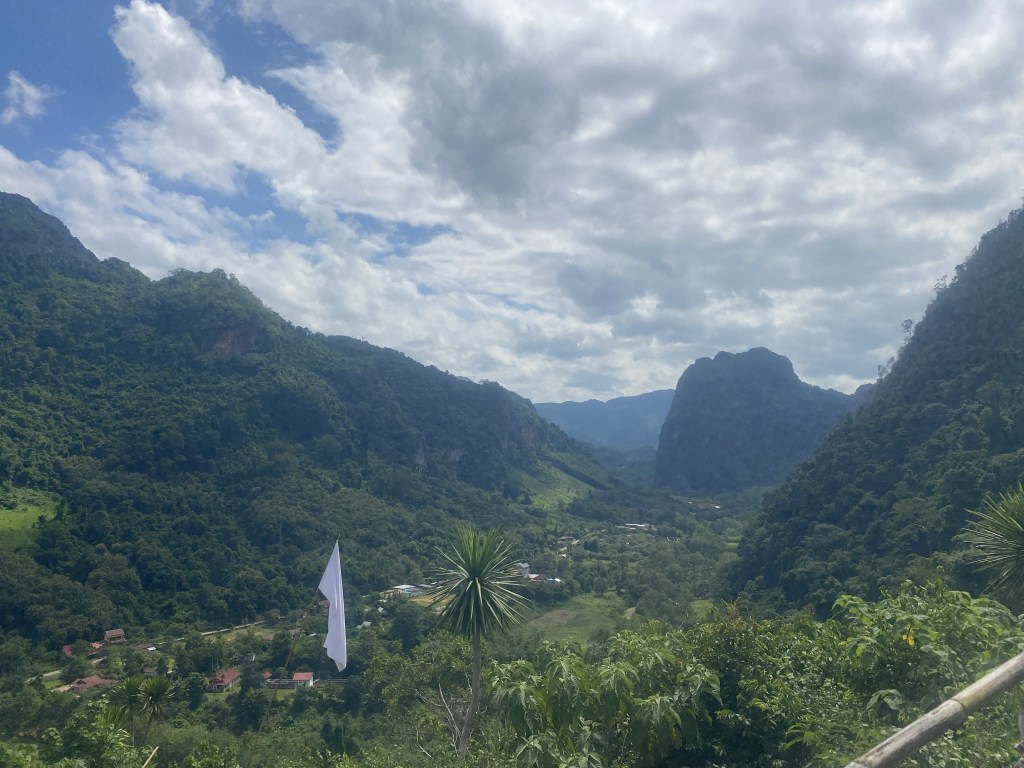
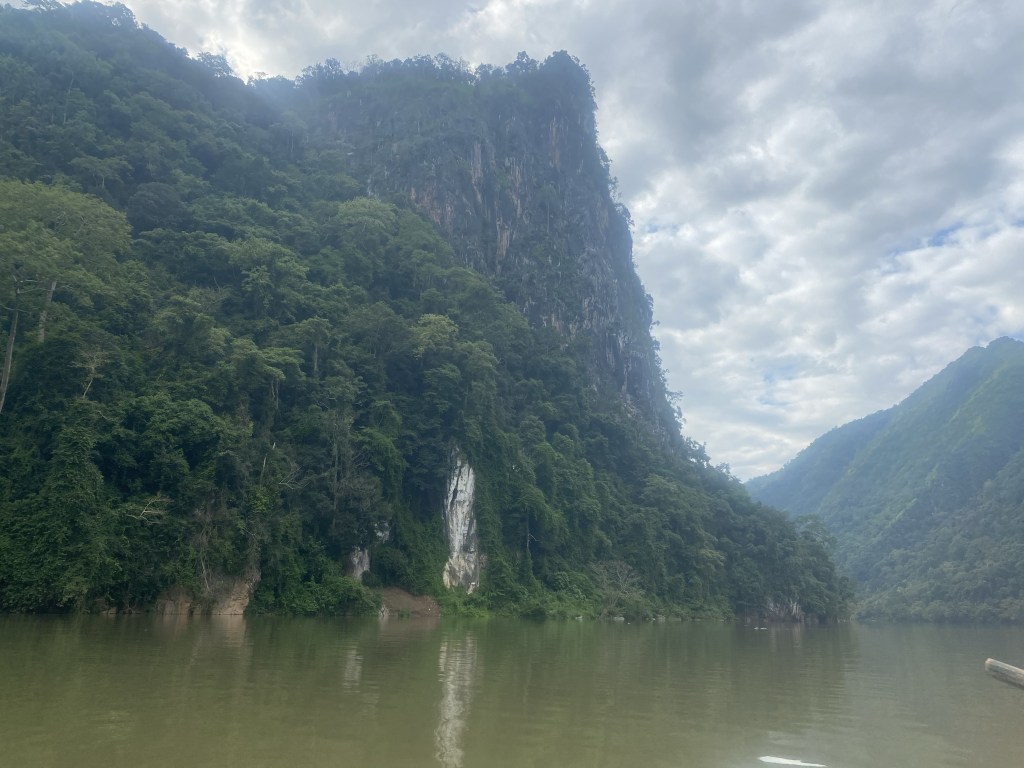
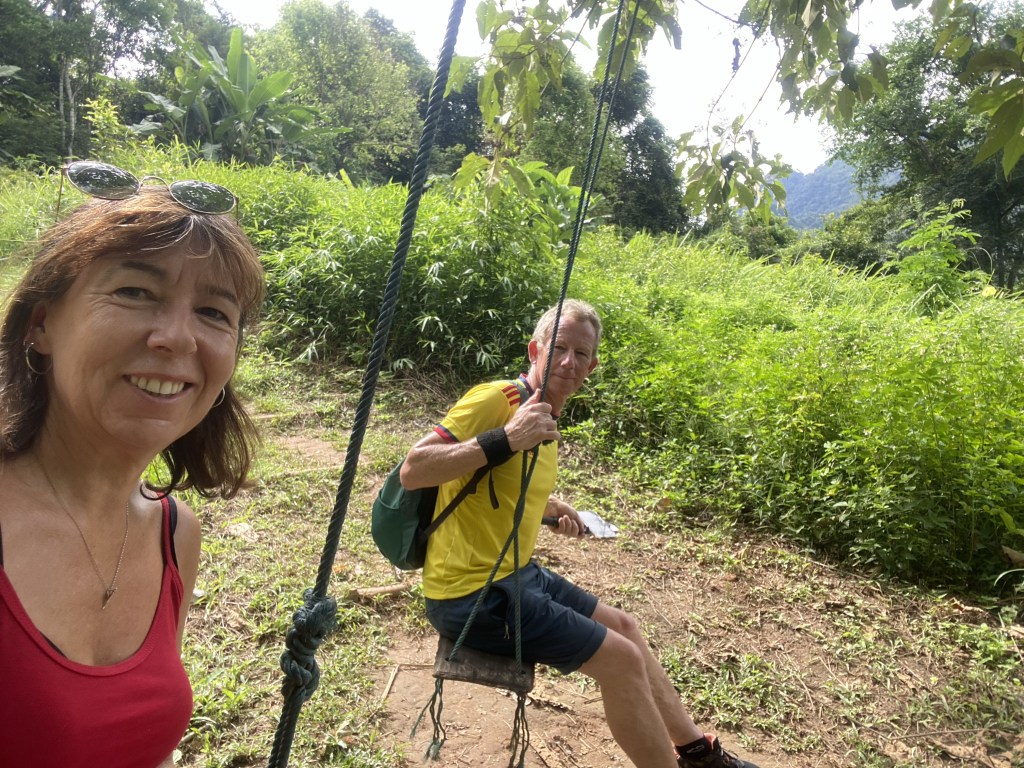
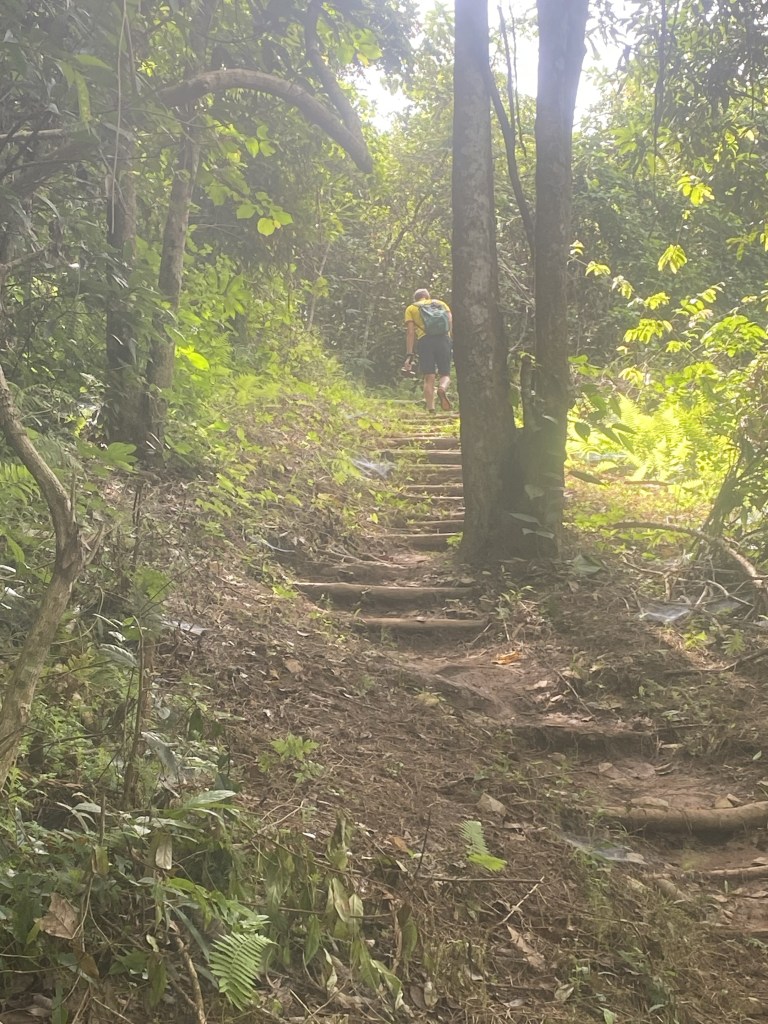
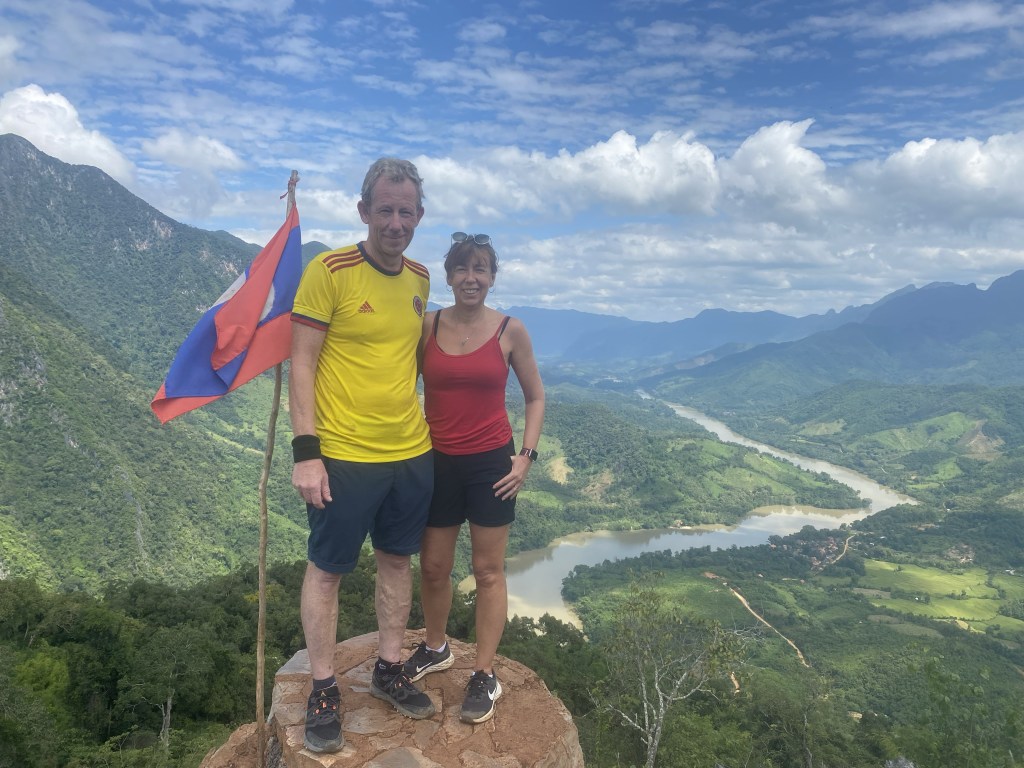
The following morning, we took a minivan (full of 20 somethings and us😂) north to Nong Khiaw- a small town in the mountains. We stayed in floating bungalows which, though basic, were very clean with the most amazing views. We did some fantastic hikes to viewpoints here which were totally worth it when we got to the top. Callum nearly walked into the biggest spider ever on one but has now proved that he’s over his fear of heights as he hopped up onto the concrete block for the photo no bother at all.
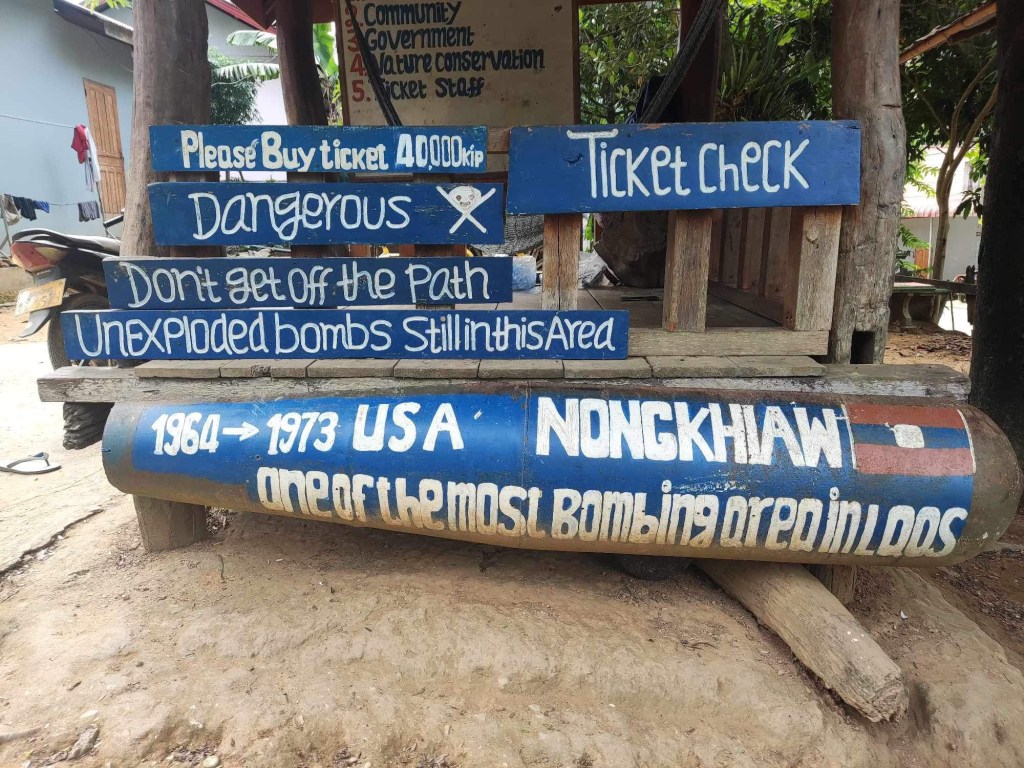
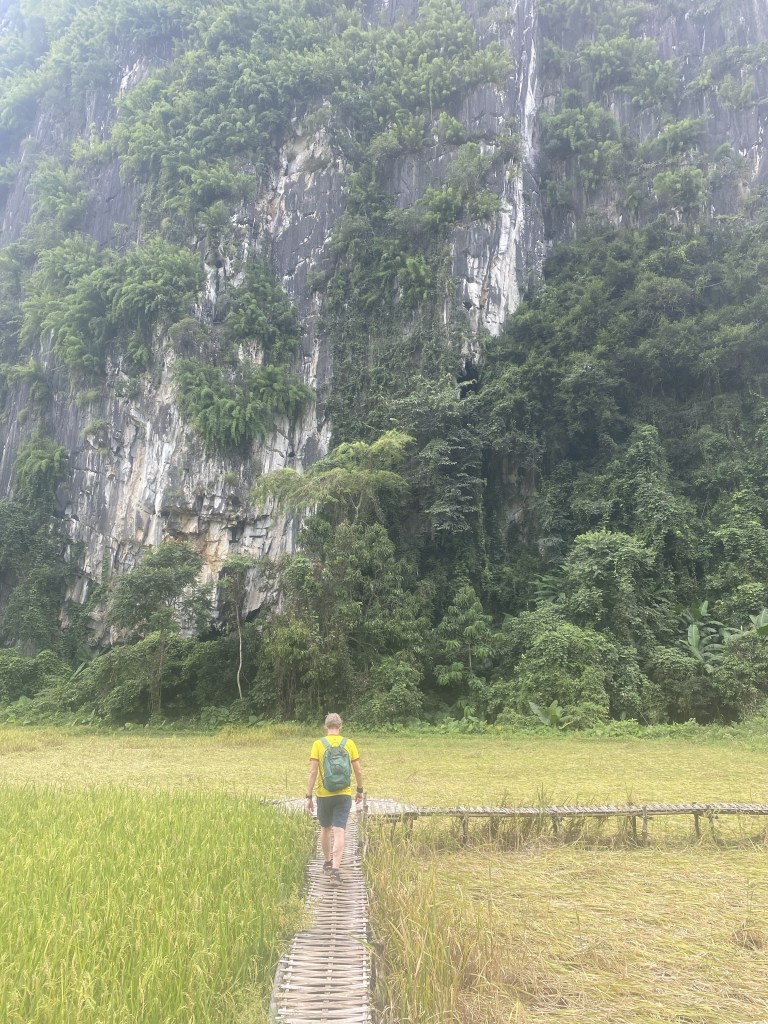
Despite our tired legs and the fact that the free mountain bikes had no gears with concrete feeling tyres, we headed out into the undulating countryside to a cave that was used by the locals to hide out in during the Indo-Chinese war between 1964 and 1974. They were both cavernous in places and also very tight and windy. Poor Callum; heights and small spaces in one day – I really pushed him that day 🤣! What made it worse, was when we were in the second small cave, we spotted leeches on our ankles that were far more attracted to Callum than me. He renamed the cave and we had to stop and deleech when we arrived back at the bomb crater at the start. Must be love, if I’m willing to deleech my husband!
Phadeng Viewpoint trail entrance has very clear warnings.Messing about as a rest on the way up!The top was worth it!The leech cave!Losing pints of blood😂
Next, we’re returning to Luang Prabang for a night including a trip up Mount Phousi and a massage for our calves before heading, with the 20 somethings I’m sure, to Vang Vieng by Chinese bullet train!
We got the afternoon train from Thonburi station in Bangkok, headed to Nam Tok for 100 baht each (£2.22 so in budget😁) and throughly enjoyed the 4 and a half hour journey. We watched the flat land around Bangkok change into mountains and we were very surprised to pass through so many fields filled with marijana plants (ganga, weed, hemp or what ever you want to call them). In fact, the air smelt very much like the student union in the 90s which could be why we enjoyed the trip so much! We had seen many weed shops in Bangkok and read that it is legal here as long as it is not sold to the underage or pregnant women and is consumed at home (though the Thai government has just done an about face on this as it is causing too much trouble and in 6 months it will only be available for medical purposes).
We chose a to stay in a homestay in Nam Tok and though it only had 4 rooms, it was so friendly with Poom, the owner, chatting with us every night over delicious food cooked by the older ladies of the family as locals popped in and out of her little shop. We had a lazy day the next day as I still wasn’t feeling great and the following day rented a scooter from Poom heading to Hellfire Pass.
Fields upon fields of weed!
Hellfire Pass
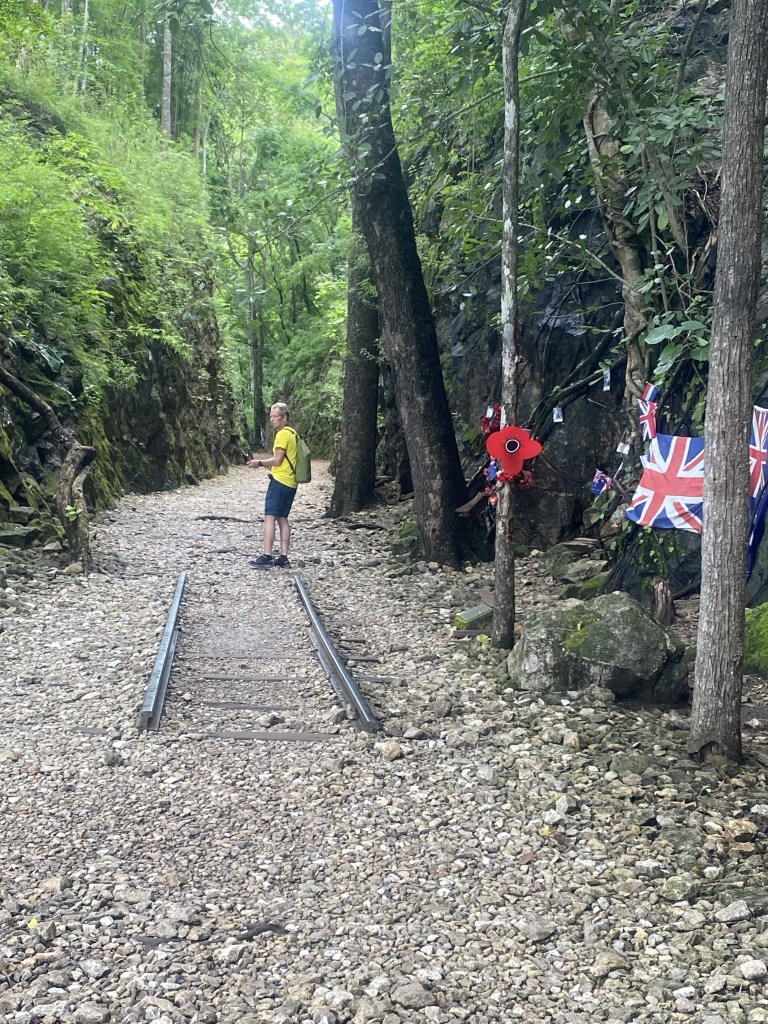
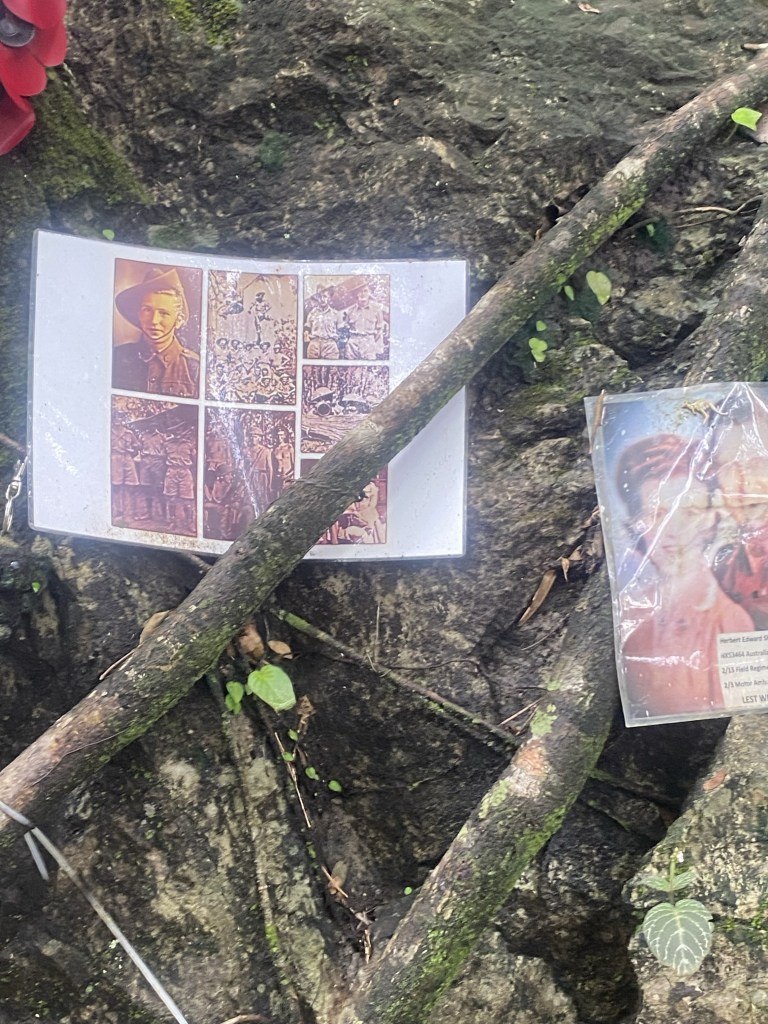
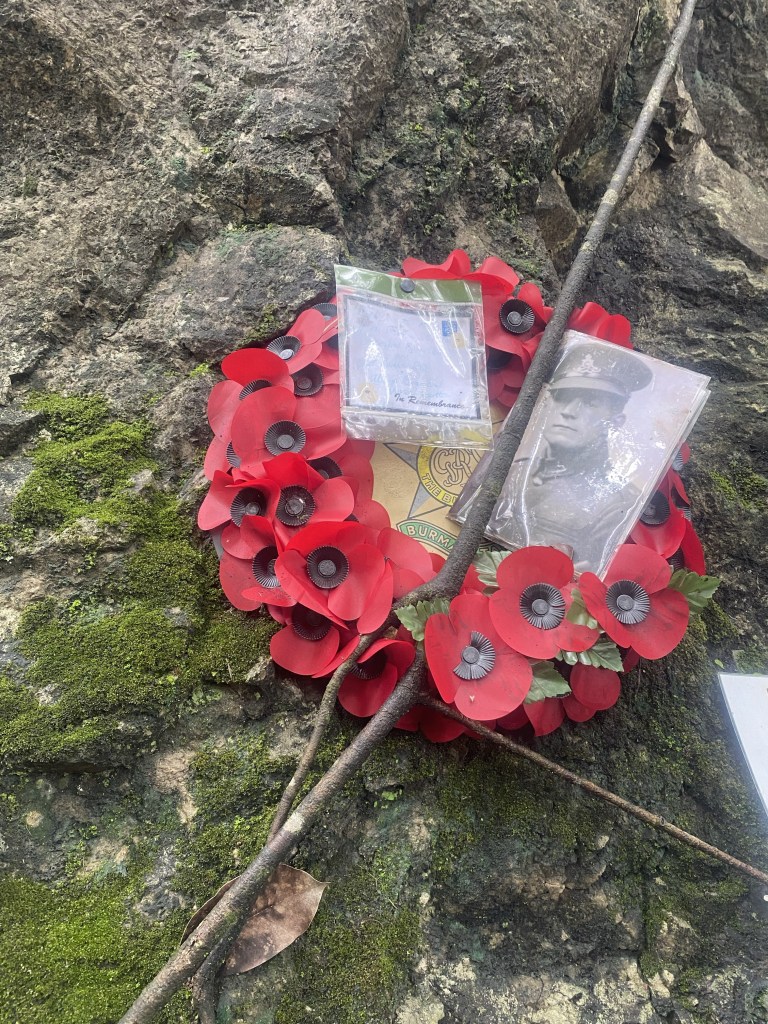
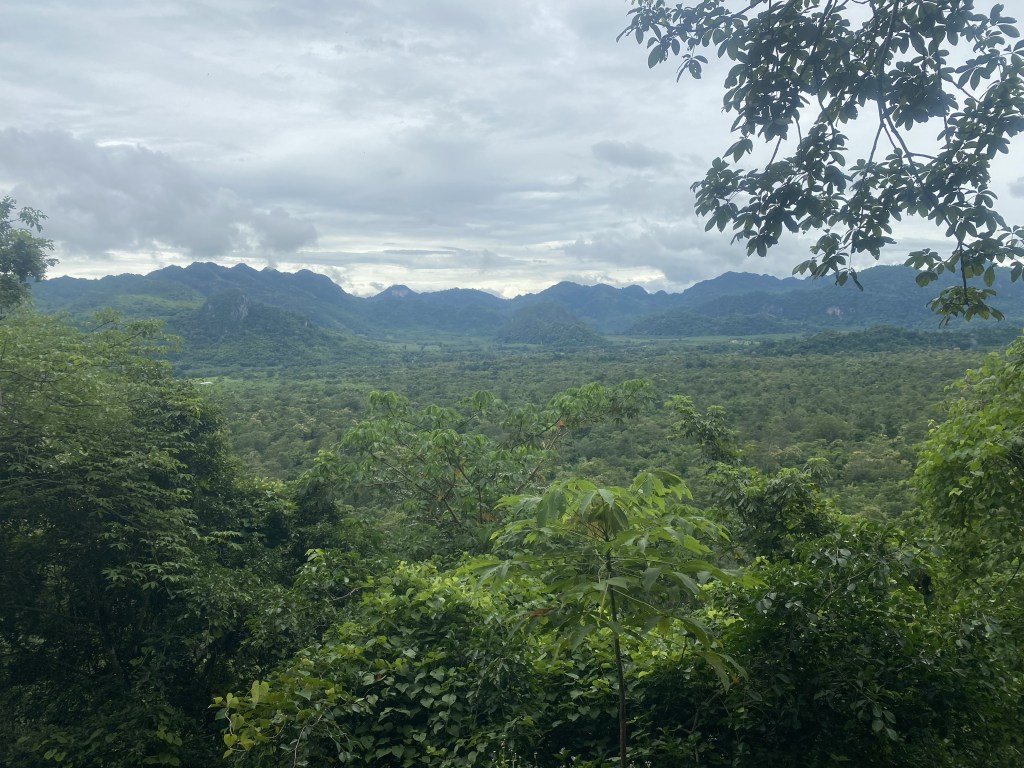
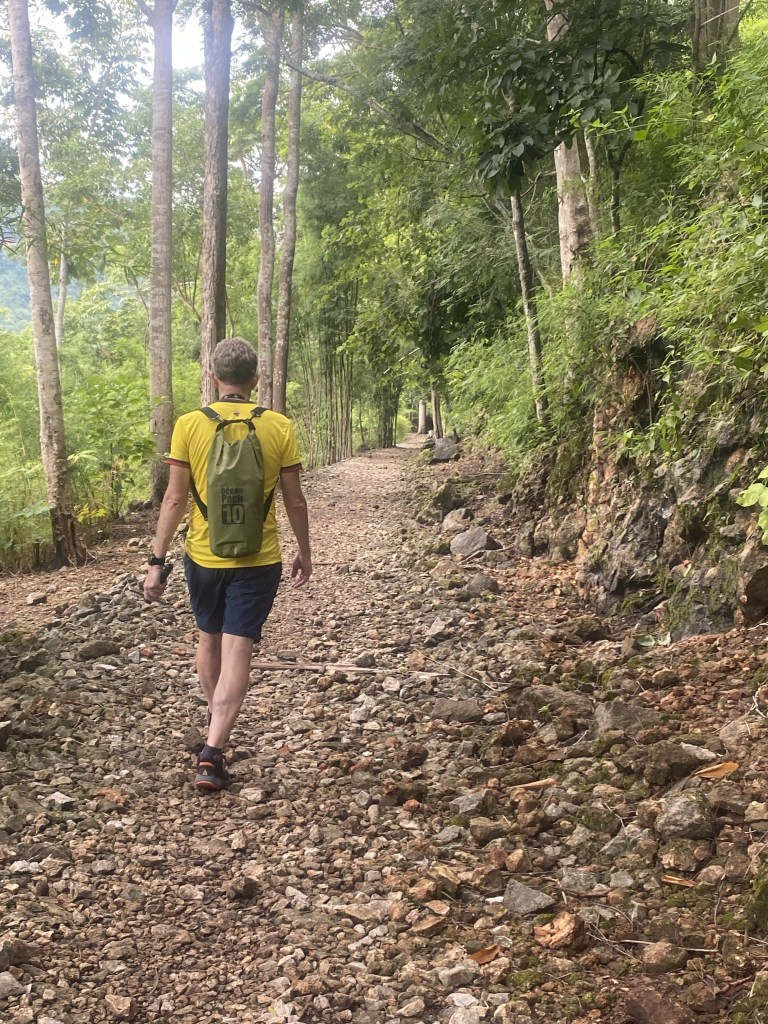
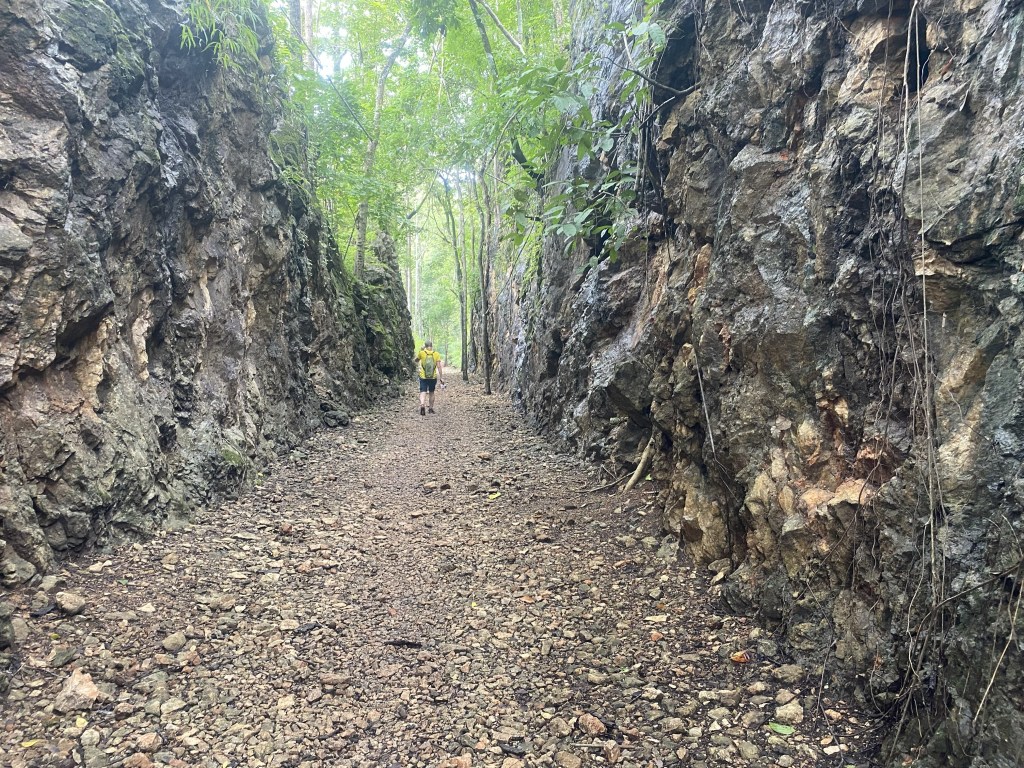
Hellfire Pass is known as the place with the worst conditions along the Death Railway that was built by POWs and Romusha (local Thai, Burmese and Tamil people) in 1942. The 415km railway was built so the Japanese would have a supply route to Burma through Thailand as they were worried about the attacks from allied submarines with their sea routes. It was called Hellfire Pass because, at night when work continued, it looked like hell as the prisoners hacked away at the cutting with hammers and nails in order to make the space for sticks of dynamite. Initially, Japanese’s surveyors thought it would take 5 years to construct the railway but with forced labour it took just over a year. Conditions were brutal, to say the least, as the men were forced to work in 18 hour shifts with very little food, water or shade. Their clothes literally fell apart and they were eventually bare footed wearing just loin cloths that they were provided with. We had enough trouble walking the 5km path with trainers and water so goodness knows how any of them survived at all. Many died of: starvation (eating around 600 calories a day) , cholera, being shot/beaten, snake bites and ulcers despite their doctors efforts to save them. Seeing the poppy tributes and the photos on the cutting was sobering and a real juxtaposition against the beauty of the place especially as the area was so quiet and full of bird song.
We really learnt a lot here as we found that despite the heavy focus on WW2 in our school history exams, it was so European focussed that our knowledge of this aspect of the war was definitely lacking. The Australian government funds this free to visit place with excellent free audio guides and walkie talkies to keep you safe with regular check-ins on the route. All was fine until Callum thought he’d wave at the camera at the end, Hintock Station, before we started back and they quickly contacted us concerned we had an issue! Note to others, don’t try to funny here they were very concerned for number 4!
Amazing waterfalls
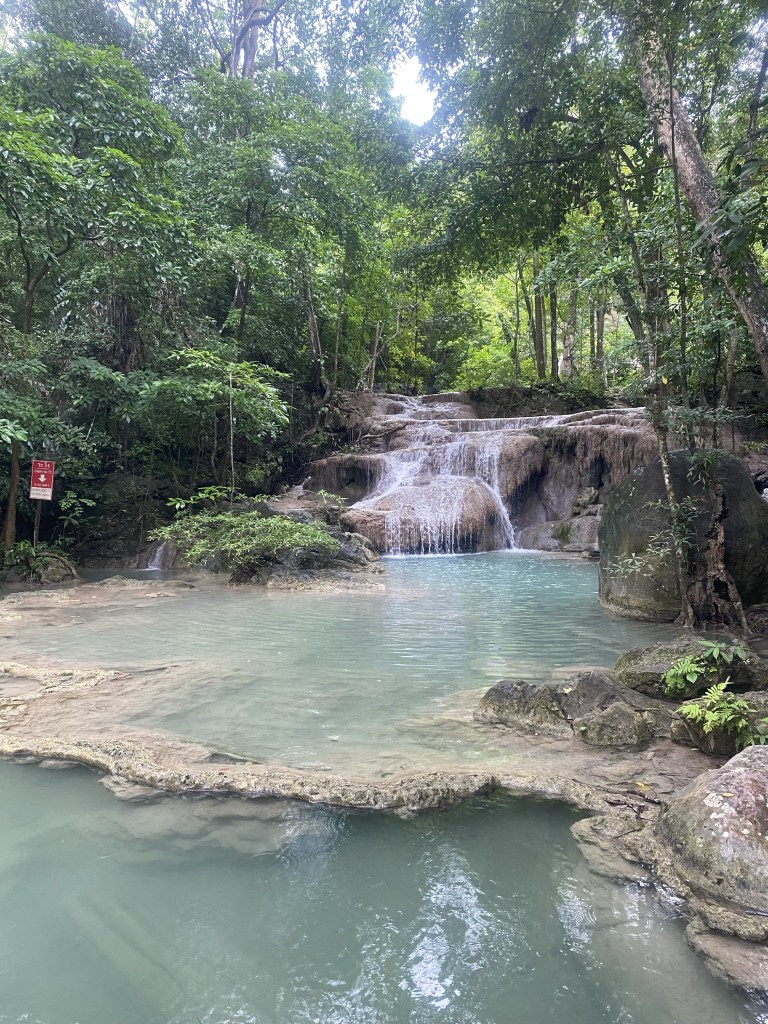
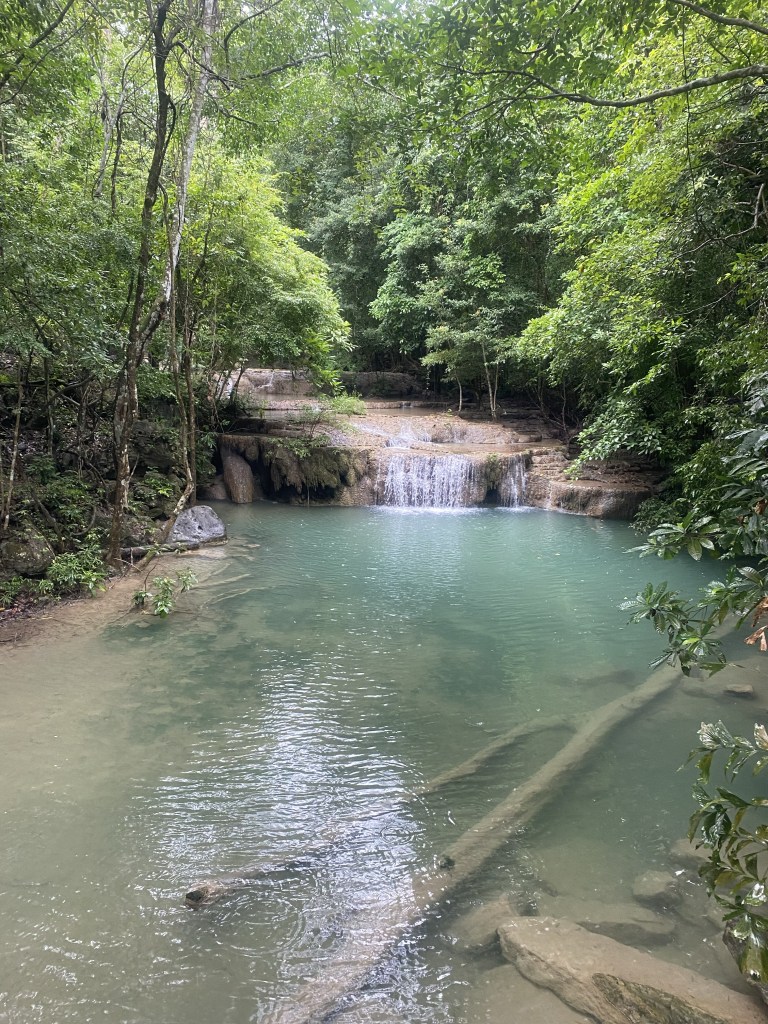
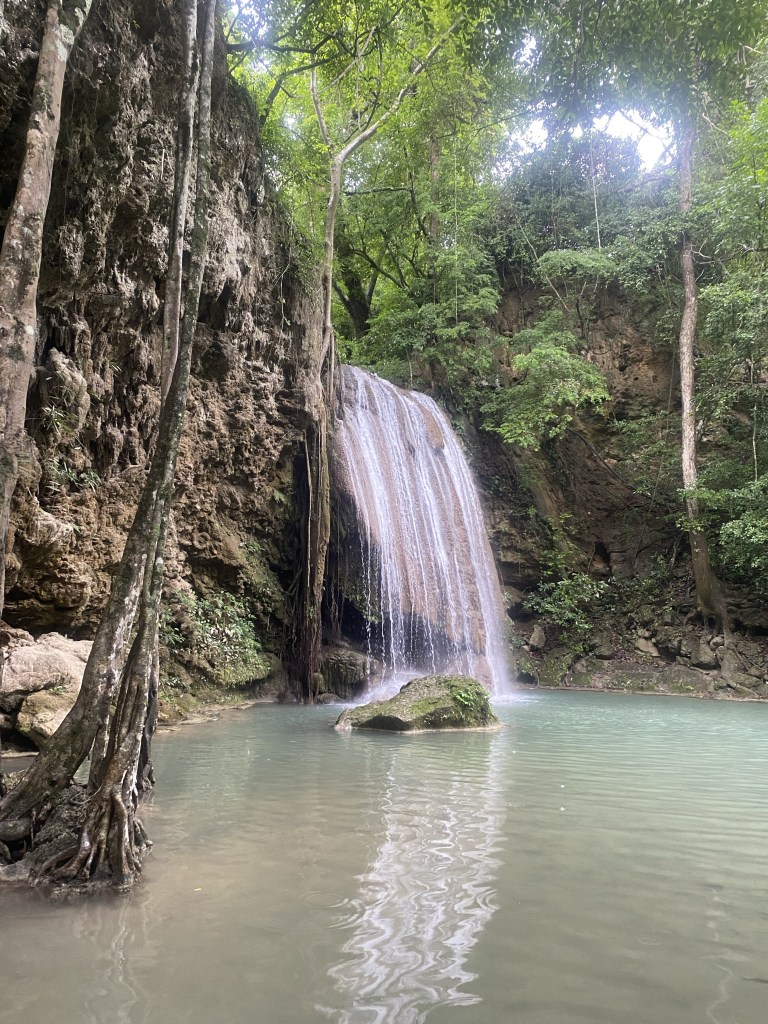
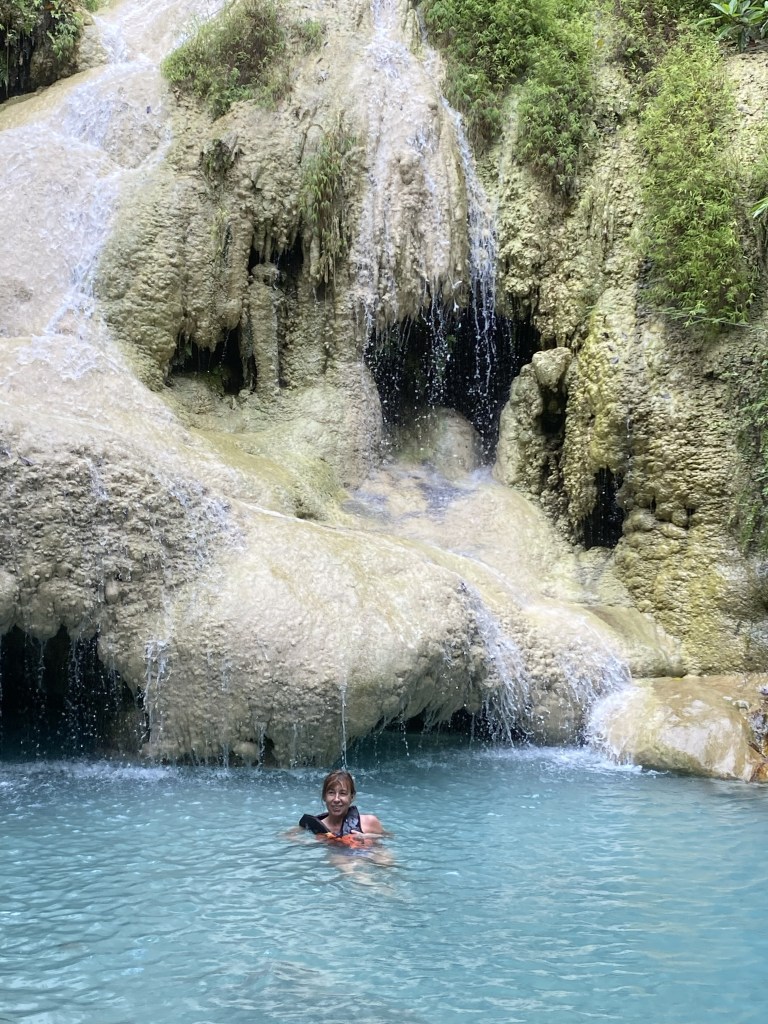
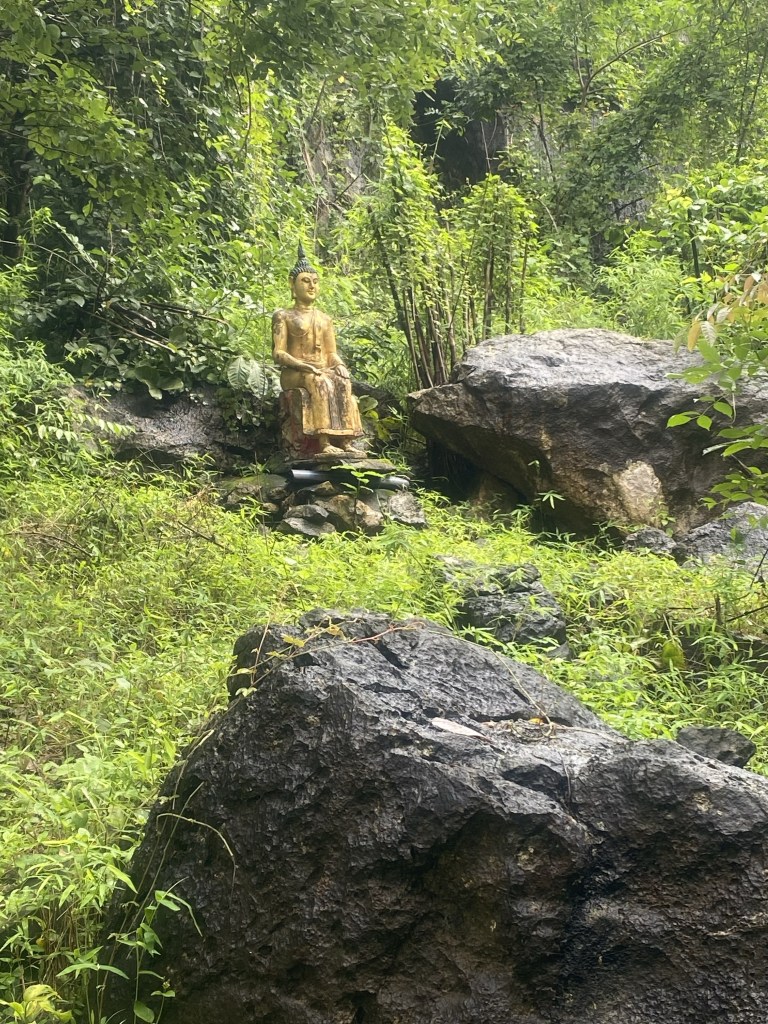
The next day, despite the rain, we decided to still head to Erawan Falls, a series of 7 waterfalls an hour away on our moped so we donned our sexy ponchos and took our time. The rain, thankfully, stopped as we arrived and though we didn’t have the bright blues of the brochures (as we were missing the sunshine), the national park was really beautiful. That is, once we managed to negotiate a rather confusing entry procedure; we didn’t know we needed to book online, then the signal wasn’t great and it was all in Thai – travel agent fail here!. We walked to all 7 falls and went in at the top with our mandatory life vests on in waist deep water! The many fish ( some quite large) there had a good suck on any part they could reach so keeping moving was very necessary to prevent tickling- Callum swore they were feasting on a small cut of his which after a good suck from the fish healed much quicker! Unfortunately, we got very wet going back and spent one more night with the Yayee homestay. On our final morning, Poom sent us up the hill next to homestay to see a small cave and Buddha used by locals. A really peaceful spot that looked over the valley.
Temple hopping
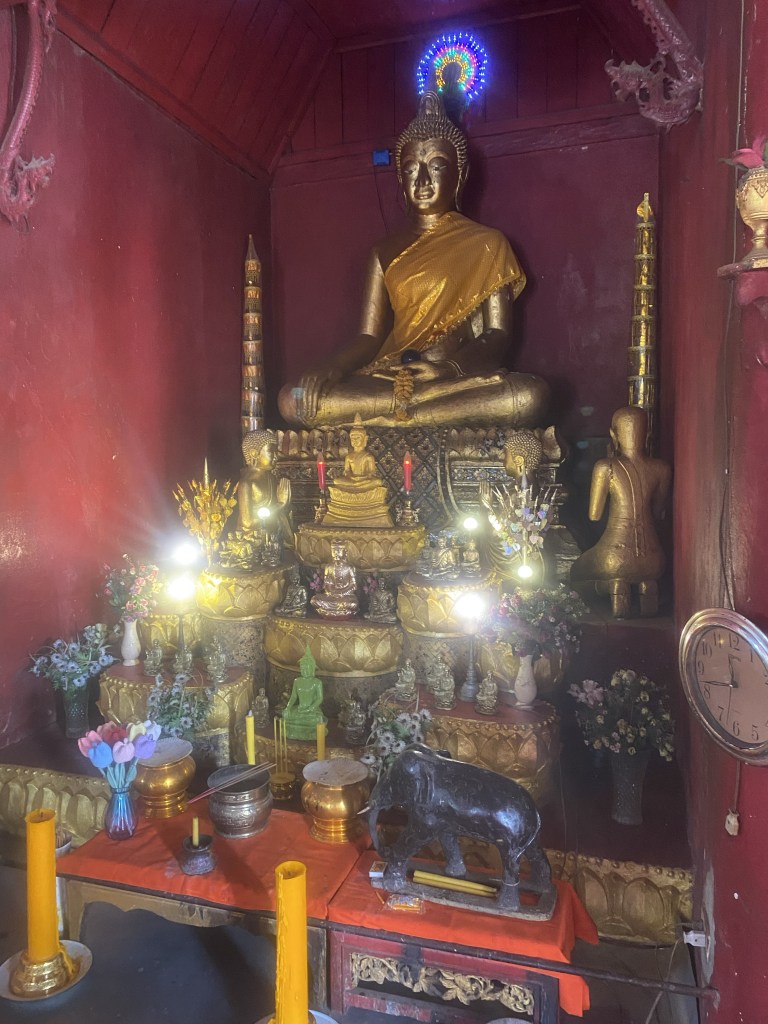
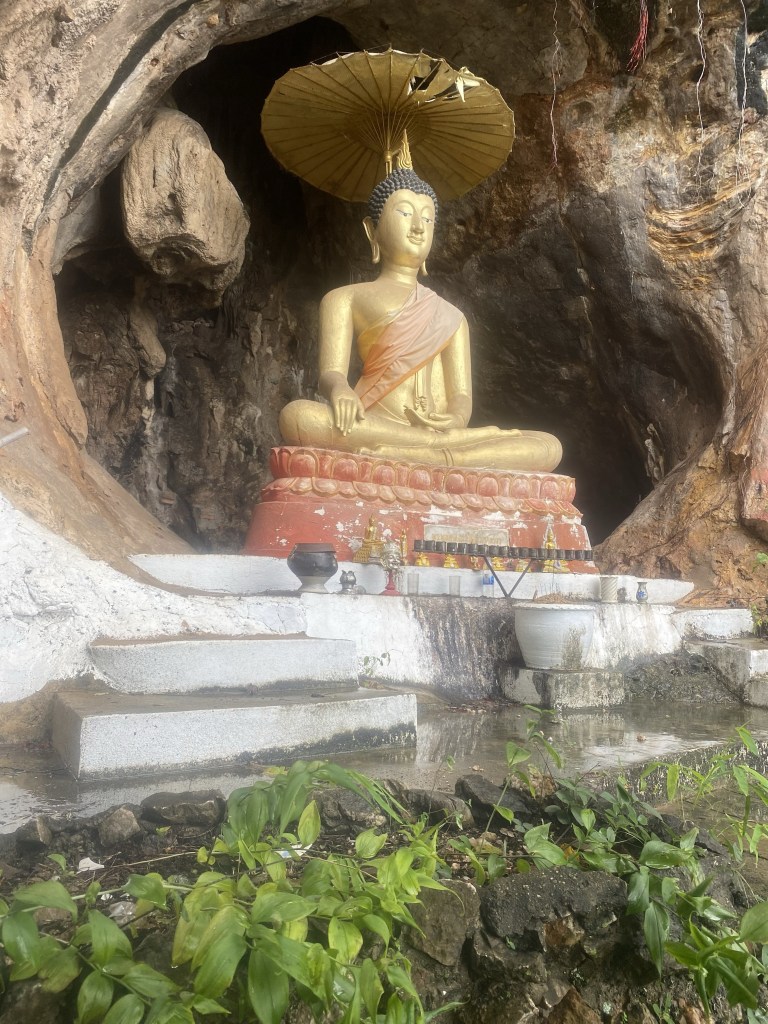
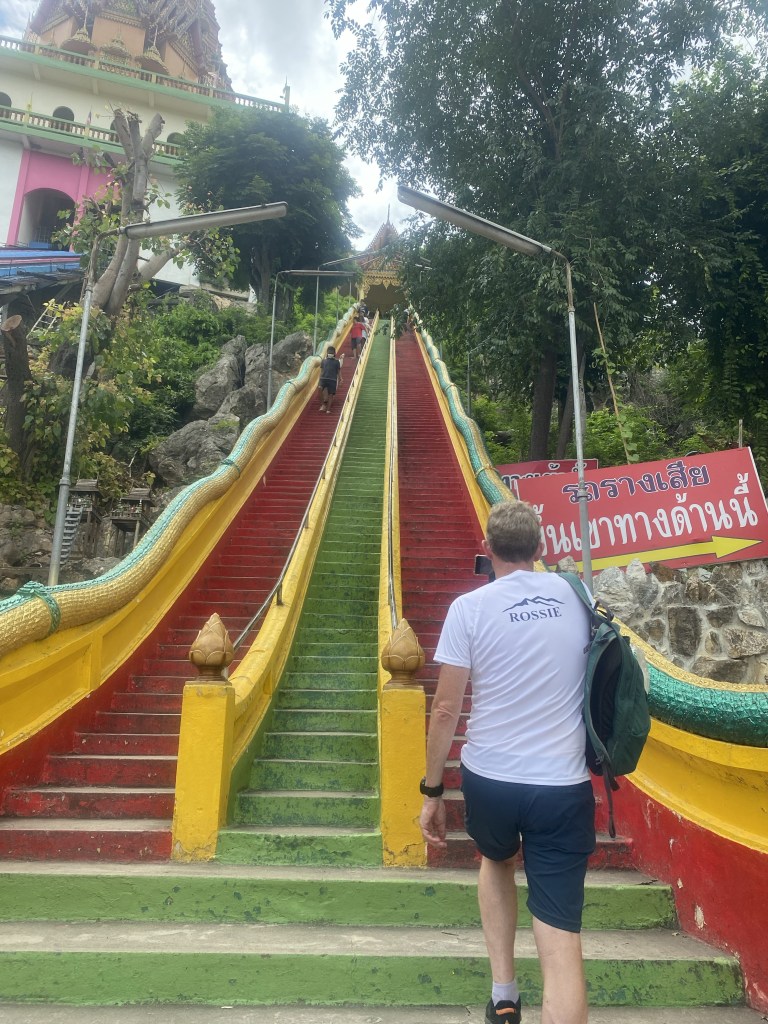
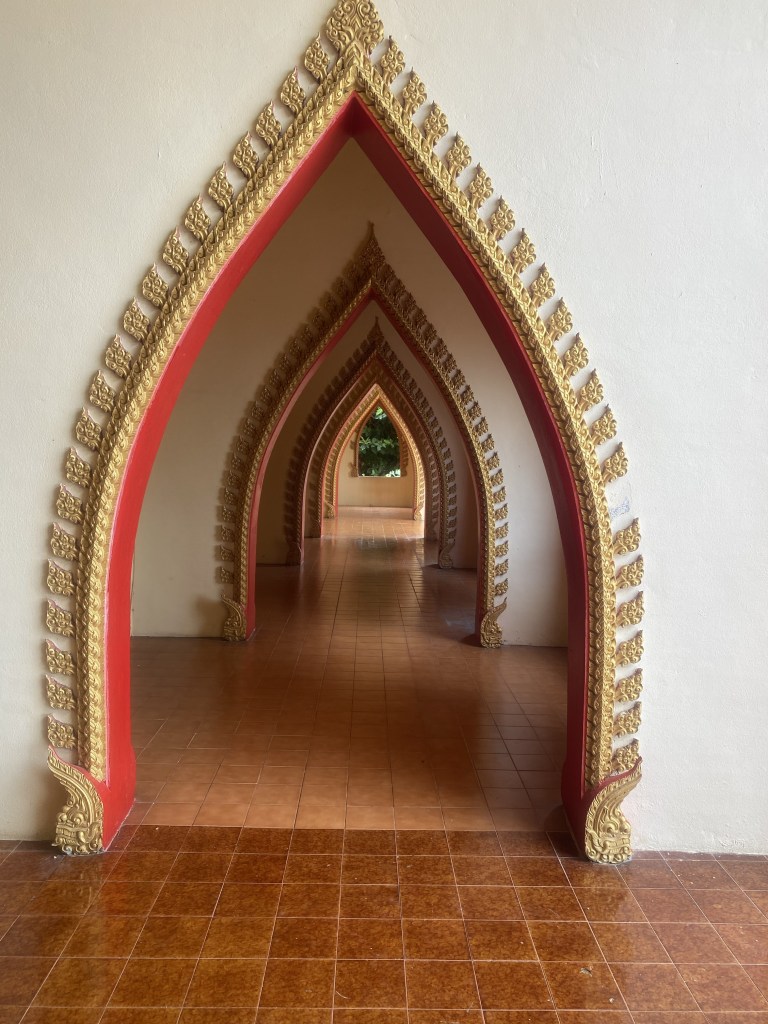
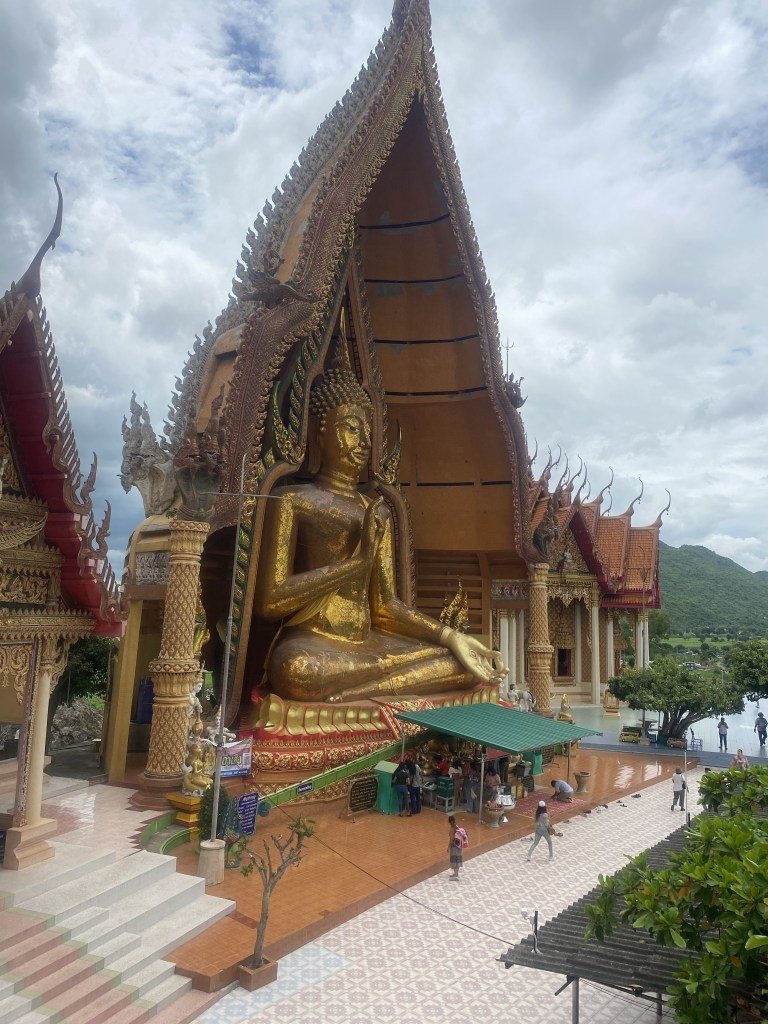
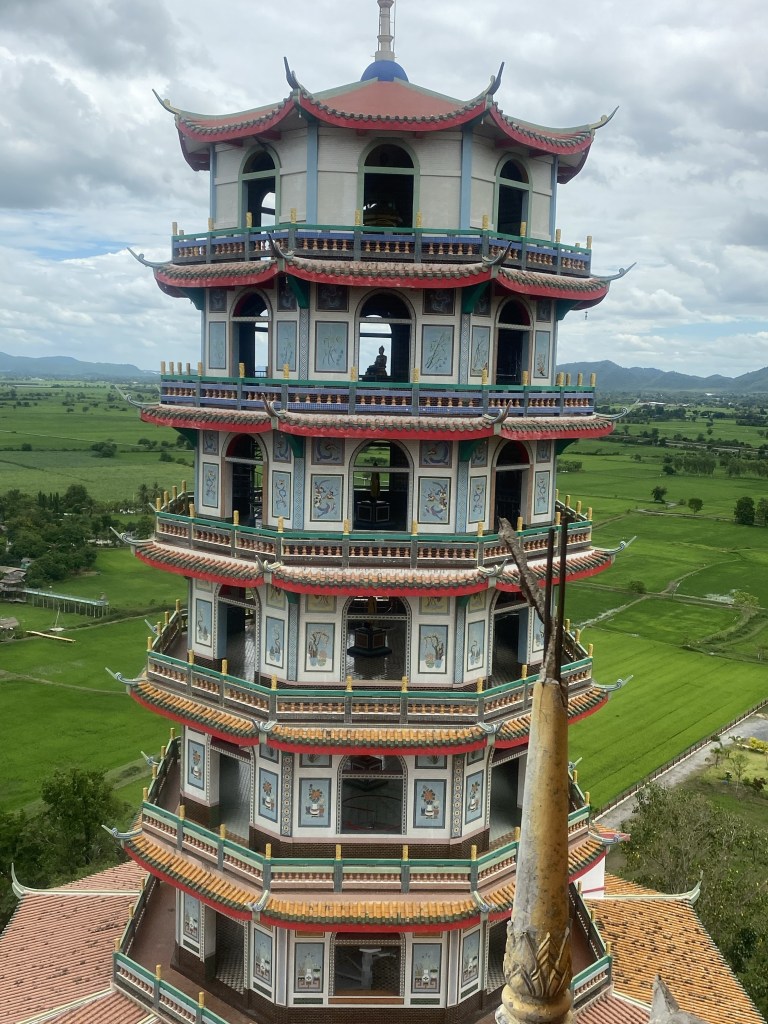
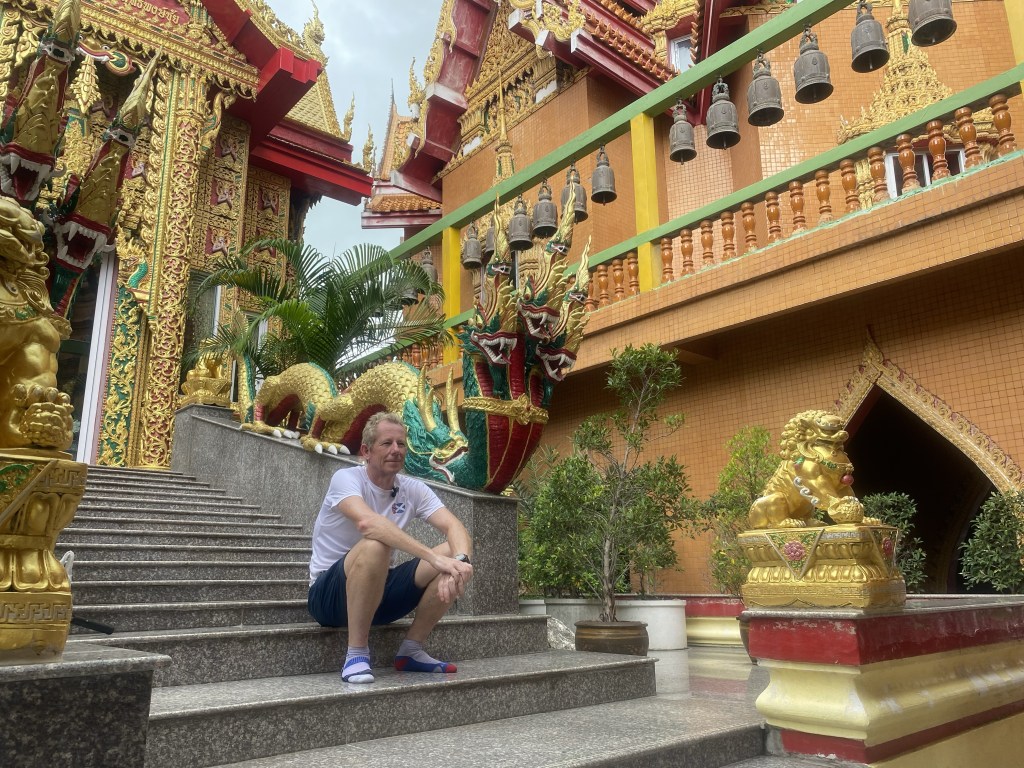
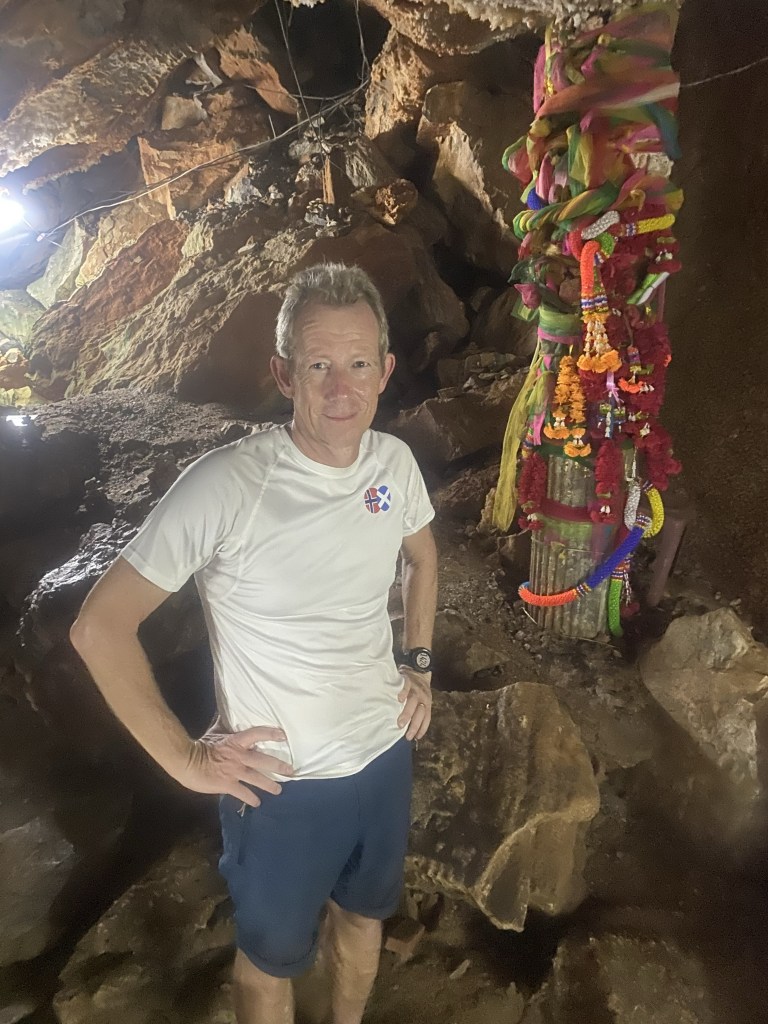
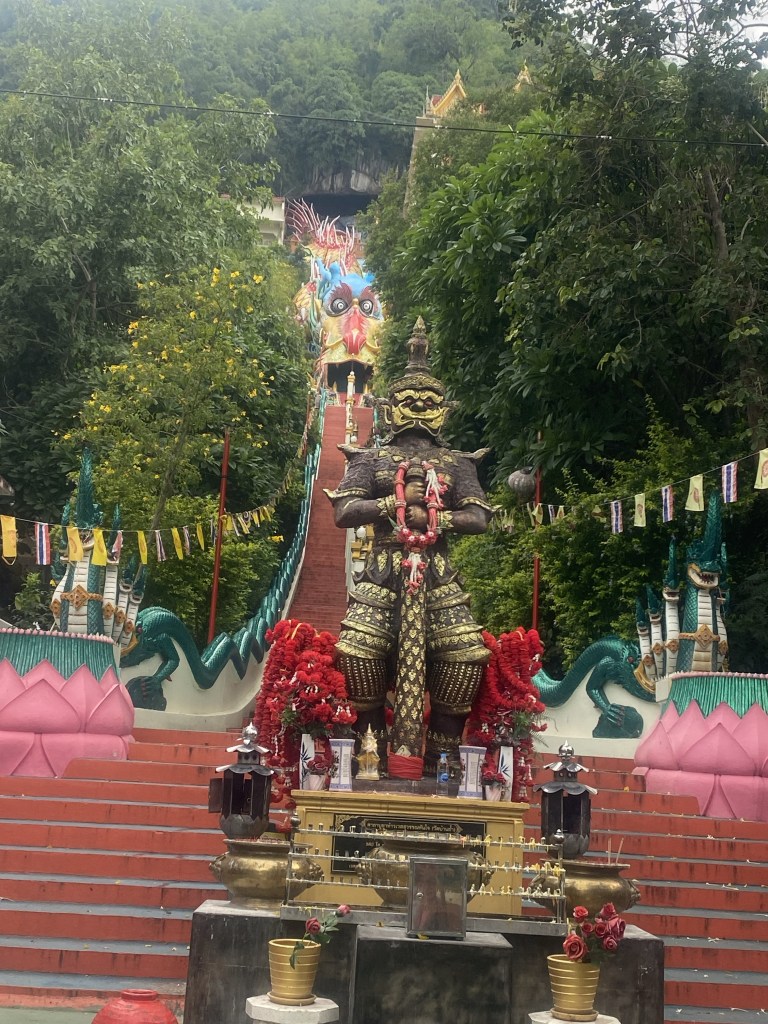
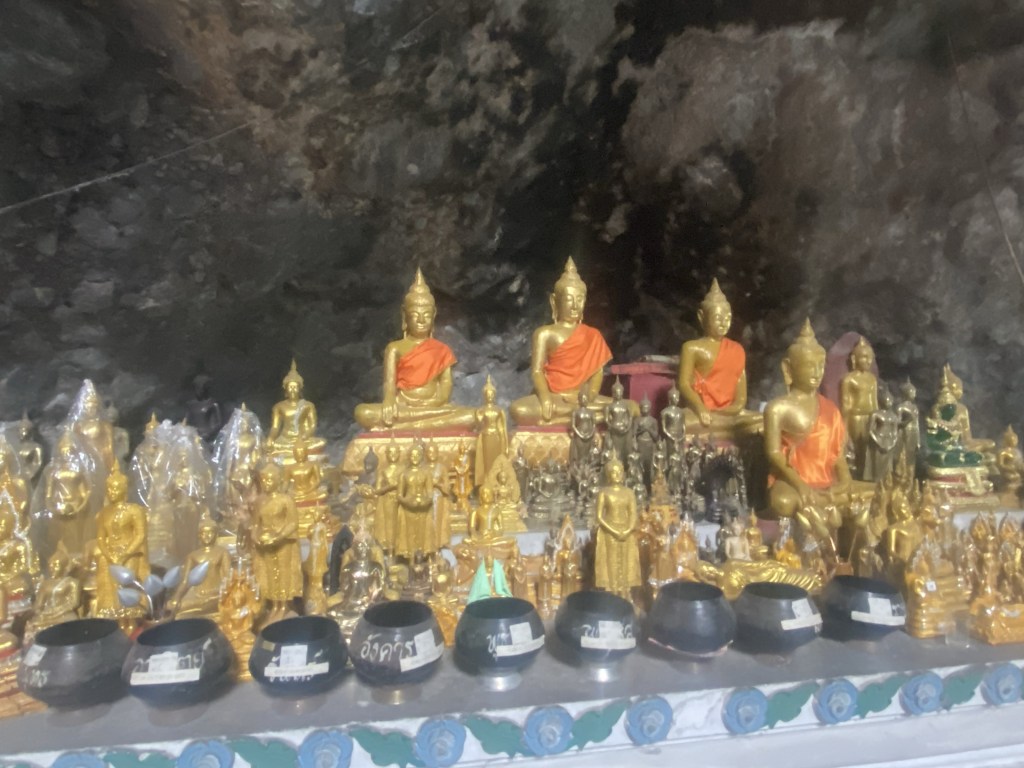
We woke up the next morning in a rather lovely hotel near the River Kwai. As the sun was shining, and with memories of wet scooter rides earlier in the week, we decided to visit the recommended temples first. We spent the day temple hopping with them all being quite different. The first had two parts, an old Chinese inspired pagoda built in 1883 next door to Wat Tham Sua, a large Buddha finished quite recently. Both were up 157 stairs and rather beautiful. Next, we visited the Crystal Cave which really did have crystals on the walls and contained stalagmites and stalactites. The small cave, that Callum only just fit into, activated his fear of small spaces so we didn’t stay long! The last temple of the day was up even more stairs and through the dragon’s mouth to Wat Tham Khao Pun (we could have climbed the 700+ stairs but decided we weren’t fit enough and stopped at the cave). We met some very, very smiley monks here who though they didn’t speak English and our 3 words of Thai didn’t help, were very encouraging and kind.
Wat Tham Khao Noi Wat Tham SuaAlone in the Crystal Cave Wat Tham Khao Pun – a cave temple on a grander scale.
3 Museums and a cemetery.
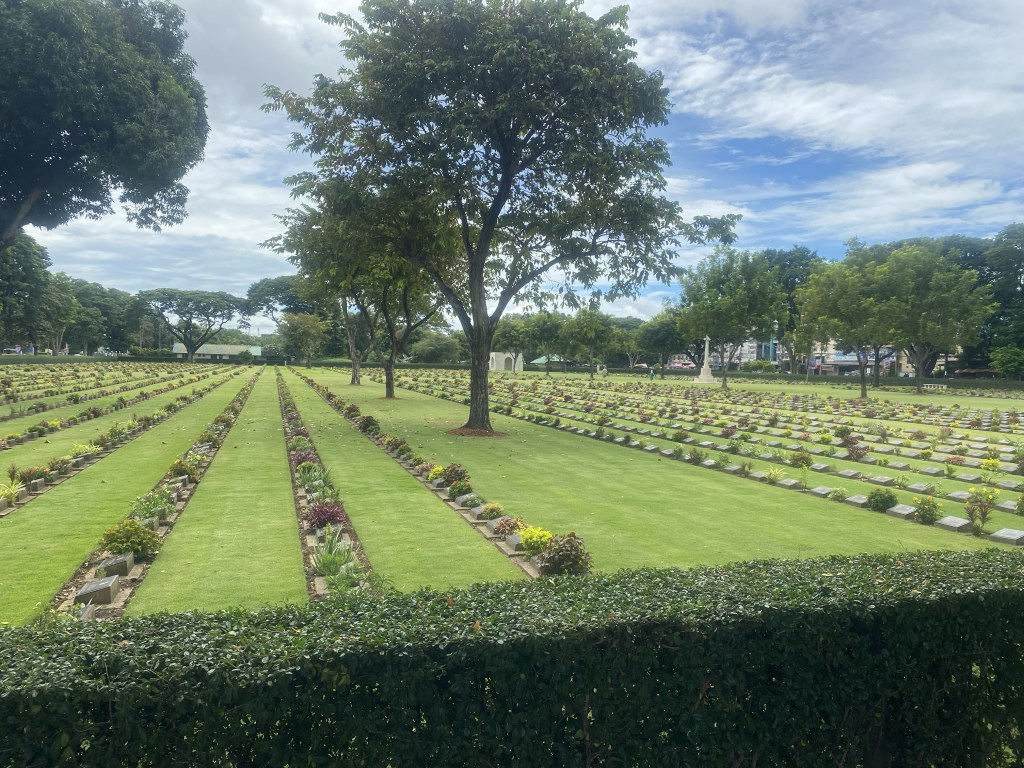
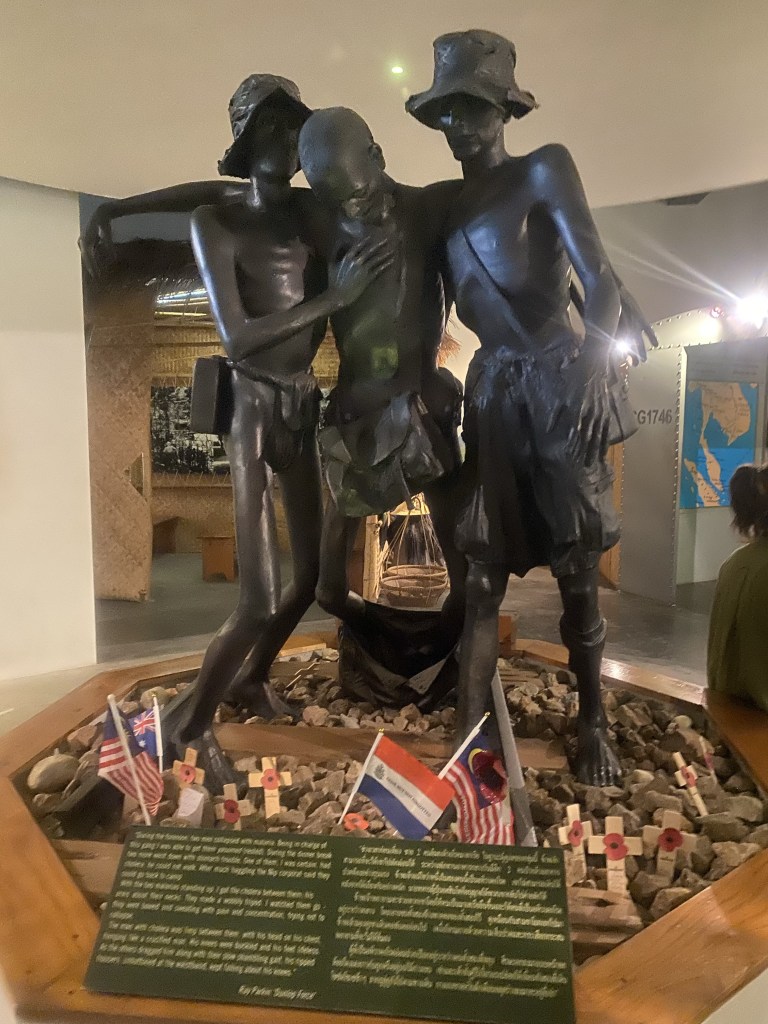
We spent the following day in Kanchanburi itself first stopping at the war cemetery which was very sad especially as we read the ages and inscriptions on the plaques. Some of the bodies of the soldiers buried along the railway were moved to this cemetery along with others ashes. It is thought that in excess of 100,000 people died in the construction of the railway that took just over a year to complete with the numbers rising in its “speedo” period when prisoners were pushed even harder. Shockingly, it is thought that one prisoner died for every sleeper that was laid on the track. We visited several museums which were a bit bizarre and then the one next to the cemetery which was by far the most informative.
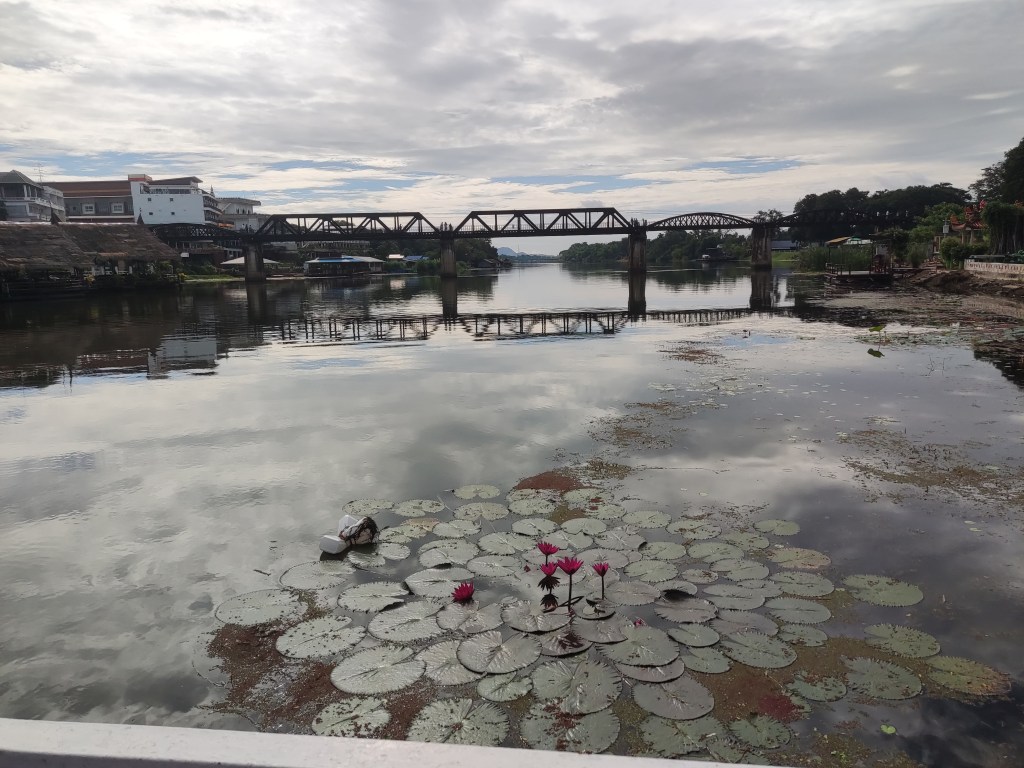
We spent the afternoon by the glorious pool at the hotel and then had a delicious, if very spicy, meal overlooking the bridge. Back to Bangkok next and then we hop on a plane to Laos and Luang Prabang.
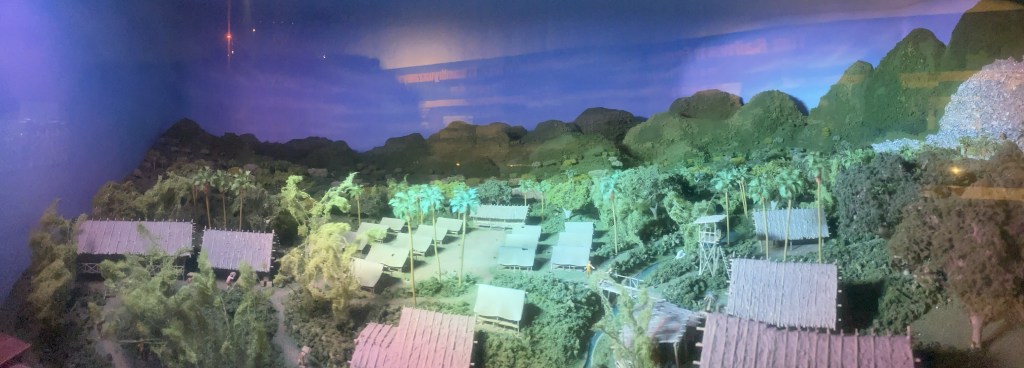
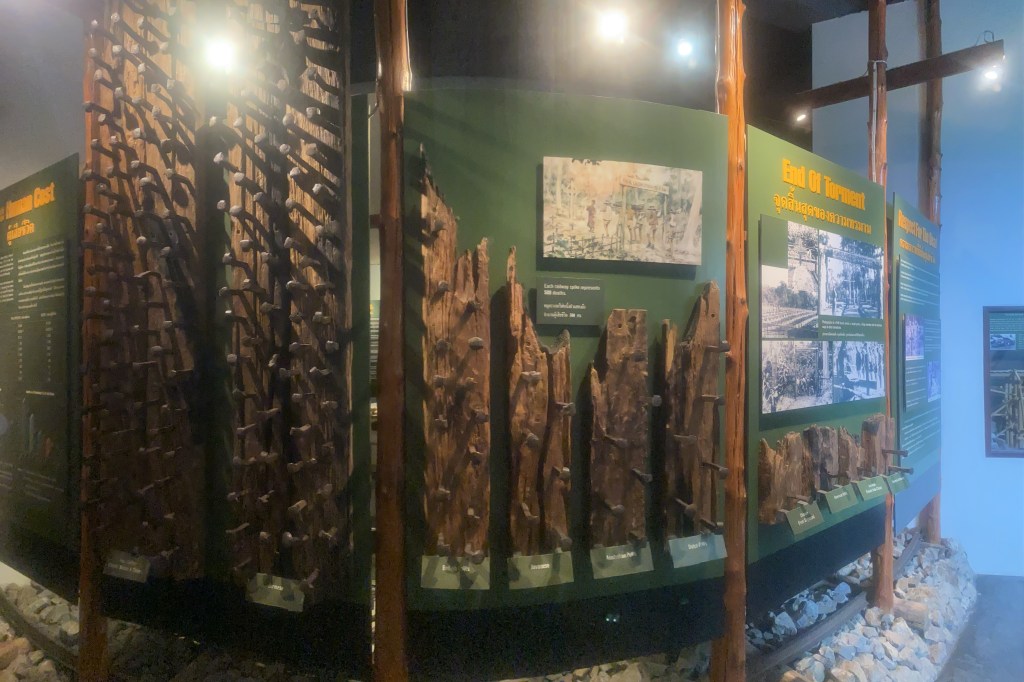
War cemetery.Model of one of the campsThe nails are representations of the number of each nation who died on the railway.
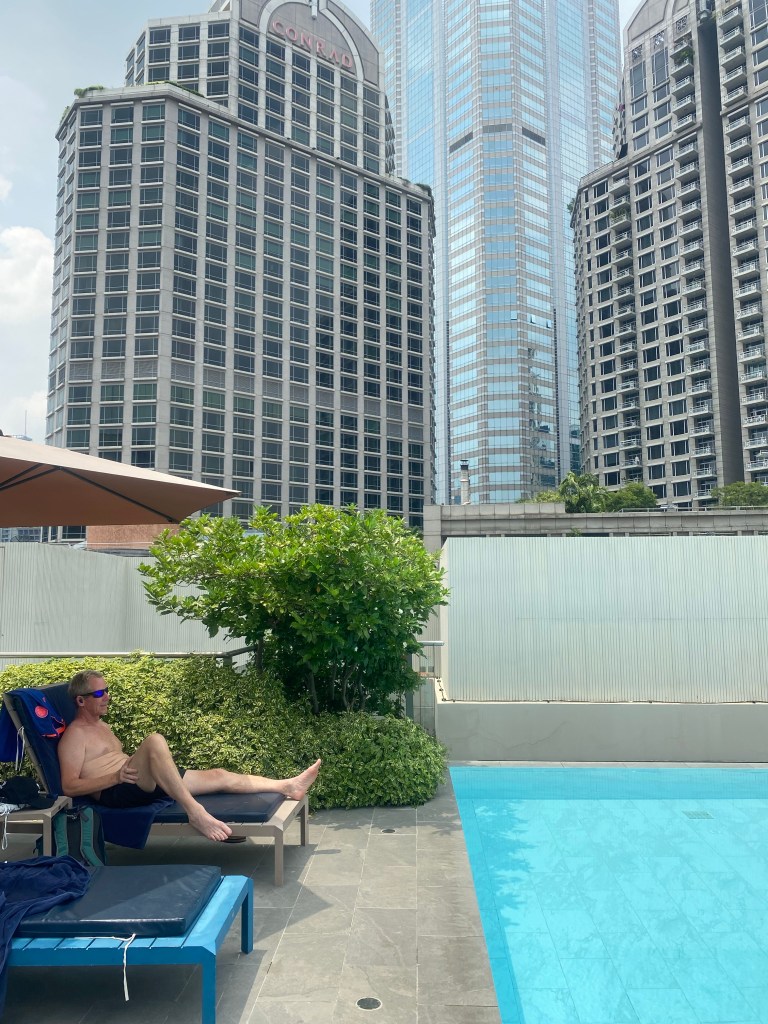
After a very sad time saying goodbye to our lovely Willow, we set off on our flight to Bangkok with a very rough itinerary of 2 weeks first in Thailand, then Laos, Cambodia and ending in Thailand again. Our Qatar flights were good with aisle seats to Doha ( with lots of bubbly) and a spare seat between us after our very tight connection. Just big enough for me to curl up on however the turbulence meant we had very little sleep. We arrived and easily found the hotel which was great except the pool was shut and we’d especially picked this as it had a good pool. After a little gentle complaining about lack of information at booking, we got the use of the partner hotel’s pool 5 minutes away and free breakfasts added so it wasn’t too bad.
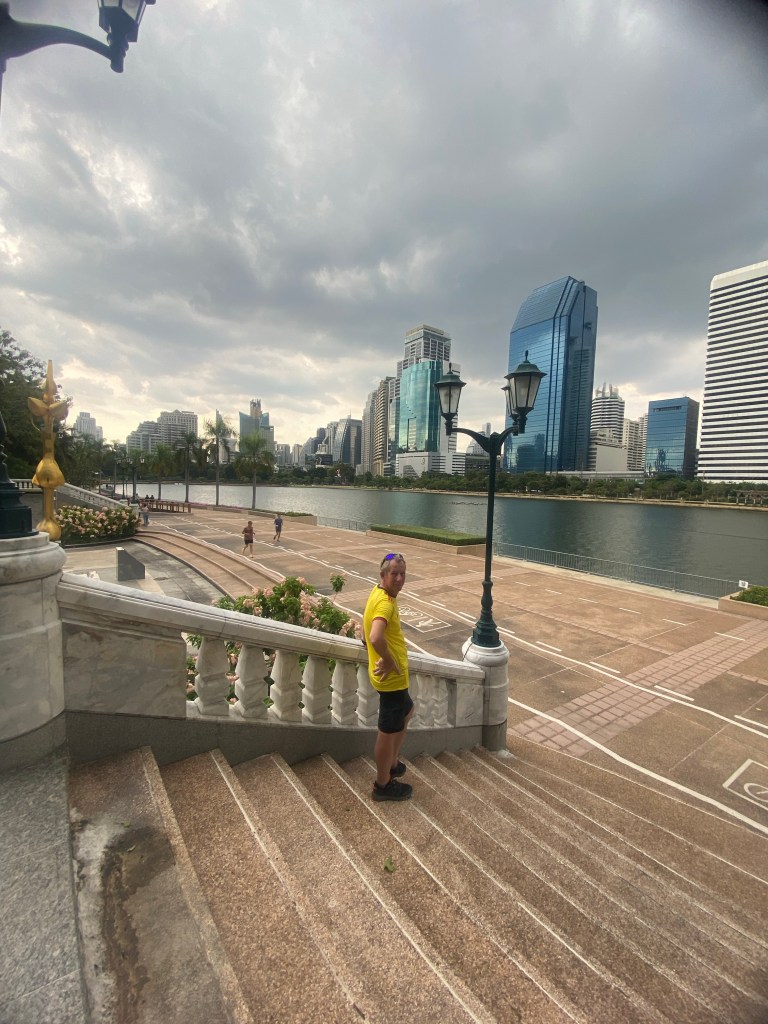
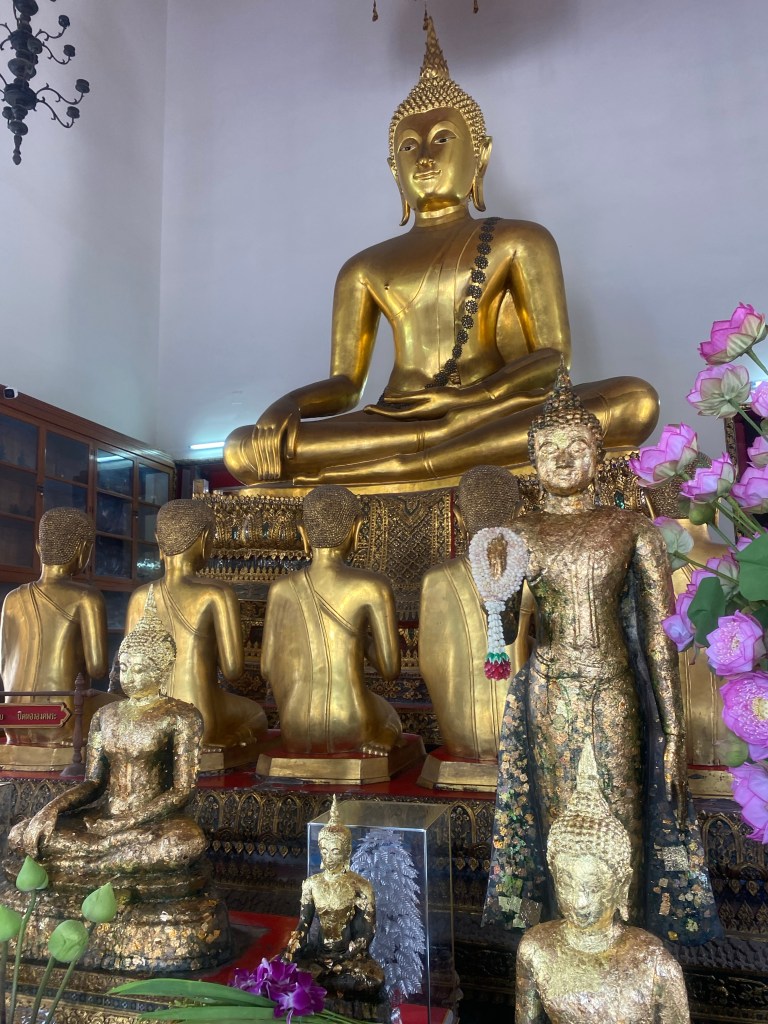
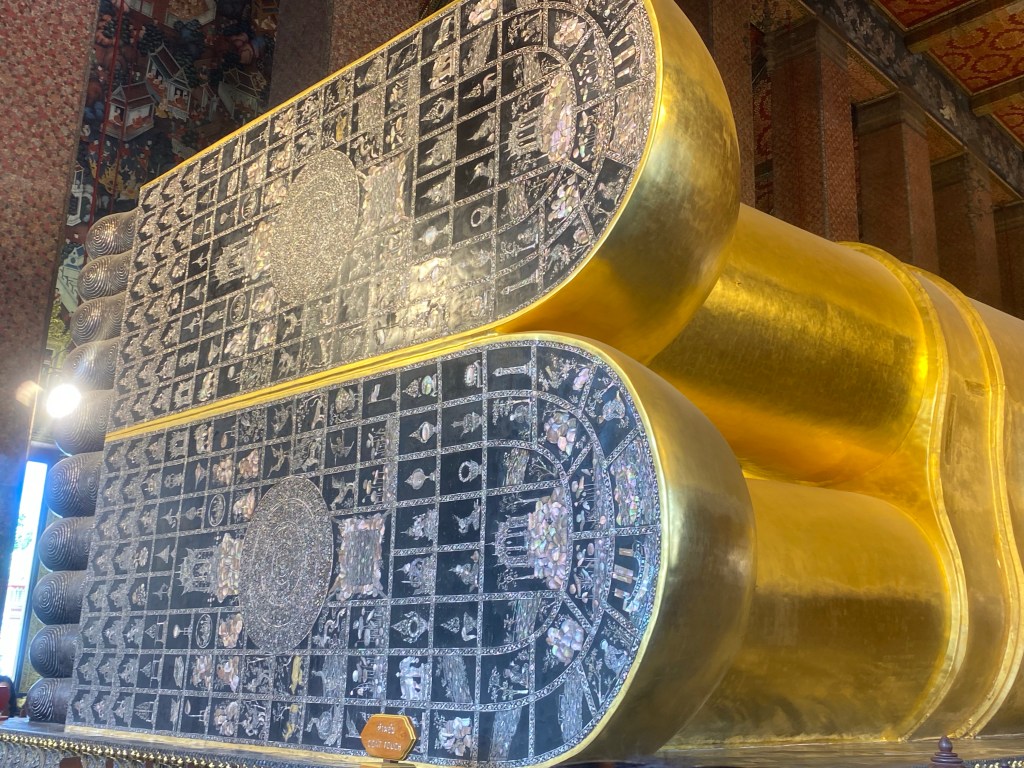
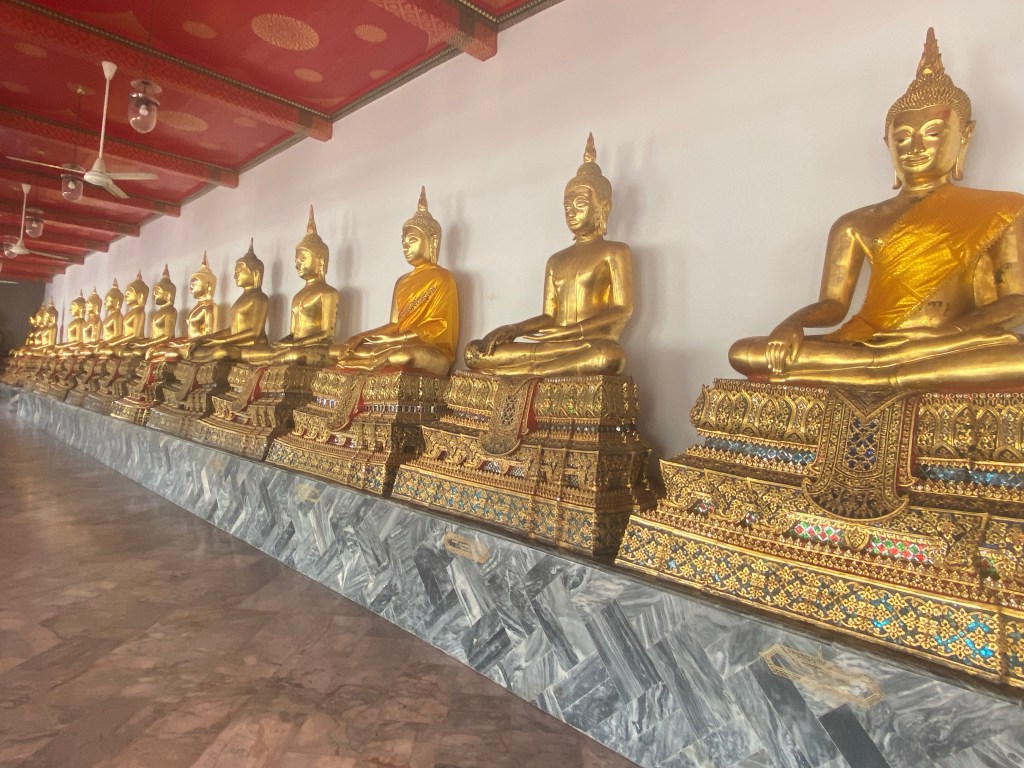
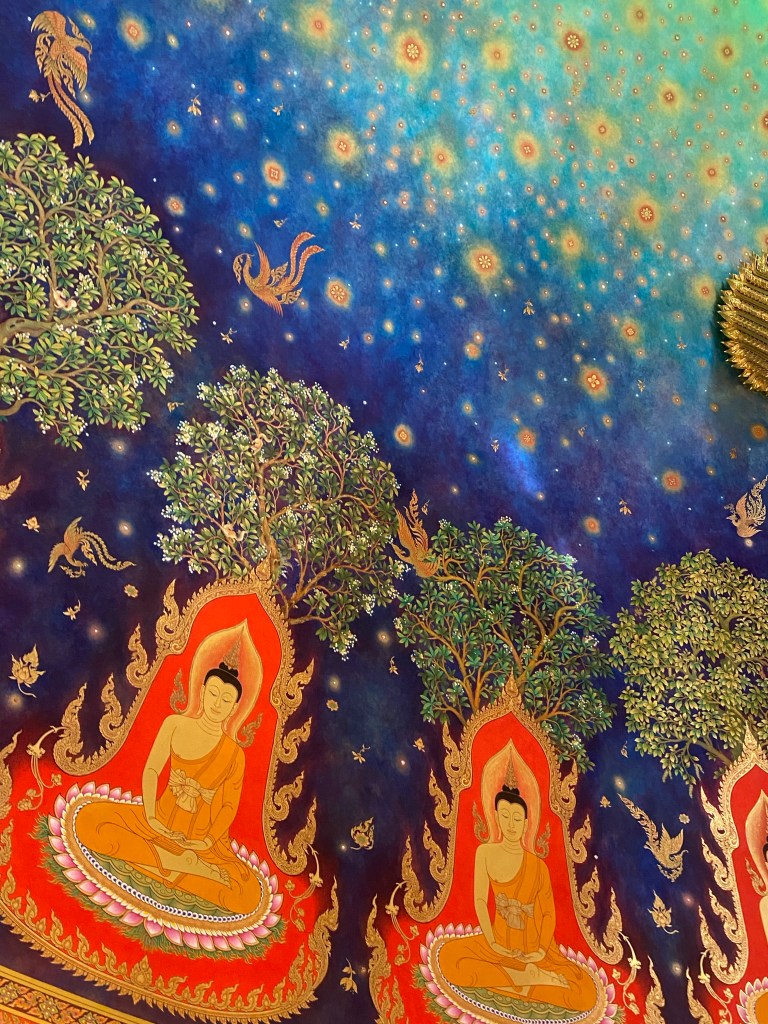
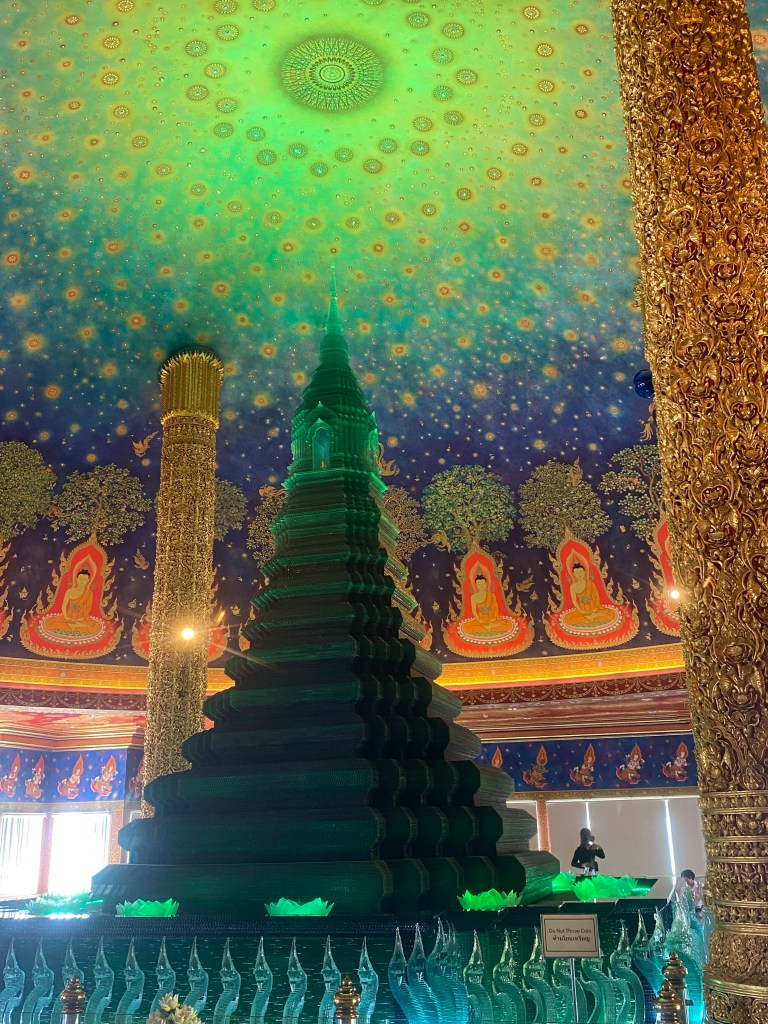
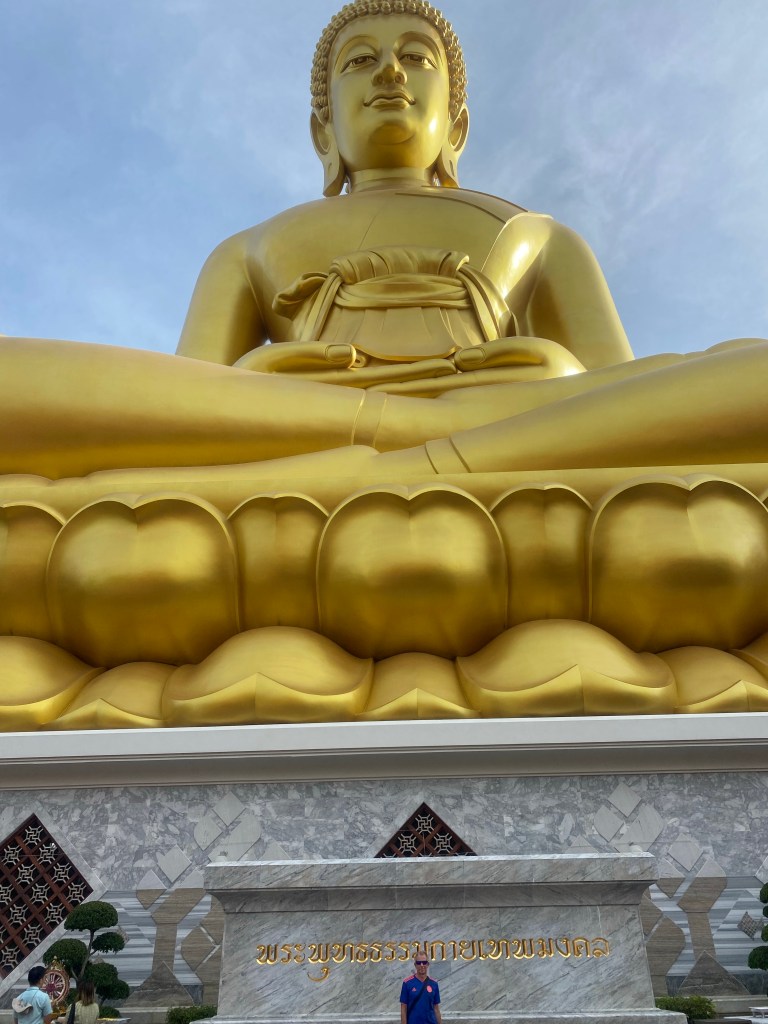
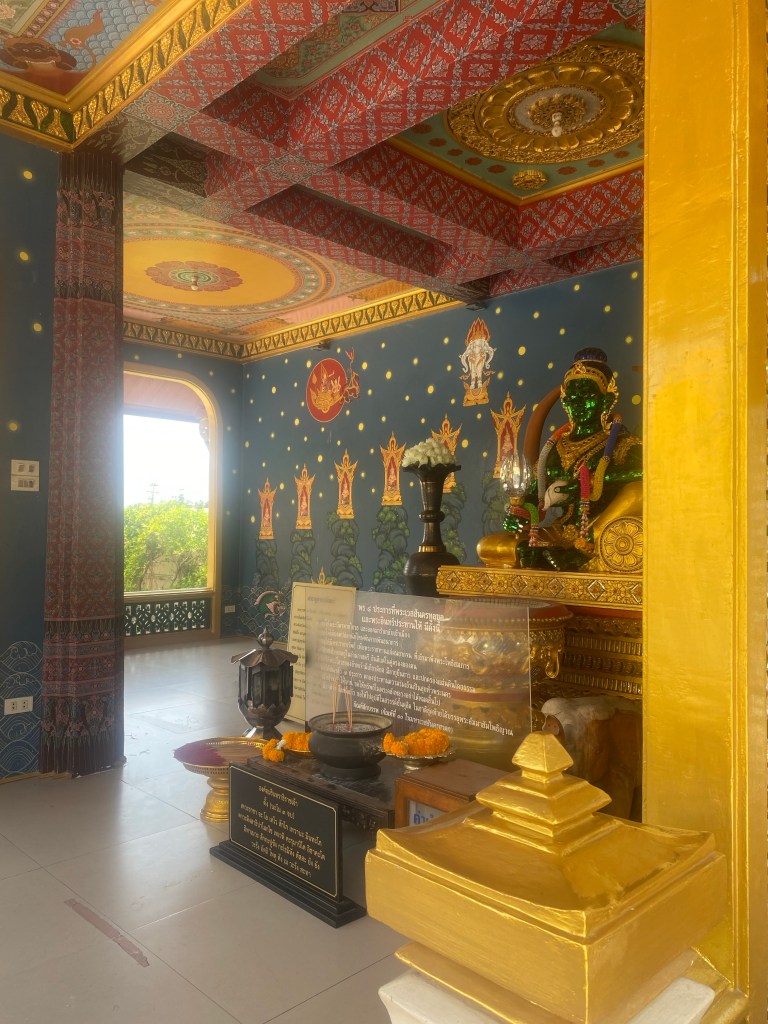
That afternoon, we explored Benchakitti Park nearby to stave off the tiredness and ended our very long day with a great street food meal as the heavens opened- well it is rainy season! The park is quite different to Lumpini Park in that it is meant to be able to prosper and grow with very little human intervention – something we could do with in our garden! Next day, we headed to Wat Pho for the third time but this time we hired a guide. Who knew we had missed so much and that there were so many ashes hidden away in the chedis that we thought were just ornamental – a family buys a side of a chedi and then the family ashes are added when someone dies so everyone is together and the family is responsible for the chedis upkeep! In the afternoon, we headed to another temple over the river with the biggest Buddha in Bangkok. It had the quietest, calmest garden and sat on a canal. We climbed up inside the new chedi and couldn’t believe the art work inside. We always imagine places of worship to be old (especially as we live so close to an old one) and it was fascinating to watch the art on the walls actually being done whilst we were there. The huge Buddha was pretty cool too.
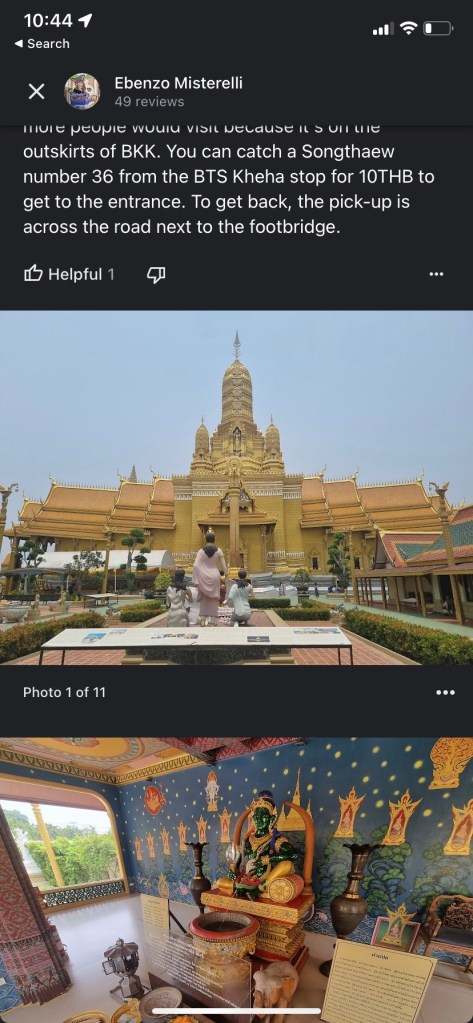
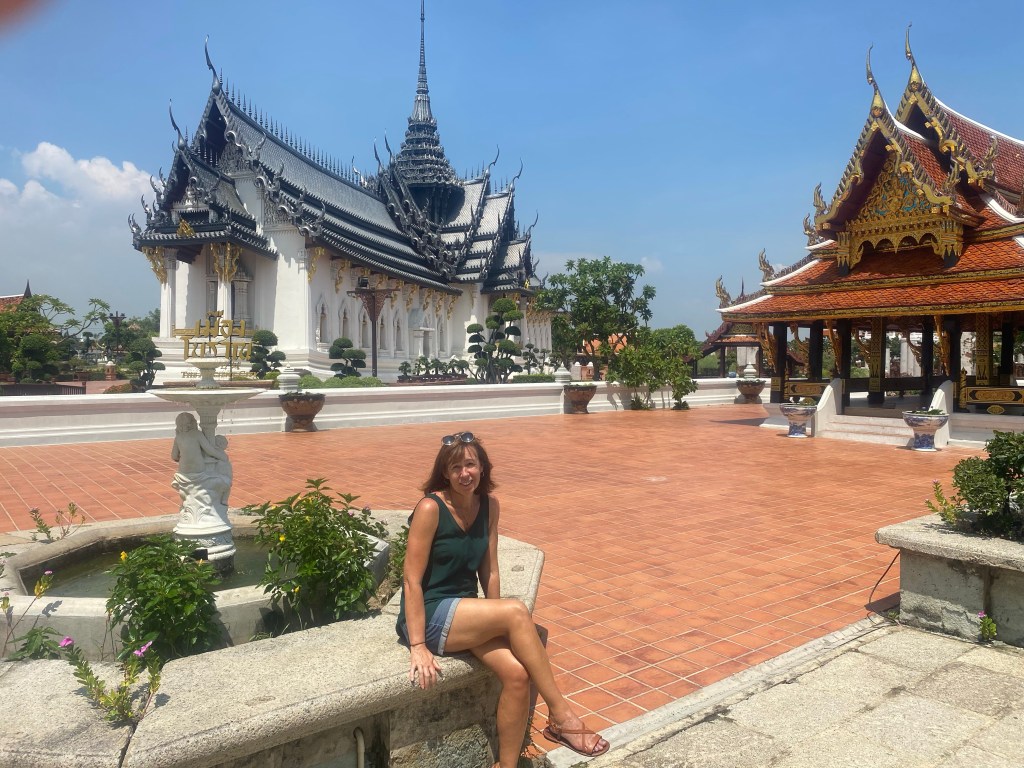
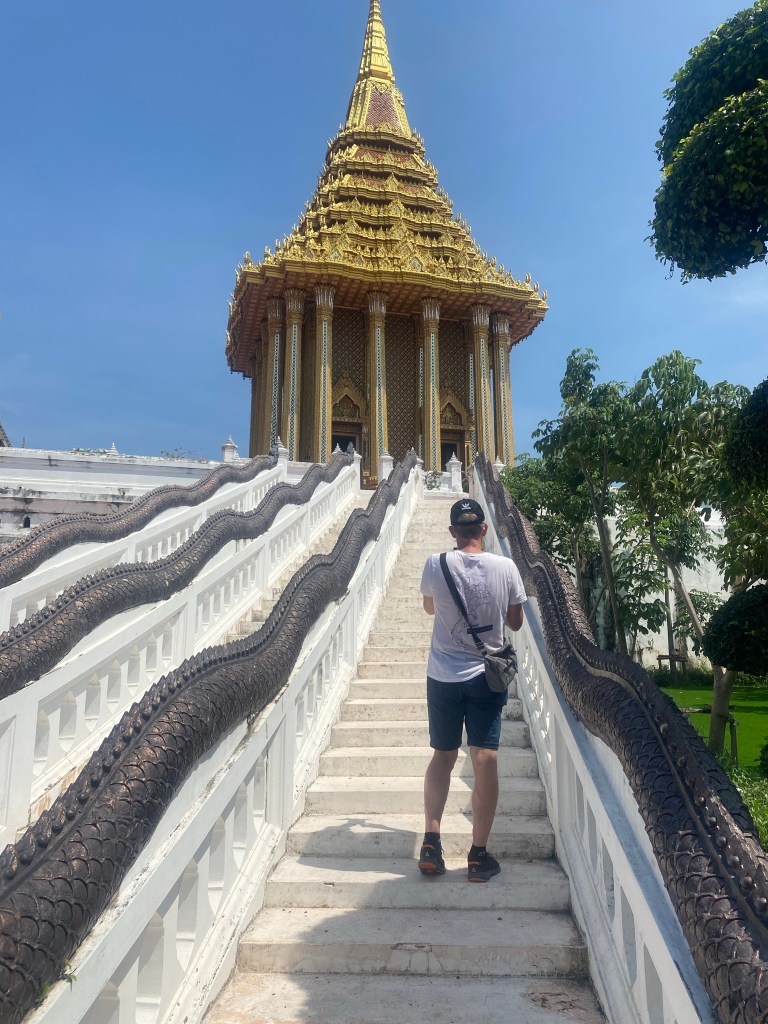
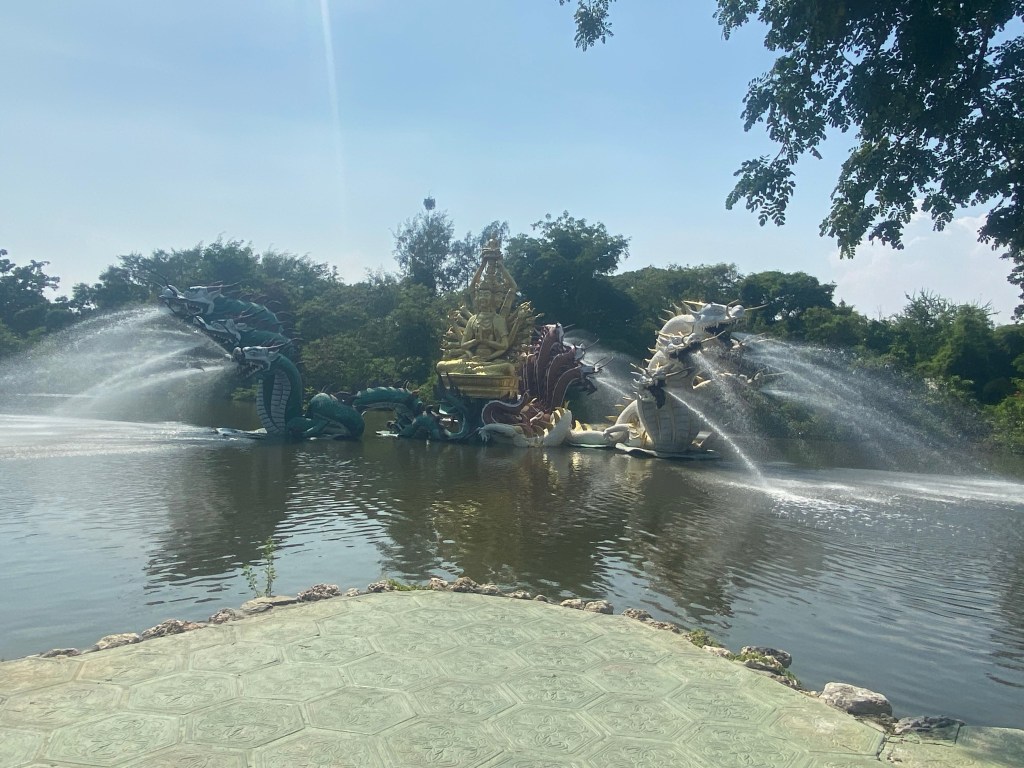
The next day, we headed to the outskirts of Bangkok on the BTS to a tourist attraction called The Ancient City, an attraction not frequented by many foreigners which is a real shame as it was amazing and one of the best things we’ve done here. Basically, all the important temples in Thailand have been replicated there with the intention of building a sense of identity and pride for the Thai people. We hired bikes there and sweatily cycled round for nearly 5 hours.To be honest, we didn’t know were to look; there were so many amazing sites and some that have been reconstructed from the remains and descriptions in manuscripts which explained why we’d never seen them on any tourist information sites. It was a really fantastic day out and we felt it was a real shame there weren’t more people there. We attempted, in the evening, to visit Jodd Fairs night market but the torrential rain changed our mind and so after a tasty, if spicy, local meal in a plush shopping mall for £2.50 (Callum was very pleased with an eye on the budget), we headed back.
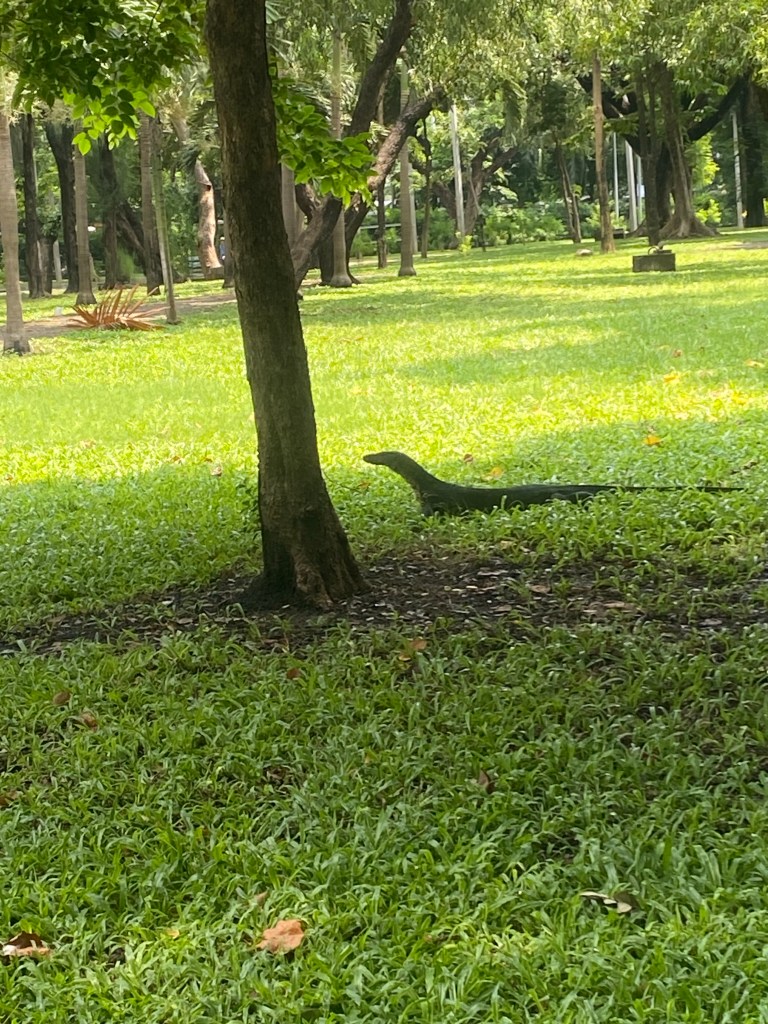
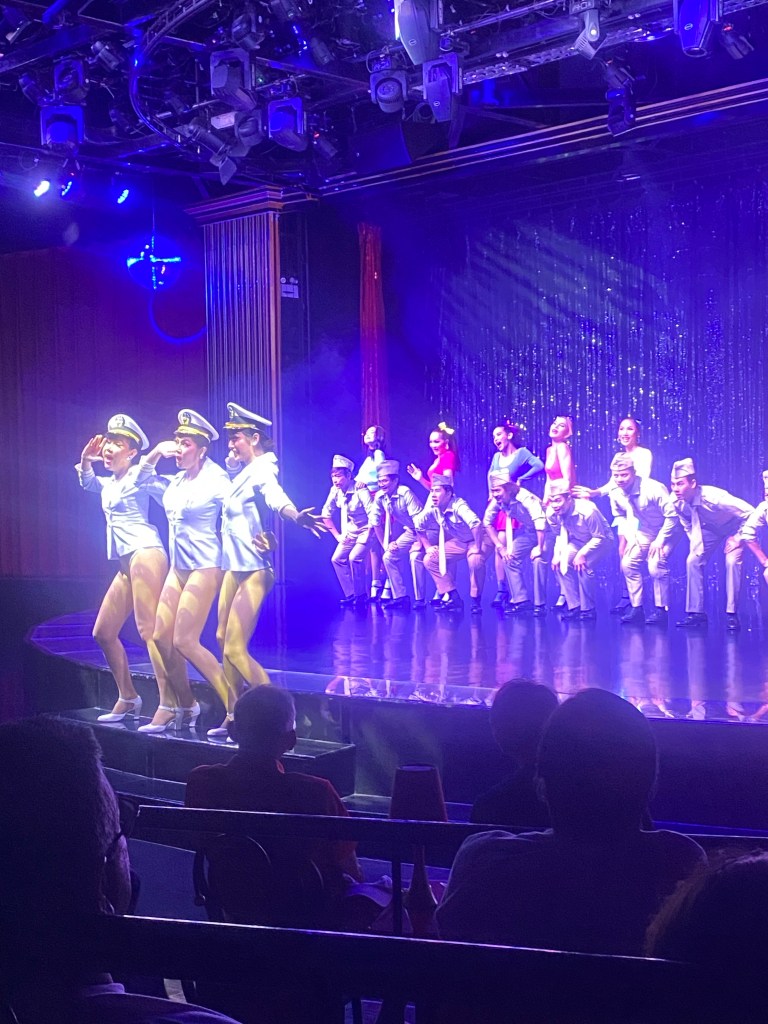
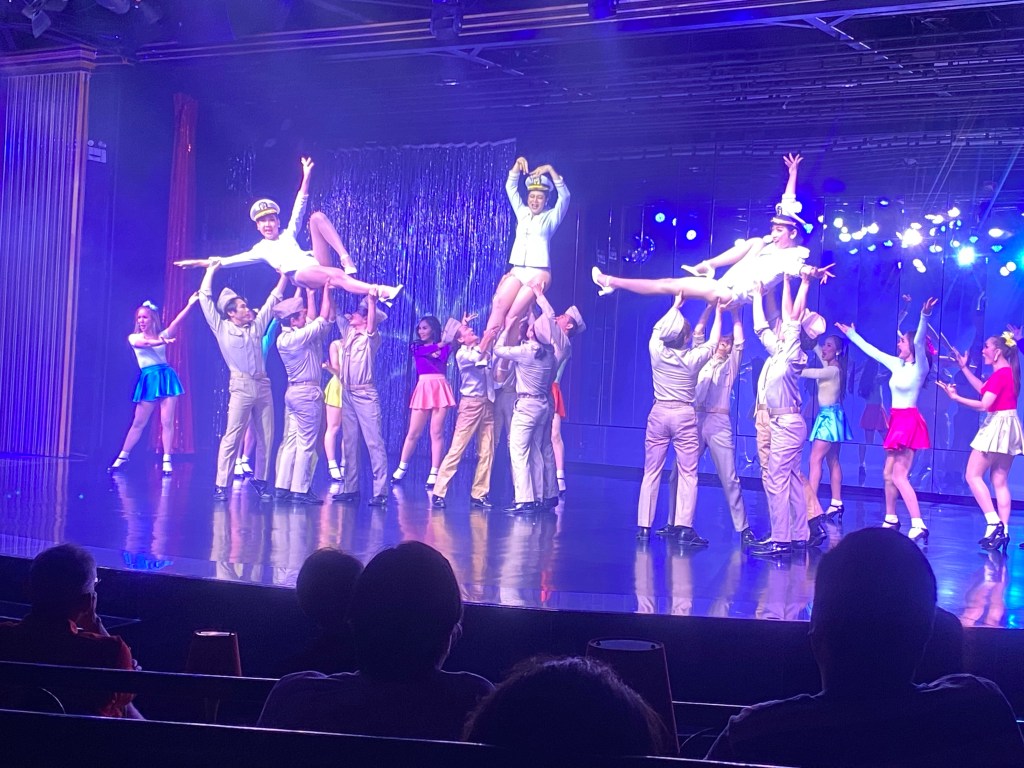
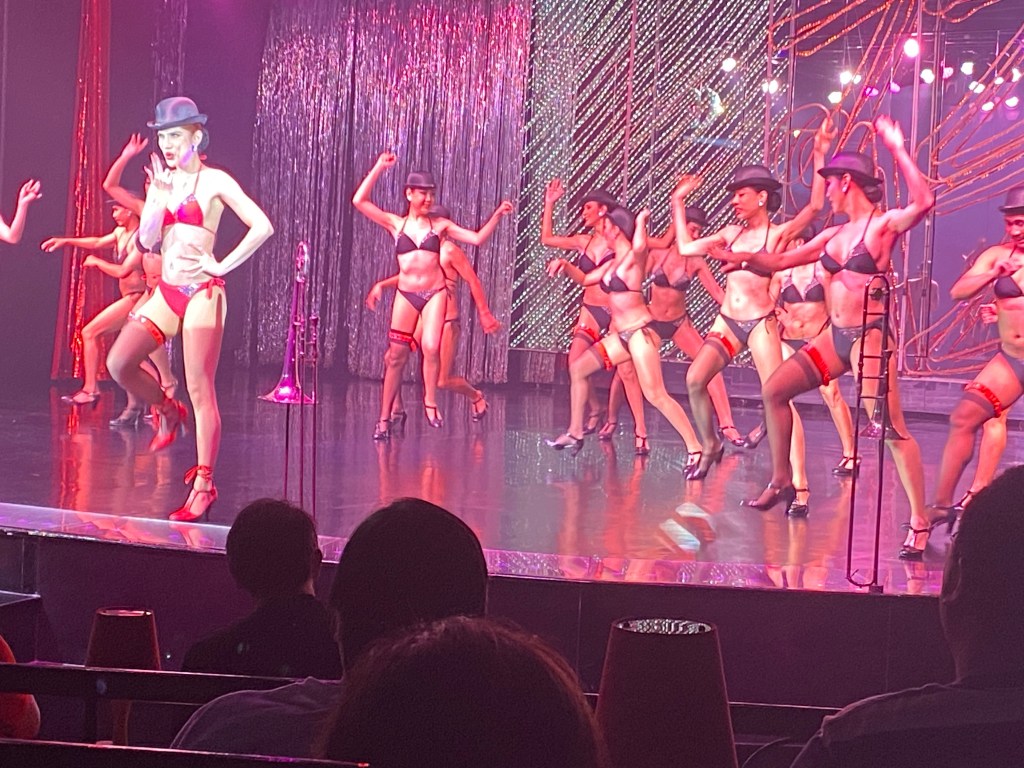
The pool called us the next morning and we booked and planned to see a cabaret show in the evening after visiting China town . Unfortunately, a rather nasty bug Callum picked up had us grounded from the afternoon onwards (which he swiftly passed to me a few hours later. – memories of our last visit with Covid week 2 when he did the same were shared!) We ventured out briefly the next afternoon to Lumpini Park to watch some local dancing and giant water monitors making it to the cabaret in the evening. We were very impressed that the company we booked through changed the previous nights tickets even after we had missed it! The cabaret was extremely professional with the ladyboys lip-synching to a wide variety of music including Rihanna songs, music from the Chicago show and Candy Man. We did enjoy it though it all felt a little too serious after the one we had visited in Chaweng in Koh Samui.
Off to Kanchanaburi next to see WW2 sites and waterfalls as well as to let Callum rest up (though he’s enjoying the ride there watching everyday Thai culture from the train- latest count amusing him is 5 people on one moped!)
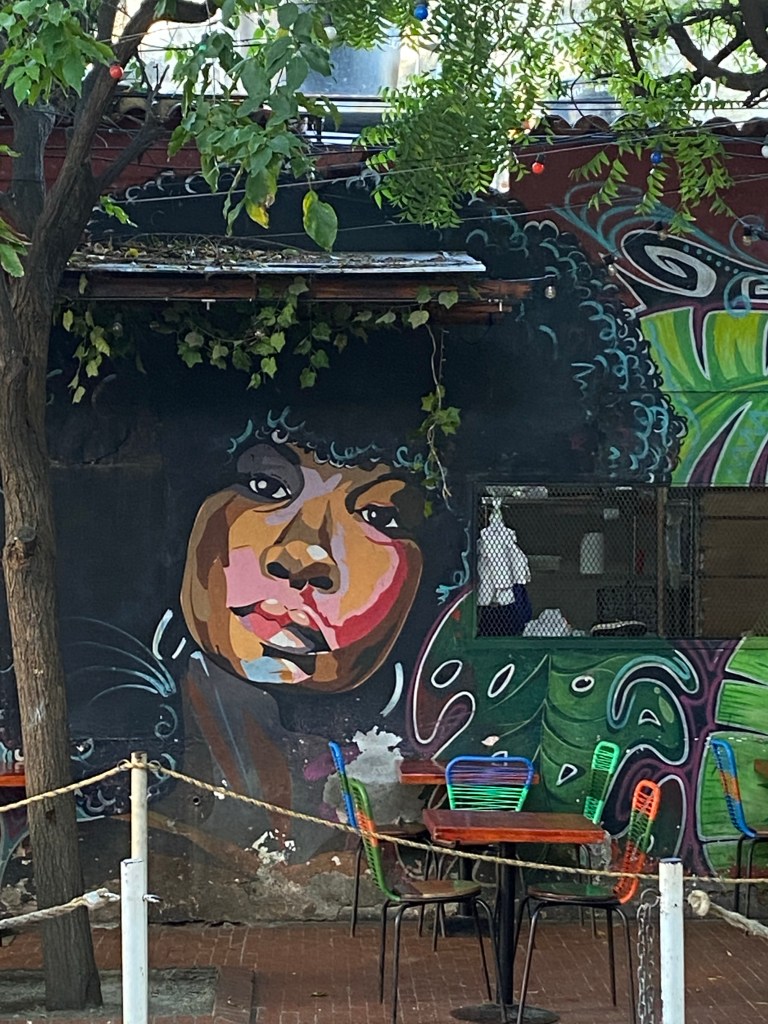
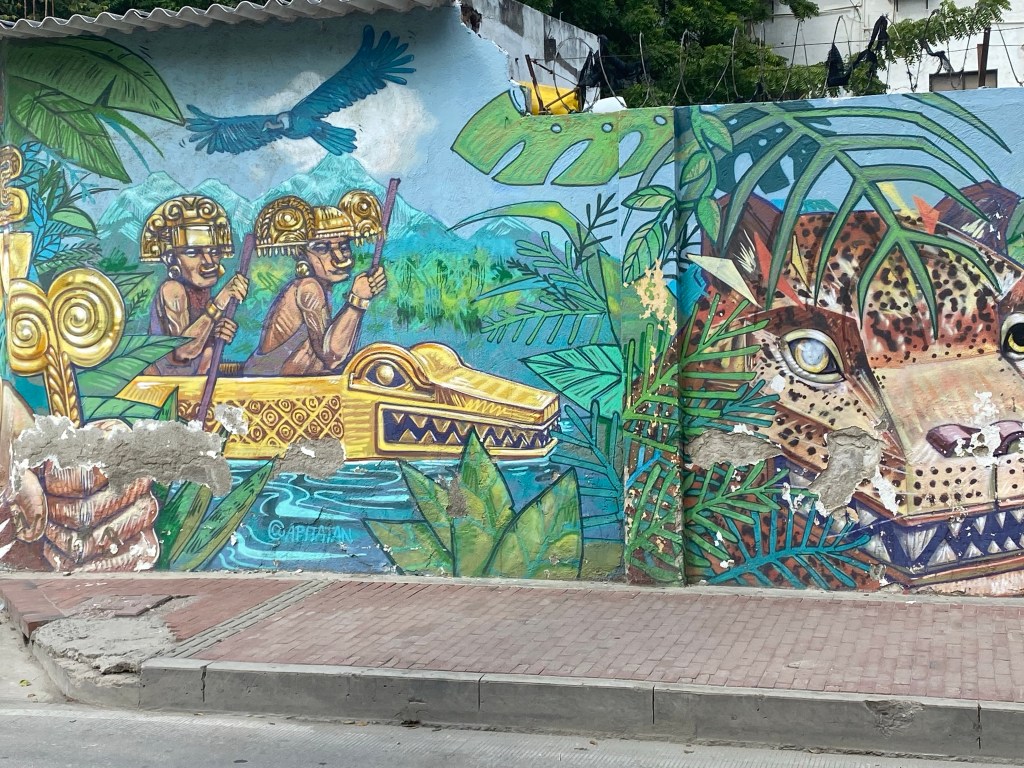
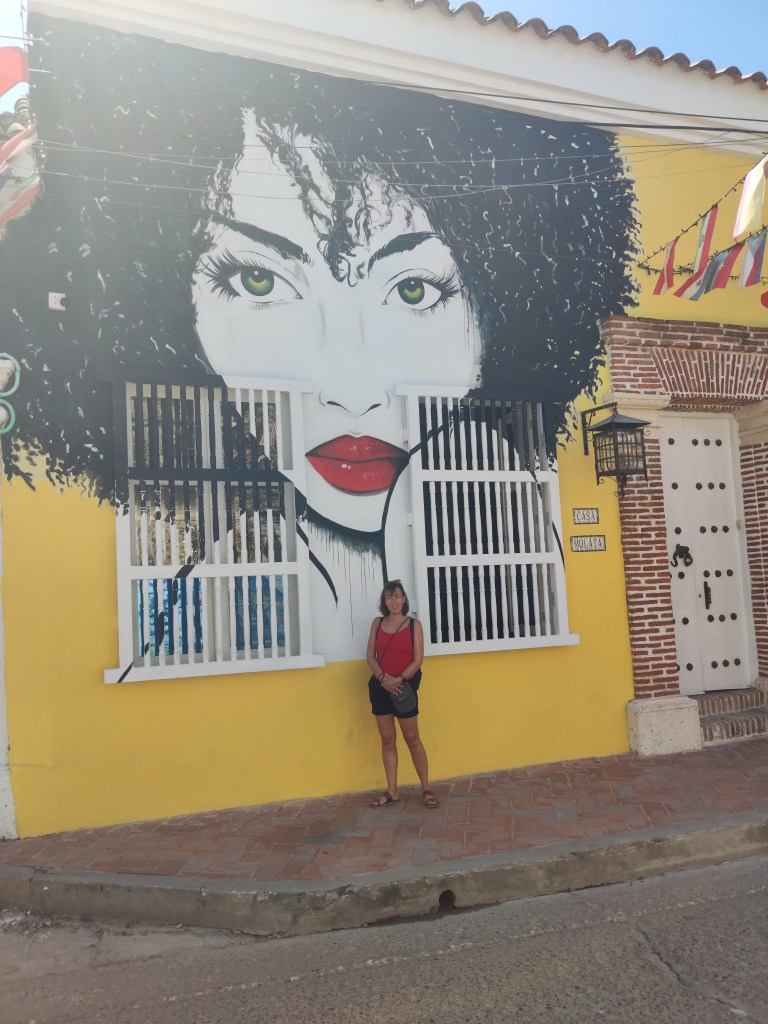
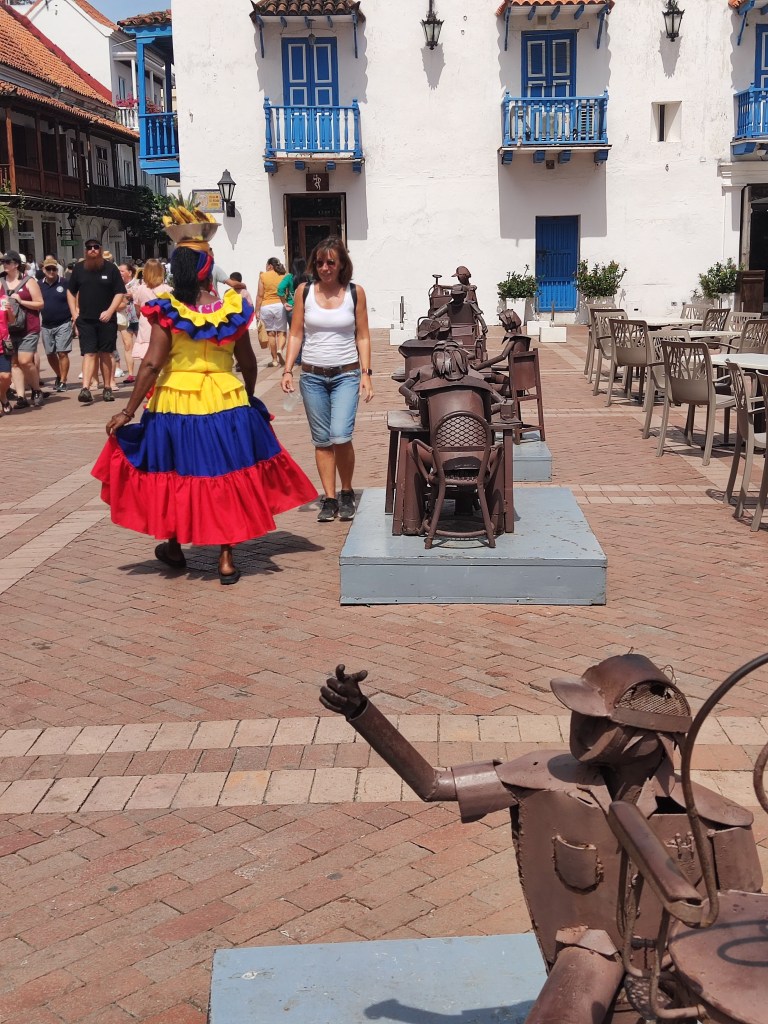
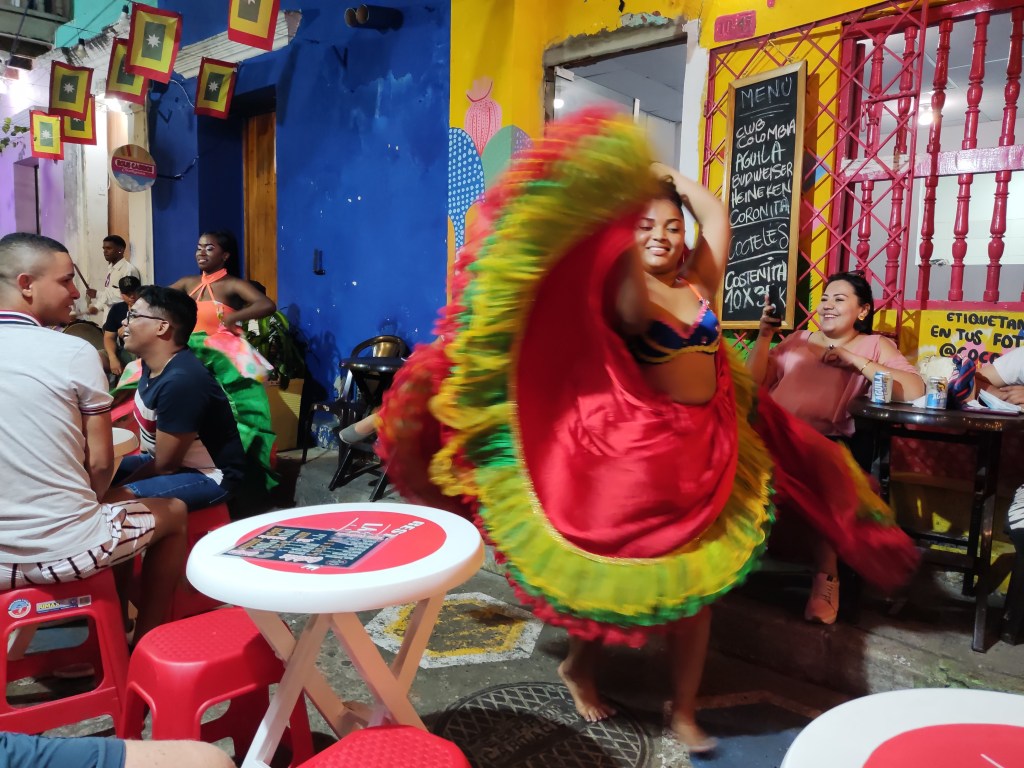
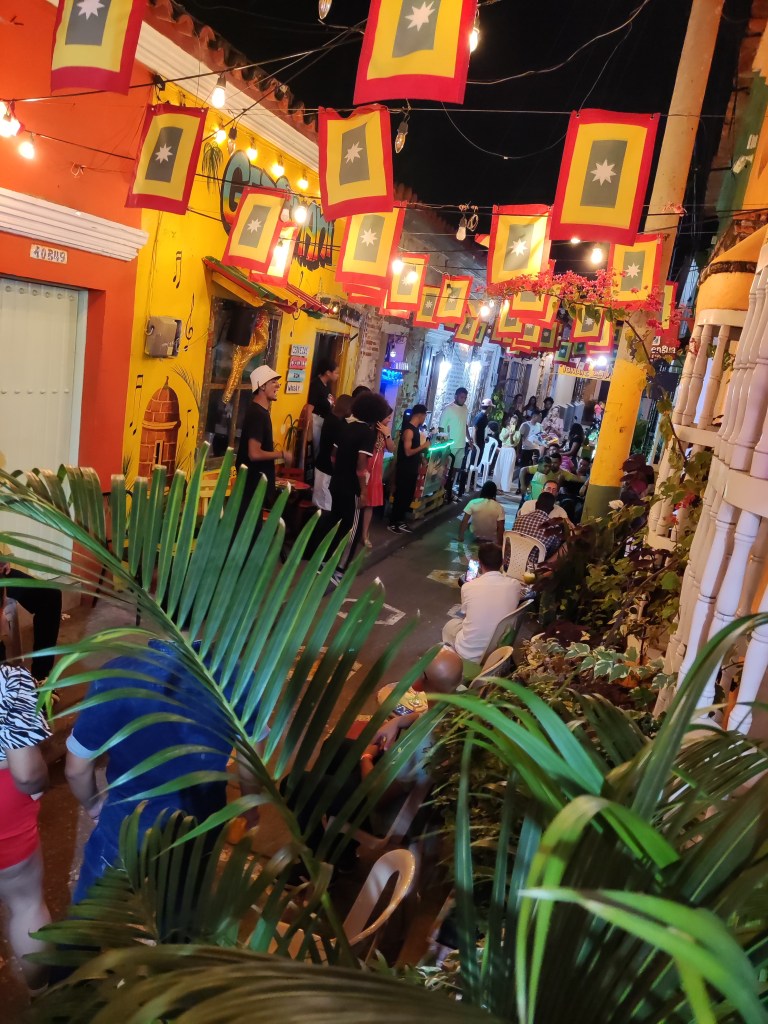
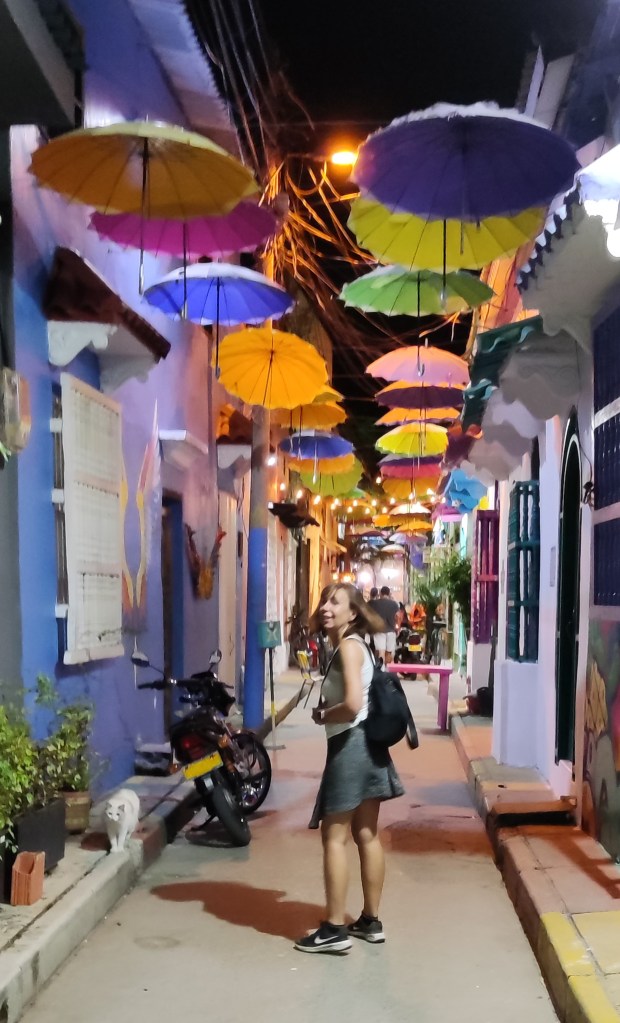
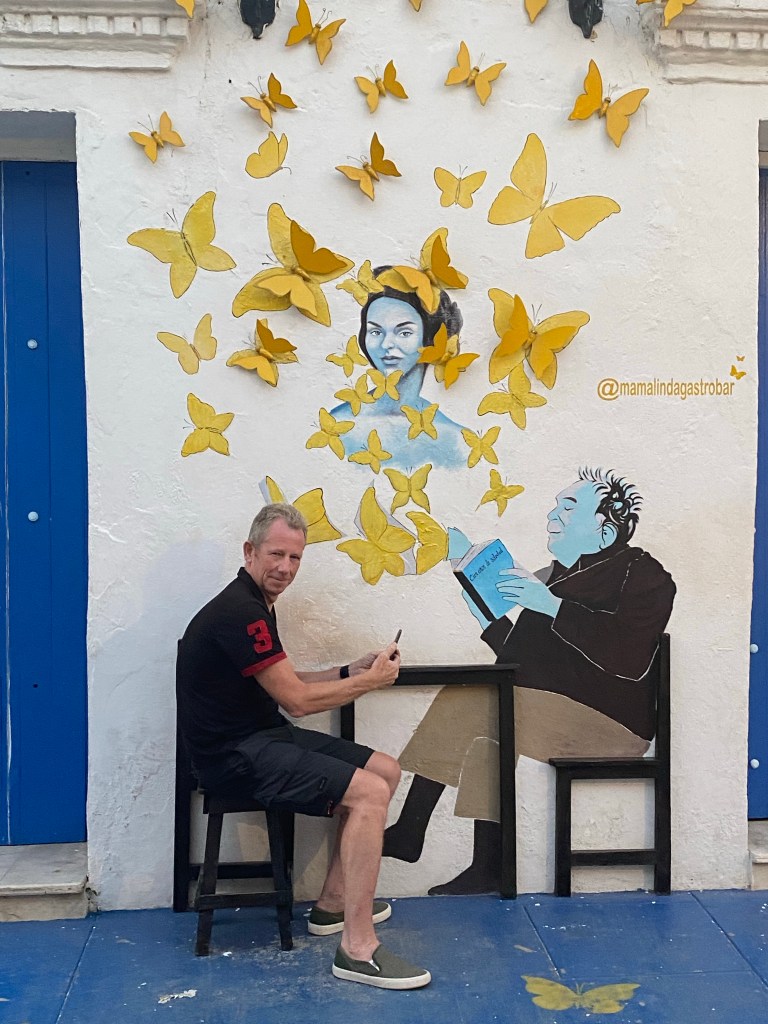
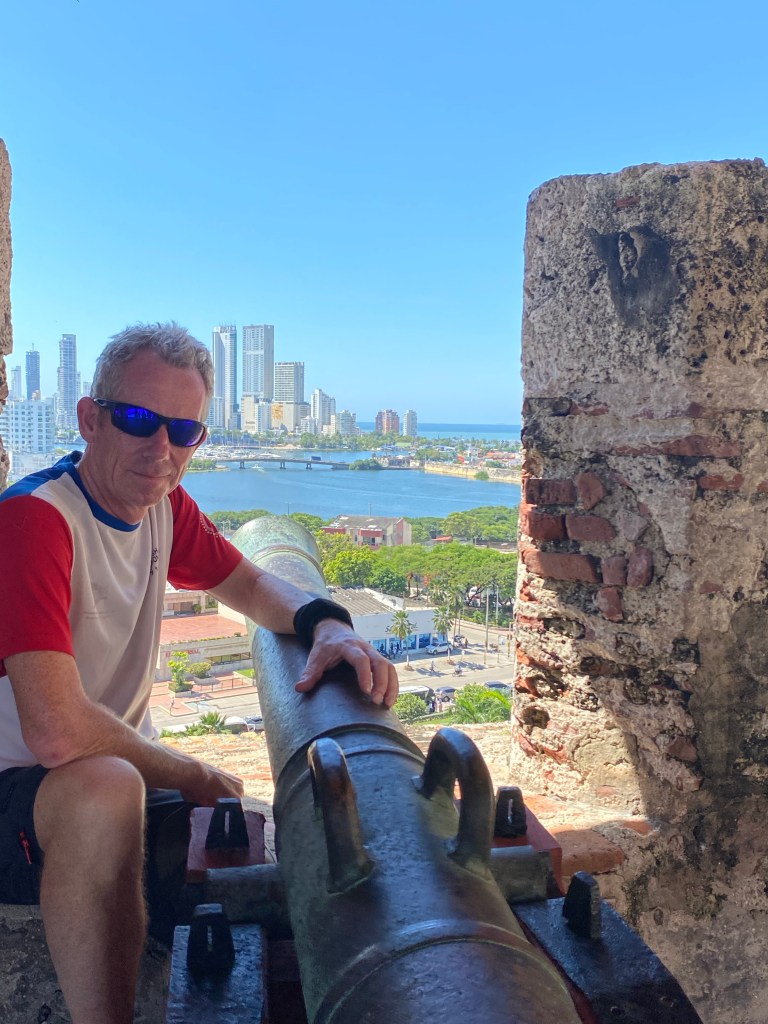
Cartegena is by far the most beautiful city we have visited in South America so far. As you turn into each street, there seems to be yet another beautiful row of coloured houses or a mural to see. We arrived on a Sunday evening which in Columbia has the same vibe as a Saturday night. We ended up in a small alley that had bars either side having mojitos whilst a variety of dancing street performers worked their way up the street. The atmosphere was very carnival like with loud songs playing in the bars and so many people singing at the top of their voices or standing up dancing. The couple on their plastic chairs in front of us had bought a bucket of 10 beers (£4.50ish) and after a few minutes turned to us and offered us some. We then spent the next 3 hours talking through a mixture of Google translate, their pigeon English and our limited Spanish, drinking beer and Colombian brandy. An unexpectedly lovely evening which was worth Callum’s hangover the next day. Over the next few days, we wandered round the old town, did a walking tour, thoroughly enjoyed the street art and visited the fort. I also enjoyed a few museums whilst Callum sampled the ice cream. We learnt lots of new things about the slave trade and it’s impact on Columbia too.We would highly recommend this place despite the old America tourists from the cruise ships everywhere.
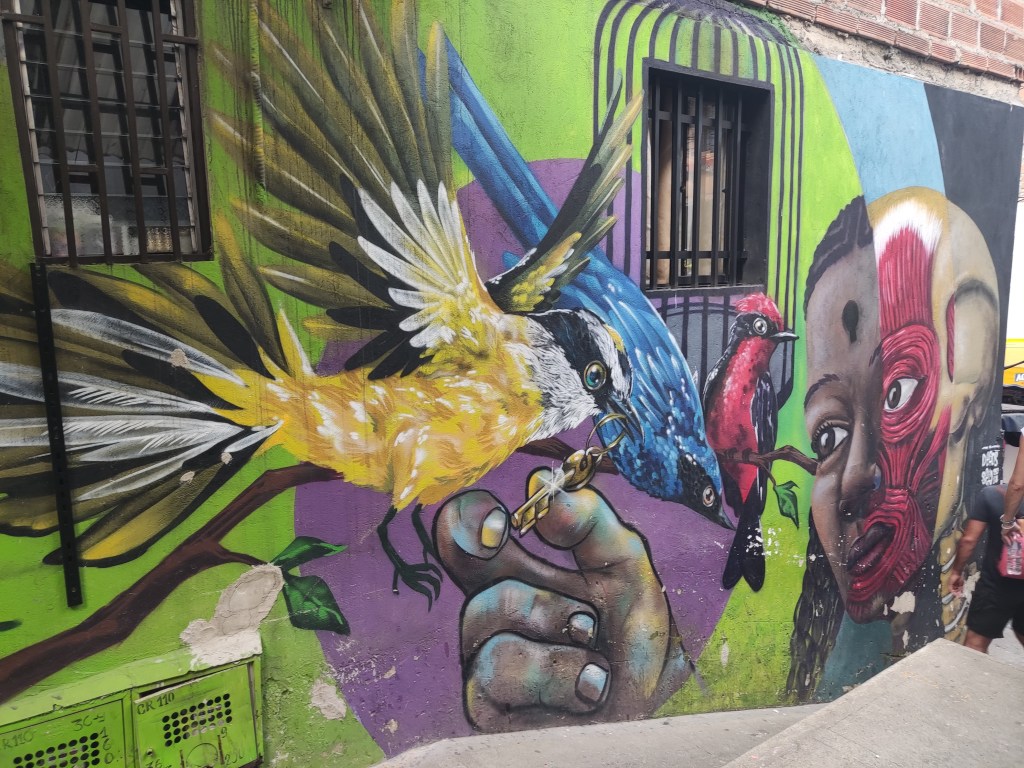
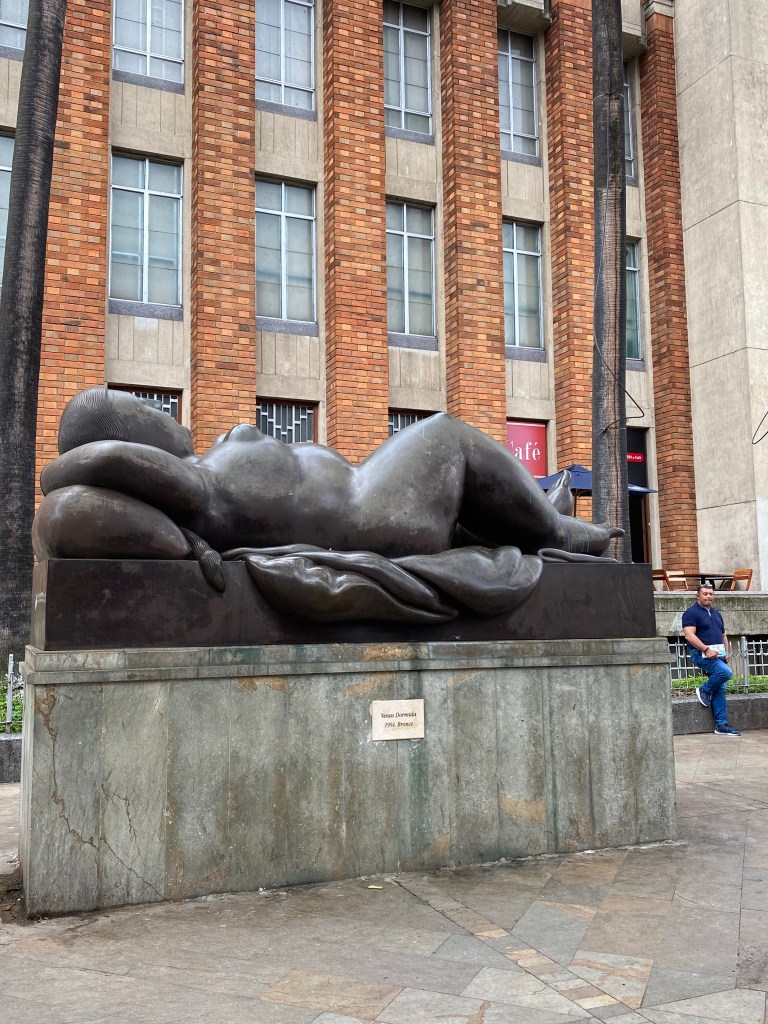
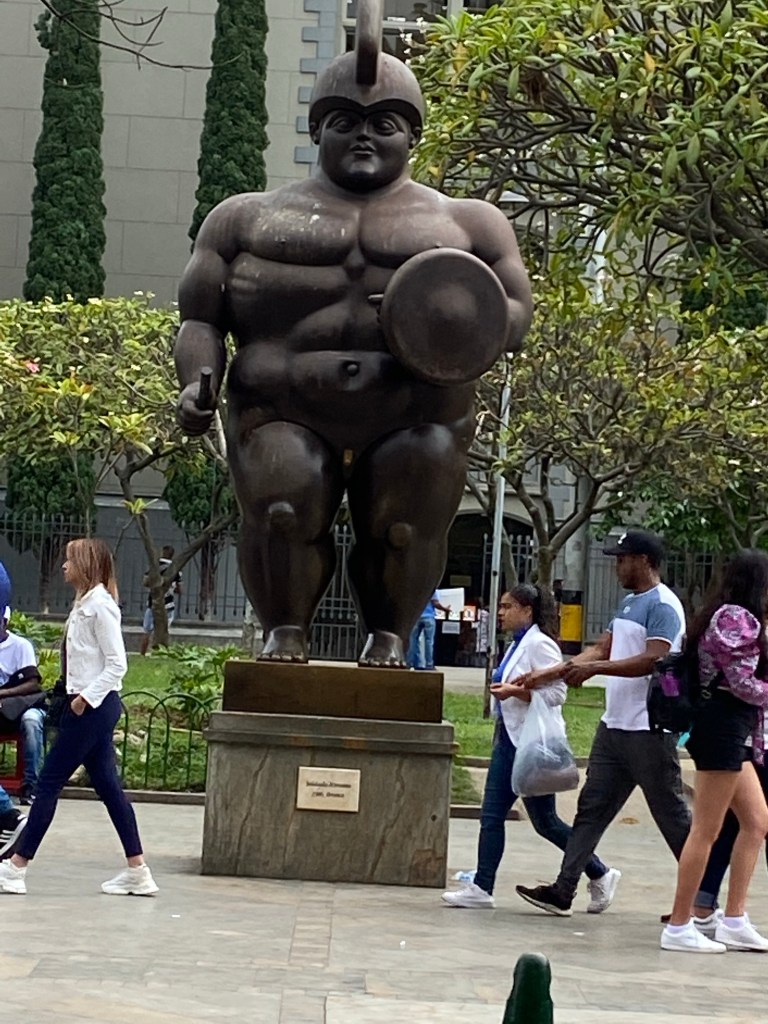
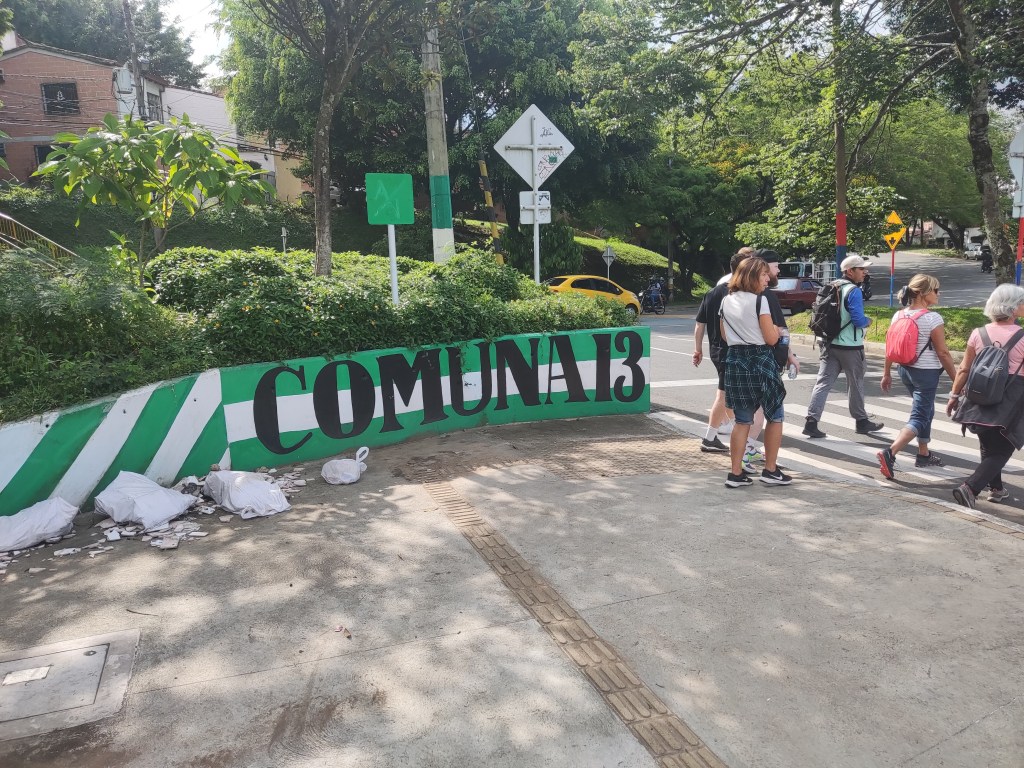
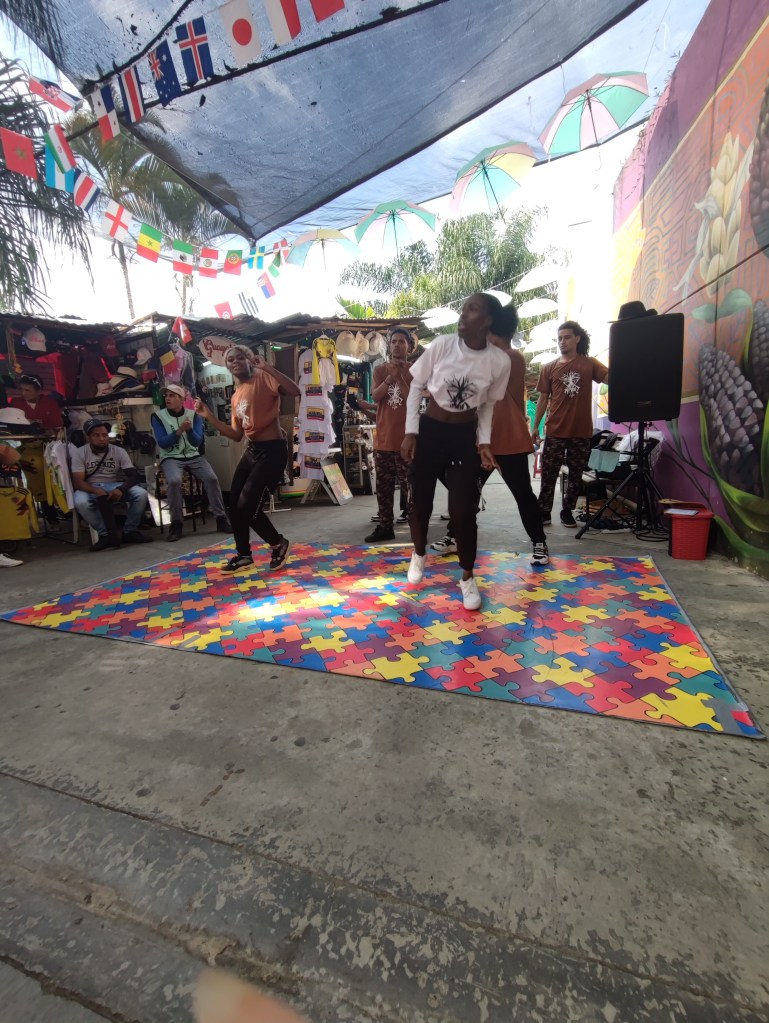
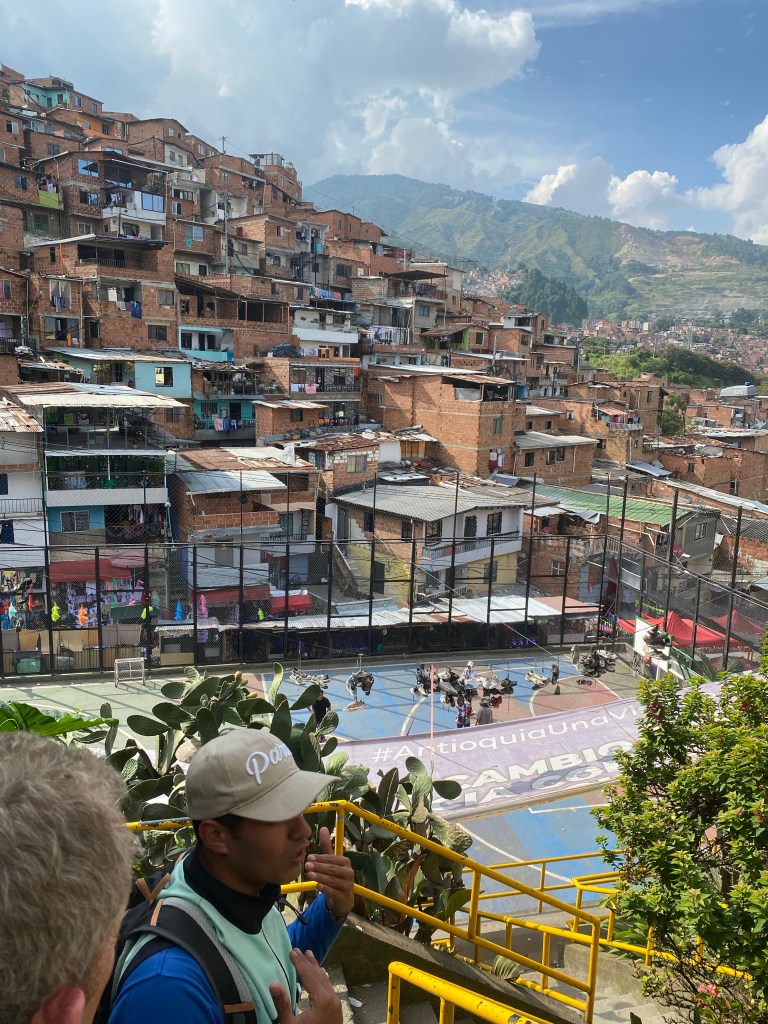
We had expected to then spend the rest of our time on a beach but decided that this would be a bit of a waste of time as we can do beaches anytime and so headed to Medellin, the murder capital of the world in the 80s and 90s. Everyone we had spoken to had raved about how interesting it was and after finishing season 2 of Narcos, we thought it was worth a few days. We stayed in a lovely area where all the tourists stay arriving early after our night bus. It was a bank holiday ( a christingle type of celebration) and so when we headed downtown it was packed. We visited a memories museum remembering the victims of the violence and then tried to find the plaza where the Botero’s ( famous Columbian artist) statues were. Google maps and Maps.me have been somewhat unreliable at times and we ended up, with the help of a bent sign, in a street with many “ ladies of the night” at noon. We felt quite unsafe and didn’t want to retrace our steps so took 2 right turns and ended up in the right place with a sigh of relief. We took 2 tours the next day – a general walking one and a graffiti tour in communa 13- the most notorious area in Medellin. It was so interesting to get 2 different perspectives from people who had lived through the violence. Our first guide had been shot twice as a young man though he had come from a privileged background and area by just being in the wrong place at the wrong time. Our second guide had grown up in the communa and talked about running from police bombardments and hiding under the bed as an 8 year old. The most moving part was seeing 2 statues together in our final square where many people died including a 7 year old when a bomb was placed in one of Botero’s statues during a celebration. The authorities wanted to remove it but instead Botero created another and they sit side by side. Hearing the human stories behind the death figures brought it all home. However, the visit to the communa 13 did show how far they have come. It has changed into a huge tourist draw though still home to a huge number of people living in one room houses (including our guide). Escalators have been installed so people can travel up the hill in 15 minutes rather than an hour to improve mobility and so employment opportunities, the transport system is cheap and immaculate (40p for any trip) and art and dance is being used as an alternative to gangs to interest the youth. Whilst we were there, we saw street dance shows and art galleries as well as the place where executions by the gangs and cartels used to happen (in the middle of the communa so everyone could see) that are now used for sport. The atmosphere was one of regeneration and hope which was pretty amazing to see. It was interesting that no one there uses Pablo Escobar’s name but rather the “crazy criminal” and find it hard to understand why people are interested in him. Our guide was passionately unhappy that Escobar was shown to have a human side in Narcos as he built a school and houses when trying to get elected to Congress. He raised the point of how many houses would be worth the life of your mother, father, son or daughter. We found it hard to understand why people would think he was in any way a good man after he was responsible for 46,000 deaths however a couple we met a few days later from the Netherlands were pretty insistent that if you followed the cartels rules and didn’t speak against him, “ the crazy criminal” was very good for the middle classes and Columbia. Not sure the mothers in the communa would agree!
Botero statueBotero statueDances in the communa.Where the cartel executions used to happen.
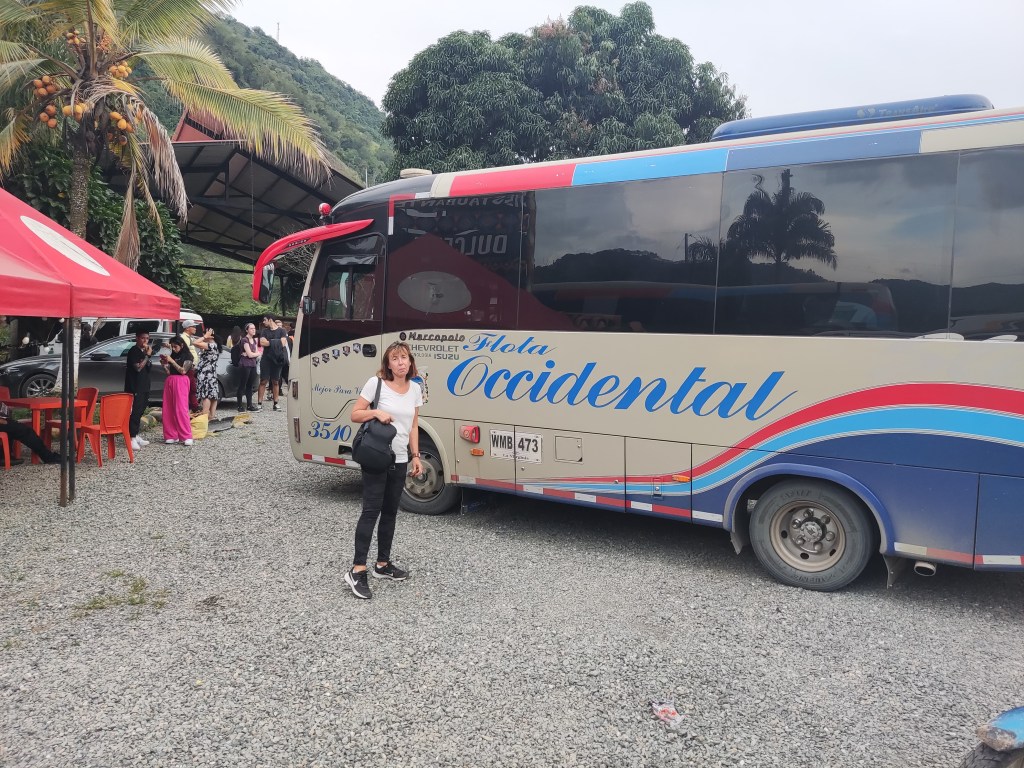
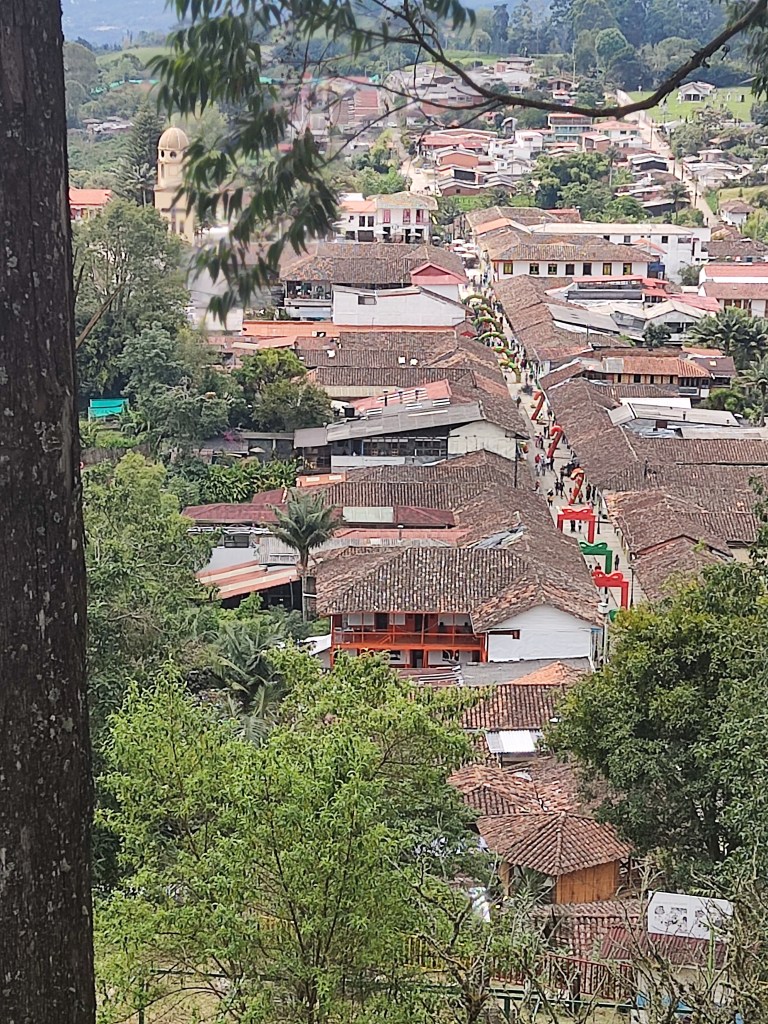
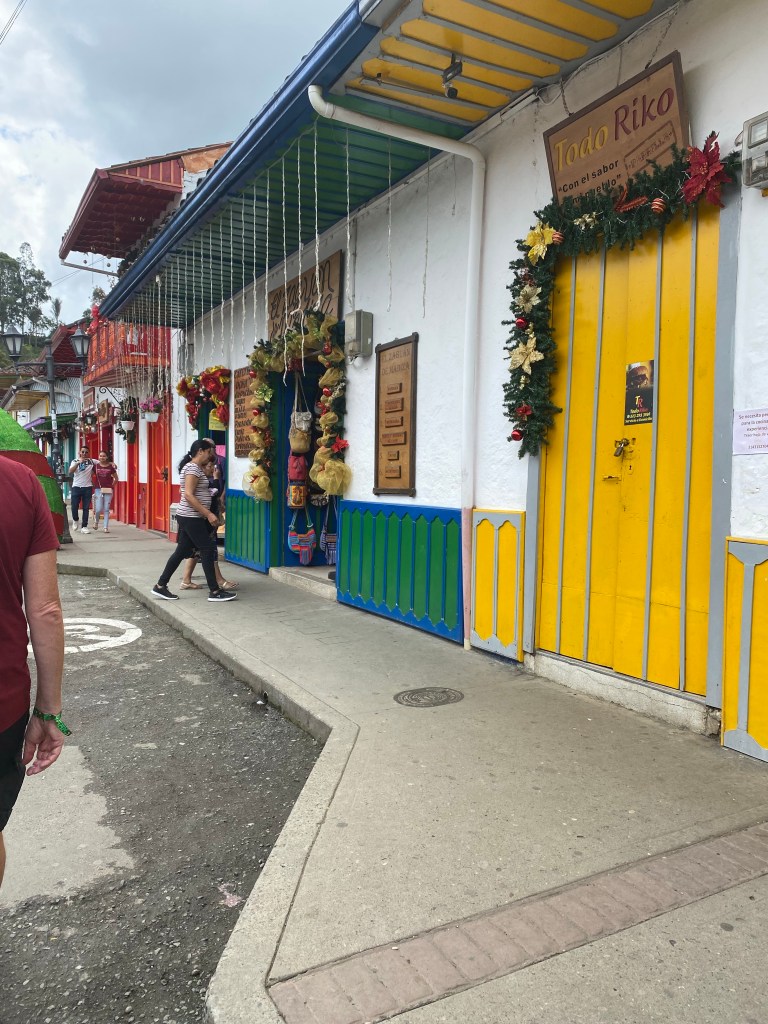
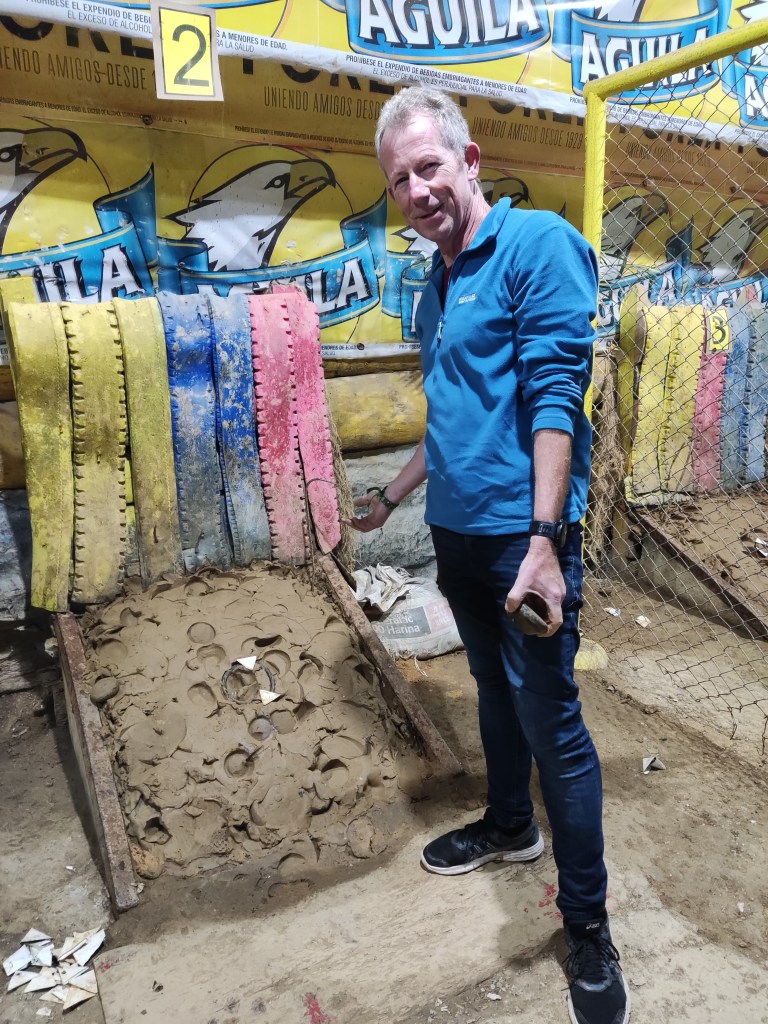
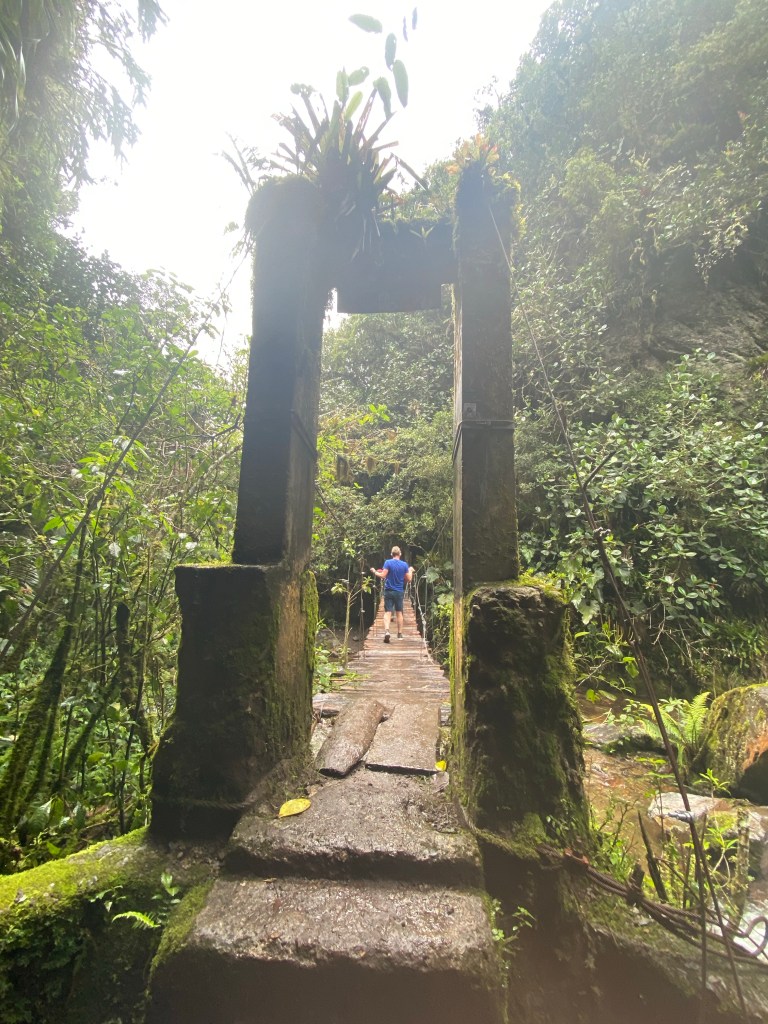
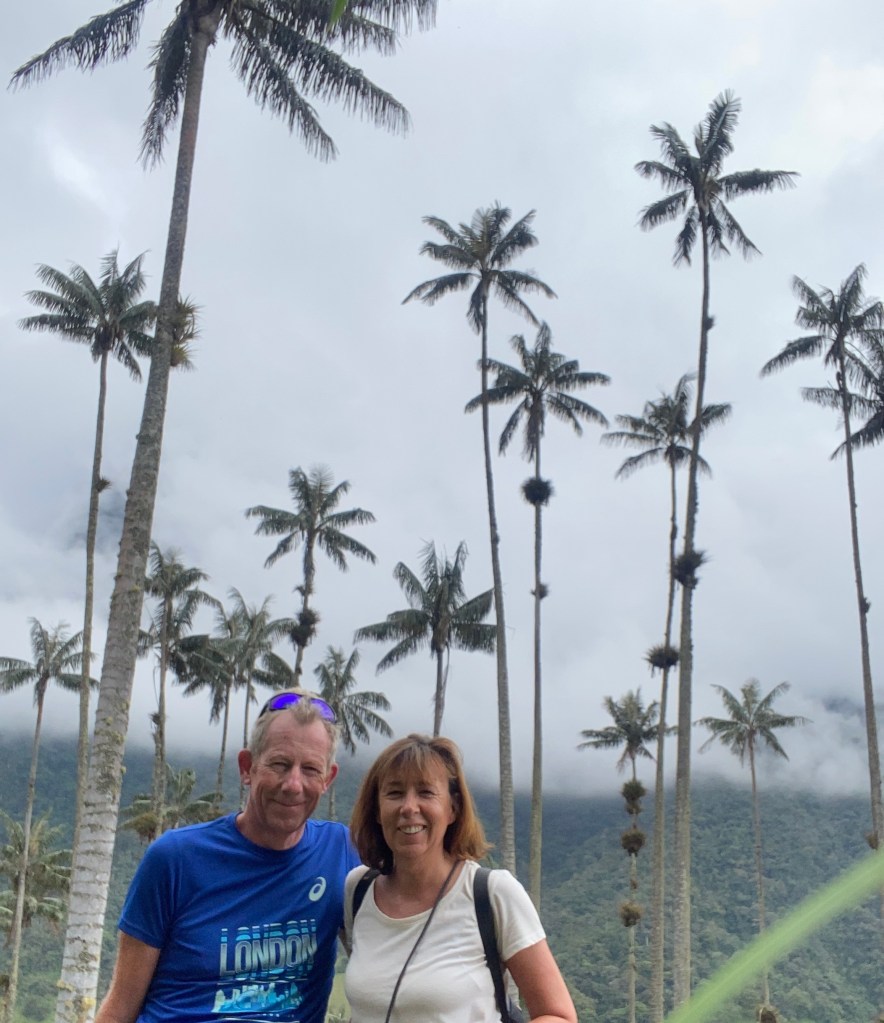
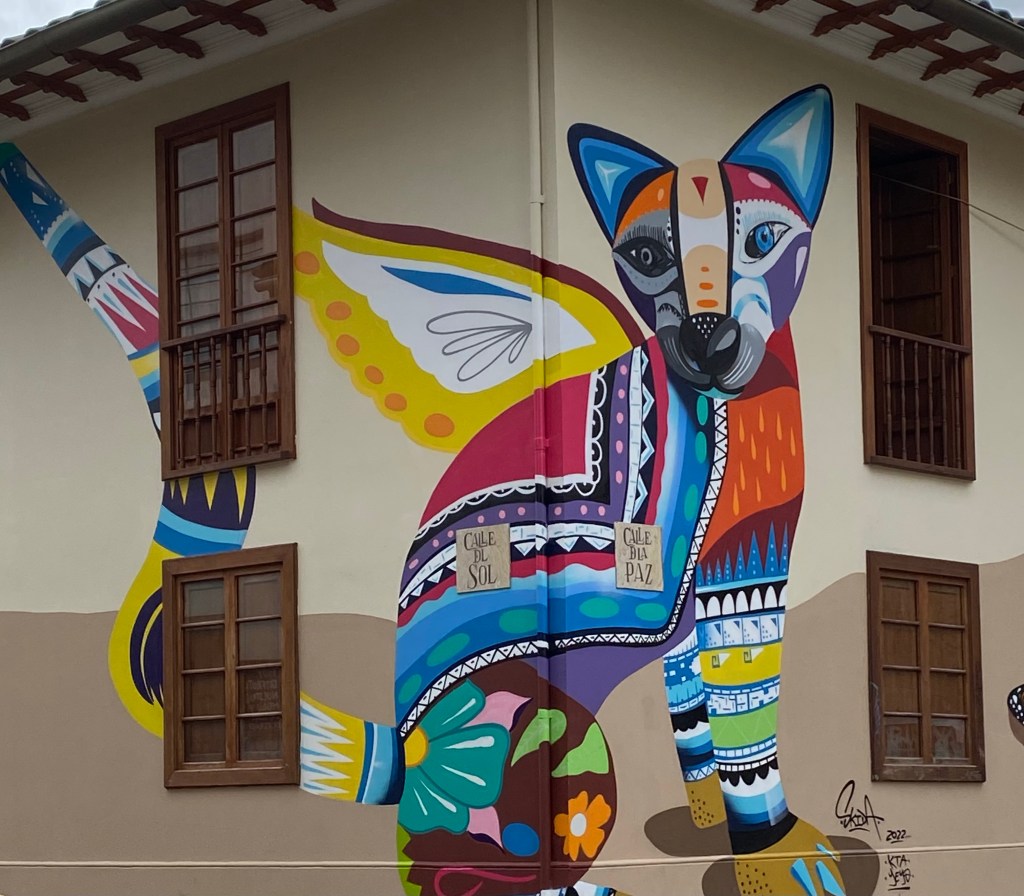
Our next stop was a much smaller place supposedly only 6 hours by bus (it was 12 and clashed with the football) and was another coffee region , Salento . It is famous not just for its coffee but also for having the tallest palm trees in the world and for being a beautifully painted town. We spent 2 days there, walking in the national park in the rain, wandering the town and playing the national game tejo. This involved throwing a metal puck at the metal ring that had triangles placed on it filled with gunpowder. When you hit it correctly, it caused a fairly loud explosion. You bought a beer and then played in lanes so you could see and hear each other’s explosions. It was surprisingly hard but a lot of fun even if Callum did win.
Sooo long on this bus! SalentoAll the streets were painted like this.TejoCocura ValleyWax palm trees.
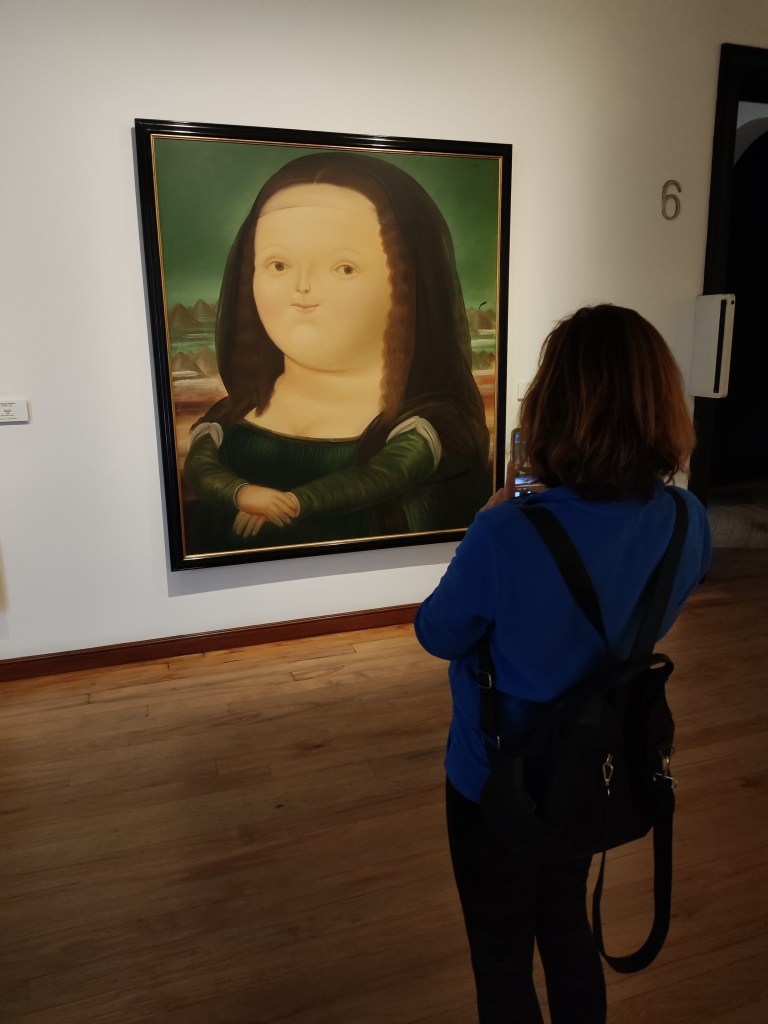
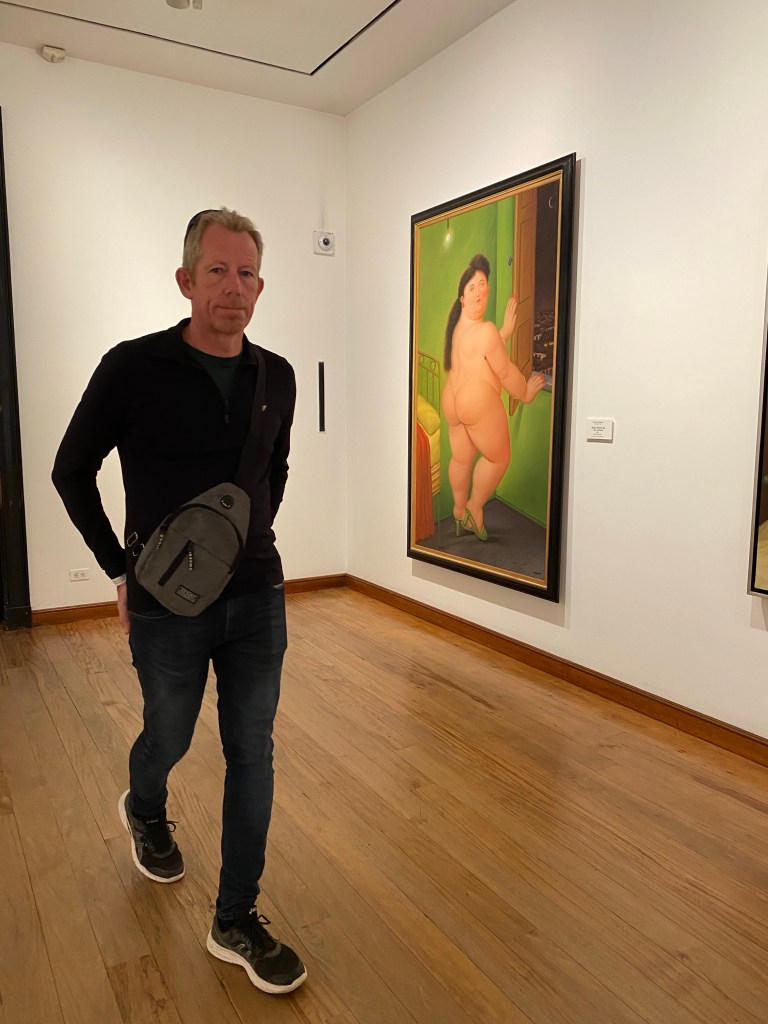
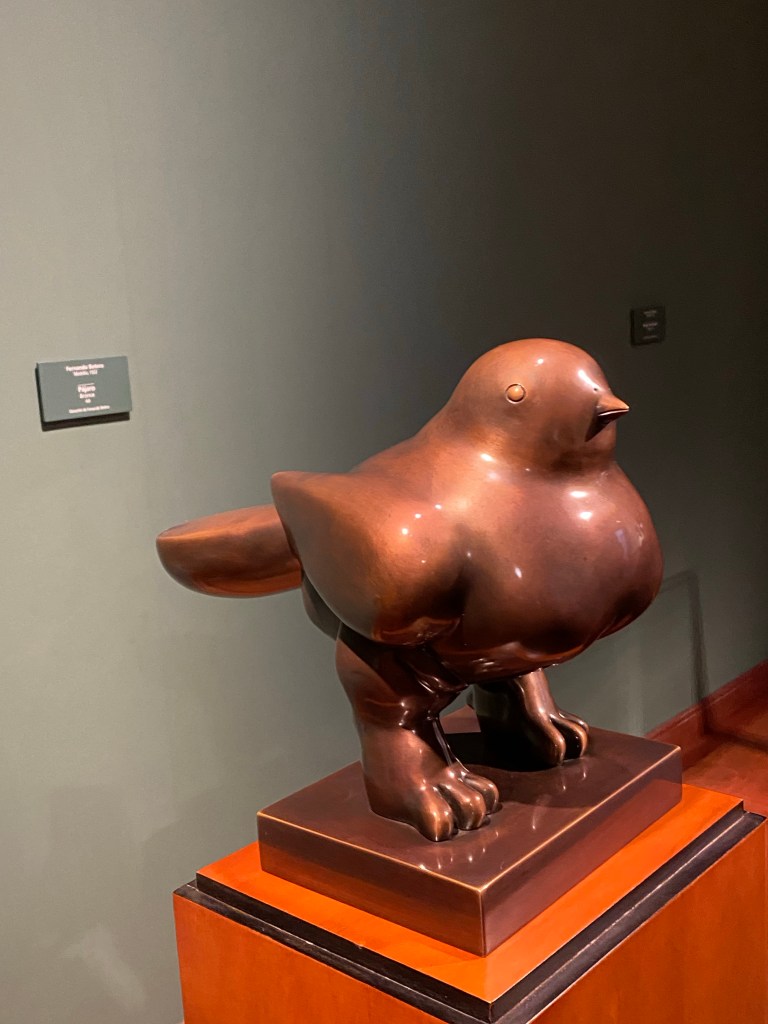
For our final few days, we went to Bogotá to wander the old town and do another walking tour. We didn’t have high expectations of Bogotá as everyone we’d met, including our Columbian friends who live there, had warned us about safety there but it was good enough to while away the day before our flight. I finally got Callum into a museum – the Botero museum and art gallery. We really enjoyed the paintings and seeing smaller versions of the statues we’d seen in Medellin.
The bird we saw in the square that was blown up in Medellin. A last dinner.
This trip has been so varied and memorable. We’ve done some amazing things, learnt a lot, met so many interesting people and talked lots of politics- very unlike us. All in all, a fantastic few weeks.
After a long day of travel from Peru: boat, pick up truck, plane, being fleeced by a dodgy airline (Ryan air are missing a trick not charging to check in), plane, taxi, bus, broken down bus (clutch not brakes), bus and taxi, we arrived in San Gil, 28 hours after leaving the Amazon. San Gil is a small town known for adventure sports. We bought some more appropriate clothing for the heat and booked our white water rafting something Callum really wanted to do. There had been horrendous rain on our journey and the rivers were very full so we went for the category 3 rapids despite Callum wanting to do the level 5. He did moan that it was quite tame but it was a lovely few hours down the river and quite scary enough.
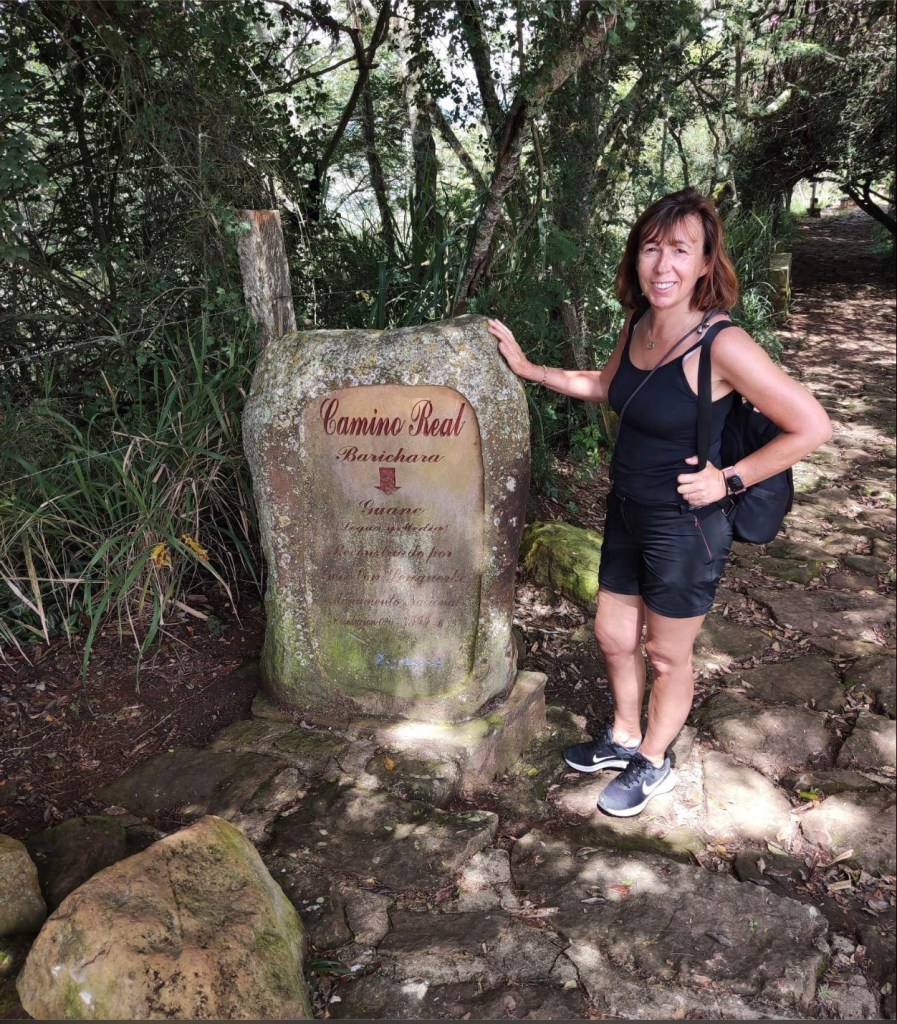
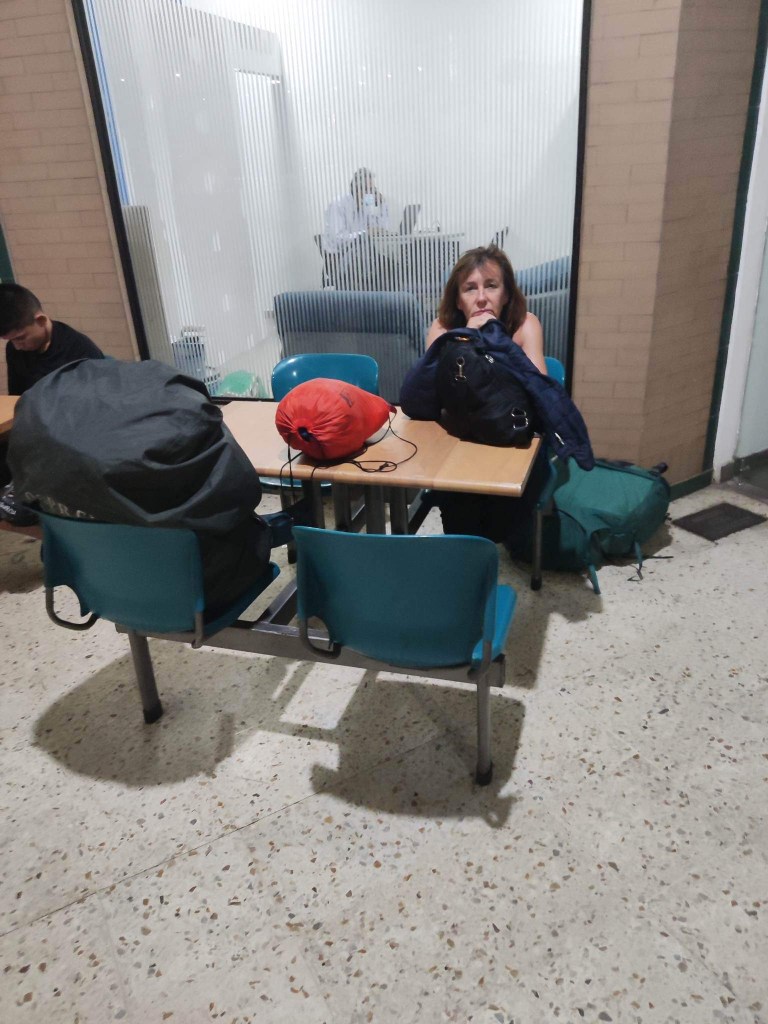
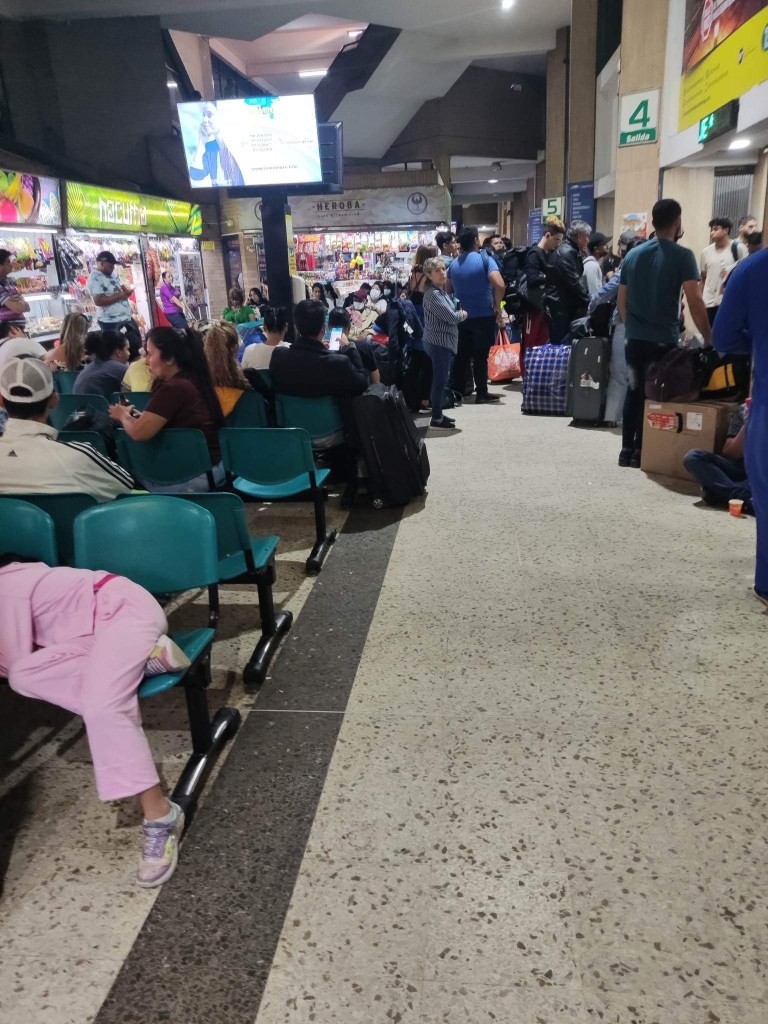
We also visited a lovely old town nearby, Barichara, with a beautiful square and hike through the countryside mainly downhill which felt like a change. That night, we headed off towards the old river port town of Mompox on the overnight bus. All was going smoothly until we tried to change buses. It was delayed and we were told to check again at salida 4 at about 11pm. Absolute chaos ensued as every bus from that company went from there, with no signs, so much shouting and even Spanish speakers didn’t understand the tannoys. After annoying the lady at the barrier for 2 hours, she saw the funny side and waved us towards a bus- unfortunately it was one of 4 so we were still the helpless gringos with very little Spanish! It was worth it, however, as Mompox is a gorgeous place if you ignore the fact that every street except the riverfront has been dug up. There was a beautiful promenade with hanging lights, restaurants and huge iguanas due to flooding of the river. We stayed in an old colonial house with a little pool and met some interesting Columbians and a Polish/German man who liked to share his views on everything including those about Brexit, immigration and the racism in Germany and Poland of which he was very much a part. We felt very settled here and Callum even managed a run along the front.
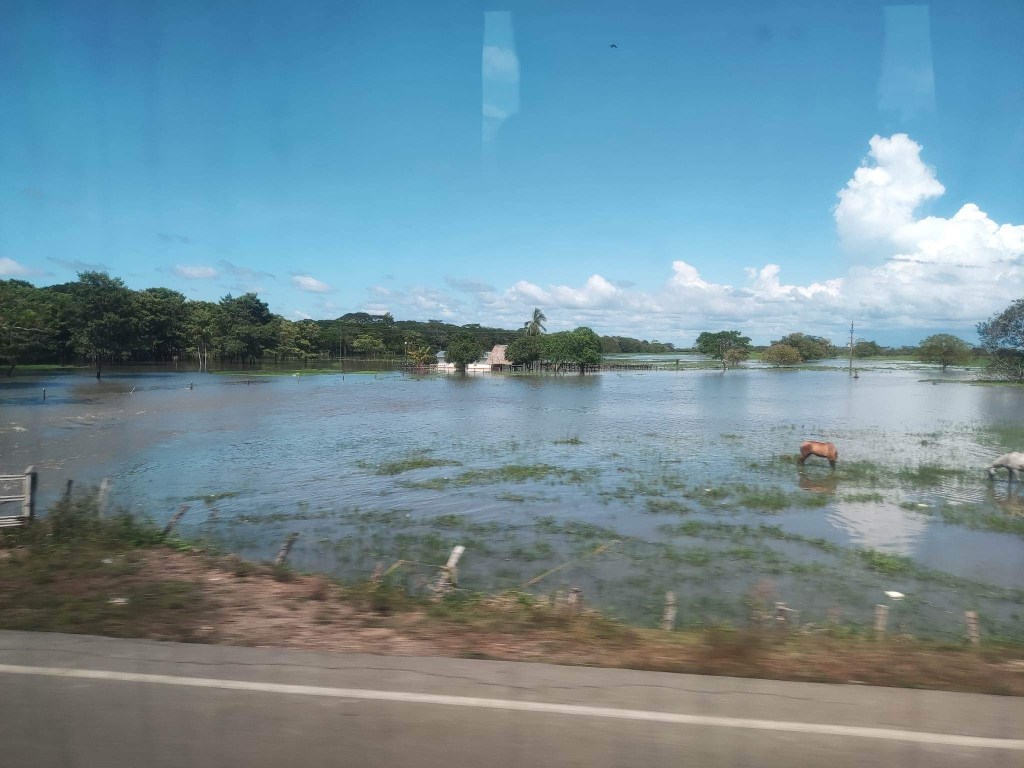
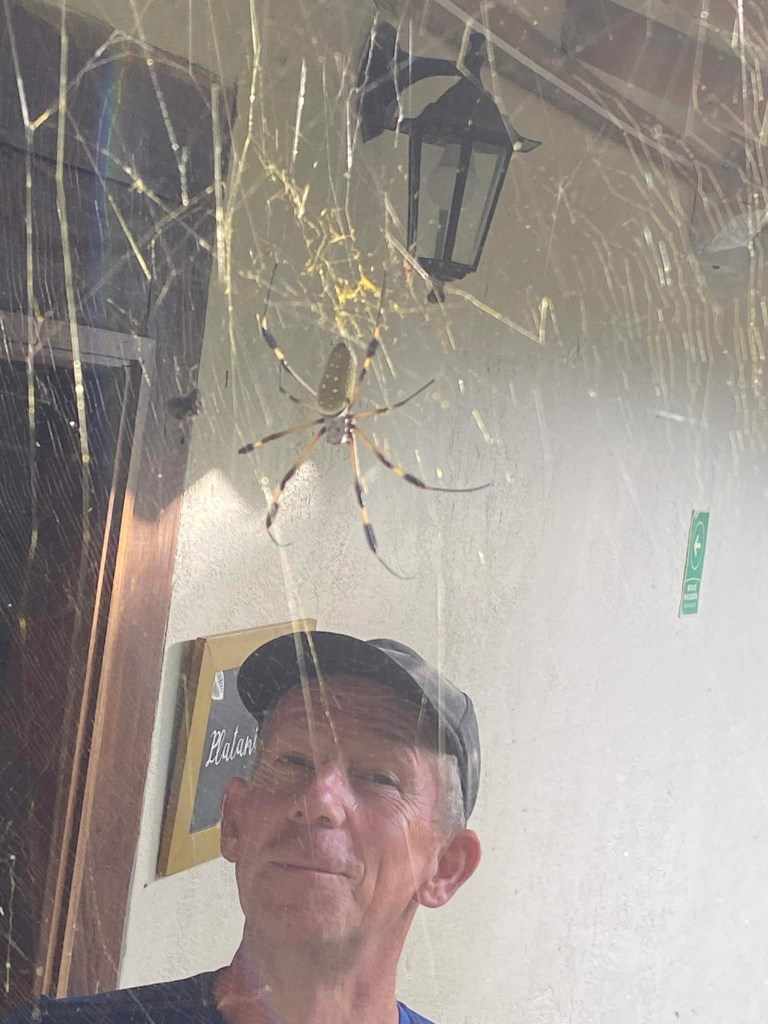
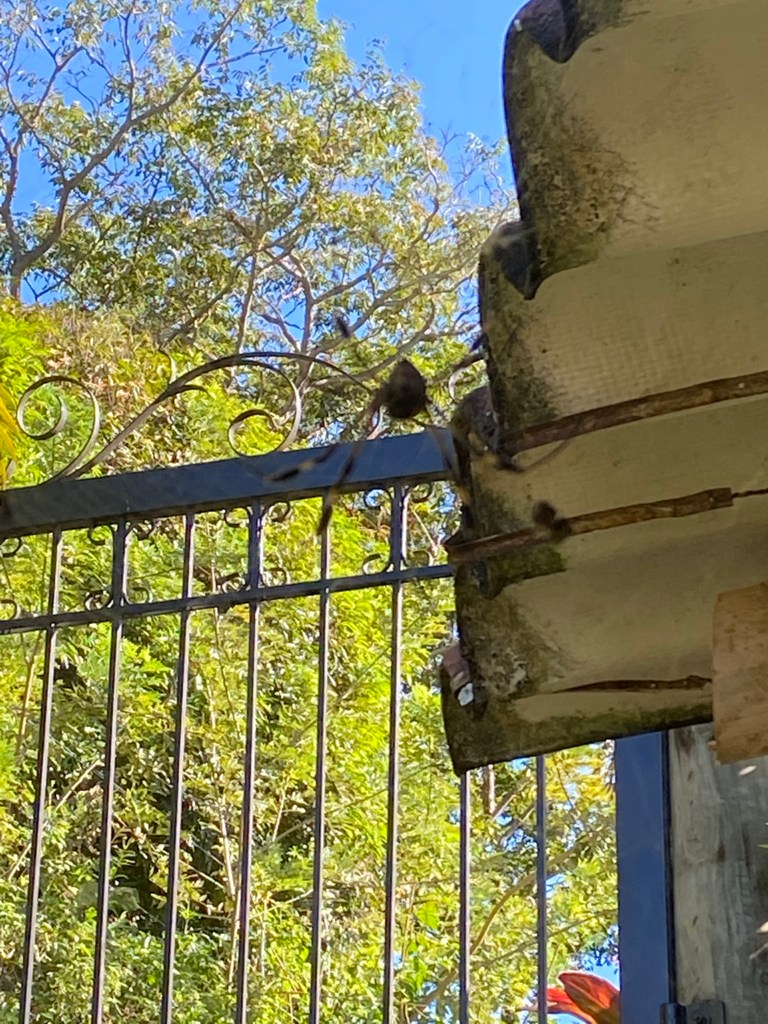
Our next stop was Minca, nearer to the coast, again with a long bus journey through floods where people even attempted to stop the bus claiming it was too dangerous but the bus driver was having none of it just driving over the cones! We weren’t completely sure if they were “legit” either having started watching Narcos! After changing buses again in a dodgy looking town where Callum watched the match, our next part of the journey took forever and sadly included a dog with diarrhoea next to me! We arrived in Santa Marta too late for the local bus and after failing to organise a taxi on the way, we thankfully negotiated one that looked like it would die on the half hour journey up the mountain. We arrived to a very grumpy hotel owner in her nightie who showed us to our room with it’s spider sentry. We did enter and exit the room very quickly each time!
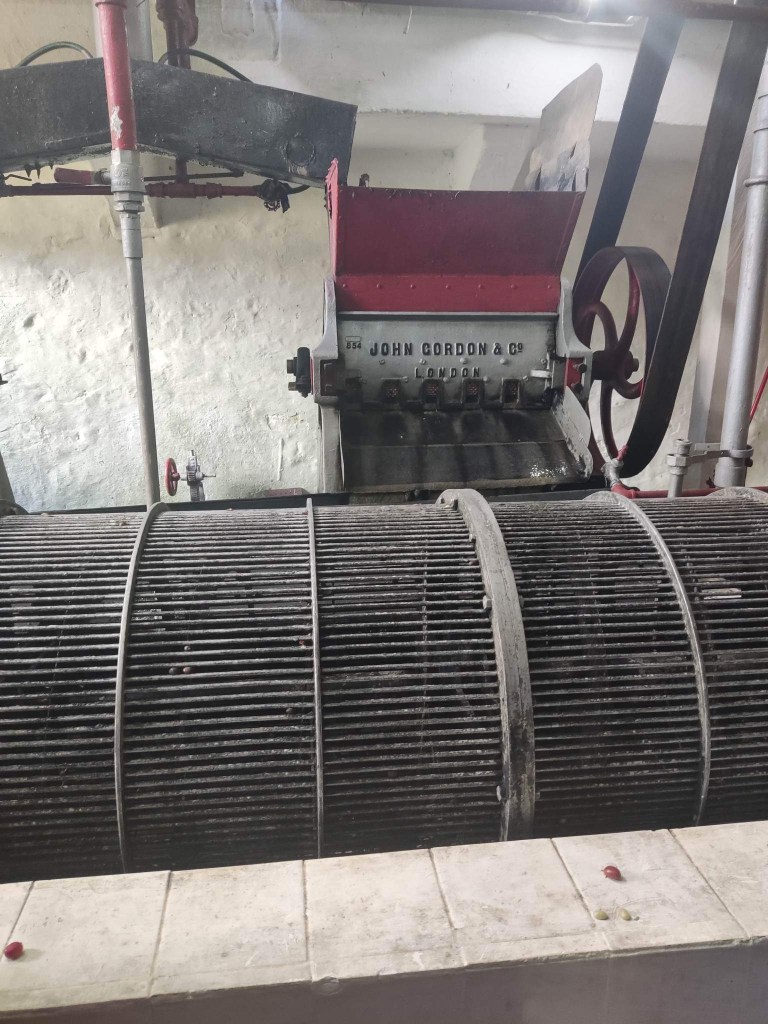
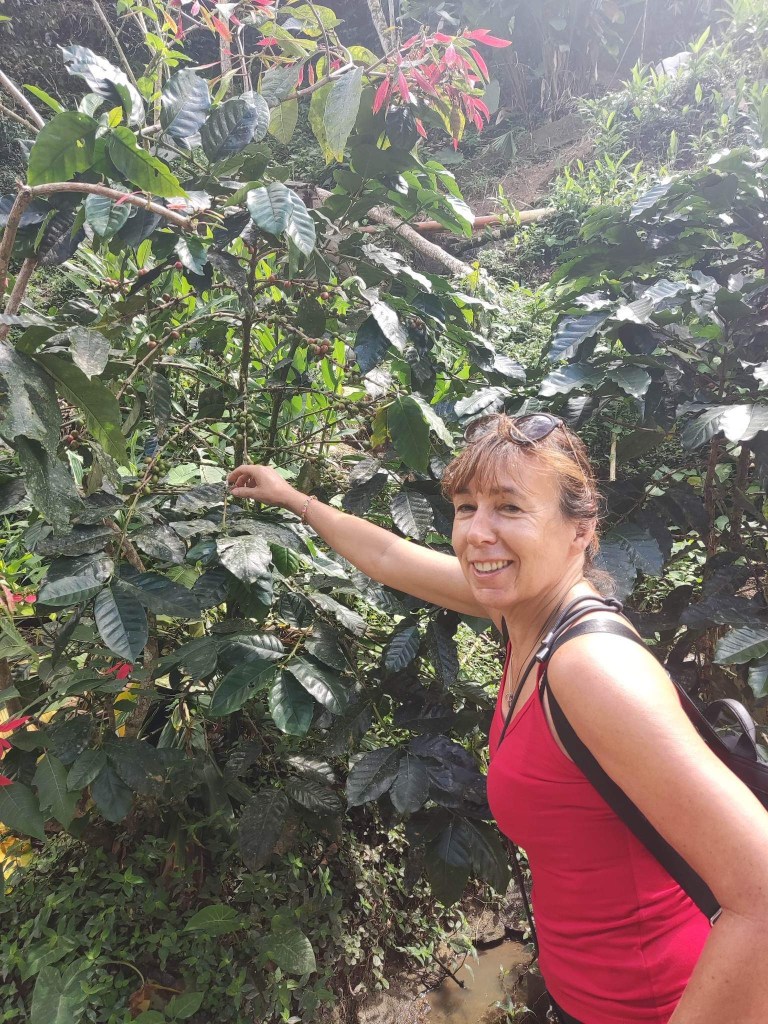
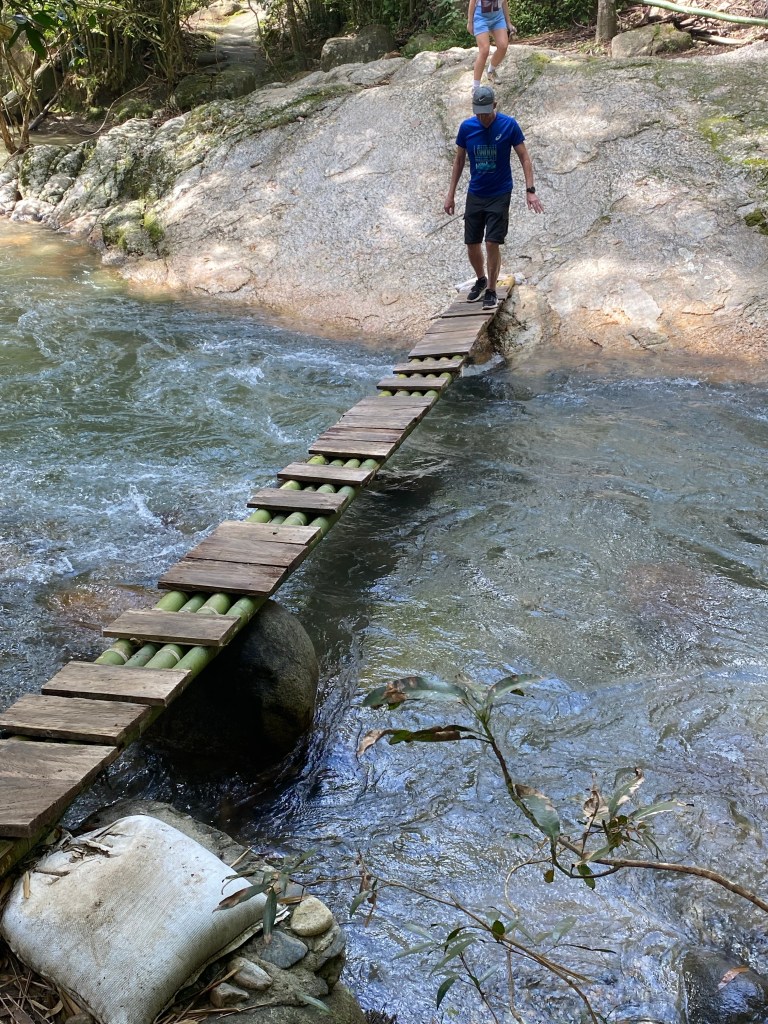
In Minca, we wanted to take a nearby coffee tour and so the next day walked up to the centre, after Callum had very bravely crossed the bridge whilst being laughed at by a 15 year old, to arrange a taxi. This turned out to be a ride on the back of a bike driven by a too young looking man who worryingly had a need for speed! We arrived in one piece (not sure I breathed or moved whilst on the back once) and took a tour with a friendly American family. We were quite shocked to learn that the coffee pickers earned 4,000 pesos a day (80p) despite it looking like jolly hard work as all the crops are on the mountain side. All the equipment was from London made in 1891 and they had their own workshop to create spare parts. Quite amazingly, all the processes and machines still worked. We also visited a local waterfall, another downhill and rutted adventure on the back of the bikes and then found a restaurant for the all important football match.
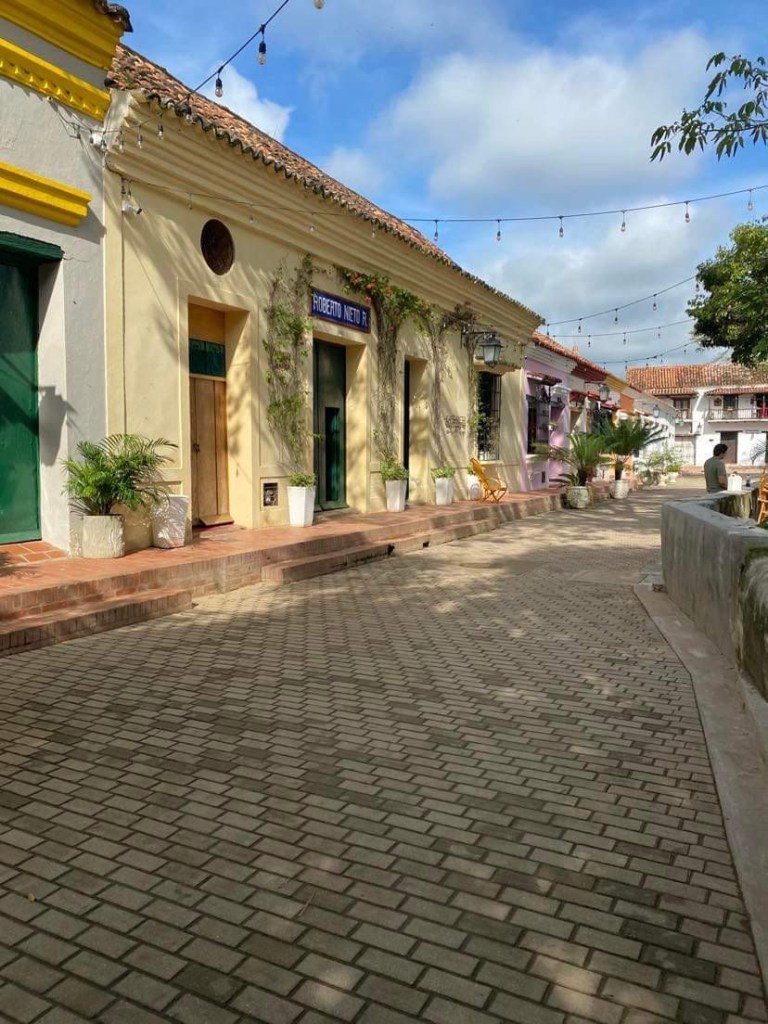
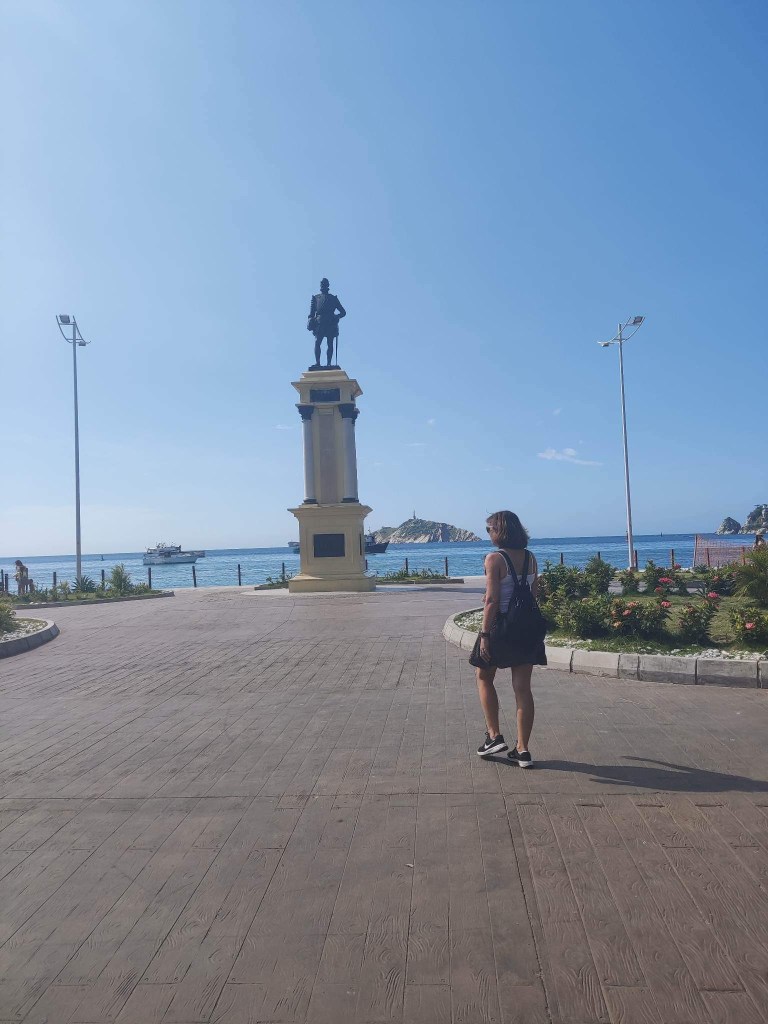
After the quiet of the mountain, we spent Saturday night in Santa Marta, a town on the coast with not such a great reputation. Despite that, we felt safe wandering round the streets, along the promenade, in the local museum and chatting to a lonely seeming Swiss ex-pat. Santa Marta at night was a riot of noise in the main square. We had cocktails whilst listening to a local band in the middle of the square, with Spice Girls from the Bob Marley bar next door, Maracas Mike with his portable speaker on a trolley (who looked 80 if he was a day), local rappers with a mic (who liked to rap at couples eating dinner) and a night club across the square. Quite an experience but a good spot for getting a feel for local life in Columbia. Music is absolutely everywhere. On every bus, salsa is playing loudly (with some even having it on a screen at the front next to the driver) and it even blasts out of every supermarket.
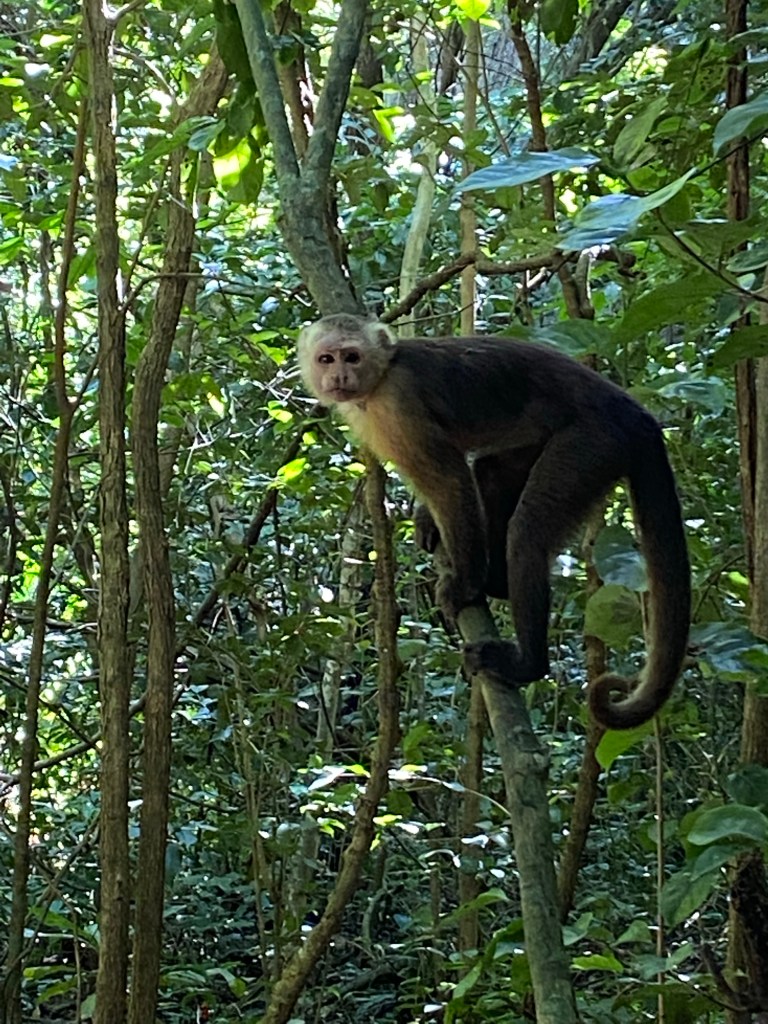
We spent the next 6 days in 2 places on the Caribbean coast. We had expected the waves to be big but they were so wild that unfortunately going in past your knees safely was not possible. It was quite pretty but extremely windy too. It was nice to be very lazy though. However, we did go to the national park for a 5 hour hike to some less than amazing beaches. We saw some wild monkeys on the way, scrambling through rocks and so much mud. Lots of people just took their shoes off and walked barefoot with mud almost to their knees! We had earned our beer that night. We did also find a nice little bar with cocktails for £1 and fish restaurant where we could sit and watch the pelicans fishing whilst we ate though so that was pretty cool.
We’re off next to Cartegena (fingers crossed for a better bus journey) and have high hopes for a shower with hot water which we’ve not had for a while! How our standards have dropped!
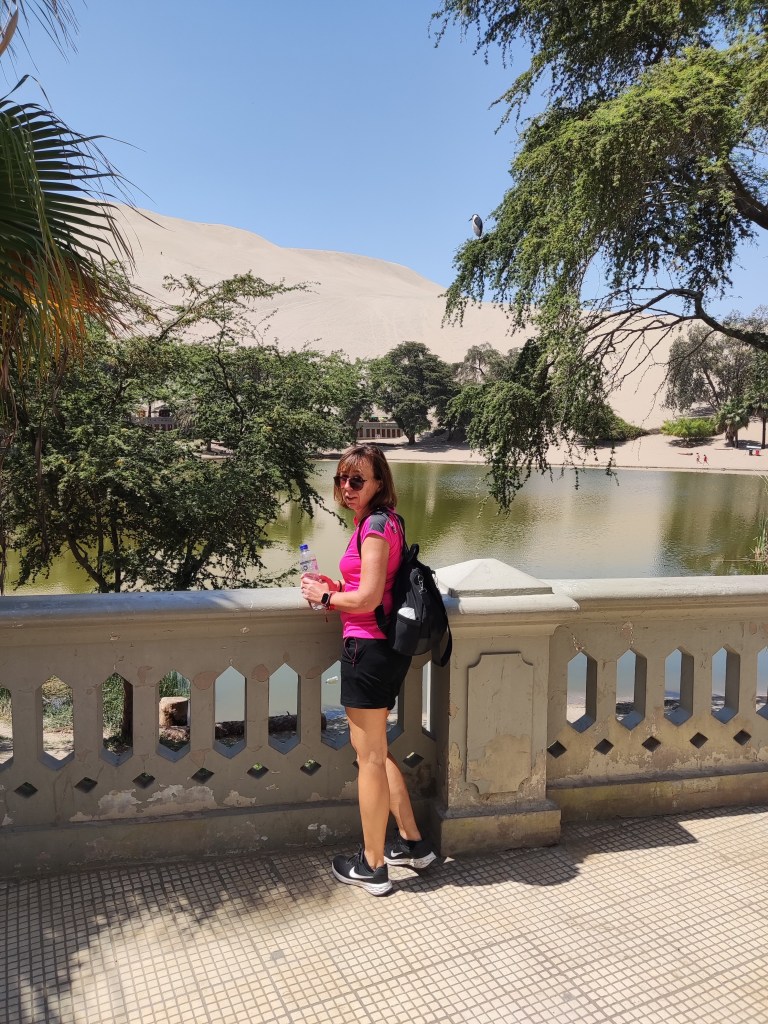
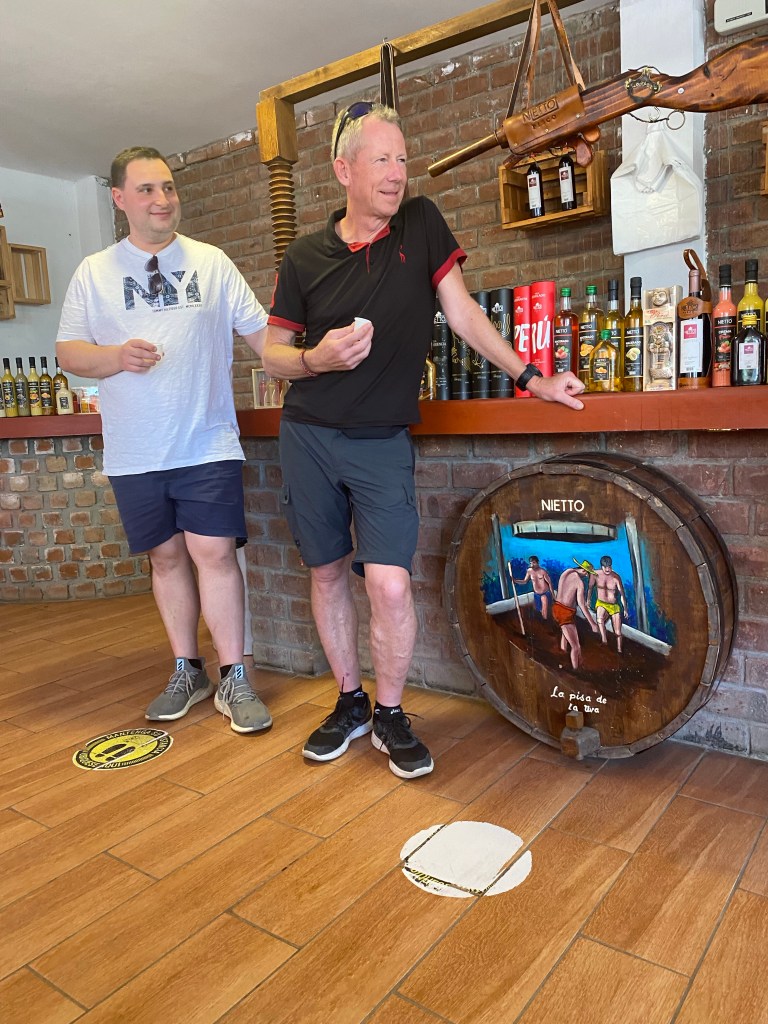
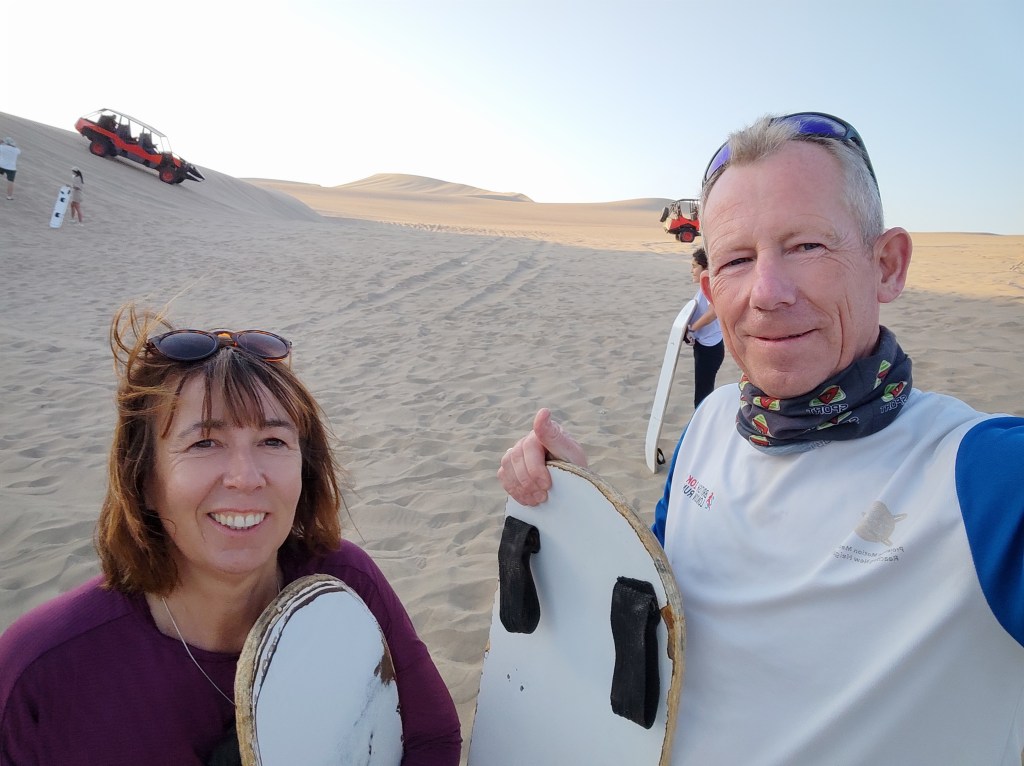
We left Arequipa early for a long journey through the desert past the uninspiring and underwhelming Nazca lines to Huacachina, an oasis in the desert that was very touristy but great fun. Our free activity with Peru hop was a pisco vineyard tasting tour. We learnt how pisco wine is made and then moved swiftly onto the tasting. The wine is extremely sweet and we had about 4 shots before moving onto the hard liquor , all 40%+ alcohol . All before noon! Volunteers for a challenge were asked for and Callum’s hand was up like a shot. The aim was to down the shot so that there were no drips left in the glass , if there were you had to go again. Callum did fairly well, even licking the inside of the glass and won as one other bowed out after 2 fails. Unfortunately, there was no prize and the shots themselves were certainly no prize. After lunch, we went on the dune buggy and sand boarding tour. The drivers were quite frankly insane and we bounced all over the desert in our 10 person buggy. The sand boarding though was simply fantastic fun. It had to be done face first on your front so it took a bit of courage the first time and we worked up to the biggest dune which was still pretty scary. You had to steer and slow yourself with your feet but the sand certainly came at you quickly.
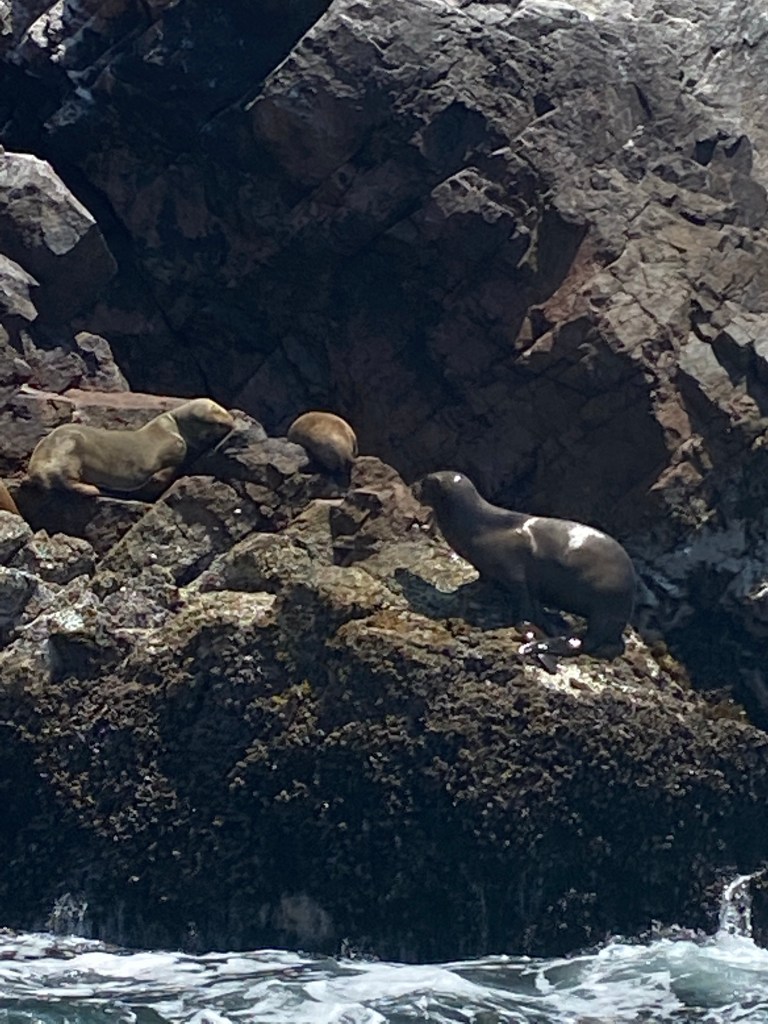
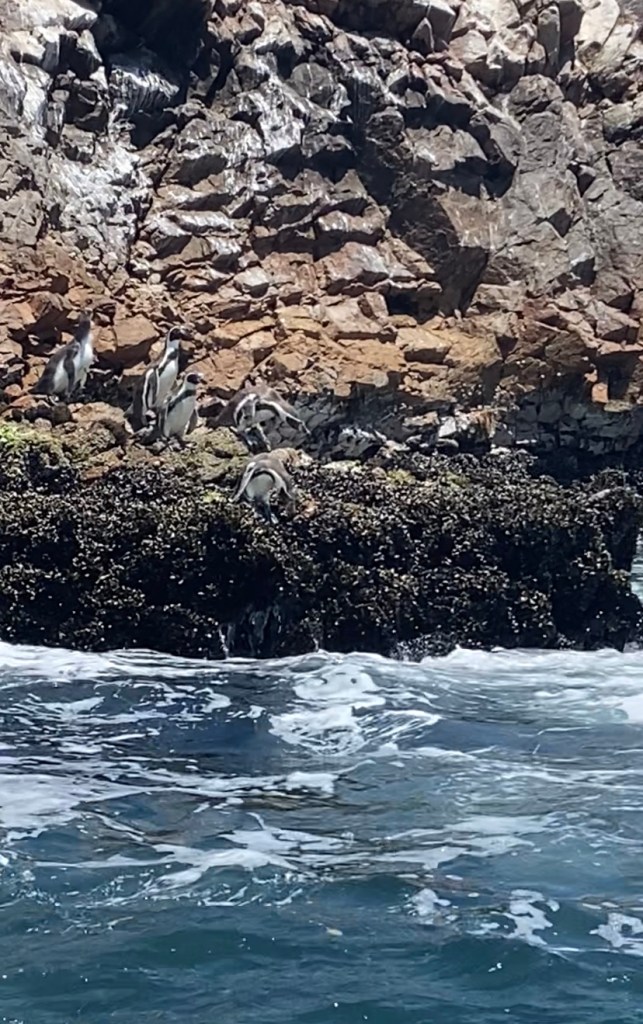
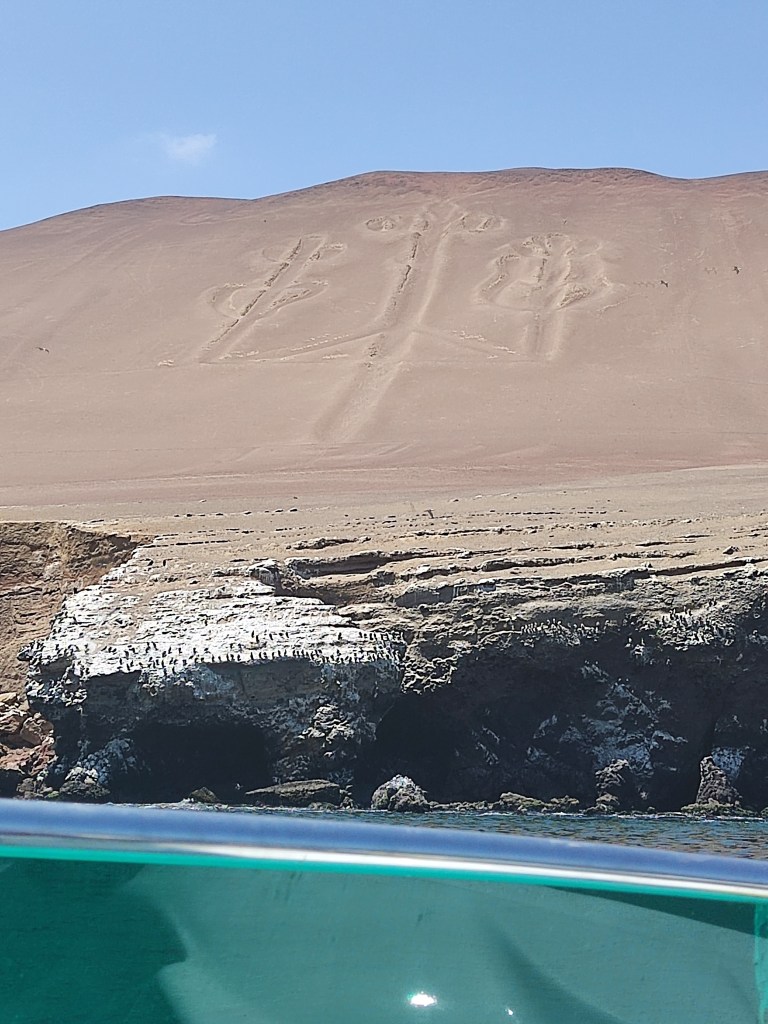
Our next stop was Paracas where we do think we stayed a bit too long. We had thought it might be peaceful but it was actually very small and VERY noisy. Nevertheless, we toured the national park desert and then the best part was to visit Isla De Ballestas by boat – Peru’s version of a mini Galapagos. The boat trip though only 2 hours was enough to see the most impressive glyph and so many sea lions and penguins. The penguins were their busy selves and the many sea lions lazed in the sun with their huge eyes which looked remarkably like Willow’s!
They did eventually make it into the sea off camera of course! They’re unsure if this a trident, a cactus or a tree.
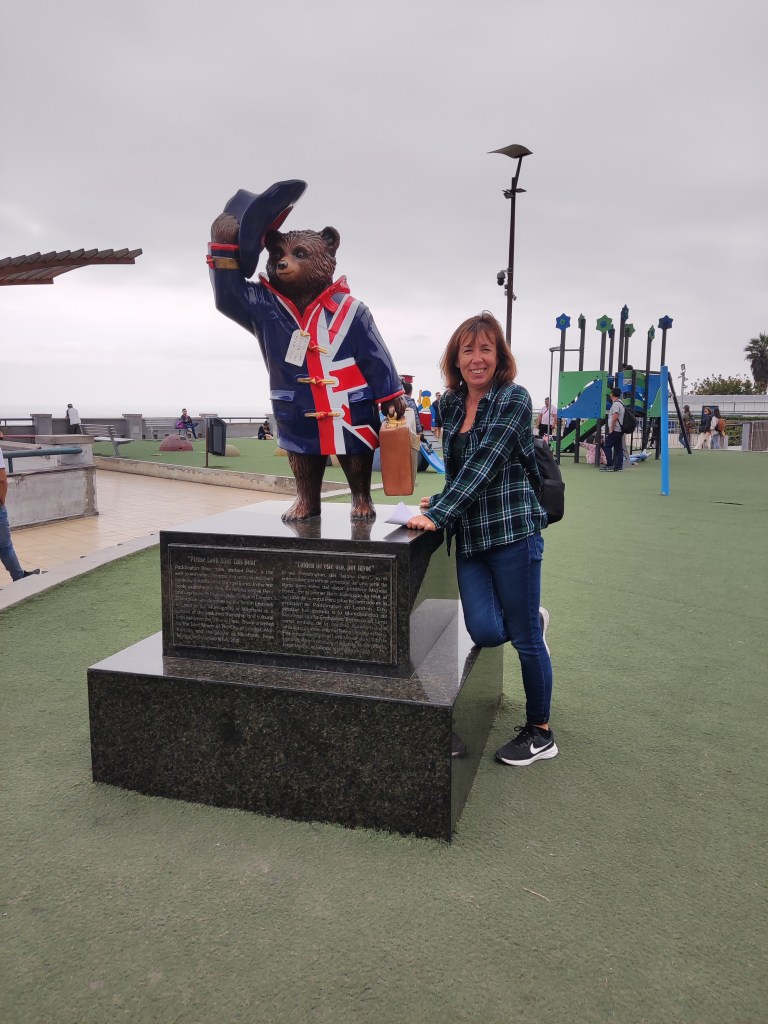
After talking to other travellers, we made some decisions on our trip to Lima from the next bus that has altered the rest of the trip. We had been planning on heading to Ecuador but the trouble (beheadings, riots and curfews) in Guayaquil (a transport hub that we couldn’t seem to avoid) made us decide to head for the Amazon in Iquitos and then Columbia instead. Therefore, the next morning was spent in Lima booking plane tickets and Amazon lodges. We were warned on the bus not to venture out of the Lima tourist zones of Miraflores and Barranca which we paid attention to though we did really enjoy the walk along the promenade and through Kennedy Park and meeting Paddington.
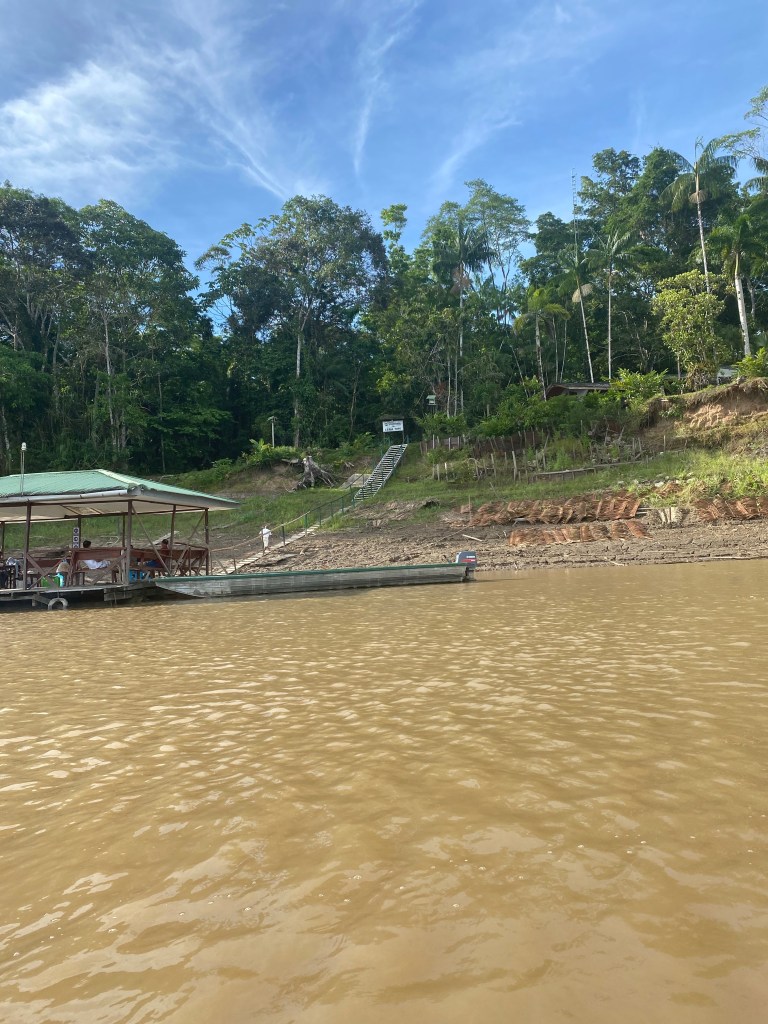
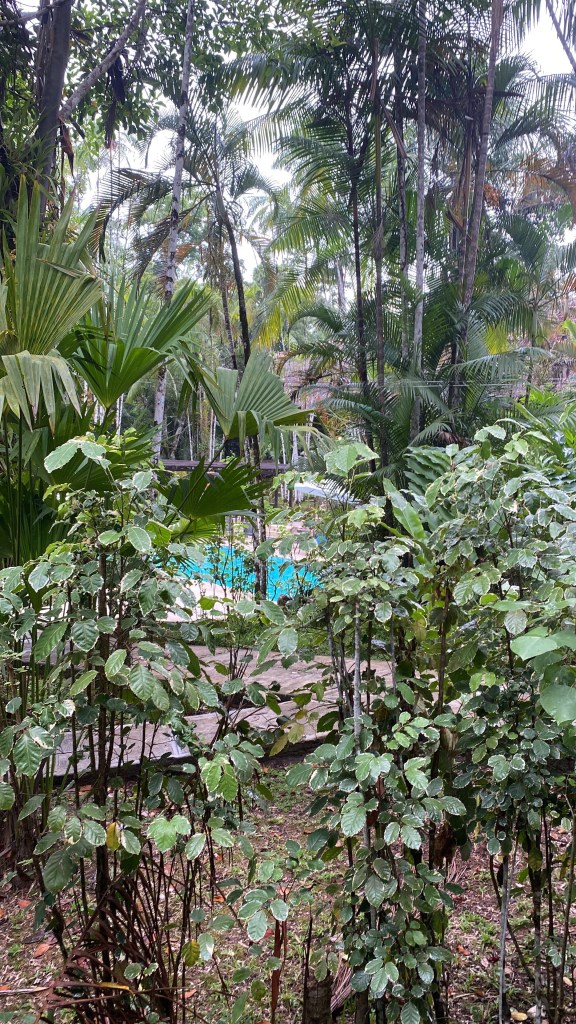
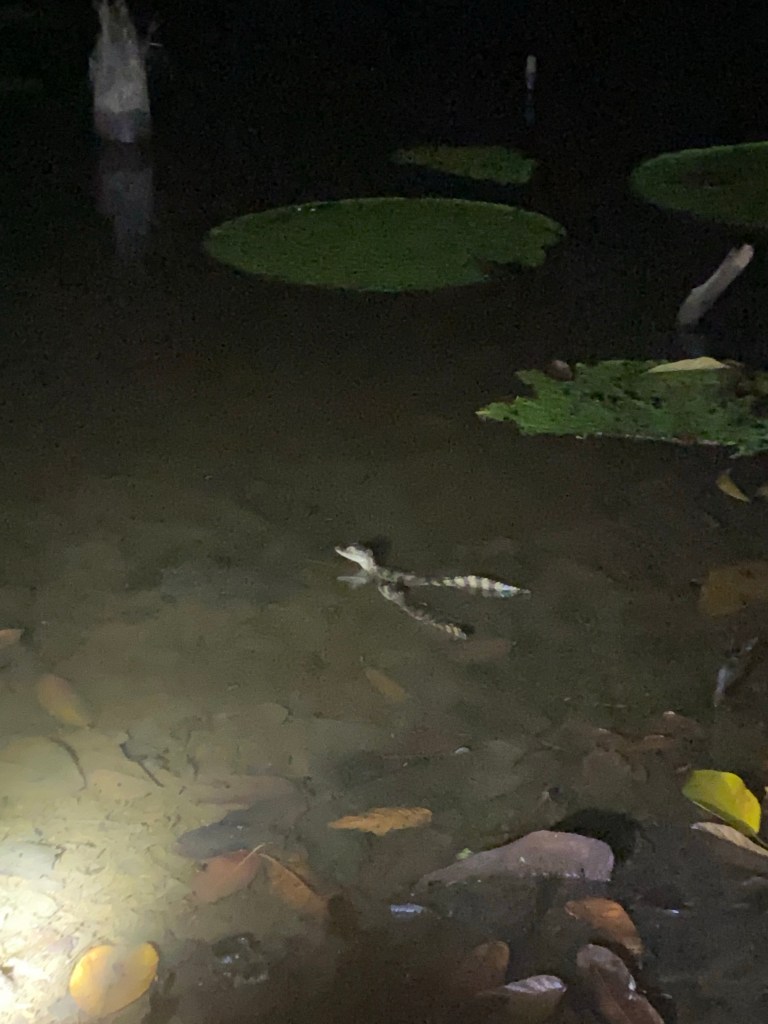
The following day, we flew to Iquitos (a place that you can only get to by boat or plane – no road goes there from anywhere yet) and stayed in a very sketchy place (not enough research clearly went into that one) but our Amazon lodge more than made up for it. We were upgraded to the Ceiba Tops Lodge and after an hour on a boat arrived to find a pool, 3 course dinners, our own guide and a lovely room. All the activities were included and we had an action packed 4 days with a couple of hours here and there in a jacuzzi that had a great slide into the pool which we were not the only ones enjoying like kids. We had a couple of night walks through the jungle seeing caiman’s eyes glistening at us as well as the sounds of the jungle before dinner.
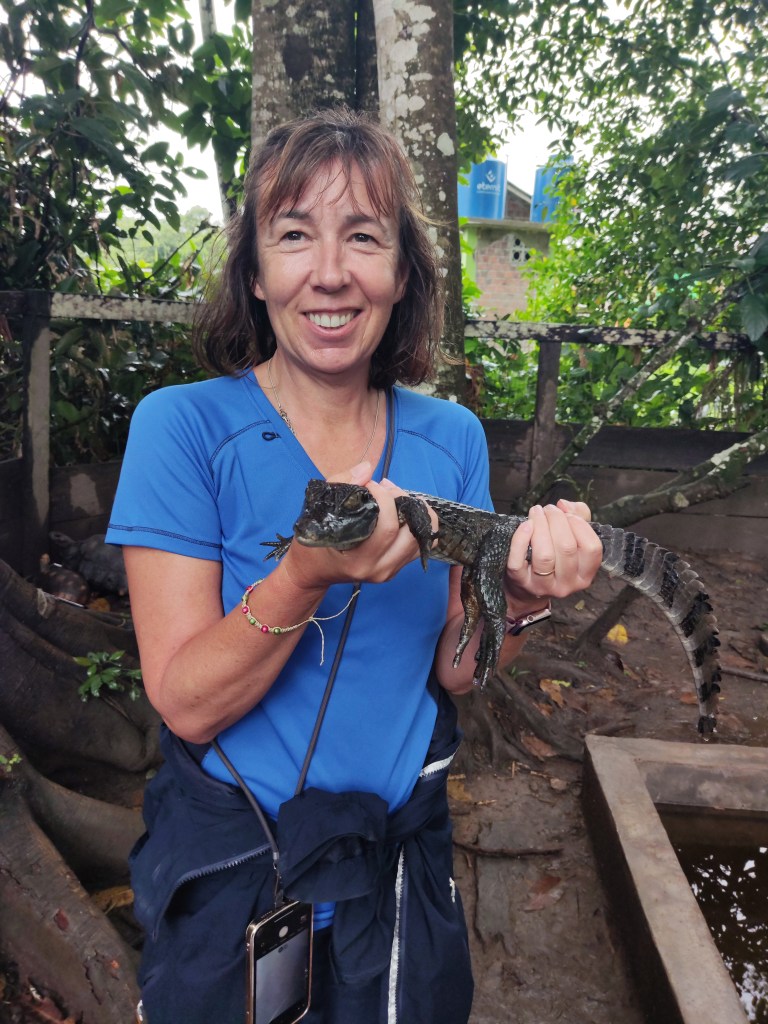
A little one but he assured us it’s mother was nearby!
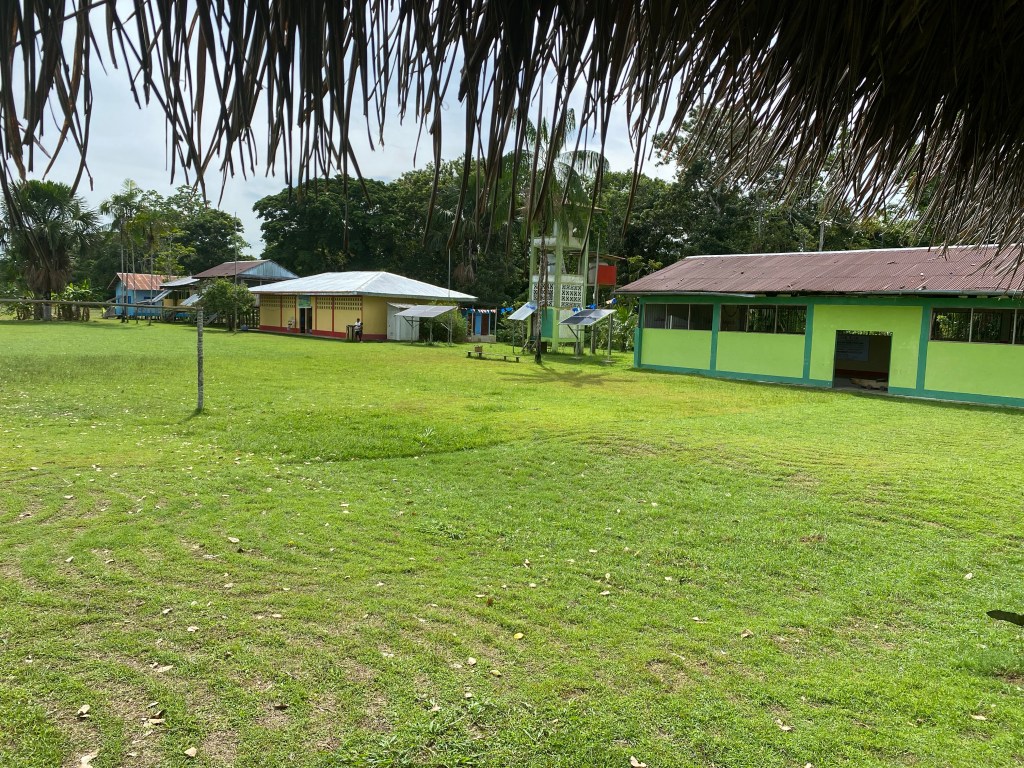
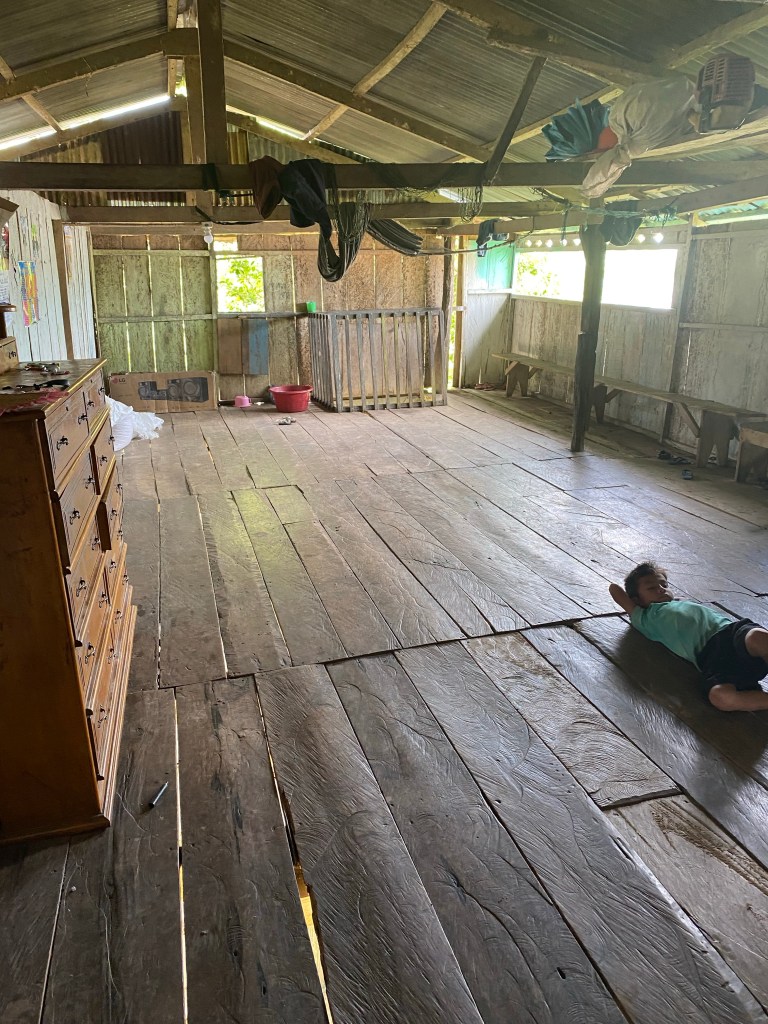
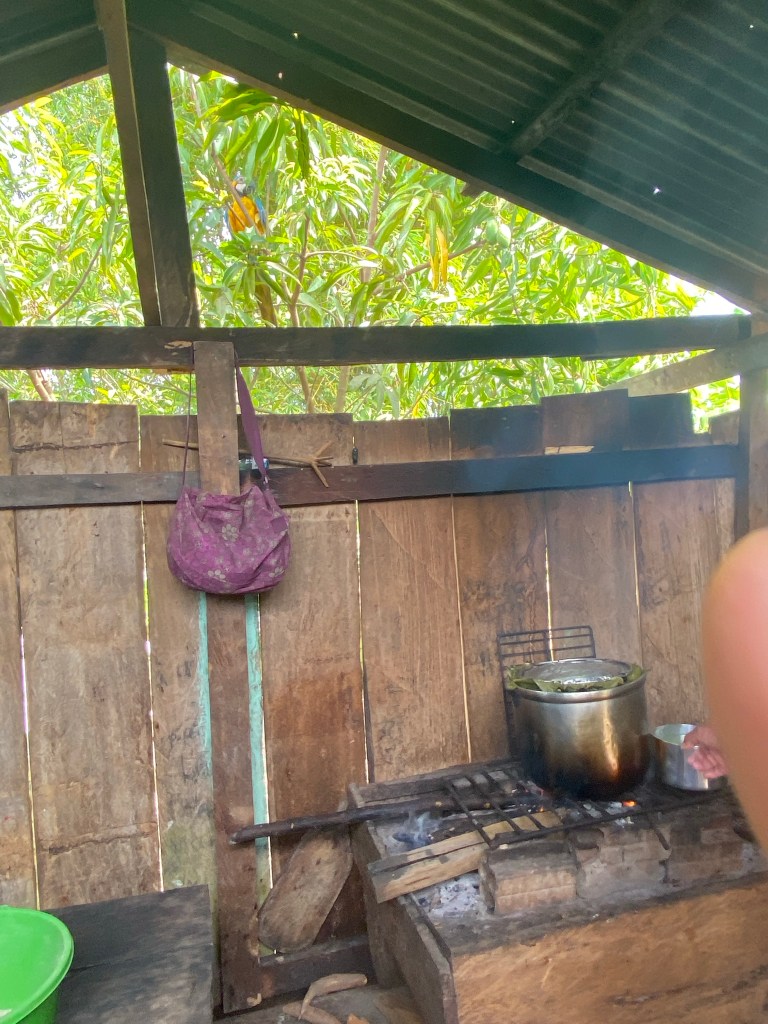
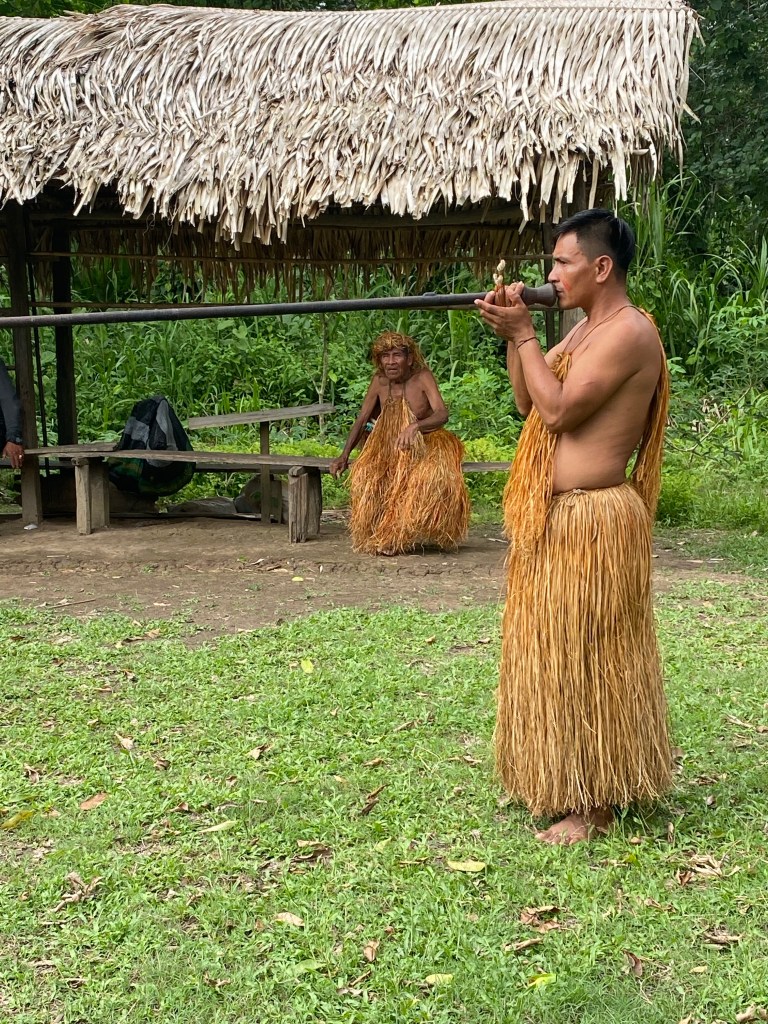
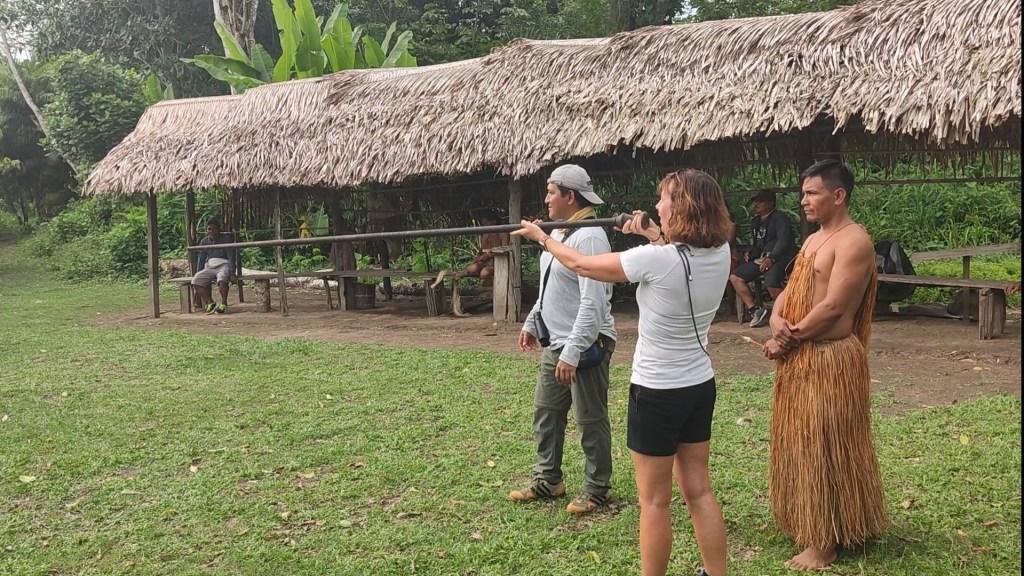
We thought touring the local villages may seem a bit awkward but everyone was so friendly, we thoroughly enjoyed seeing how the river people lived and how the Amazonian tribes used to live. The school was having their version of Ofsted while we were there so the teachers were actually there – they apparently only turn up once or twice a week! The houses were all on stilts and more basic than we had imagined but the people were so proud to show us around. We also visited a replica traditional village where we saw some dancing , bought a few trinkets and had a go at using a blowpipe dart. Callum was most upset that I won that one! The lodge gives money and aid to the villages they visit and our guide explained how they had helped during covid too.
School tidied for “Ofsted”.2 tvs on solar power but no chairs. Cooking yucca for chicha – alcohol that gave the Inca trail porters oomph!
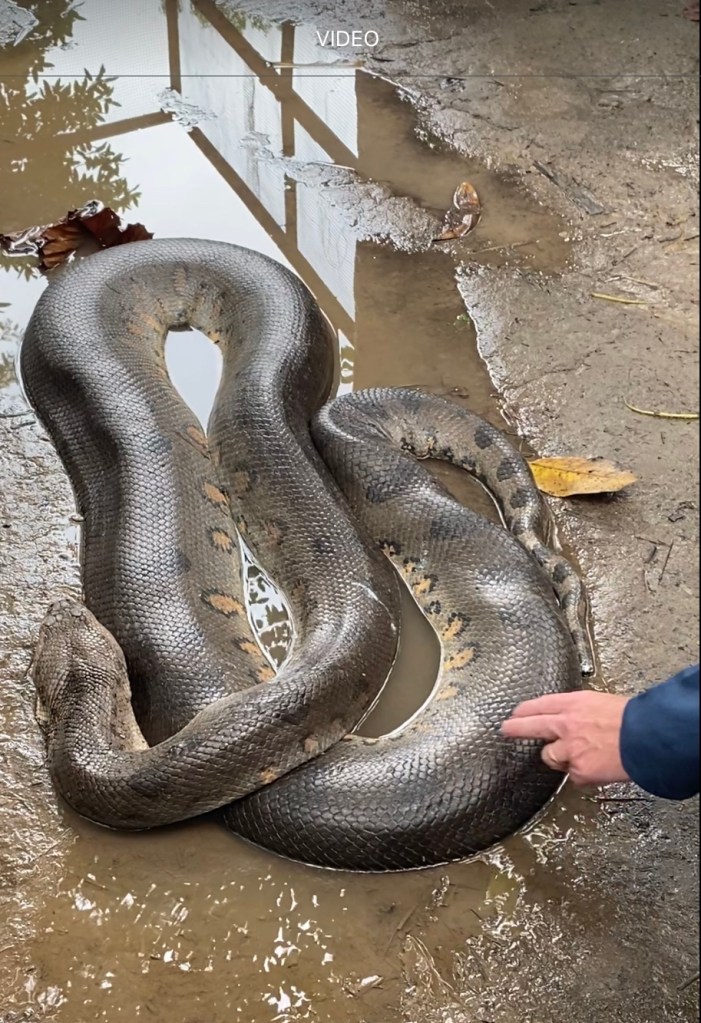
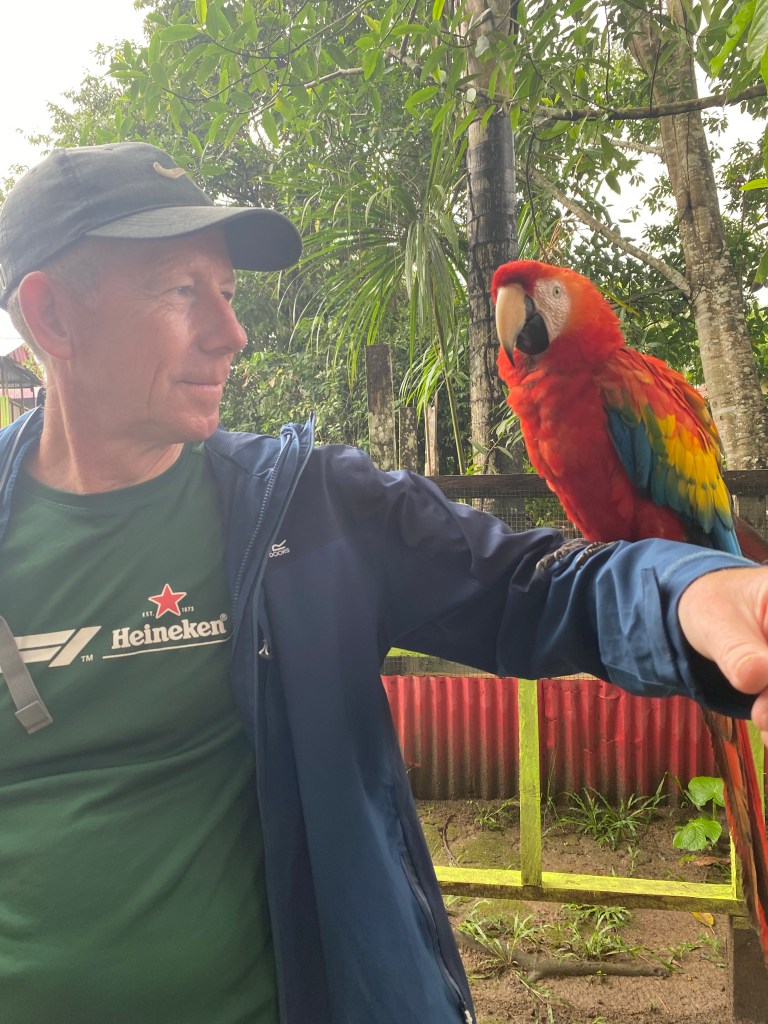
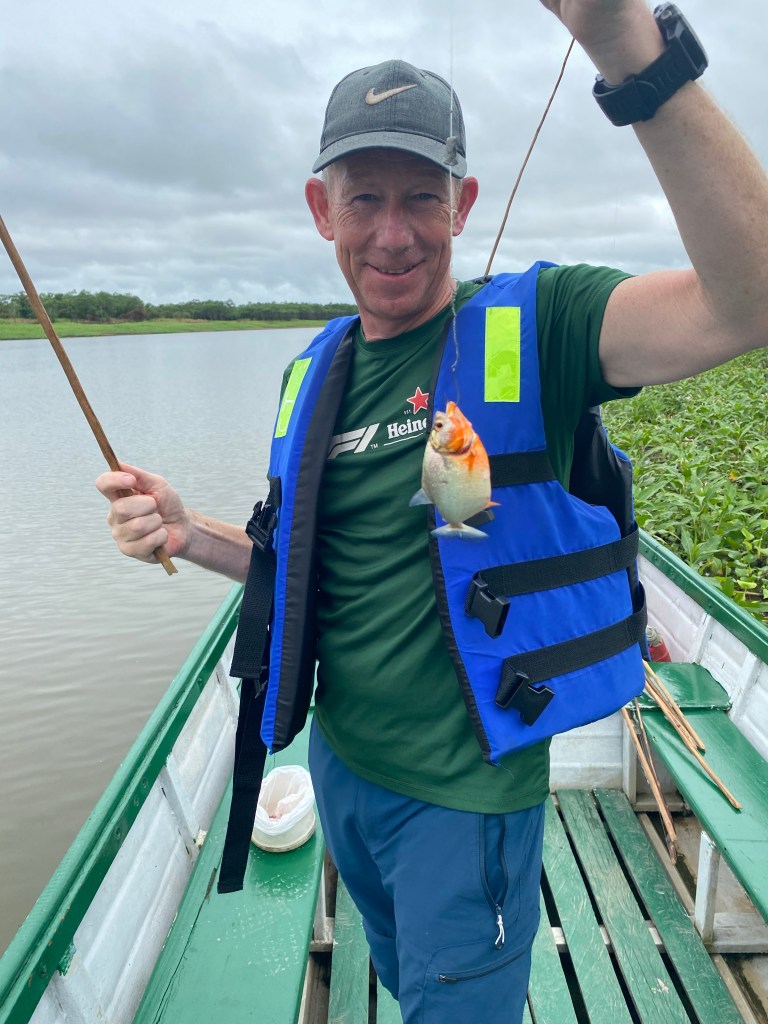
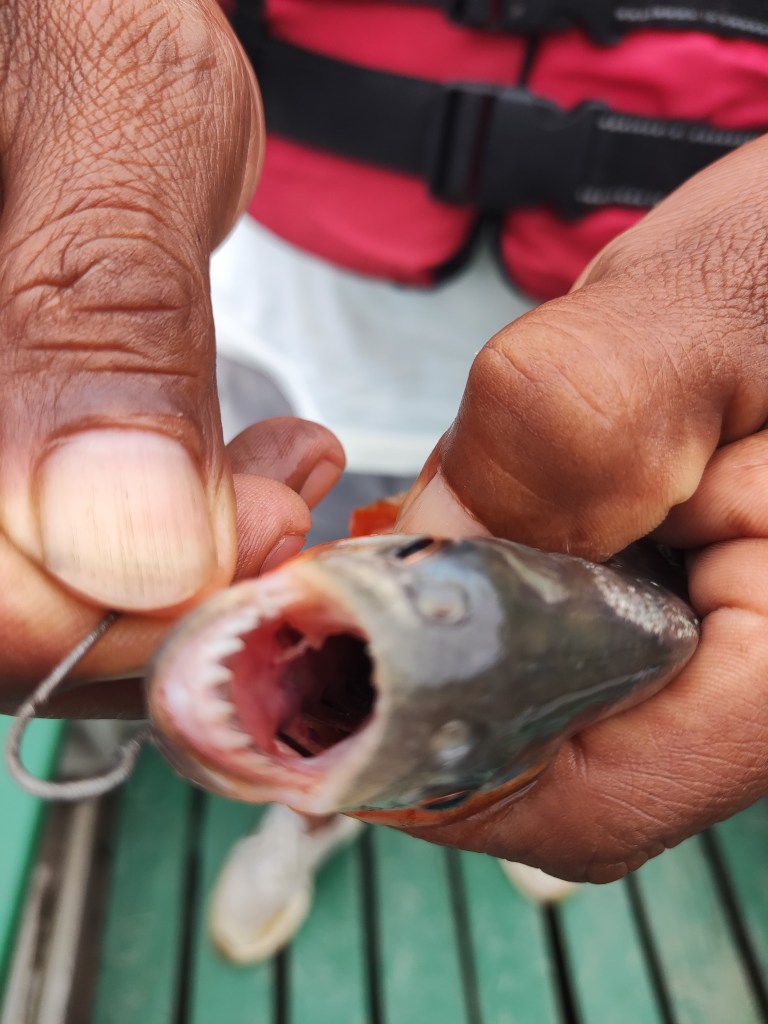
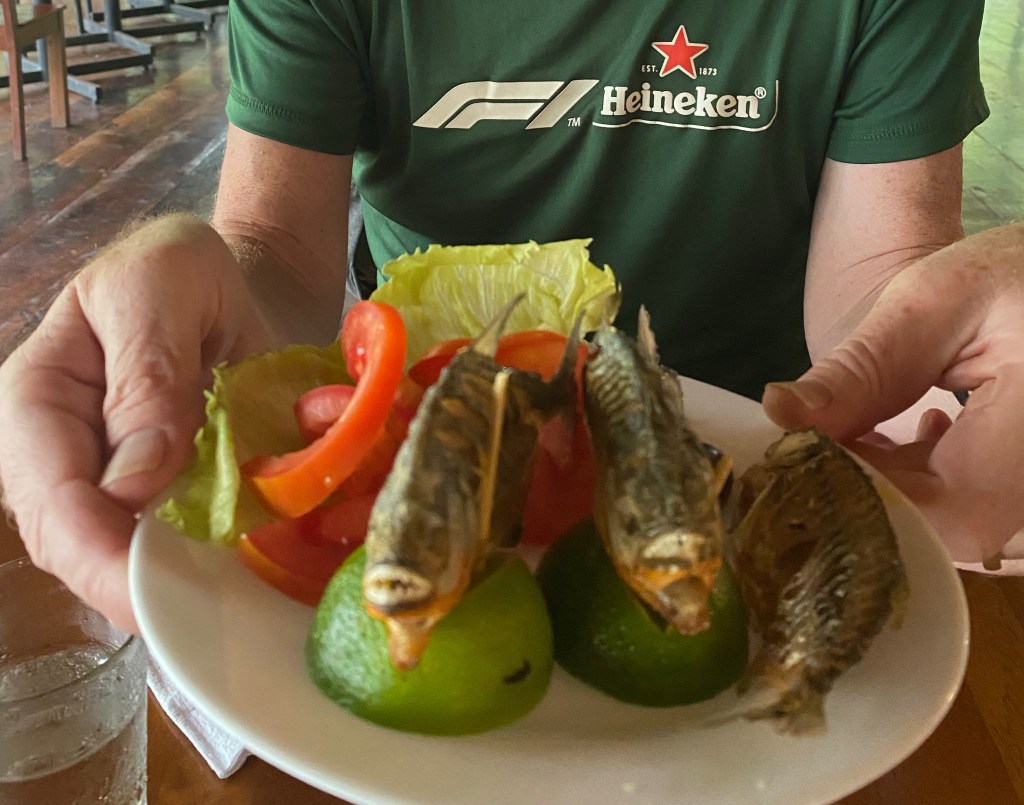
The following day was probably one of our best of our travels. We started early with a birdwatching tour by boat where the pod of feeding dolphins completely stole the show. These were grey dolphins so they do move like the ones you see in the sea but on other occasions we also saw pink dolphins which only just come to the surface and are quite tricky to spot. Later, we went to a sanctuary that returns animals (not the anacondas of course) to the wild after nursing them back to health. The anaconda had been fed a live chicken the day before so apparently we were quite safe. The baby caimans were surprisingly heavy and solid and we were surprised that the birds seemed very happy and did not try to fly away. Callum redeemed himself on the piranha fishing which was surprisingly hard. They managed to snatch the meat from our hooks far too often but he still caught 3 piranhas to my 1 piranha and a sardine!
Not too James Bond scary!
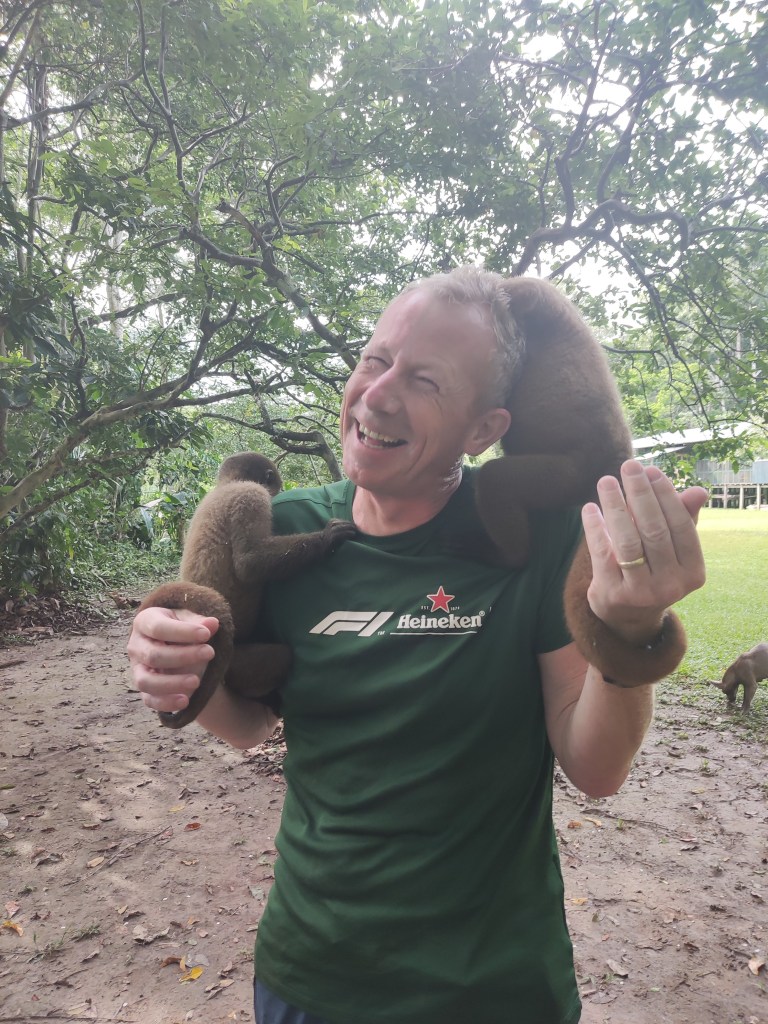
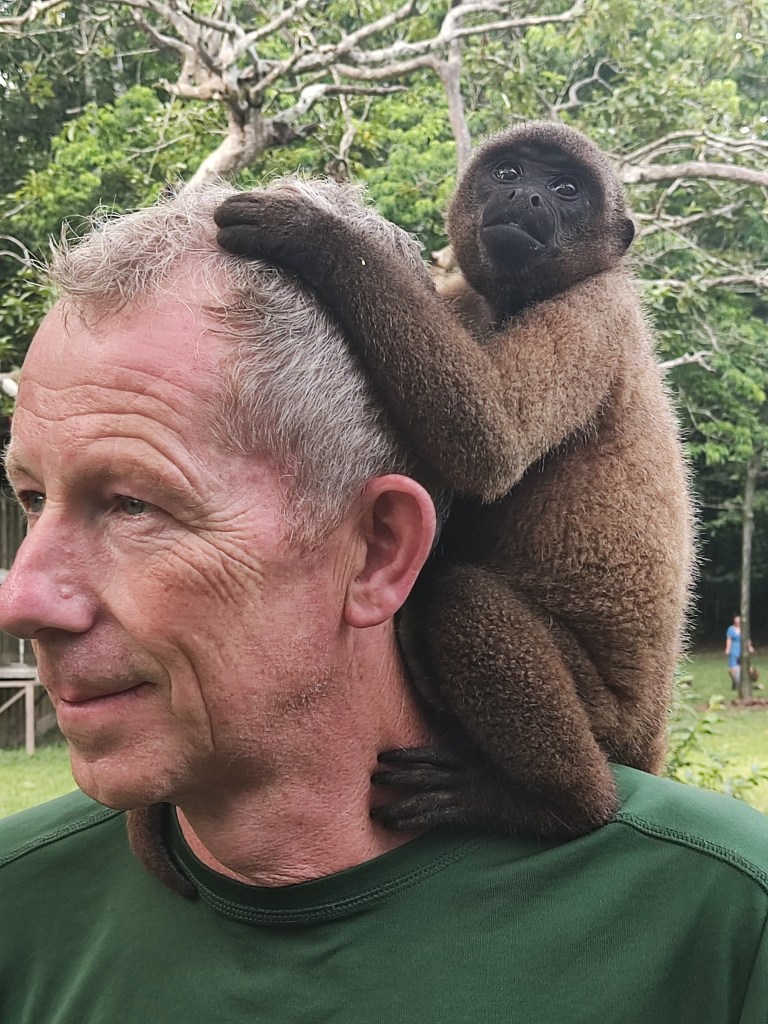
After a large lunch, when we tasted our catches, we headed out to a monkey island sanctuary where wild and rescued monkeys live completely free. They took a real liking to Callum who spent the next 90 minutes with at least one brown woolly monkey wrapped round his head. Another had stayed with him for the first 20 minutes too but then got very upset with me, screeching and trying to grab the phone- it was a real teenage strop but with bared teeth! It was amazing to see them completely free, swinging through the trees that they got their own food from but also interacting with us and each other. The guide there was so passionate about his job and proudly showed us trees that he had planted 20 years ago that were now fully mature. It was interesting to discuss the local issues with both him and our guide who explained not the just the environmental issues but also the human ones. How to live in this poor isolated area when Peru has 52% unemployment as well as preserve local customs whilst living in a more modern world all whilst saving the rainforest.
This gave me no end of amusement!
We are so glad we decided on this detour despite our long overnight journey to come. It really was a once in a lifetime experience.


 Rossies Go Roaming